REVIEW · TOKYO
Tokyo: Open Top Sightseeing Bus with Audio Guide
Tokyo reveals itself in broad sweeps from the upper deck of this 70-minute open-top bus ride. You pass from Tokyo Station and Marunouchi toward Tokyo Tower, Ginza, Tokyo Bay, and Odaiba, with the city moving around you instead of requiring a day of train changes.
I like the low price, about $11.71 per person, and the easy overview it gives first-time visitors. I also like the GPS audio system, which offers Japanese, English, Chinese, French, Korean, Vietnamese, and Thai commentary.
The main catch is simple: this is not a hop-on, hop-off service. You stay on the bus, and the recorded commentary may not always match the sight directly in front of you. Think of it as a scenic orientation ride, not a guided walking tour.
Key points to know
- Two routes: Choose the Bay Course for Tokyo Bay, Odaiba, Rainbow Bridge, and Fuji TV, or the City Course for the Imperial Palace, Roppongi, Tokyo Tower, and Ginza.
- About 70 minutes: The ride begins and ends at Tokyo VIP Lounge near Tokyo Station.
- GPS audio commentary: Information starts automatically according to the bus location and is available in seven languages.
- Open-top views: You get a clear look at Tokyo’s streets and skyline, though the roof may be closed in rain.
- Simple meeting point: Check in 20 to 40 minutes early at the Yaesu-area lounge, where drinks may be available while you wait.
- Strict departure time: Late arrivals are not accommodated, and refunds are not given for arriving late or going to the wrong meeting point.
What this Tokyo bus tour really offers
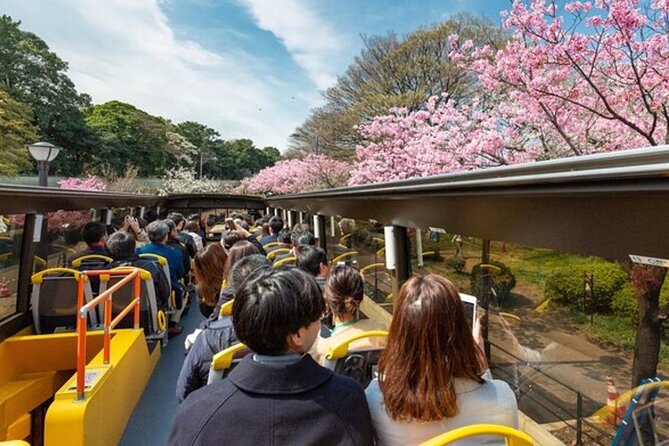
This experience is best understood as a moving introduction to Tokyo. You will not get off at Tokyo Tower, Odaiba, Ginza, or the other sights. Instead, you ride past them, listen to location-based commentary, and get a sense of how the central districts fit together.
That format can be useful on your first day, especially after a long flight. One practical benefit is that you can see several major parts of the city without working out every train connection. You also get a quick feel for the contrast between Tokyo’s formal central districts, waterfront development, temple grounds, and high-rise shopping areas.
At roughly $11.71, the price is low for a 70-minute city ride. I would not book it expecting detailed sightseeing at each stop. I would book it to get your bearings, enjoy the open-air view, and decide which areas deserve a longer visit later.
The bus holds up to 40 people. That is large enough to feel like a shared city outing, but not an enormous vehicle. Japanese-speaking staff are available to help at the meeting point, while the sightseeing information comes through the recorded system rather than a live guide.
More Open-Top Bus Tours in Japan
- Tokyo: Open Top Panoramic Sightseeing Bus with Audio Guide
★ 3.8 · 254 reviews - Tokyo: 60min Panoramic Open Top Bus Tour with Audio Guide
★ 4.0 · 40 reviews - Tokyo Thrilling Open Top Bus Expressway Adventure Tour
★ 4.3 · 5 reviews
Starting near Tokyo Station’s red-brick building
The meeting point is Tokyo VIP Lounge at 1-chome 5-9 Yaesu, Chuo City, on the second and third floors. The location is near public transportation and close to Tokyo Station, but you should still allow time to find the correct building and check in.
Arrive 20 to 40 minutes before departure. This matters because the bus leaves promptly and cannot wait for late arrivals. The facility is shared with other users, and it is normally a paid space. Open-top bus customers can use it free of charge from 40 minutes before departure, but outside that window, a facility fee may apply.
The waiting area can make the start less hectic. Drinks may be available while you wait, which is a small but welcome touch before a timed departure. Keep your mobile ticket ready and confirm the route and meeting point before leaving your hotel.
The bus returns to the same meeting point. That makes the ride easy to fit into a morning or afternoon without having to work out a second pickup location.
Bay Course: Tokyo Tower, Rainbow Bridge, and Odaiba
The Bay Course is the more visually varied option. It links central Tokyo with the waterfront, giving you city streets, temple architecture, modern towers, and open views over Tokyo Bay in one circuit.
Tokyo Station and Marunouchi
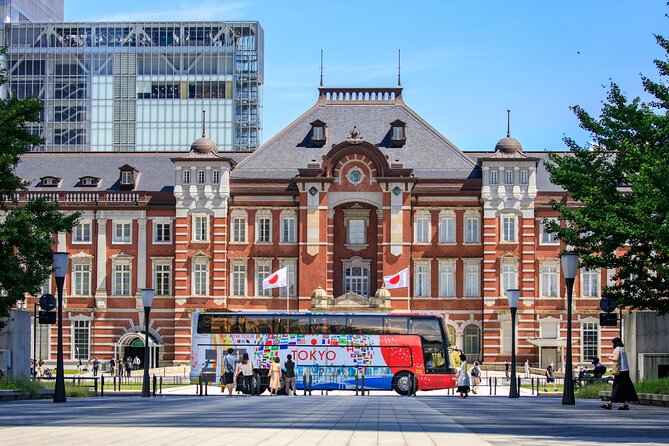
The route begins around Tokyo Station’s red-brick station building and the Marunouchi district. This is one of Tokyo’s most formal central areas, with broad streets and major office buildings surrounding the station.
From the upper deck, you get a useful first look at the scale of central Tokyo. The view is not the same as stopping to explore the station or its nearby streets, but it helps place the city’s business core on your mental map.
More Sightseeing Bus Tours in Japan
- Tokyo: Morning Sightseeing Bus Tour
★ 4.4 · 109 reviews - Departing from Takayama [Regular sightseeing bus] World Heritage Sites Shirakawago and Gokayama Ainokura
★ 4.5 · 137 reviews - Okinawa: Bus Tour to Churaumi Aquarium with Sightseeing
★ 4.3 · 20 reviews
Zojoji Temple and Tokyo Tower
The bus then passes Zojoji Temple and Tokyo Tower. This pairing is one of the most memorable contrasts on the route: a traditional temple setting beside one of Tokyo’s best-known modern towers.
The open top helps here because you can look up without the obstruction of a normal bus roof. Still, traffic and road position affect what you see, so keep your eyes moving rather than waiting for one perfect photo.
The audio system should provide context as the bus approaches each area. It uses GPS to trigger information according to the bus location and adjusts to road conditions. In practice, the timing may not always feel exact. One useful tip is to listen for the general area being described instead of expecting every sentence to line up with a building at the precise second.
Shibaura and the first Rainbow Bridge crossing
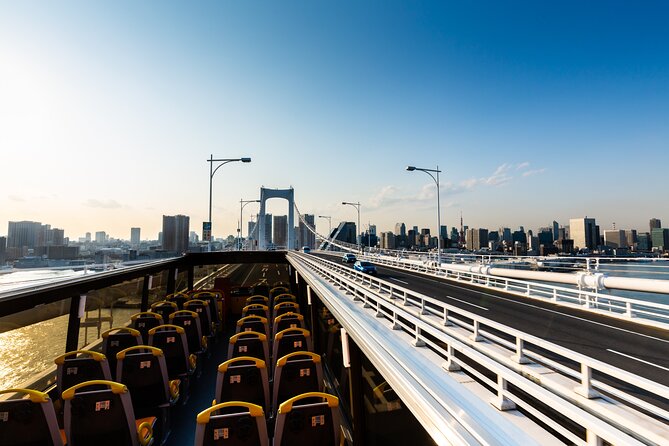
The Bay Course continues toward Shibaura and the first level of Rainbow Bridge. This is where the ride shifts from central streets to a broader waterfront setting.
Tokyo Bay views give your eyes more room after the dense city center. The bridge itself is a major visual feature, and an open-top bus gives you a clear upward and outward view as you approach and cross it.
The experience is still a continuous ride, not a photo stop. If you want carefully composed pictures, sit where you have the clearest side view and keep your camera ready. Selfie sticks are not allowed, and umbrellas are also prohibited on the vehicle.
Fuji TV Building and the Statue of Liberty
On the Odaiba side, the route passes the Fuji TV Building and the Statue of Liberty. The Fuji TV building is easy to recognize by its unusual round structure, while the Statue of Liberty gives the waterfront an unexpected visual twist.
This section is useful for seeing how Tokyo has developed its bayfront districts. You will not have time to visit the attractions during the ride, but you can mark Odaiba for a separate outing if the area catches your interest.
Odaiba Seaside Park and the second Rainbow Bridge crossing
Odaiba Seaside Park offers another change of pace, with water views and a more open setting than the central wards. The ride then heads back across Rainbow Bridge on its second level before continuing toward Shiodome and Ginza.
The two bridge sections help make the Bay Course feel more than a standard downtown circuit. You see the bridge and bay from different parts of the route, though traffic can affect the exact timing.
Shiodome and Ginza
The final stretch passes through Shiodome and Ginza. Shiodome is known for its cluster of tall buildings, while Ginza brings the ride back to one of Tokyo’s best-known shopping districts.
Ginza is especially useful as a point of reference. You can return later for department stores, dining, and central-city walks. From the bus, though, it is an overview rather than a full visit.
City Course: the central Tokyo circuit
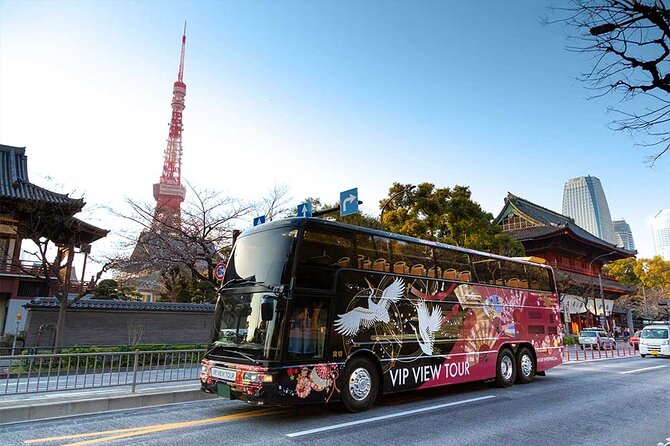
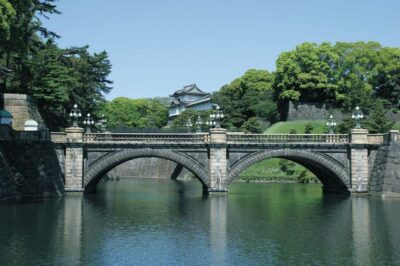
The City Course keeps closer to Tokyo’s central districts. It passes the Imperial Palace, Tokyo Midtown, Roppongi, Tokyo Tower, and Ginza.
This route may suit you better if your main goal is central Tokyo rather than the bayfront. The Imperial Palace gives the route a formal historic setting, while Tokyo Midtown and Roppongi show the city’s modern commercial side.
The City Course also includes Tokyo Tower and Ginza, so you still get two of the most recognizable names on the Bay Course. The tradeoff is that you do not get the same emphasis on Rainbow Bridge, Odaiba, and Tokyo Bay.
Because the published details for this route are less extensive, confirm the exact departure and route choice when booking. Road traffic can cause minor time changes or route adjustments without advance notice.
How the GPS audio guide works

The audio system is automatic. GPS tracks where the bus is and starts sightseeing information for the area, with commentary available in Japanese, English, Chinese, French, Korean, Vietnamese, and Thai.
That is a strong feature for an inexpensive city ride. You do not need to follow a live guide’s speech or depend on one language. The system is also designed to respond to traffic and changing road conditions, which helps keep the information relevant.
You should bring earphones with a standard 3.5mm mini plug. If you do not have a suitable pair, optional earphones are available for 100 yen. The tour does not include a live guide, so the audio is your main source of sightseeing information once the bus leaves.
The commentary is not perfect in every moment. You might find that a recording finishes before the sight is fully visible, or that music repeats between sections. Treat the audio as background context, then use your own eyes to take in the city. The ride remains worthwhile even when the timing is a little loose.
Open-top views and Tokyo weather

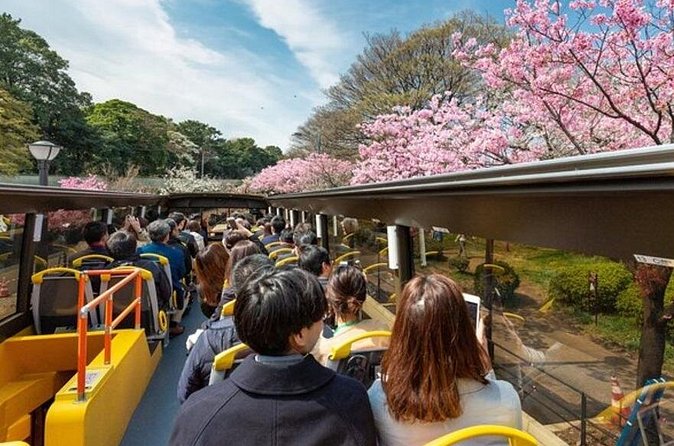
The open deck is the reason to choose this experience instead of a regular bus. You can look above street level, see more of the skyline, and feel the change from central streets to the bayfront.
Tokyo weather can change the experience. The tour operates in rain unless conditions become extreme, such as a typhoon. If it rains, the open top may be closed. That means you should not book this solely for an open-air ride during a doubtful forecast.
Dress for exposure to the weather and keep valuables with you. Food, smoking, selfie sticks, and umbrellas are not allowed on the vehicle. These rules are practical: umbrellas are awkward and unsafe on an open bus, and loose items can cause problems in the wind.
The bus holds one piece of luggage per person, provided it is manageable. Luggage stored in the trunk cannot be reached during the ride. The maximum combined height, width, and depth for stored luggage is 155 centimeters, so keep passports, cameras, medicines, and other valuables with you.
Who gets the best value from the $11.71 price
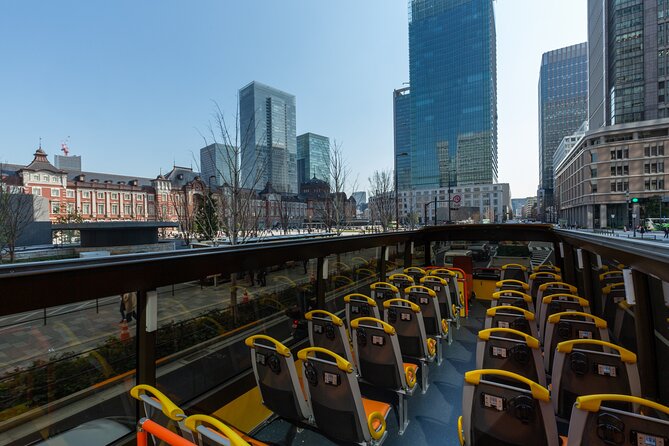
The low fare makes this an easy add-on for several types of visitors. If you have only one day in Tokyo, the ride can show you which districts you want to explore on foot. If you have just arrived after a long flight, it offers a relaxed first look without asking you to navigate a complicated route.
Families and couples may also like the simple format. You sit, look around, and let the city pass by. Most people can participate, and the meeting point is near public transportation.
I would be more cautious if you want in-depth history, frequent photo stops, or direct access to attractions. You cannot get off at Tokyo Tower, Zojoji Temple, Ginza, Odaiba, or the Imperial Palace. You also should not confuse the tour with a hop-on, hop-off service.
At this price, the value lies in coverage and convenience. A normal sightseeing bus ride may not explain every detail perfectly, but it can save you from spending your first hours in Tokyo simply trying to understand where the main areas are.
Timing, cancellation, and small details that matter
The ride lasts approximately one hour and 10 minutes. Schedules can shift slightly because of weather, traffic, or other unexpected conditions.
Free cancellation is available if you cancel at least 24 hours before the local start time. Changes made within 24 hours are not accepted, and late arrival does not qualify for a refund. If the minimum number of participants is not reached and the activity is canceled, you will be offered another date or experience, or a full refund.
Contact support may not be available outside Monday through Friday, 9:30 a.m. to 6 p.m. Japan time. For that reason, solve meeting-point questions before the day of the ride rather than waiting until the last minute.
Should you book this Tokyo bus ride?
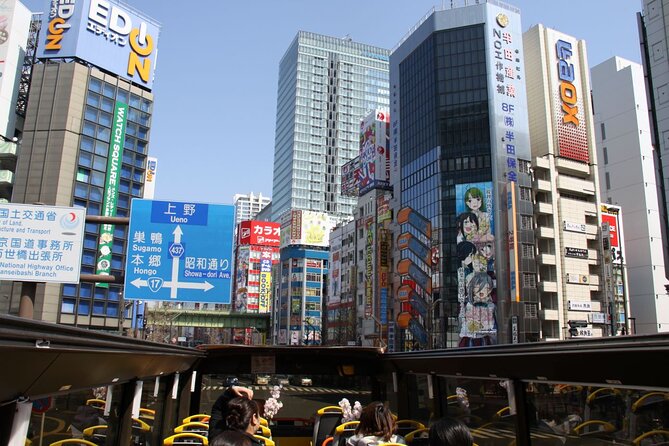
Book it if you want a low-cost orientation to Tokyo, especially on your first day or when you have limited time. Choose the Bay Course for Rainbow Bridge, Odaiba, Tokyo Bay, and the broadest mix of city scenery. Choose the City Course if the Imperial Palace, Roppongi, Tokyo Midtown, Tokyo Tower, and Ginza matter more.
Skip it if you expect to explore each attraction, leave the bus, or receive a detailed live commentary. The audio can be slightly out of sync, and the repeated music may bother some people.
For everyone else, this is a pleasant way to get your bearings. Keep your expectations clear, arrive early, bring compatible earphones, and treat the ride as a scenic introduction rather than a full day of sightseeing.
FAQ
How long does the open-top bus tour last?
The ride lasts approximately one hour and 10 minutes.
Where does the tour start and finish?
It starts and ends at Tokyo VIP Lounge at 1-chome 5-9 Yaesu, Chuo City, near Tokyo Station.
Is this a hop-on, hop-off bus?
No. This is a continuous sightseeing ride, and you cannot get off at the attractions during the route.
What languages are available through the audio guide?
The GPS audio guide is available in Japanese, English, Chinese, French, Korean, Vietnamese, and Thai.
Do I need to bring earphones?
The audio guide uses a 3.5mm mini plug. Optional earphones can be purchased for 100 yen if needed.
Does the bus run in the rain?
The tour operates in rain unless extreme weather, such as a typhoon, leads to cancellation. If it rains, the open top may be closed.
How early should I arrive?
You should check in 20 to 40 minutes before departure. The bus leaves on time and cannot wait for late arrivals.
More Sightseeing Bus Tours in Tokyo
- Rome: City Sightseeing Hop-on Hop-off Bus with Audioguide
★ 4.0 · 16,045 reviews - Barcelona: City Sightseeing Hop-On Hop-Off Bus Tour
★ 4.4 · 10,061 reviews - City Sightseeing London Hop-On Hop-Off Bus & Bookable Extras
★ 4.4 · 7,374 reviews - Hamburg: Line A Sightseeing Hop-On Hop-Off Bus Tour
★ 4.6 · 6,958 reviews
More Open-Top Bus Tours in Tokyo
- Rome: Big Bus Hop-on, Hop-off Open-Top Sightseeing Tour
★ 4.1 · 9,537 reviews - Savannah Hop-On Hop-Off Trolley Tour
★ 4.5 · 6,527 reviews - Prague: Sightseeing Dinner Cruise on Open-Top Glass Boat
★ 4.4 · 6,314 reviews - New York: Hop-on Hop-off Sightseeing Tour by Open-top Bus
★ 4.2 · 5,863 reviews
Just added around Tokyo
- Tokyo: A Half-Day Trip Bus Tour in the Morning★ 4.6 · 236 reviews
- 3-Row Luxury Bus Tour to Mt. Fuji, Lake Kawaguchi from Tokyo★ 4.3 · 3 reviews
- Tokyo: 1 Day Bus Tour with Meiji-Jingu,Odaiba,lunch&Skytree★ 4.6 · 156 reviews
- Full Tokyo: Meiji Shrine, Imperial Palace, Asakusa & Skytree★ 4.4 · 7 reviews
- Tokyo: Mount Fuji Views and KABA Amphibious Bus Day Tour★ 5.0 · 4 reviews
- Tokyo: Morning Sightseeing Bus Tour★ 4.4 · 109 reviews
- Tokyo: Open Top Panoramic Sightseeing Bus with Audio Guide★ 3.8 · 254 reviews
- Tokyo: 60min Panoramic Open Top Bus Tour with Audio Guide★ 4.0 · 40 reviews
Tokyo Bus Tours, compared.
Mt Fuji and Hakone 1-Day Bus Tour Return by Bullet Train
Read our review →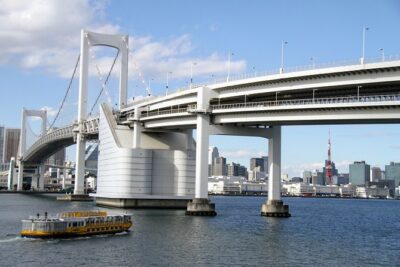
Meiji Shrine, Asakusa, Skytree Bus Tour and Cruise
Read our review →
Mt Fuji & Hakone Cruise, Drum Show Bus 1 Day from Tokyo
Read our review →
Mt Fuji and Hakone 1-Day Bus Tour Return by Bus
Read our review →
Mt.Fuji & Lake Kawaguchiko 1-Day Bus Tour w/Optional Lunch
Read our review →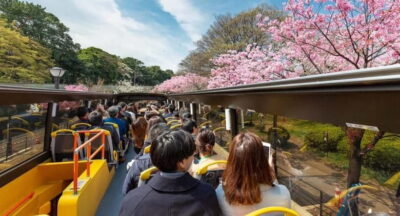
Open Top Panoramic Sightseeing Bus with Audio Guide
Read our review →