REVIEW · CITY TOURS
Tbilisi: 45-Minute City Tour by Retro Bus
Tbilisi’s best quick introduction may be this 45-minute retro bus ride, which sweeps from the old town through major avenues, bridges, and landmarks without asking you to climb hills or decode the city map. You’ll see the sulfur baths, Freedom Square, Dry Bridge, the House of Justice, and the Bridge of Peace while a local guide fills in the story.
I like the low $10 price and the way the route covers far more ground than a short walk. I also like the easy first-day format, especially with guides such as Gari, Stas, and Eric praised for clear explanations and careful driving. The main catch is time: one booking received only about 20 minutes and felt rushed, while another found the tour short on information. Confirm the departure and allow for a brisk overview, not a full city tour.
Key points at a glance
- A quick city orientation: In 45 minutes, you move from Jan Shardeni Street through old Tbilisi, central squares, main avenues, bridges, and riverside sights.
- A retro-style ride: The cozy vehicle gives you a comfortable way to see the city, though one tour detail calls it an electric car rather than a bus.
- Strong guide feedback: Gari, also referred to as Gary, Stas, and Eric are praised for informative commentary, safe driving, and a friendly approach.
- Useful photo stops: Dry Bridge allows time for photographs, a walk, and shopping, while several other landmarks receive short sightseeing stops.
- English and Russian commentary: You can book the tour with a live guide speaking either language.
- A very affordable sampler: At $10 per person, it is good value if you want orientation, but not if you expect extended visits or detailed history at every stop.
Why this short Tbilisi tour works
Tbilisi can feel confusing at first. The old town spreads around uneven streets, the river cuts through the center, and newer districts stretch well beyond the lanes most people explore on foot. This ride gives you a fast mental map.
The route begins near Sioni Church and Meidan Square at the start of Jan Shardeni Street, a useful location in the old town. From there, you move through a broad selection of central sights rather than staying in one historic pocket.
That matters because the tour is not built around one monument. It is a moving introduction to Tbilisi’s contrasts: old streets beside modern civic buildings, traditional baths beside glass architecture, and historic avenues beside busy traffic routes.
You should think of the ride as a first look. It helps you decide where to return later on foot. It does not give you enough time to enter major buildings, browse every market stall, or study each landmark in detail.
The strongest part of the experience is its efficiency. In less than an hour, you cover places that could take much longer to connect on foot. If you have only a short stay, or if your first day is better spent getting oriented, that efficiency has real value.
A few more bus tours around the world worth a look
- Rome: City Sightseeing Hop-on Hop-off Bus with Audioguide
★ 4.0 · 16,045 reviews - Barcelona: City Sightseeing Hop-On Hop-Off Bus Tour
★ 4.4 · 10,061 reviews - City Sightseeing London Hop-On Hop-Off Bus & Bookable Extras
★ 4.4 · 7,374 reviews
Jan Shardeni Street and the old-town start
The meeting point is at the beginning or end of Jan Shardeni Street, near Sioni Church and Meidan Square. Arrive 15 minutes early because the bus leaves on time.
This starting point places you in one of Tbilisi’s most central historic areas. It is also practical for fitting the ride around other plans in the old town. You can meet the guide, settle into the retro-style vehicle, and begin with the streets closest to Tbilisi’s traditional core.
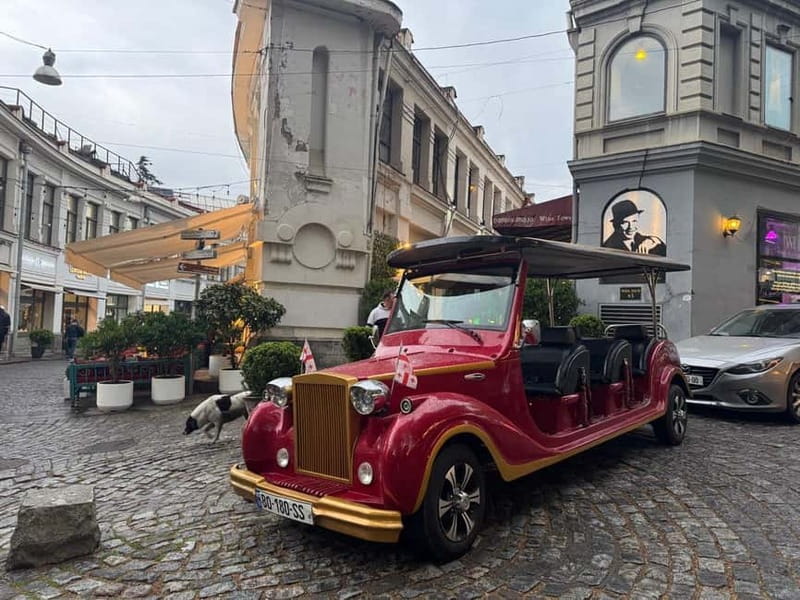
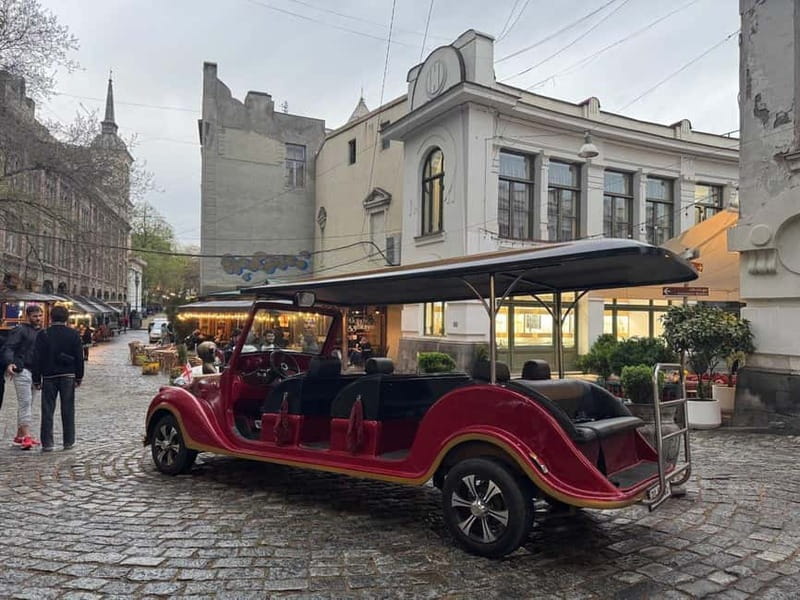
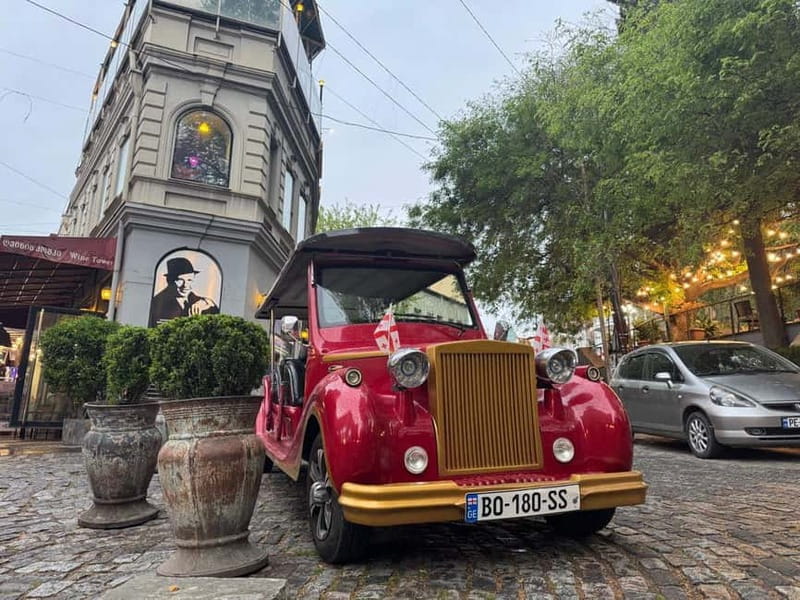
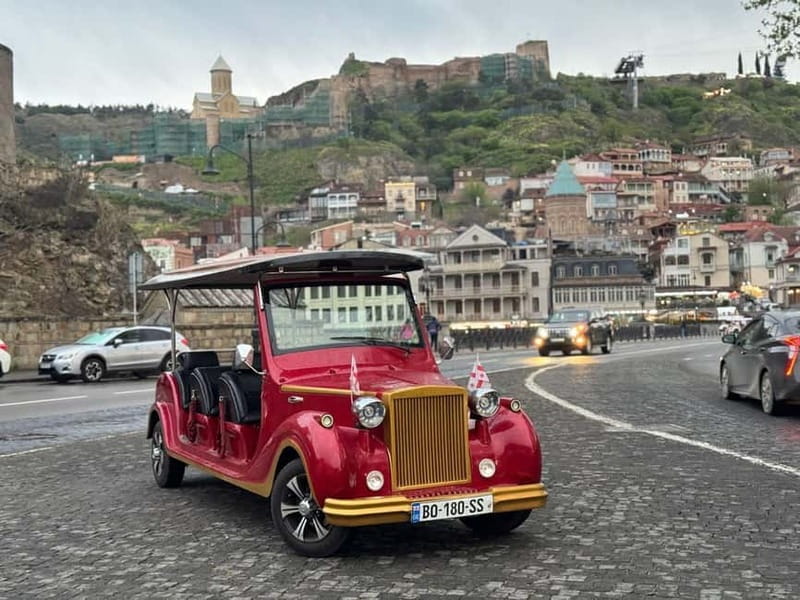
The vehicle is described as a cozy retro-style bus. One part of the tour information refers to an electric car, so the exact description is a little inconsistent. The important point is that you are riding in a small, retro-looking sightseeing vehicle rather than joining a standard full-size coach.
That style suits the tour. You get a closer feel for the streets, and the vehicle itself adds some character to what could otherwise be a plain transfer around town. At the same time, a compact vehicle may mean limited space, so do not expect the room of a large sightseeing bus.
Europe Square, Kote Afkhazi Street, and Freedom Square

The route includes Europe Square and 5th Century Street, also known as Kote Afkhazi Street. These early sights help connect the old town with Tbilisi’s wider story.
Kote Afkhazi Street is especially useful as a point of orientation because it leads through the historic center toward Freedom Square. From the vehicle, you get a sense of how the old quarter connects to the city’s main civic and commercial spaces.
Freedom Square is one of the key stops on the route. The guide provides a short visit and sightseeing period, listed at about eight minutes. That is enough to hear the basic story, look around, and take in the square, but not enough for a long walk or a detailed examination of every building.
I would pay close attention here if you are using the tour to plan the rest of your stay. Freedom Square is a central reference point, and knowing its location makes later walks around the city easier.
The short timing is also a reminder to keep your expectations in check. You are not being given a full historical lecture at each stop. You are getting compact commentary, quick views, and a route designed to keep moving.
Rustaveli Avenue, Heroes Square, and Queen Tamar Avenue
The ride continues along Rustaveli Avenue, Heroes Square, and Queen Tamar Avenue. This section shifts the mood from old Tbilisi to the city’s broader modern center.
Rustaveli Avenue is one of the most important streets in the capital, and seeing it from the bus helps you understand the scale of central Tbilisi. Instead of viewing the city only through narrow old-town lanes, you see a major avenue linking cultural and civic areas.
Heroes Square and Queen Tamar Avenue add more of that wider city perspective. The value here is not a single photo stop. It is the chance to see how Tbilisi extends beyond the old quarter.
Several people who enjoyed this experience liked the amount of ground covered. That is exactly where the route earns its $10 price. A walking tour focused only on the old town would not give you this same quick view of the city’s different districts.
Traffic can affect the pace. One guide was praised for driving safely when other motorists were behaving unpredictably, which is worth noting in a city tour that spends much of its time on active roads. The bus may move quickly between sights, but careful driving matters more than a few extra minutes.
Same city, a different seat on the bus:
- Mt Fuji and Hakone 1-Day Bus Tour Return by Bullet Train
★ 5.0 · 26,383 reviews - Barcelona: 24 or 48-Hour Hop-On Hop-Off Bus Tour
★ 4.4 · 20,872 reviews - London: Warner Bros. Studio Harry Potter Tour & Branded Bus
★ 4.7 · 19,194 reviews - Amsterdam: Zaanse Schans, Edam, Volendam & Marken Bus Tour
★ 4.6 · 15,034 reviews
Aghmashenebeli Avenue and the old and new city
Aghmashenebeli Avenue is one of the more useful parts of the tour because it shows another side of Tbilisi. The route includes both old and new sections of the avenue, allowing you to compare different streetscapes without arranging separate transport.
The listed sightseeing period here is about ten minutes. That is one of the longer portions of the itinerary, so you may get more explanation and a better sense of the avenue’s character.
I like this part for the way it broadens the experience beyond the most familiar postcard sights. Tbilisi is not only churches, baths, and bridges. Its identity also comes from long avenues, changing neighborhoods, and the close presence of old and modern architecture.
Still, this is a ride-by visit rather than a slow architectural walk. If Aghmashenebeli Avenue interests you, mark it as a place to return to later. The bus gives you an introduction, then leaves you with enough information to decide if you want more time there.
Dry Bridge Market: the best chance to pause
Dry Bridge Market is the clearest break in the moving tour. The itinerary allows about ten minutes for photographs, free time, shopping, and walking.
That short pause makes the market one of the most useful stops for your camera. You can step out, take pictures, and get a quick taste of the market atmosphere instead of seeing everything through a window.
Do not plan a serious shopping session in ten minutes. The stop is long enough for a look and perhaps a quick purchase, but it is not designed for careful browsing. If you enjoy markets, you will likely want to return independently with more time.
This is also a good place to ask your guide a question. The guide commentary is live, and several guides have been praised for answering questions and adding details along the way. The experience is better when you treat the ride as an introduction rather than simply a series of photo points.
The House of Justice and Baratashvili Bridge
The route next includes the House of Justice and Nikoloz Baratashvili Bridge. These sights bring you back toward the river and show more of Tbilisi’s modern public face.
The House of Justice is a striking stop because it represents the city’s newer civic architecture. It contrasts well with the historic streets and sulfur baths seen earlier in the route.
Baratashvili Bridge offers another change of view. Bridges are especially useful on a short city tour because they help you understand the river’s role in the layout of Tbilisi. You are not only looking at a structure, you are seeing how different parts of the city connect.
The stop is listed at about seven minutes. As with the other brief visits, you should expect a guided look and sightseeing rather than a long walk across the bridge.
Bridge of Peace and the sulfur-bath district
The Glass Bridge, usually called the Bridge of Peace, is one of the most recognizable modern sights in Tbilisi. The tour includes a very short visit, listed at about three minutes.
That is enough for a quick view and a photograph, but the timing is tight. If you want to cross the bridge slowly, study its design, or spend time beside the river, plan to return after the tour.
The route also includes the cable car area and the Abanotubani district, home to Tbilisi’s famous sulfur baths. Abanotubani is one of the city’s most distinctive areas, and it connects directly to the founding story of Tbilisi.
The city dates back more than 1,600 years, with its foundation traditionally linked to the area’s warm sulfur springs. You get only a brief introduction here, but seeing the bath district in context helps explain why this part of Tbilisi matters.
The cable car stop is extremely short, listed at about two minutes. Treat it as a visual reference, not a cable-car ride. The tour does not include a cable-car journey or a bath visit.
What the guide adds to the ride
A retro vehicle is fun, but the guide makes the difference between a useful tour and a simple drive around town. Commentary is available in English or Russian, and the guide stays with you during the route.
Gari, also called Gary in the tour information, has been singled out for passion, interesting explanations, and a friendly manner. Stas has also been praised for making the ride better than expected, while Eric has been noted for explaining the streets and districts clearly.
You may not have one of those specific guides, but these details show the kind of service to expect: local commentary, answers to questions, and information delivered while the vehicle moves through the city.
The quality can vary with the guide and the pace of the day. One person found the explanation detailed, while another felt there was not much information. If you want a long, scholarly account of Tbilisi, choose a longer walking tour. If you want a friendly overview with the main landmarks pointed out, this format is more suitable.
Is $10 good value?
At $10 per person, the tour is inexpensive for a live-guided city introduction. You are paying for transport, commentary, and access to a route that covers old Tbilisi, central avenues, market areas, bridges, and the sulfur-bath district.
The price is strongest when you use the ride as a planning tool. You can note which streets deserve a second visit, locate the main squares, and understand the city’s basic layout before setting out on foot.
The value drops if you expect every stop to be a proper visit. The itinerary includes many locations, but several stops last only a few minutes. The $10 buys breadth, not depth.
There is also a timing concern. The advertised duration is 45 minutes, but one booking recorded roughly 20 minutes and felt hurried. That appears to be an exception rather than the stated plan, but you should leave some flexibility around the ride and confirm the departure details when booking.
Who should book this retro bus tour?
I would recommend it for a first morning or first afternoon in Tbilisi. It suits you if you want a quick orientation, prefer not to walk long distances, or have limited time in the capital.
It is also useful for families, older visitors, and anyone who wants to see the city without tackling every street on foot. One review described it as a good choice for people with mobility issues, but the official information says it is not suitable for wheelchair users. If you use a wheelchair, confirm the vehicle and boarding arrangements before booking.
The ride can also work for people who already live in Tbilisi but want a fresh overview. One local passenger had lived in the city for a year and still found new sides of Tbilisi through the route.
I would skip it if your main goal is detailed history, long market browsing, or time inside attractions. A walking tour or private guide would give you more depth. This is a compact city sampler, and it succeeds best when you use it that way.
Practical details before you go
Meet at Jan Shardeni Street number 4, near Sioni Church and Meidan Square. Be there 15 minutes early because the tour starts on time.
Bring a camera. The route includes several bridges, squares, avenues, the Dry Bridge Market, and the sulfur-bath district, so you will have plenty of quick photo opportunities.
The tour lasts 45 minutes and returns to the same Jan Shardeni Street meeting point. English and Russian live commentary are available.
Free cancellation is offered up to 24 hours before departure, and you can reserve now while paying later. Starting times vary, so check availability for your date.
Should you book it?
Book this tour if you want the fastest inexpensive overview of Tbilisi and like the idea of seeing the city from a characterful vehicle. The route covers a surprising amount, and strong guide feedback points to a friendly, safe, and informative experience on a good day.
Do not book it expecting a deep historical tour or generous time at every sight. The itinerary moves quickly, and the reported short running time is worth keeping in mind.
For $10, I see it as a smart first look. Take the ride early in your stay, note the places that catch your eye, then return to the sulfur baths, Dry Bridge, Bridge of Peace, or Aghmashenebeli Avenue on foot with more time.
FAQ
Where does the Tbilisi retro bus tour begin?
It begins at Jan Shardeni Street number 4, near Sioni Church and Meidan Square.
Where does the tour finish?
The ride returns to the starting point at Jan Shardeni Street number 4.
How long does the tour last?
The stated duration is 45 minutes. One booking reported receiving about 20 minutes, so allow some flexibility and confirm the departure details.
What languages does the guide speak?
Live guide commentary is available in English and Russian.
What vehicle is used?
The experience is described as a cozy retro-style bus. One part of the tour information refers to an electric car, so the exact vehicle wording is inconsistent.
What landmarks are included?
The route includes Europe Square, Kote Afkhazi Street, Freedom Square, Rustaveli Avenue, Heroes Square, Queen Tamar Avenue, Aghmashenebeli Avenue, Dry Bridge, the House of Justice, Baratashvili Bridge, the Bridge of Peace, the cable-car area, Abanotubani, and the sulfur baths.
Is Dry Bridge Market a shopping stop?
Yes. The stop includes time for photographs, free time, shopping, and walking. The listed duration is about ten minutes.
Can I ride the Tbilisi cable car during the tour?
No cable-car ride is listed. The tour includes a very short visit to the Tbilisi cable-car area.
Is the tour suitable for wheelchair users?
The official information says it is not suitable for wheelchair users. Check directly with the provider if you need specific boarding assistance.
What should I bring?
Bring a camera. You should also arrive 15 minutes early because the tour starts on time.
Just added around the world
- 2 Days 1 night Sapa Tour from Hanoi by Limousine/Sleeper bus★ 4.5 · 6 reviews
- Halong Bay Luxury Cruise Day trip: Buffet lunch, limousine bus★ 5.0 · 2 reviews
- Hoa Lu – Tam Coc Luxury Small group 1D: Limousine bus, biking, boat trip, Lunch★ 5.0 · 6 reviews
- Halong Bay Luxury cruise Day trip: Buffet Lunch, Limousine bus★ 5.0 · 25 reviews
- Halong bay Luxury Cruise Day trip: Buffet lunch & Limousine bus★ 5.0 · 3 reviews
- Limousine Bus Transportation from Hanoi to Sapa★ 5.0 · 2 reviews
- From Hanoi- Halong Bay 1 Day Save Cost With Limousine Bus Option★ 5.0 · 8 reviews
- Halong bay Luxur Cruise Day trip: Buffet lunch & Limousine bus★ 5.0 · 21 reviews
City Tours, compared.

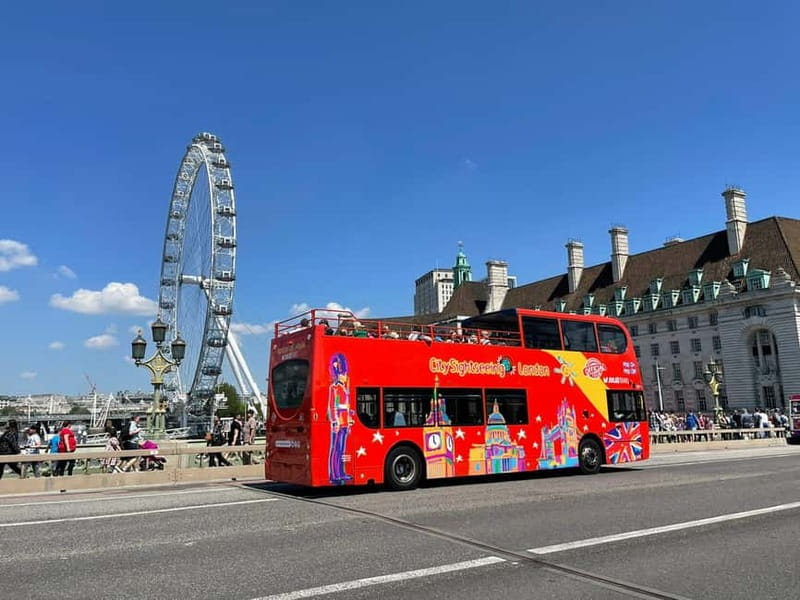
City Sightseeing London Hop-On Hop-Off Bus & Bookable Extras
Read our review →

City Sightseeing HOHO Bus Tour + Sunset & Night Tour
Read our review →
City Sightseeing Hop-On Hop-Off Bus with Audio Guide
Read our review →
City Sightseeing Rome Hop-On Hop-Off Bus Tour
Read our review →
City Sightseeing Barcelona Hop-On Hop-Off Bus Tour: 24 or 48-Hour
Read our review →