REVIEW · MORNING
Seat-In-Coach: Small Circuit tour with Sunrise at Angkor Wat
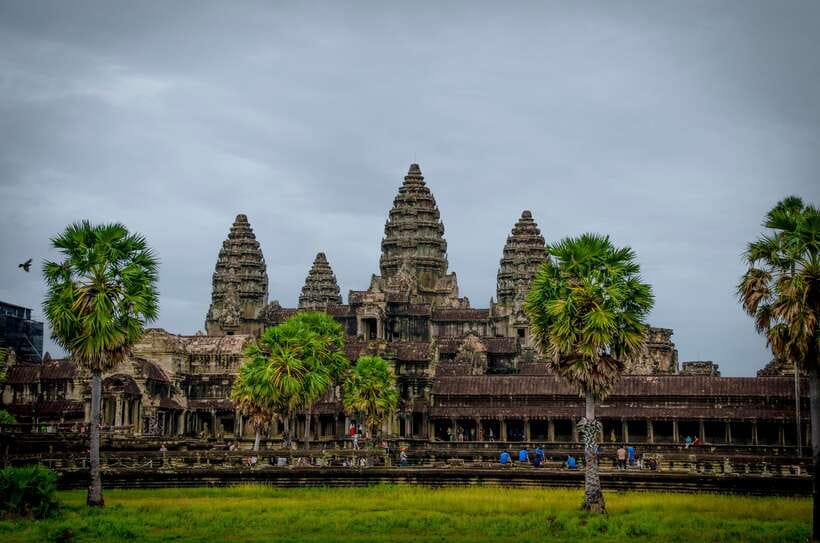
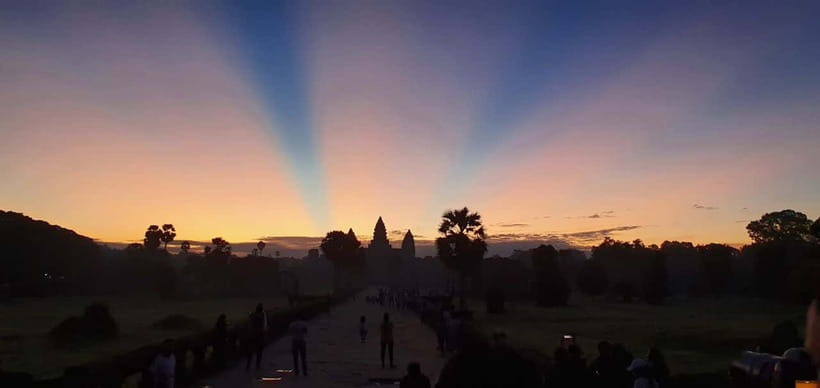
Sunrise at Angkor Wat gives this tour its big moment. You leave your hotel between 4:20 and 5:00 AM, enter the temple grounds before the heat builds, and watch the sky brighten behind one of Southeast Asia’s most famous monuments. Later, Bayon’s stone faces and Ta Prohm’s tree-covered ruins complete the classic three-temple route.
I like the small-circuit focus, which keeps the morning manageable instead of sending you racing through a long list of temples. I also like the practical help from guides such as Touch, Phylom, SoK, and Phyrom Hoeum, who are praised for picking good photo spots and keeping the pace moving.
The main catch is the early start and the extra temple fee. The tour costs $30, but you must add the one-day Angkor pass at $37, bringing the basic total to $67 per person before any food or personal spending. Sunrise also depends on the weather, so the sky may not deliver a perfect orange glow.
Key points to know before booking
- Sunrise begins the day at Angkor Wat: Hotel pickup runs between 4:20 and 5:00 AM, with the exact time depending on your location and availability.
- Three major temple stops keep the route focused: You visit Angkor Wat, Bayon in Angkor Thom, and Ta Prohm.
- The temple pass costs extra: Budget $37 for the one-day Angkor pass in addition to the $30 tour price.
- Photo help is a real strength: Guides including Phylom and Phyrom Hoeum are praised for finding useful angles and helping with photos.
- The tour ends around noon: You get a full morning in the park, then a transfer back to your hotel.
- Dress rules are strict: Wear trousers or a skirt covering the knees and a shirt covering the shoulders.
Why the sunrise start is worth the alarm
You will probably be awake before your normal holiday self feels ready to function. That is the price of seeing Angkor Wat in the cool early light, before the day becomes hot and the temple grounds grow busier.
Your guide collects you from your hotel lobby between 4:20 and 5:00 AM. The exact pickup time is not fixed in the information provided, so check your booking details closely. A punctual pickup matters here. A few extra minutes in bed can mean missing the best part of the morning.
After arrival, you purchase your Angkor temple pass and enter with the guide. The pass is not included in the tour price, and the listed cost is $37 for one day. This is an important bit of arithmetic: the advertised $30 tour is not your complete cost for the temple visit.
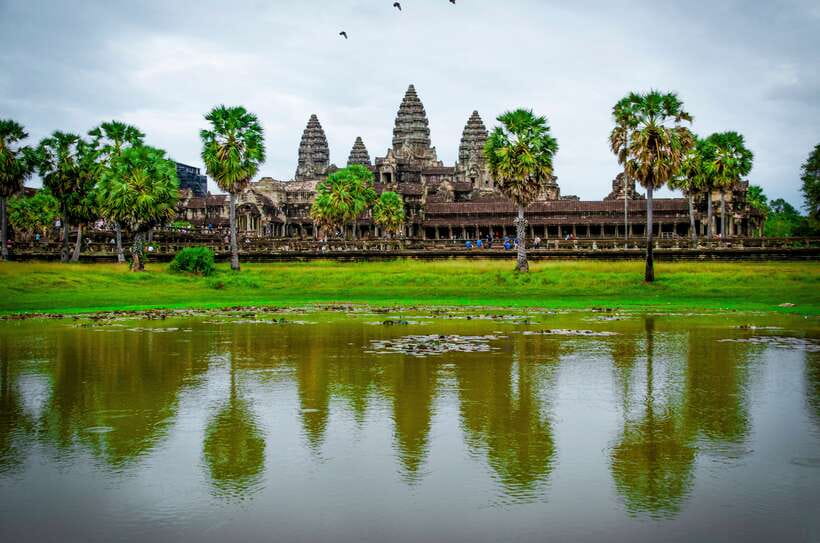
The sunrise view is weather-dependent. On a clear morning, the temple’s towers and reflection pool can make a striking picture as the sky changes color. On an overcast morning, the sunrise may be faint or nearly invisible. Even then, the early hour has one useful advantage: temperatures are lower than they will be later.
Bring water, wear comfortable walking shoes, and carry something light for the first cool part of the morning. The tour includes a refreshment drink and cold towel, which are small but welcome comforts once the sun is up.
More Morning Departures in the world:
- Yulara: Uluru Sunrise and Kata Tjuta Day Trip by Bus
★ 4.5 · 469 reviews - Tokyo: A Half-Day Trip Bus Tour in the Morning
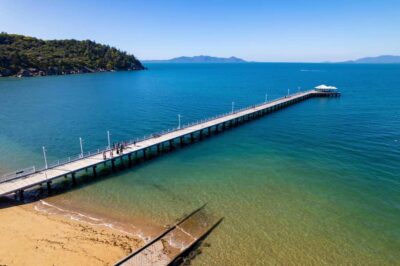
★ 4.6 · 236 reviews - Magnetic Island: Guided Bus Tour with Morning Tea
★ 4.8 · 129 reviews
Angkor Wat gives you the grand opening
Angkor Wat was built in the first half of the 12th century by King Suryavarman II. Its scale is the first thing you notice. The temple rises above the surrounding ground with a strong sense of order, and its long galleries, towers, and balanced layout explain why it is Cambodia’s most famous monument.
The tour gives you a broad introduction rather than an exhaustive study of every carving. That suits the seven-hour schedule. You have time to take in the major views, listen to your guide, and walk through the temple without spending the entire morning on one site.
The strongest guides add useful context without burying you in facts. Touch is praised for explaining religious themes and historical details, while Kim is described as giving enough information to set the scene and then allowing time for independent looking. That balance matters at Angkor Wat, where you need a moment to stop listening and simply look.
Photo advice is another practical benefit. Guides such as Phylom, SoK, and Phyrom Hoeum are noted for suggesting good angles and helping with creative pictures. You should not expect a private photographer, but a guide who knows where to position you can save time and help you avoid the most obvious crowding.
Do not expect the temple to feel empty. Angkor Wat is the main attraction in the park, and sunrise is a popular time to visit. The early start improves your chances of cooler conditions and better light, but it does not guarantee solitude.
Bayon and the famous 216 faces
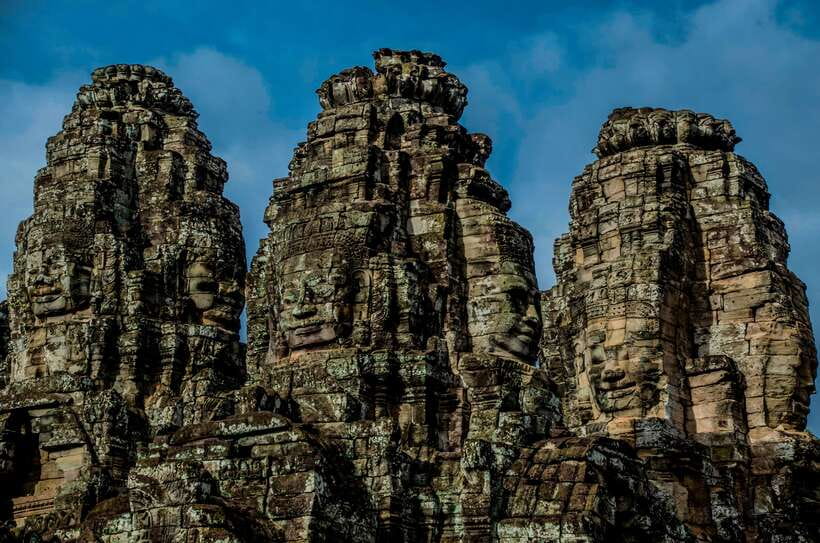
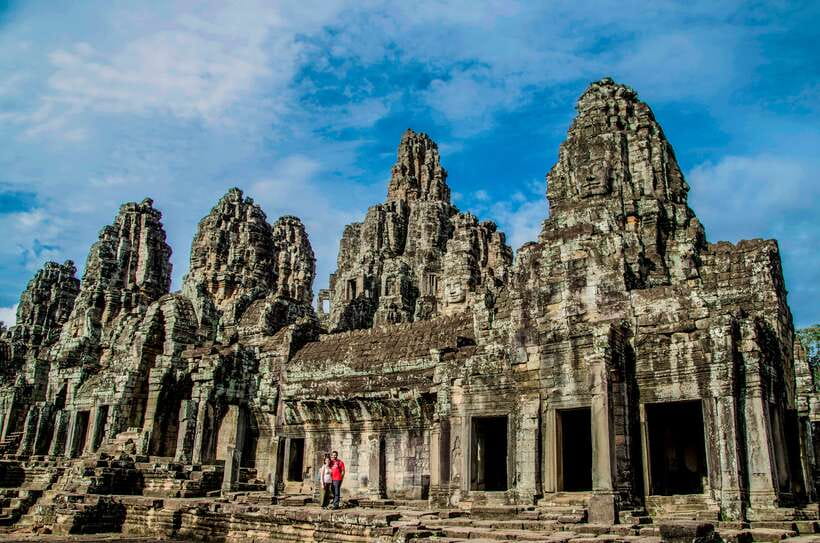
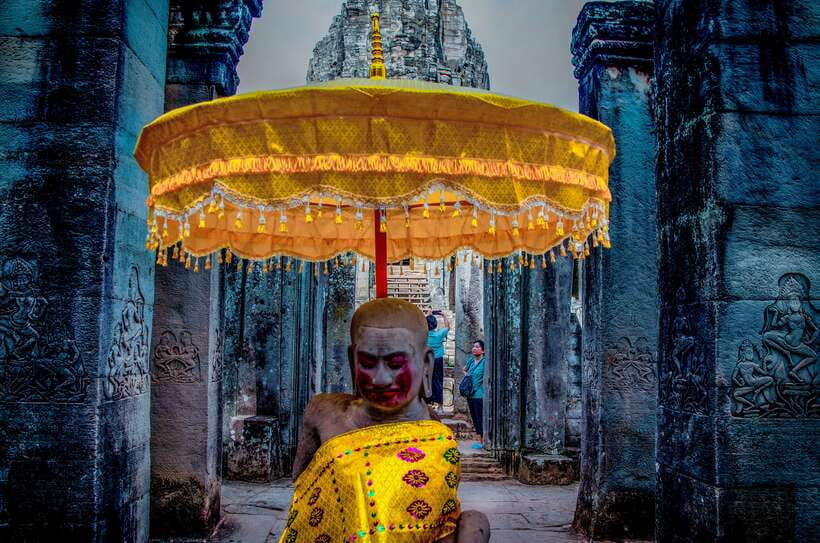
The morning continues to the Angkor Thom complex, where Bayon is the main stop. King Jayavarman VII built the temple in the latter part of the 12th century. Its towers carry large carved faces, giving Bayon a look that is unlike Angkor Wat’s formal symmetry.
The commonly cited figure is 54 towers with four faces on each tower, making 216 faces in total. As you move among the towers, faces appear from different heights and angles. The effect is more intimate and enclosed than the wide approach to Angkor Wat.
This is where a guide can save you from seeing Bayon as just a maze of gray stone. A good explanation helps connect the carvings to the temple’s religious purpose and the reign of Jayavarman VII. Touch is noted for following religious themes, while other guides are described as providing shorter explanations when that better fits the group.
The stop is also useful for photographs, but expect crowds at the best-known corners. Your guide may lead you toward less crowded angles, as several guides are praised for doing. Still, you will need to share the space and wait your turn at popular photo points.
The tour’s pace is designed to cover the major sights, not every passage. If you want a detailed architectural study of Bayon, a private or longer tour would give you more time. If you want the famous faces without spending half a day on one complex, this stop is well judged.
Ta Prohm brings the jungle atmosphere
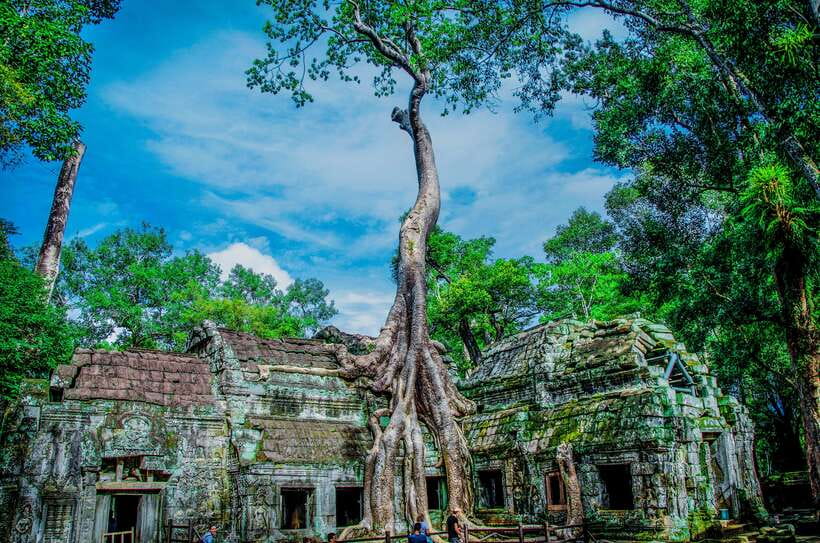
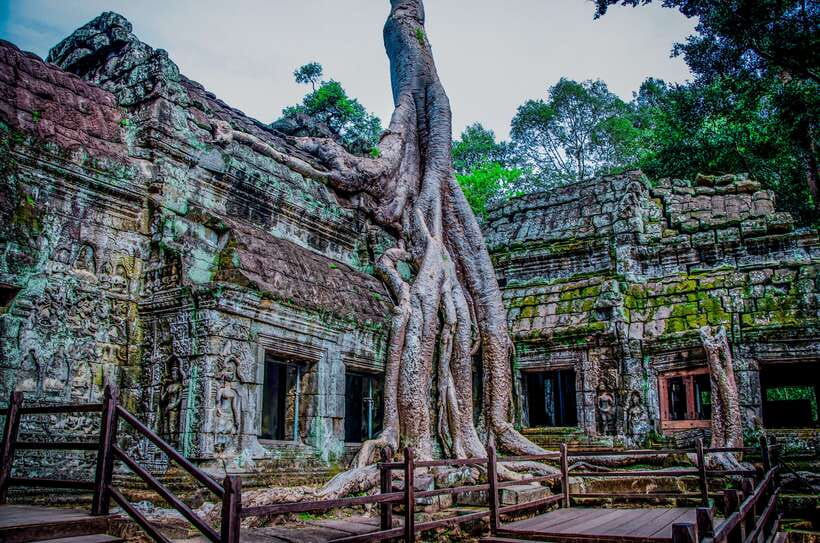
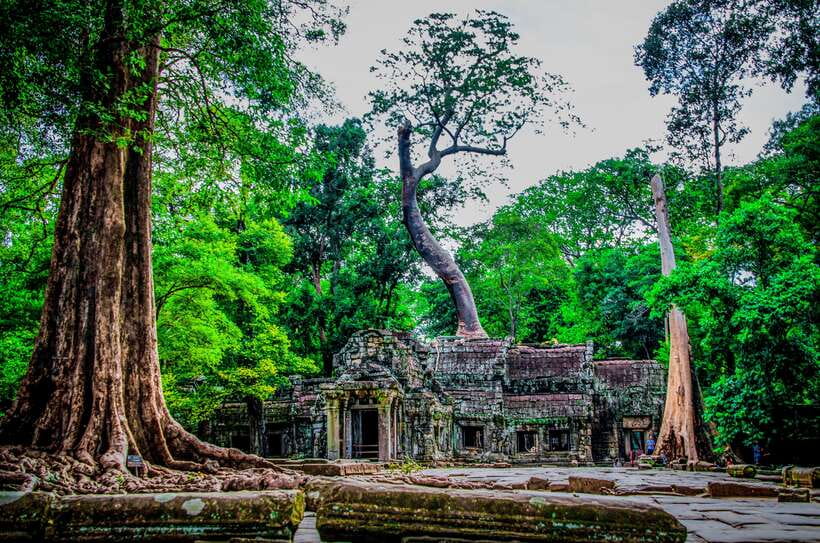
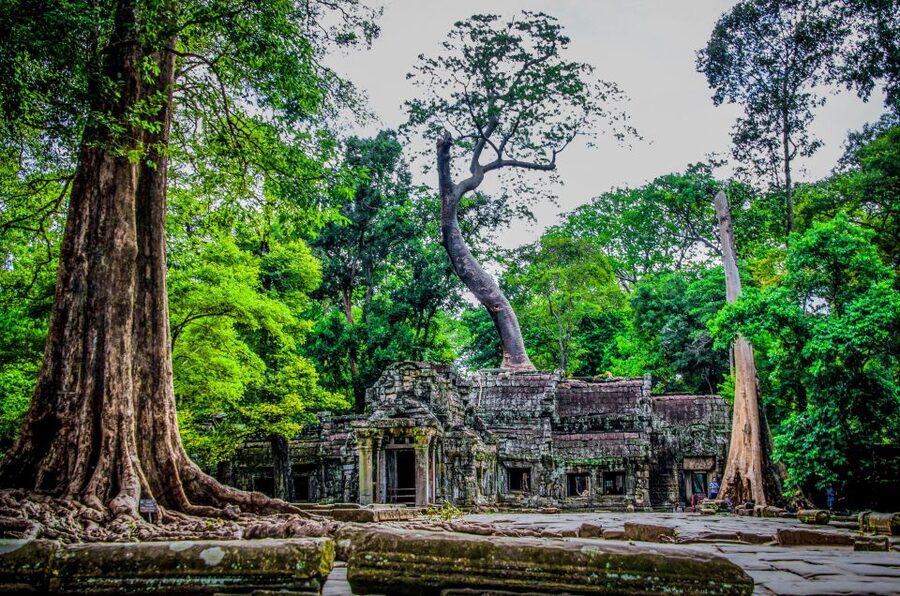
Ta Prohm is the final major temple stop and often the most immediately memorable after Angkor Wat. Trees and vines have grown through parts of the ruins, creating the look that earned the temple its jungle-temple reputation.
The site is famous for its appearance in Angelina Jolie’s Tomb Raider. That film connection brings extra attention, but Ta Prohm is more than a movie location. Its broken galleries, roots, and narrow stone passages show how strongly nature has taken hold of the old structure.
You will find plenty of photo opportunities here. The best-known tree-covered sections can become crowded, so patience helps. Guides who know the site can suggest alternative angles and help you take pictures without standing in the largest cluster of people.
Ta Prohm can also feel less orderly than Angkor Wat and less visually consistent than Bayon. That is part of its appeal, but it means you should watch your footing and pay attention to the guide’s route. The tour does not promise a long free period at every temple, so use the time well.
By finishing at Ta Prohm, the itinerary saves one of the most atmospheric locations for the end. You have already seen the grand monument and the carved faces. Ta Prohm changes the mood to something more enclosed and dramatic.
A few more bus tours around the world worth a look
- Mt Fuji and Hakone 1-Day Bus Tour Return by Bullet Train
★ 5.0 · 26,383 reviews - Barcelona: 24 or 48-Hour Hop-On Hop-Off Bus Tour
★ 4.4 · 20,872 reviews - London: Warner Bros. Studio Harry Potter Tour & Branded Bus
★ 4.7 · 19,194 reviews - Rome: City Sightseeing Hop-on Hop-off Bus with Audioguide
★ 4.0 · 16,045 reviews
A seven-hour schedule with a practical pace
The listed duration is seven hours, with the tour ending around 12:00 PM and a transfer back to your hotel. In practice, the morning is compact: pickup before dawn, sunrise, three temple areas, and a return before the strongest afternoon heat.
That schedule is one of the tour’s best features. You see the three headline temples without committing your entire day to Angkor Park. You can rest, eat, or make other plans after returning to Siem Reap.
The pace may feel active, especially if you want to photograph every doorway and carving. One account describes the tour as action-packed but worthwhile, while another found the timing comfortable and the visits long enough. The difference will depend on your group and how much time you spend taking pictures.
The tour is sold as seat-in-coach transportation, using a minivan or tour bus. It is not presented as a private car experience, so you should expect shared transport. Group size can vary. Some departures may feel very personal, while others may be less intimate.
You receive an English-speaking guide throughout the tour. The quality of the morning depends heavily on that guide. Touch, Kim, Phylom, SoK, and Phyrom Hoeum are among the names associated with especially strong explanations, friendly service, photo help, and good timing. English ability may vary by guide, and one account found some explanations hard to understand.
What the guide adds, and where expectations matter
A guide is particularly useful at Angkor because the buildings are large and the sites can blur together after several hours. Your guide can explain who built each temple, point out religious themes, organize the route, and help you find photo locations.
The best reports of this tour praise guides who are energetic without rushing the group. Phylom is described as especially lively and helpful with photographs. Phyrom Hoeum is praised for friendliness, timing, and photo ideas. SoK is noted for clear explanations and organized pictures, while Touch is praised for religious context and strong scheduling.
You should also know that the tour may not provide a full academic lecture at every stop. One account found the explanations fairly basic, with more free time for looking around. That may be ideal if you dislike constant commentary. If temple history is your main reason for visiting, ask questions as you go and make clear that you want more detail.
A guide can also help when someone becomes separated from the group. One account describes a guide making a serious effort to locate a missing group member. That kind of attention matters in a large park with many paths and tour groups.
The real price: $67 before food
At $30, the tour price looks low for a seven-hour guided morning with transport. But the Angkor temple pass costs another $37, so your essential total is $67 per person.
That remains reasonable if you value transport, a guide, and a carefully timed route. Organizing sunrise transport, finding the right temple entrances, and choosing the order of stops can be awkward on your own, especially before dawn. The tour removes much of that planning.
Food is not included in the listed package. A morning stop at a restaurant may be part of the schedule on some departures, but you should not treat breakfast or lunch as included. Bring some money for food and do not assume a restaurant will have the same prices as central Siem Reap. One reported stop was described as pleasant but more expensive than local food nearby.
The package does include a refreshment drink and cold towel. Transportation, the English-speaking guide, and visits to Angkor Wat, Angkor Thom, and Ta Prohm are also included. The temple pass is the major extra cost.
Free cancellation up to 24 hours before the start and reserve-now, pay-later booking make the purchase less risky if your plans are still shifting. Check the current availability for the start time before booking.
Dress, heat, crowds, and other practical matters
Angkor’s dress code requires clothing that covers the knees and shoulders. Wear long trousers or another garment covering the knees, along with a shirt covering the shoulders. This is not a place to rely on a quick scarf adjustment at every entrance.
The heat builds fast after sunrise. The early start helps, but you are still walking through large temple areas in a tropical climate. Drink the water provided, use the cold towel, and keep your pace sensible.
Crowds are most noticeable at the famous photo locations, especially Bayon and Ta Prohm. Guides may steer you toward quieter angles, but no shared tour can control the behavior of every group in the park. If you want time for slow photography, tell your guide early.
This tour works best for a first day at Angkor. You see the three most recognizable temples and receive enough context to understand the basic story. It is less suited to someone who wants remote temples, long archaeological discussions, or a full-day exploration of the park.
Should you book this sunrise Angkor tour?
Book it if you want the classic Angkor Wat morning with minimal planning. The route is sensible, the timing avoids the worst afternoon heat, and the $30 tour fee covers transport, an English-speaking guide, a drink, and a cold towel. Add the $37 temple pass when calculating the real cost.
I would especially recommend it for first-time visitors, short stays, and anyone who wants useful photo help. The strongest guides appear to be friendly, energetic, and good at choosing photo spots, with Touch, Phylom, SoK, and Phyrom Hoeum receiving particularly strong praise.
Skip it if you dislike pre-dawn starts, shared transport, or a fixed schedule. Also think twice if sunrise photography is your main goal, since clouds can flatten the show. For most people, though, this is a sensible way to meet Angkor Wat, Bayon, and Ta Prohm in one focused morning.
FAQ
What time does hotel pickup begin?
Pickup takes place from your hotel lobby between 4:20 AM and 5:00 AM. Check availability and your booking details for the exact starting time.
How long does the tour last?
The tour lasts seven hours and ends around 12:00 PM, followed by a transfer back to your hotel.
Is the Angkor temple pass included?
No. The one-day Angkor temple pass costs $37 per person and must be purchased separately.
Which temples are included?
The tour includes Angkor Wat, the Angkor Thom complex with Bayon Temple, and Ta Prohm.
Is transportation included?
Yes. Transportation is provided by minivan or tour bus, with pickup and return transfer from your hotel included.
Is the guide English-speaking?
Yes. The tour includes a live English-speaking guide.
What should I wear?
Wear long trousers or other clothing that covers the knees, plus a shirt covering the shoulders. This dress code is required at the temples.
Are food and drinks included?
The tour includes a refreshment drink and cold towel. Food is not listed as included, and the temple pass is also separate.
Just added around the world
- 2 Days 1 night Sapa Tour from Hanoi by Limousine/Sleeper bus★ 4.5 · 6 reviews
- Halong Bay Luxury Cruise Day trip: Buffet lunch, limousine bus★ 5.0 · 2 reviews
- Hoa Lu – Tam Coc Luxury Small group 1D: Limousine bus, biking, boat trip, Lunch★ 5.0 · 6 reviews
- Halong Bay Luxury cruise Day trip: Buffet Lunch, Limousine bus★ 5.0 · 25 reviews
- Halong bay Luxury Cruise Day trip: Buffet lunch & Limousine bus★ 5.0 · 3 reviews
- Limousine Bus Transportation from Hanoi to Sapa★ 5.0 · 2 reviews
- From Hanoi- Halong Bay 1 Day Save Cost With Limousine Bus Option★ 5.0 · 8 reviews
- Halong bay Luxur Cruise Day trip: Buffet lunch & Limousine bus★ 5.0 · 21 reviews
Morning, compared.

Yulara: Uluru Sunrise and Kata Tjuta Day Trip by Bus
Read our review →
Magnetic Island: Guided Bus Tour with Morning Tea
Read our review →

Brisbane Bus Tour: Max 10 people | Half Day | Morning tea inc.
Read our review →

Morning Sightseeing Bus to Bondi with Lunch Cruise
Read our review →