REVIEW · BUS TOURS
La Paz: 5-Day Uyuni Salt Flats by Bus
Uyuni is not just a salt-flat photo stop. This five-day trip carries you from La Paz into Bolivia’s high desert, where giant cacti rise from white salt, flamingos feed beside red lagoons, and volcanoes frame nearly every long road. The best part is the variety: Salar de Uyuni and Incahuasi Island are only the opening act.
I like the practical overnight buses, which save you two hotel nights and come with reclining seats and onboard bathrooms. I also like the small-group format and the strong guiding reported from people who traveled with Johnny, Ronaldo, Dolphin, and Adalid. The main drawback is comfort: the final two nights can be cold and very basic, and long hours on rough roads are part of the deal.
Key points to know before booking
- Two overnight bus rides connect La Paz and Uyuni, with hotel pickup and drop-off at both ends.
- The salt flats fill only part of the tour, while the colorful lagoons, geysers, hot springs, and volcanoes take up much of the route.
- Incahuasi Island has giant cacti, volcanic rock, and wide salt-pan views that make it one of the trip’s best photo stops.
- Flamingos gather at several high-altitude lagoons, often with snow-covered volcanoes behind them.
- The accommodation is shared and basic, with limited electricity and possible extra charges for showers, towels, Wi-Fi, and private rooms.
- Budget BOB 200 per person for entrance fees, which are not included in the $486 price.
What this five-day Uyuni trip is really like
This is a long, high-altitude circuit rather than a relaxed sightseeing break. You spend two nights on buses, three days in a 4×4, and two nights in simple lodges. In return, you see far more than the salt flats alone.
The route reaches around 5,000 meters above sea level. You will cross broad, treeless plains, stop beside mineral-colored lagoons, watch volcanic steam rise from the ground, and travel through areas where services are scarce. The scenery is the main event, but the remoteness shapes everything else: meals are simple, roads are rough, electricity may be limited, and weather can turn a basic room into a very cold one.
The advertised group size is limited to 10 people, though one account described a group of 12. Either way, this is a much more personal setup than a large coach tour. Your guide and driver matter greatly here, since they manage the timing, rough roads, meal stops, and high-altitude conditions.
A few more bus tours around the world worth a look
- La Paz: Uyuni Salt Flats & Isla Incahuasi 5-Day Bus Tour
★ 4.6 · 6 reviews - 5-Day Pass: Hop-On Hop-Off, Lost World Aquarium, Dubai Frame
★ 4.4 · 838 reviews
Night one: leaving La Paz for Uyuni
The tour begins with pickup at your La Paz hotel. You are taken to the bus station for an overnight ride to Uyuni, which takes about nine hours.
The selected bus has reclining seats and a bathroom onboard. That makes a real difference on a long night journey, though a reclining bus seat is still not the same as a bed. I would wear warm layers, keep valuables close, and place anything you need overnight in a small day bag rather than buried in your main luggage.
The bus schedule also makes the trip efficient. Instead of paying for a hotel in La Paz and another in Uyuni, you travel while sleeping and arrive ready for breakfast. At the end of the tour, the same basic idea works in reverse, with a night bus back to La Paz and a driver waiting around 6:00 AM to take you to your hotel.
Day two: trains, salt, and giant cacti

After arriving in Uyuni, you are taken to an office or nearby hotel for breakfast. Several arrangements have been used for this pause, including access to a more comfortable hotel where you may eat, shower, and rest before the 4×4 portion begins. The exact stop can vary, so do not assume you have a full hotel room included.
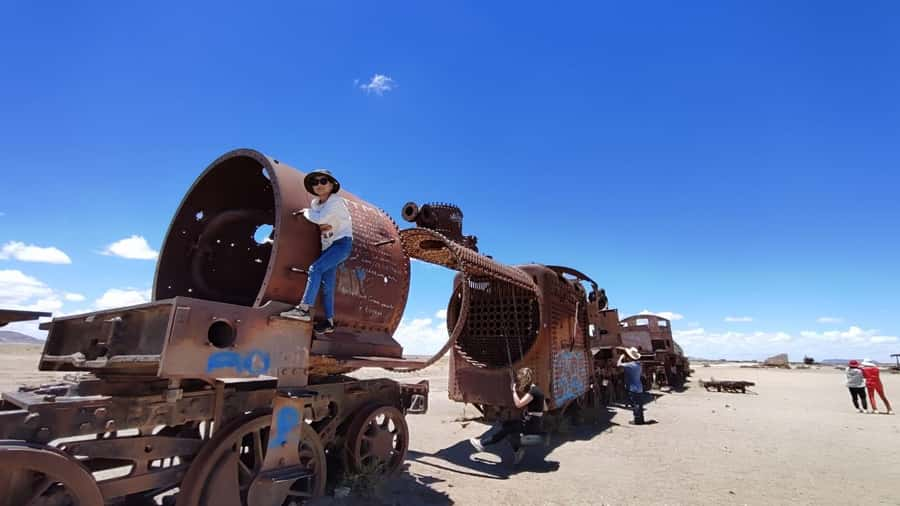
The first stop is the train cemetery outside Uyuni. Rusting locomotives sit in the open desert, their metal bodies worn by wind and time. It is a quick, atmospheric introduction to the region and an easy place for photographs.
At Colchani, you see how local workers process edible salt by hand. This stop gives the salt flats a human side. The great white surface is striking, but it is also a working resource, and the small salt mounds and local stalls show how people use it.
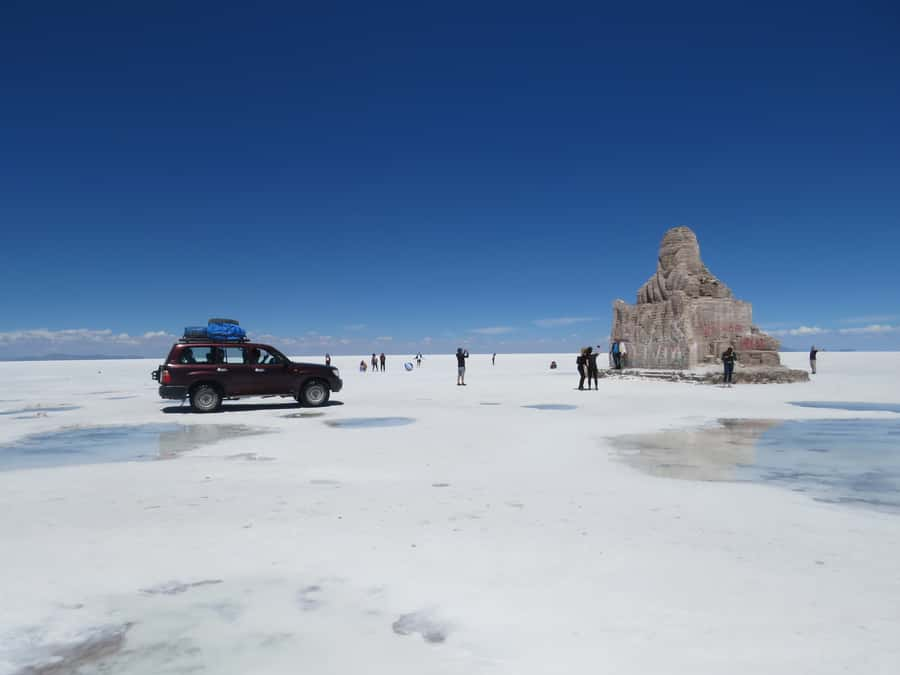
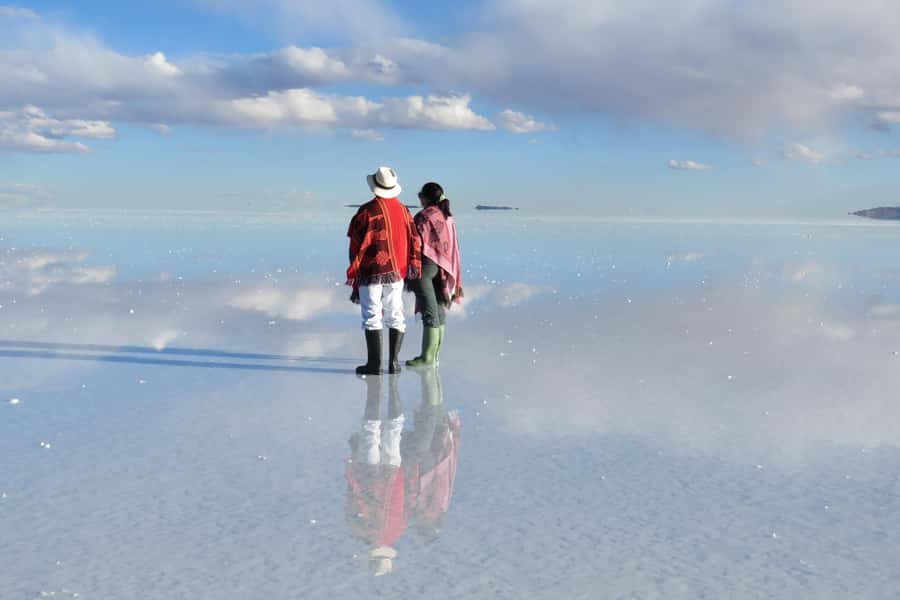
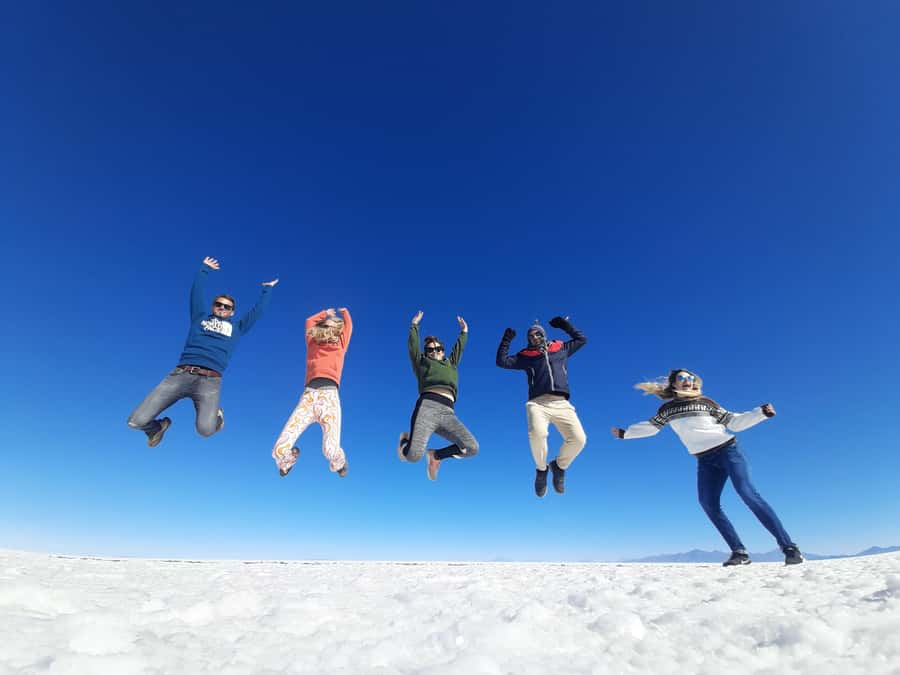
Then the 4×4 heads onto the Salar de Uyuni itself. The scale is hard to grasp at first. The salt forms a vast white plain with very few visual reference points, which explains why perspective photographs work so well here. Your guide or driver will usually help arrange playful images, and the professional guide is described as having a strong photography focus.
The route continues to the salt mounds and the center of the Salar, followed by Isla Incahuasi. This island is made from volcanic rock and covered with giant cacti. It gives you a higher viewpoint across the salt pan, and the contrast between dark rock, green cactus, and white salt makes it one of the most memorable stops.
After crossing to the far side of the Salar, you reach San Juan. The night is spent in a shared room, followed by dinner. The first day in the 4×4 is busy, and the combination of an overnight bus, bright sun, wind, and altitude can leave you tired by evening.
Day three: flamingos at five highland lagoons
After breakfast, the route turns southwest toward a chain of lagoons: Cañapa, Stink, Chiarkota, Honda, and Ramadita.
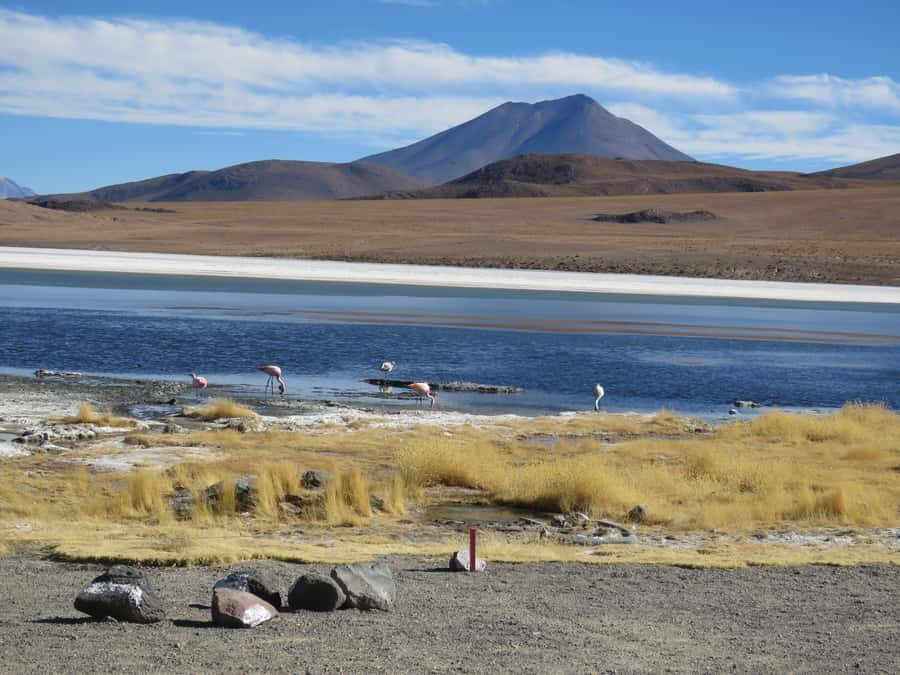
This is where the trip becomes more than a salt-flat excursion. Flamingos feed in the shallow water, while Andean geese and seagulls gather nearby. The birds are set against open highland plains and snowy volcanoes, giving each lagoon a different color and mood.
The lagoons are not all the same shade or shape. Mineral deposits, water levels, light, and weather change their appearance. You may find one intensely blue, another greenish or brown, and Laguna Colorada famously red from its mineral content and microscopic life.
The road between stops is part of the experience, but it is also the hardest part physically. You spend long periods in a Toyota 4×4 on rough, bumpy tracks. People seated in the back may have less legroom, and the vehicles are not described as air-conditioned or especially cushioned. Bring water within reach and expect a day built around driving rather than walking.
You reach Laguna Colorada later in the day and spend the night in a very basic lodge. Warm blankets are provided, but conditions vary sharply. Some people have found the beds comfortable and stayed warm; others have faced freezing rooms, no hot water, scarce electricity, and shared bathrooms without supplies such as soap, towels, or toilet paper.
The location has one major reward after dark. With little surrounding light, the stars and Milky Way can be unusually clear. If the sky is open, this may be one of the trip’s most striking moments. Bring a small flashlight or use your phone carefully, since power can be switched off for part of the night.
Same city, a different seat on the bus:
- Mt Fuji and Hakone 1-Day Bus Tour Return by Bullet Train
★ 5.0 · 26,383 reviews - Barcelona: 24 or 48-Hour Hop-On Hop-Off Bus Tour
★ 4.4 · 20,872 reviews - London: Warner Bros. Studio Harry Potter Tour & Branded Bus
★ 4.7 · 19,194 reviews - Rome: City Sightseeing Hop-on Hop-off Bus with Audioguide
★ 4.0 · 16,045 reviews
Day four: geysers, hot springs, and Licancabur
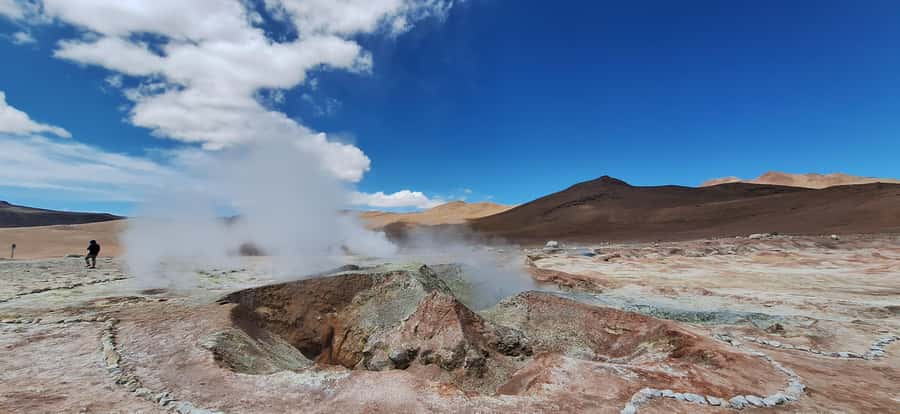
The fourth day starts early, often before sunrise, with a drive to the geysers known as Morning Sun. Steam and fumaroles rise from the ground as the first light reaches the volcanoes. This is a cold stop, so gloves, a hat, and proper warm clothing are not optional extras.
The road then reaches its highest point at about 5,000 meters. Even if you do not feel altitude strongly, the height can make the cold and exertion more noticeable. Move slowly when getting out of the vehicle, drink water, and keep your warm layers handy.
The route returns briefly to Laguna Colorada before continuing to the Stone Tree, a weathered rock formation shaped by wind. You then cross the high plateau toward the Polques hot springs. This is one of the few chances to get properly warm, and soaking in hot water while surrounded by the high desert is a welcome change after the early morning cold.
Next comes the Dali Desert, named for its unusual rock shapes and broad, empty setting. The final major stop is Laguna Verde, the green lagoon at the foot of Licancabur Volcano. The volcano gives the view a strong focal point, while the water’s color depends on minerals, wind, and light.
The 4×4 then begins the long return to Uyuni. You may see Andean plants and animals along the way, but the main challenge is endurance. Arrival is scheduled for about 5:00 PM, followed by a short break before the night bus to La Paz.
The buses, 4x4s, and daily pace
The bus legs are one of this trip’s better practical features. Reclining seats and onboard bathrooms make the overnight rides easier, and hotel pickup and drop-off remove much of the confusion around bus stations.
The 4×4 section is less comfortable. You cover major distances over rough roads, and the old Toyota Cruisers used on some departures may feel cramped, especially in the last row. You should choose this tour for the places it reaches, not for smooth transport.
The schedule is tightly organized. Pickup, breakfast, transfers, meals, and sightseeing are arranged around fixed departure times. That is helpful in a remote area, but it also means little freedom to linger at one lagoon or skip a long driving section.
The guides can make a major difference. Johnny has been praised for being calm, funny, prepared, and well organized. Ronaldo is noted for keeping the group together and checking that everyone was all right. Dolphin is praised for smooth driving on difficult roads, while Adalid is described as professional and attentive throughout the route.
Guide assignments vary, so you may not meet one of those particular people. Still, the pattern is useful: a steady driver and an organized bilingual guide are worth more here than a polished vehicle.
Food, water, and the two shared nights
Breakfast, lunch, dinner, snacks, and bottled water are included according to the schedule. The food has often been better than expected for such a remote route, with shared meals that help the group settle into the long days together.
Standards can vary. Some meals may be simple, portions may not always be generous, and one account described a small dinner at the second lodge. Bring a few extra snacks if you have dietary needs or tend to get hungry between stops.
The included accommodation is shared. A private room may be available for about $35 per person per night, with no single room option. Another account paid about BOB 200 for a private room, so confirm the current supplement before departure.
Do not book this expecting normal hotel service. Electricity may be available for only a few hours, outlets may be in common areas, and showers can be cold or cost extra. One night may have no shower facilities at all. Warm blankets are supplied, but a sleeping bag liner, thick socks, a headlamp, and personal toiletries would make the stay easier.
Some departures provide access to a hotel in Uyuni before the first 4×4 day and again before the return bus. This can mean a shower and a place to rest, although availability has not always been guaranteed. Treat it as a useful arrangement, not a full extra hotel night.
Is $486 a fair price?
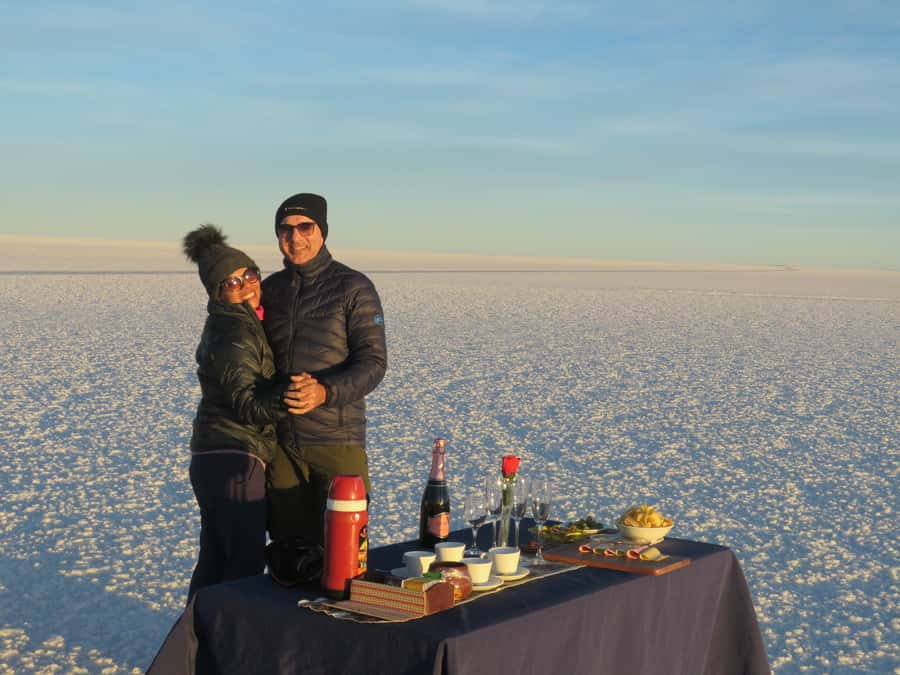
At $486 per person, the price is reasonable if you want the full route and prefer having transport, meals, lodging, guides, and transfers arranged together.
You are paying for two long-distance bus rides, three days of remote 4×4 travel, two nights of shared accommodation, food, water, hotel transfers, and a bilingual guide. Organizing those pieces yourself would take time and would not necessarily produce a cheaper result, especially once you add vehicle hire and park transport.
The price does not include BOB 200 in entrance fees. You also need to budget for souvenirs, travel insurance, possible private-room charges, and optional payments for showers, Wi-Fi, towels, or toilet paper at some lodges.
The value depends on your comfort expectations. For a salt-flat visit with a hotel bed, this is too rugged. For access to flamingo lagoons, geysers, hot springs, volcanoes, and remote desert scenery in a compact five-day plan, it offers a lot.
Who should book this route?
I would recommend it to you if you want the complete Uyuni circuit, have limited time in Bolivia, and can handle long drives, high altitude, cold nights, and simple lodging.
It suits photographers particularly well. The salt pan, giant cacti, birds, fumaroles, colored water, and volcanoes offer a steady run of strong subjects. Bring extra camera batteries and plenty of storage, since charging may be limited.
It is less suitable if you need reliable hot water, private bathrooms, good road comfort, or a flexible schedule. The tour is not suitable for pregnant women, and anyone concerned about altitude or cold should seek medical advice before booking.
Free cancellation up to 24 hours before departure and reserve-now, pay-later terms make planning easier. Still, the key choice is not the booking policy. It is deciding if three days in a remote 4×4 and two basic nights sound like part of the adventure or an avoidable hardship.
Should you book the five-day Uyuni tour?
Book it if you want more than the famous white salt pan. The strongest reason to choose this trip is the full sequence: train cemetery, Colchani, Incahuasi, five flamingo lagoons, Laguna Colorada, geysers, hot springs, the Dali Desert, Laguna Verde, and Licancabur Volcano.
Skip it if your priority is comfort or if you only want photographs on the salt flats. In that case, a shorter salt-flat tour may suit you better.
For the right person, this is a very efficient way to see some of Bolivia’s most unusual places. Pack for cold, carry cash for entrance fees and extras, expect rough roads, and judge the trip by the scenery rather than the thread count.
FAQ
How long is the tour?
The experience lasts five days, including the outbound and return overnight bus trips between La Paz and Uyuni.
Is transportation from La Paz included?
Yes. Hotel pickup in La Paz, bus tickets between La Paz and Uyuni, both overnight bus trips, and hotel drop-off in La Paz are included.
What type of bus is used?
The selected bus has reclining seats and a bathroom onboard.
How many nights are spent in accommodation?
You spend two nights in shared accommodation during the 4×4 portion of the route. The overnight bus rides provide the other two nights.
Are entrance fees included?
No. Entrance fees cost BOB 200 per person and are paid separately.
Can I book a private room?
Private rooms may be available for about $35 per person per night. A single room is not available, so confirm the current option and price before booking.
What languages does the guide speak?
The tour offers live guiding in English and Spanish.
Just added around the world
- 2 Days 1 night Sapa Tour from Hanoi by Limousine/Sleeper bus★ 4.5 · 6 reviews
- Halong Bay Luxury Cruise Day trip: Buffet lunch, limousine bus★ 5.0 · 2 reviews
- Hoa Lu – Tam Coc Luxury Small group 1D: Limousine bus, biking, boat trip, Lunch★ 5.0 · 6 reviews
- Halong Bay Luxury cruise Day trip: Buffet Lunch, Limousine bus★ 5.0 · 25 reviews
- Halong bay Luxury Cruise Day trip: Buffet lunch & Limousine bus★ 5.0 · 3 reviews
- Limousine Bus Transportation from Hanoi to Sapa★ 5.0 · 2 reviews
- From Hanoi- Halong Bay 1 Day Save Cost With Limousine Bus Option★ 5.0 · 8 reviews
- Halong bay Luxur Cruise Day trip: Buffet lunch & Limousine bus★ 5.0 · 21 reviews
Bus Tours, compared.

Mt Fuji and Hakone 1-Day Bus Tour Return by Bullet Train
Read our review →
Warner Bros. Studio Harry Potter Tour & Branded Bus
Read our review →
Zaanse Schans, Edam, Volendam & Marken Bus Tour
Read our review →

London Big Bus Hop-On Hop-Off Tour with Optional River Cruise
Read our review →