
REVIEW · JAPAN
Kyoto: Nara & Traditional Matcha Experience Bus Tour
Nara’s deer and Uji’s matcha give this day trip a nice change of pace from Kyoto’s crowded temple circuit. You’ll see Todaiji’s huge Buddha hall, walk among free-roaming deer, and finish with a hands-on tea session rather than simply watching a ceremony.
I like the smart route: three major heritage sites plus time for tea shops and souvenirs. I also like the guides’ personal touch. Guides including Nanami, Mai, At-Chan, Tsubasa, and Yuta have taught basic Japanese phrases, helped people find shops, and kept the day moving. The drawback is time. Eight and a half hours covers a lot, but each stop is fairly short, and Nara involves hills, stairs, and plenty of walking.
Key points before you book
- Todaiji’s Great Buddha: Enter one of Japan’s most impressive wooden temple halls and see the enormous seated Buddha inside.
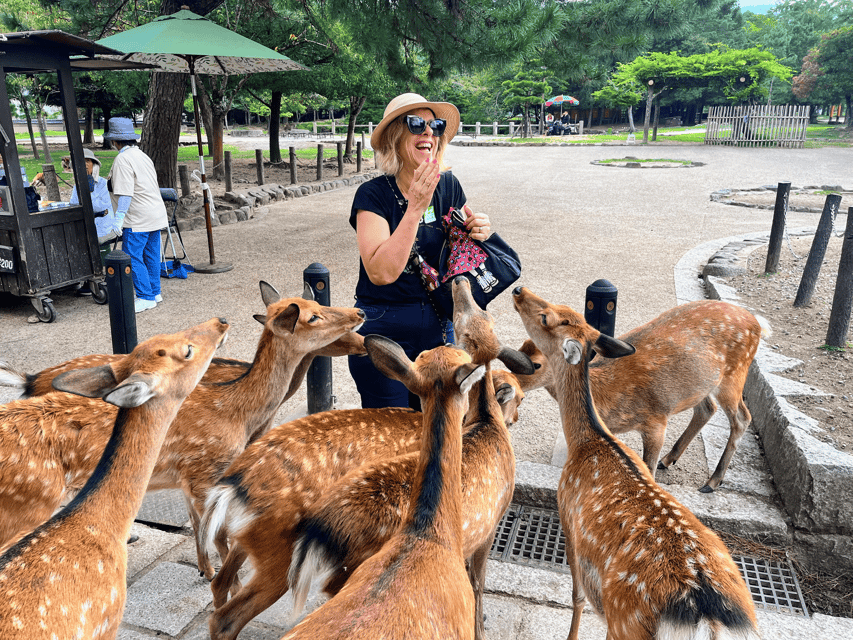
- Nara’s wild deer: Deer roam Nara Park freely, and you can buy rice crackers to feed them. Keep the crackers moving, since the deer can nip.
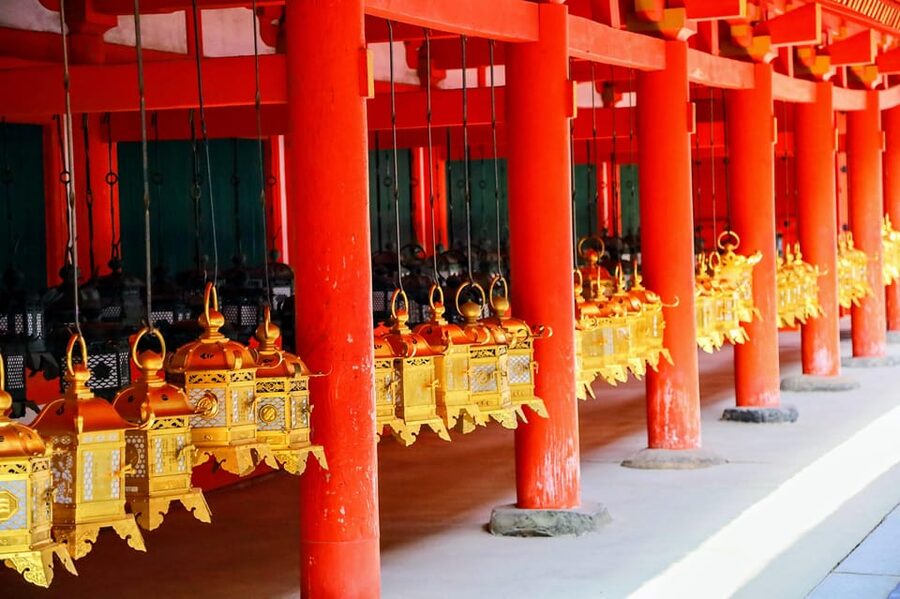
- Kasuga Taisha’s lanterns: The shrine’s stone lanterns give the forest path a memorable, almost storybook feel.
- Uji matcha workshop: Learn how powdered green tea is made and prepare your own cup in the region most closely linked with matcha.
- Optional Japanese lunch: Choose the lunch supplement if you want a traditional meal arranged for you, or use the break to eat independently.
- Easy coach transportation: The air-conditioned bus has free Wi-Fi, ventilation, and multilingual audio support, though the early meeting time is strict.
Why this Nara and Uji combination works
Kyoto can fill several days on its own, but Nara and Uji show you two different sides of the Kansai region. Nara gives you ancient temples, shrine paths, and friendly-looking deer with surprisingly determined appetites. Uji slows the day down with tea, small shops, and Byodoin’s graceful Phoenix Hall.
At $122 per person, the cost is reasonable if you want transportation, two temple admissions, a guide, and the matcha activity bundled together. The value is less clear if you already know Nara well or prefer to explore at your own pace by train. Public transportation would give you more flexibility, but you would need to arrange the route, buy admissions, and organize the tea activity yourself.
This tour is most useful for a first visit, especially if you want a broad introduction without spending time figuring out trains and bus connections. It is also a good choice for families and couples who want several different experiences in one day rather than a full day of temples.
The day lasts 510 minutes, or eight hours and 30 minutes. You meet in front of Tully’s Coffee at the Kyoto Avanti Store near Kyoto Station at 7:50 a.m. The bus leaves at 8:00 a.m. Look for the green and white Japan Panoramic Tours flag. The departure rule is firm, so allow extra time to cross Kyoto Station and reach the meeting point.
A few more bus tours around Japan worth a look
- Mt Fuji and Hakone 1-Day Bus Tour Return by Bullet Train
★ 5.0 · 26,383 reviews - 1-Day Tokyo Bus Tour
★ 5.0 · 14,250 reviews - PERFECT KYOTO 1-Day Bus Tour
★ 5.0 · 13,518 reviews
Riding south from Kyoto to Nara
The coach ride to Nara takes about an hour. Along the way, the guide may point out places such as Fushimi Castle and the former Heijokyo Palace area. This is useful background rather than a sightseeing stop, so keep your camera ready but do not expect to get off the bus.
The coach is air-conditioned and includes free Wi-Fi. It is also regularly ventilated and treated with an antibacterial coating. The multilingual audio system supports French, German, Italian, Portuguese, Spanish, and Ukrainian, while the live guide speaks English.
The guide is a major part of the experience. Nanami, Mai, At-Chan, Rina, Yuta, Tsubasa, Aoi, Harry, and other guides have been praised for clear explanations and a friendly approach. Several have used homemade visual aids or short language lessons to keep the bus ride lively. You may learn how to count in Japanese or remember a few useful phrases between stops.
Traffic can affect the order and length of each visit. The route may be changed because of weather, road conditions, or temple operations. That flexibility is normal for a full-day coach trip, but you should avoid booking a tight evening reservation back in Kyoto.
Kasuga Taisha and the stone lanterns
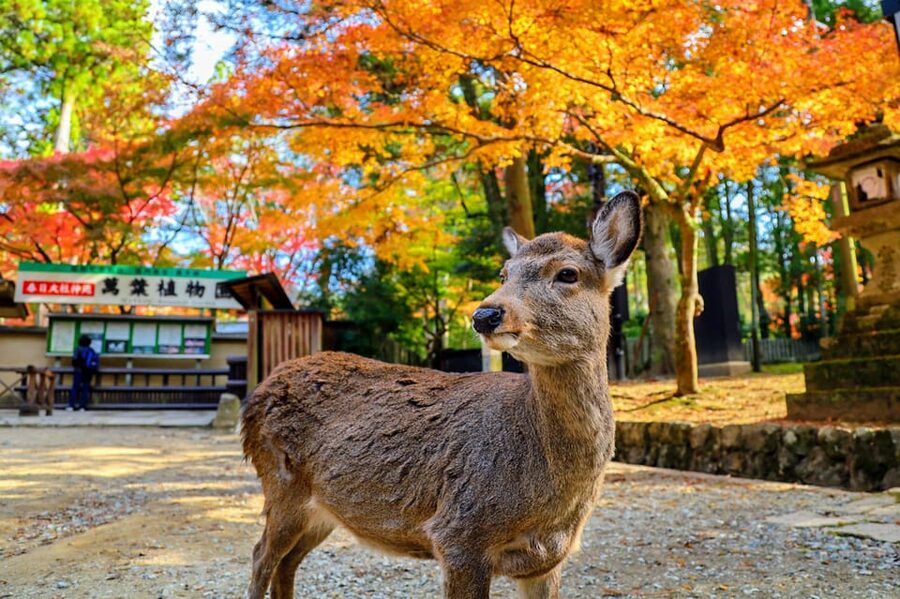
The usual visit to Kasuga Taisha lasts about 30 minutes. That is enough to see the main approach and appreciate the shrine’s famous lanterns, but not enough for a slow exploration of every path.
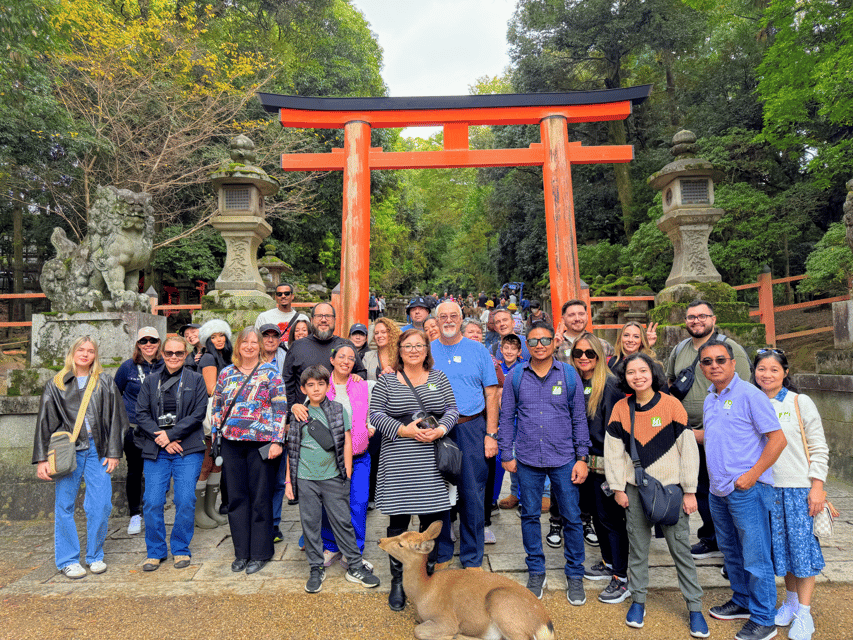
Kasuga Taisha is known for its thousands of stone and bronze lanterns. The stone lanterns along the approach create a strong sense of place, especially when the path passes through wooded areas. Your guide can explain the shrine’s role and the customs involved in visiting.
This stop suits anyone who enjoys atmosphere more than a long list of exhibits. You will want comfortable shoes because the route includes uneven ground and some uphill walking. Thirty minutes can feel rushed if you are trying to take many photos, visit every corner, and listen closely at the same time.
The tour may visit Kasuga Taisha before or after Todaiji, depending on the day’s traffic and operations. Listen for the guide’s instructions about where to meet the group again.
Nara Park and deer etiquette
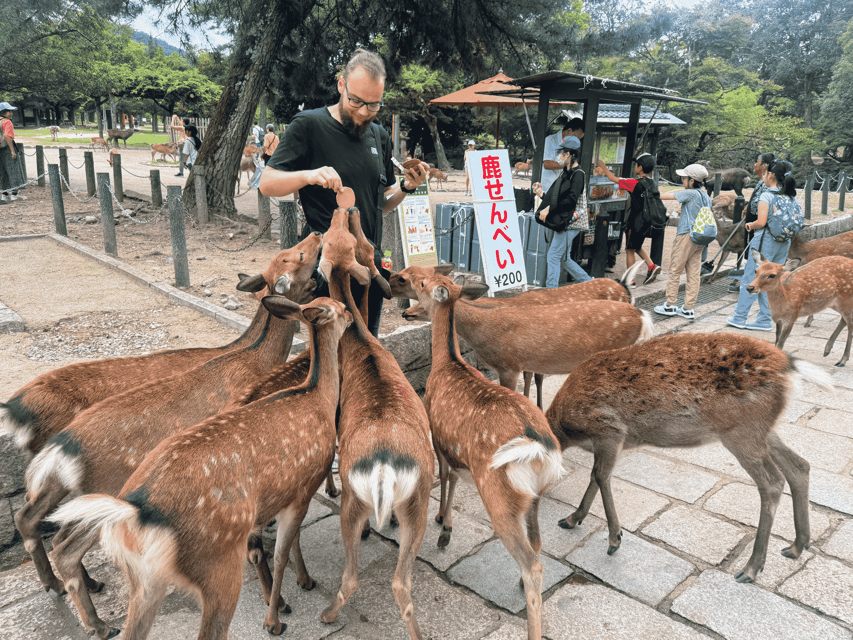
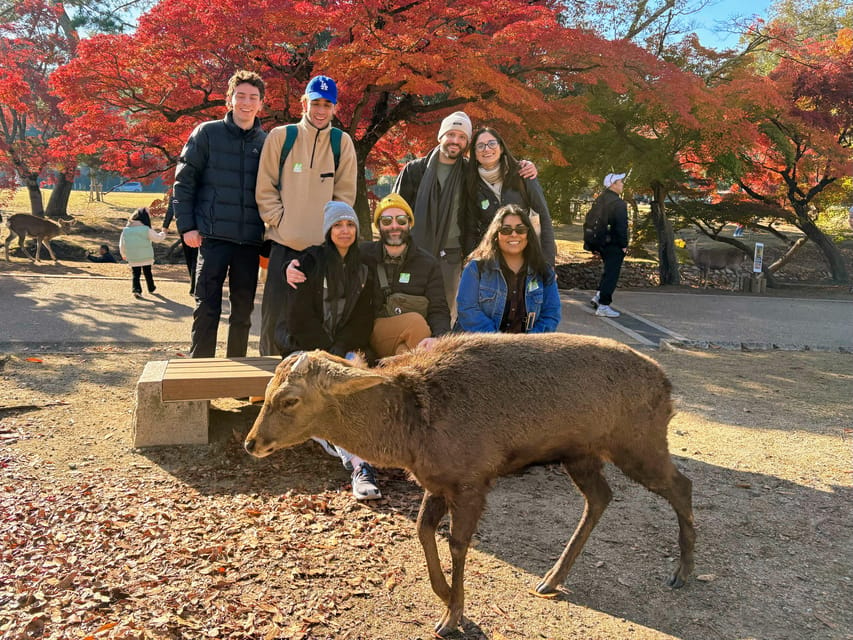
Nara Park is the most playful part of the day. The deer roam freely around the park and temple grounds, so you do not need to visit a fenced enclosure to see them up close. Their presence gives the park a very different feel from a standard temple visit.
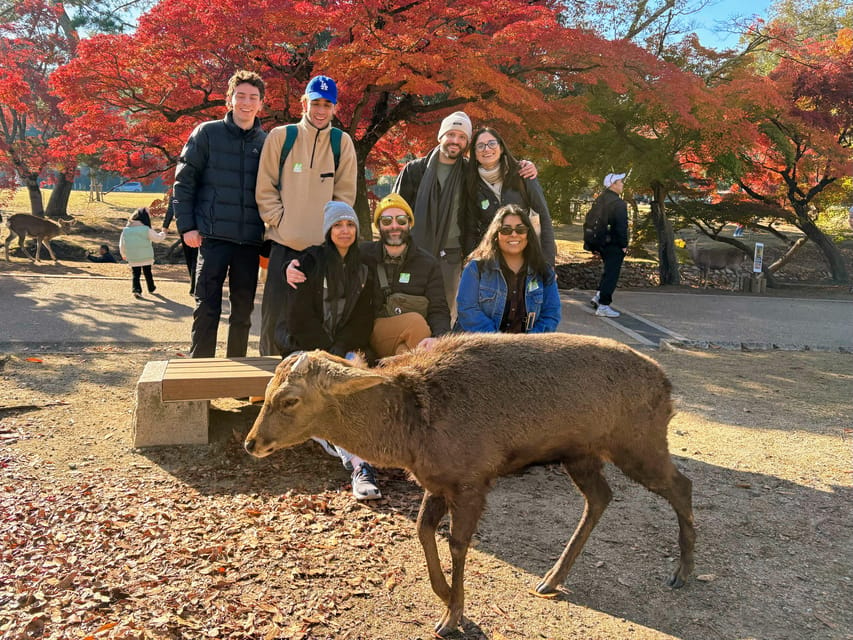
Rice crackers are sold by roadside vendors. If you buy some, feed the deer in small pieces and keep your hands visible once the crackers are gone. The deer are accustomed to people, and some will bow or lower their heads when asking for food. They can also nip, as one guide sensibly warned, so do not tease them or hold food out for too long.
The scheduled park visit is about 30 minutes, although the surrounding temple visits make the total time in the area longer. This short window works well for a first encounter, but it is not designed for a long walk across the park. Stay alert to the meeting time. A deer may be charming, but it is not a good reason to miss the bus.
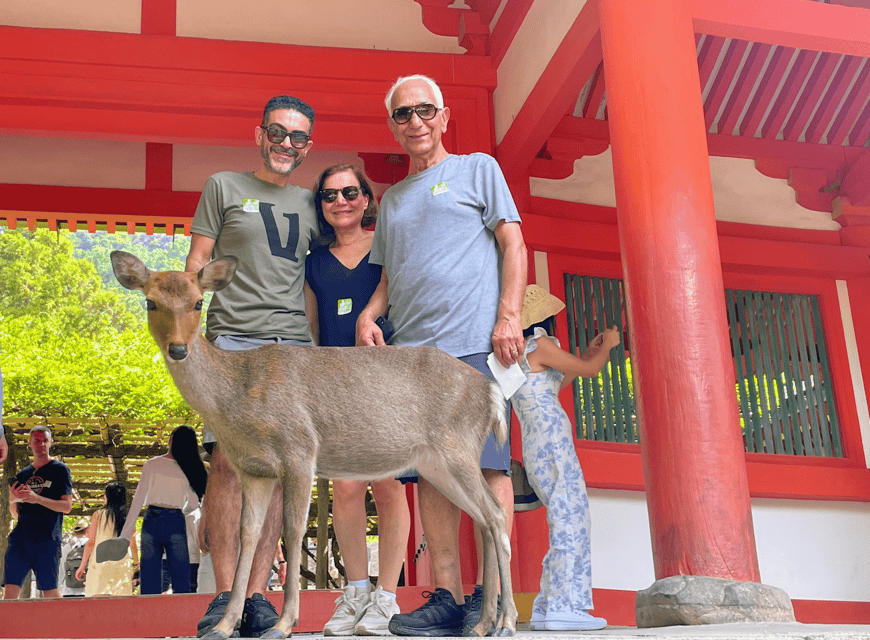
Families often enjoy this section most, and it is also a strong photo opportunity. Keep maps, tickets, and food secure. The deer are wild animals, not trained pets, and their behavior can change quickly.
Same city, a different seat on the bus:
- Peaceful Hiroshima & Miyajima UNESCO 1 Day Bus Tour
★ 5.0 · 5,309 reviews - Kyoto: Fushimi Inari, Kinkakuji, Bamboo Grove 1 Day Bus Tour
★ 4.8 · 4,316 reviews - Tokyo: Meiji Shrine, Asakusa, Skytree Bus Tour and Cruise
★ 4.7 · 1,986 reviews - Tokyo: Kamakura & Enoshima Day Trip including Temple Tickets
★ 4.5 · 1,375 reviews
Todaiji and the Great Buddha Hall
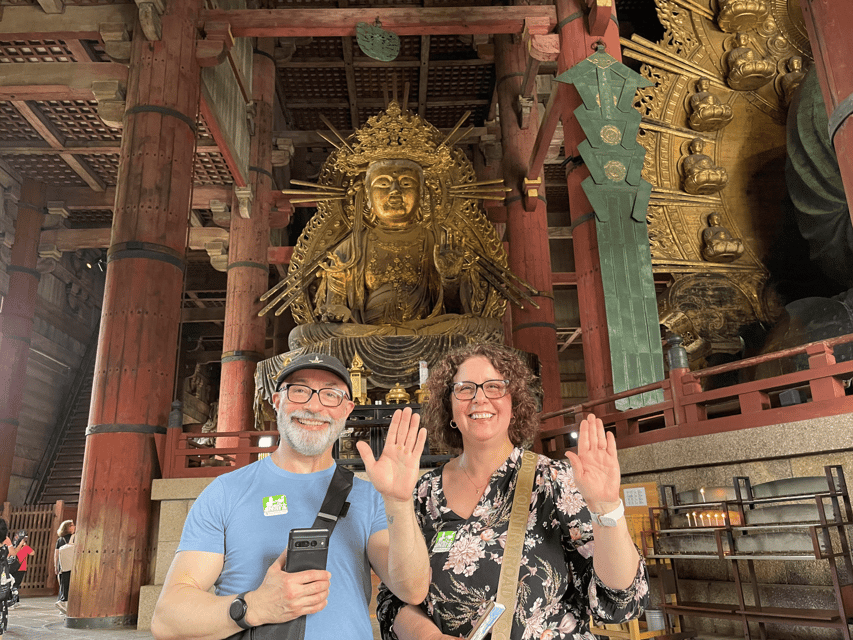
Todaiji is the architectural high point of the Nara portion. The temple’s Daibutsuden, or Great Buddha Hall, houses the Great Buddha of Nara and is recognized as one of the world’s largest wooden buildings.
The admission fee is included, which makes the visit simple. You will enter the temple grounds with the guide, hear the main explanation, and have time to look around independently. The scheduled temple visit lasts about 50 minutes.
The scale of the wooden hall is difficult to appreciate from photographs. Inside, the Buddha statue gives the room its focus, but the building itself deserves attention. Look up at the structure and notice how much timber and craftsmanship are needed to create such a large interior.
The route through Todaiji includes walking, stairs, and possibly crowded areas. Anyone with knee, balance, or mobility concerns should think carefully before booking. The tour is not suitable for wheelchair users or people with mobility impairments, and there is no hotel pickup to shorten the walking required at either end.
Your guide can add the cultural details that make the visit more than a quick photo stop. The strongest guides, including At-Chan, Nanami, Yuta, and Mai, have been praised for putting temple customs and Japanese culture into plain English.
Lunch in Uji and the value of the meal option
After Nara, the coach continues toward Uji, with about an hour of travel. The lunch break lasts roughly 50 minutes at a local restaurant.
You can book the tour with a Japanese lunch option. If you choose it, a traditional Japanese meal is arranged as part of the day. The meal has been described as tasty and is a convenient choice if you do not want to search for food during a short break.
If you do not choose lunch, you will need to arrange your own food and drinks. Additional food is not included. Vegetarian arrangements can be made up to two days before the tour, so make that request early. Last-minute bookings receive the regular meal arrangement.
Fifty minutes is enough for an organized meal, but it is not a leisurely restaurant visit. If food is a major part of your Japan trip, consider the lunch option for convenience, while recognizing that it reduces your free time for choosing your own restaurant.
Byodoin Temple and the Phoenix Hall
Byodoin Temple is one of Uji’s essential sights. Its Phoenix Hall is depicted on Japan’s 10-yen coin, making this a fun moment to pull a coin from your wallet and compare the image with the building in front of you.
The temple visit lasts about one hour and includes admission. Byodoin offers a quieter contrast to Todaiji. The setting encourages you to slow down, look across the pond, and notice the balanced design of the Phoenix Hall.
The exact flow can change, and temple access may be adjusted if conditions require it. Still, the scheduled hour gives you enough time for the main view, an explanation from the guide, and photos without turning the stop into a sprint.
This is one reason the tour works well as a pair with Nara. Todaiji is about scale and the Great Buddha. Byodoin is about proportion, reflection, and the close link between Japanese culture and everyday objects such as the 10-yen coin.
Making matcha in Uji
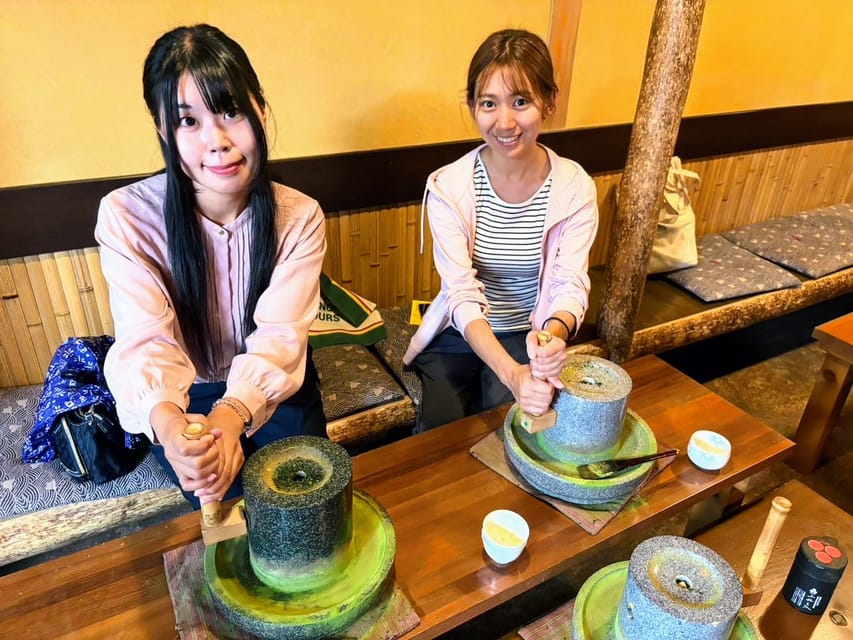
The matcha session is the most hands-on part of the day. Uji is closely associated with matcha, and the activity explains that matcha is made from finely ground green tea leaves. You will prepare the tea yourself rather than only watching a formal demonstration.
The experience lasts about 70 minutes, including free time in Uji. You can learn how the tea is handled, make your own cup, and then browse nearby shops and restaurants. Matcha is used in tea ceremonies, but also in sweets and cooking, so the workshop gives useful context for the many green tea products you will see around town.
Your own cup may taste better simply because you made it. More important, the activity gives you a clearer sense of the work behind a familiar Japanese flavor. It also breaks up the sightseeing with a seated, practical experience.
Uji offers time for souvenirs, matcha purchases, and snacks. Keep an eye on the clock because the shopping period is part of the scheduled stop, not an open-ended afternoon. One guide even helped a visitor locate the Tsuen tea shop, showing the kind of small local assistance that can make free time more useful.
The guide can make or break the day
This tour covers many stops, so clear organization matters. The guide needs to explain where to go, when to return, and what deserves your attention without burying you in facts.
The strongest guide names associated with this experience include Nanami, Mai, At-Chan, Rina, Tsubasa, Yuta, Aoi, Harry, Den, and Sakura. Their strengths vary, but the repeated pattern is easy to see: good English, cultural explanations, upbeat energy, and practical help when someone gets separated or needs extra direction.
Several guides teach simple Japanese during the bus ride. That is a small feature, but it helps connect the sights with daily life. You may also receive recommendations for shops and later stops in Japan.
No particular guide can be guaranteed, so book this tour for the route and structure rather than a specific person. The operator has received a 4.9 rating from 185 published ratings, with 96 percent of ratings giving transportation a perfect score. That suggests strong consistency in the overall operation, but your own guide assignment will still shape the day.
Practical costs, timing, and comfort
The $122 price includes the air-conditioned coach, live English guide, Todaiji admission, Byodoin admission, and matcha-making fee. It does not include hotel pickup, hotel drop-off, extra food, or drinks. Lunch is included only if you select that option.
Bring comfortable shoes and water. Cash is useful for deer crackers, snacks, drinks, and souvenirs. Pets are not allowed.
The coach is a real advantage. Nara and Uji are close enough to combine, but moving between them by public transportation takes planning. Here, you can settle into the bus while the guide explains the next stop. Free Wi-Fi is a bonus, though I would not rely on it for every personal need.
The main practical concern is the early start and fixed schedule. Check-in is at 7:50 a.m., departure is at 8:00, and latecomers and no-shows do not receive refunds or changes. Cancellation is flexible if you cancel at least 24 hours ahead, and you can reserve now and pay later.
Who should book this day trip
I would choose this tour if you are staying in Kyoto and want a guided first look at Nara and Uji without arranging trains, admissions, and a tea activity yourself. It suits first-time visitors, families who appreciate clear directions, and anyone who wants a mix of temples, wildlife, food, shopping, and Japanese culture.
I would be more cautious if you dislike group schedules, need long photo sessions, or want to explore Nara Park at a slow pace. The day is full, and every stop has a time limit. People with mobility issues should also look for a different plan because of stairs, hills, and walking.
Should you book the Nara and Uji tour?
Book it if you want broad coverage with little planning. Todaiji, Nara’s deer, Kasuga Taisha, Byodoin, and hands-on matcha make a satisfying day, and the included admissions and coach transportation support the price.
Skip it if you already have a detailed Nara plan or prefer independent travel. For most first-time visitors based in Kyoto, though, this is a well-balanced way to connect two important destinations. Choose the lunch option for ease, arrive early at Kyoto Avanti, wear shoes made for walking, and treat the deer with respectful caution.
FAQ
How long does the Nara and Uji tour last?
The tour lasts 510 minutes, or eight hours and 30 minutes. It departs Kyoto at 8:00 a.m. and returns to the Tully’s Coffee meeting point at Kyoto Avanti after the Uji visit.
Where does the tour meet?
Meet in front of Tully’s Coffee at the Kyoto Avanti Store, 31 Higashikujo Nishisannocho, Minami Ward, Kyoto. Check-in is at 7:50 a.m., and the green and white Japan Panoramic Tours flag marks the meeting point.
Is lunch included?
Lunch is included only when you select the lunch option. Additional food and drinks are not included. Vegetarian arrangements can be made up to two days before the tour date.
What admissions are included?
Admission to Todaiji Temple and Byodoin Temple is included. The matcha-making fee and transportation are also included.
Is the tour offered in languages besides English?
The live tour guide speaks English. Audio headsets are available in French, German, Italian, Portuguese, Spanish, and Ukrainian.
Can I feed the deer in Nara Park?
Yes. Rice crackers are sold at roadside stalls in and around Nara Park. Feed the deer carefully because they are wild animals and may nip.
Is the tour suitable for wheelchair users?
No. The tour is not suitable for wheelchair users or people with mobility impairments. You will need to walk up stairs and hills during the day.
Just added around Japan
- Fukuoka Open Top Bus and Hakata Doll Painting Experience with Guide★ 3.5 · 3 reviews
- Huis Ten Bosch Full Day Bus Tour From Hakata★ 3.5 · 3 reviews
- Tokyo: A Half-Day Trip Bus Tour in the Morning★ 4.6 · 236 reviews
- 3-Row Luxury Bus Tour to Mt. Fuji, Lake Kawaguchi from Tokyo★ 4.3 · 3 reviews
- Tokyo: 1 Day Bus Tour with Meiji-Jingu,Odaiba,lunch&Skytree★ 4.6 · 156 reviews
- Full Tokyo: Meiji Shrine, Imperial Palace, Asakusa & Skytree★ 4.4 · 7 reviews
- Tokyo: Mount Fuji Views and KABA Amphibious Bus Day Tour★ 5.0 · 4 reviews
- Shirakawago and Takayama 1 Day Bus Tour from Nagoya★ 4.5 · 2 reviews
Japan Bus Tours, compared.

Mt Fuji and Hakone 1-Day Bus Tour Return by Bullet Train
Read our review →
Peaceful Hiroshima & Miyajima UNESCO 1 Day Bus Tour
Read our review →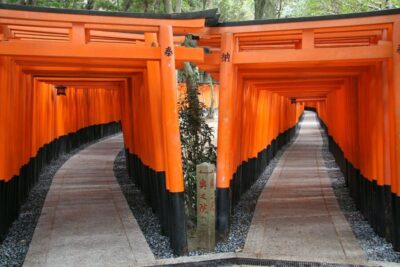
Fushimi Inari, Kinkakuji, Bamboo Grove 1 Day Bus Tour
Read our review →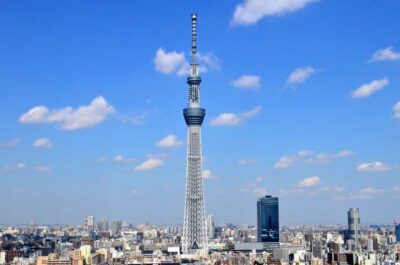
Meiji Shrine, Asakusa, Skytree Bus Tour and Cruise
Read our review →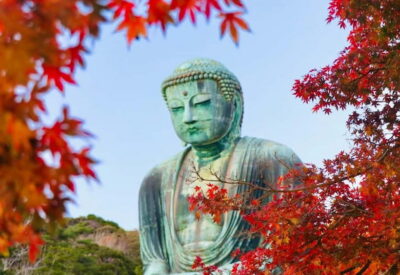
Kamakura & Enoshima Day Trip including Temple Tickets
Read our review →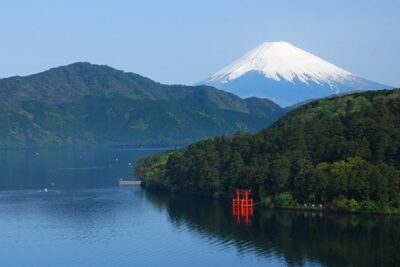
Mt Fuji & Hakone Cruise, Drum Show Bus 1 Day from Tokyo
Read our review →
Kyoto/Osaka: Nara, Fushimi Inari Taisha, Arashiyama Bus Tour
Read our review →Browse the lists this tour appears in