REVIEW · TOURS
Antigua: Villages Tour on Chicken Bus
A colorful Guatemalan bus carries you from Antigua into nearby villages, where chocolate, loquat wine, jade, and macadamia nuts offer a much fuller picture of local life than a city walk can. Juan Jesus, Esteban, Felix, and Katy are among the guides who lead this outing, with a strong focus on history, culture, and small family businesses.
I like the way the tour reaches several communities in one half-day, and I like its support for local producers rather than keeping you inside Antigua’s tourist center. The macadamia farm and chocolate tasting are especially memorable stops. One important catch: the bus is reserved for the tour, so you will not be sharing a regular public route with local passengers.
Key things to know before you book
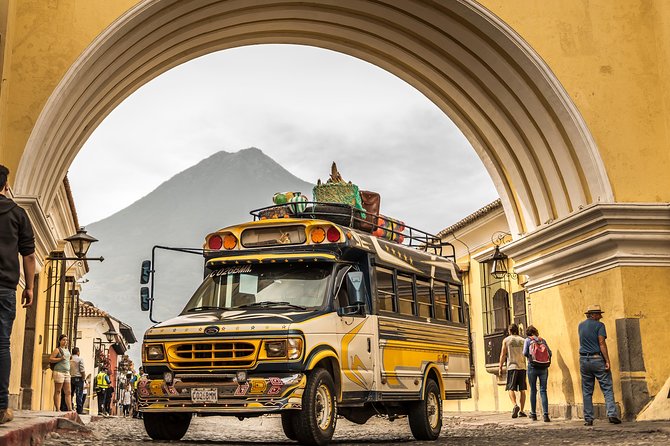
- The bus is a real former chicken bus: It is colorful and traditionally used between villages, but this tour uses it privately for the group.
- San Juan del Obispo brings two tastings: You learn about handmade chocolate and sample a warm drink, then try loquat products such as wine, jams, or preserves.
- The route gets beyond Antigua quickly: You visit San Pedro Las Huertas, pass farmland, and see the colonial villages around the former capital.
- Valhalla shows the working side of agriculture: The macadamia stop explains food, skin care, medicine, and support for Indigenous communities.
- Guides are a major part of the experience: Juan Jesus, Esteban, Felix, JJ, Michael, and Katy are praised for clear English, humor, flexibility, and local knowledge.
- Plan for a half-day, not a full meal outing: Water and snacks are included, but lunch is not.
Why this chicken bus tour is different from an Antigua walking tour
Antigua is easy to explore on foot. Its streets, churches, courtyards, and volcano views can fill a morning without a vehicle. But a walking tour keeps you inside the old city. This excursion takes you into the villages that supply Antigua and help preserve its crafts, crops, and food traditions.
The old chicken bus gives the outing a playful transport theme, but the real purpose is practical. You cover more ground without arranging separate taxis or local buses, and your guide can explain what you are seeing as you go.
The tour lasts about five to six hours and has a maximum of 15 people. That is small enough for questions and conversation, but it is not a private tour by default. Guides have sometimes adjusted the pace or order of stops for a group, and some visitors have received restaurant suggestions, photo help, or a short food stop when timing allowed. Treat those extras as possible courtesies, not guaranteed parts of the schedule.
The bus itself deserves clear explanation. It is an authentic Guatemalan chicken bus, formerly used between villages, but the company now reserves it for this excursion. That makes the ride more comfortable and keeps the route efficient, since the villages on this outing are not linked by one simple public-bus route. If you want a true public-transport experience with local passengers, this is not that. If you want the look and feel of a chicken bus plus a guided route through rural communities, it fits better.
A few more bus tours around the world worth a look
- Mt Fuji and Hakone 1-Day Bus Tour Return by Bullet Train
★ 5.0 · 26,383 reviews - Barcelona: 24 or 48-Hour Hop-On Hop-Off Bus Tour
★ 4.4 · 20,872 reviews - London: Warner Bros. Studio Harry Potter Tour & Branded Bus
★ 4.7 · 19,194 reviews
San Juan del Obispo: chocolate, loquat, and a wide valley view
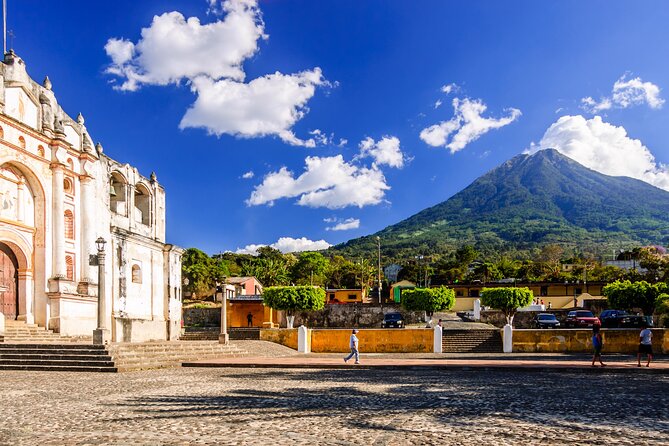
The first stop is San Juan del Obispo, a village with a plaza and broad views across the valley. The setting helps you understand the geography around Antigua before the food stops begin.
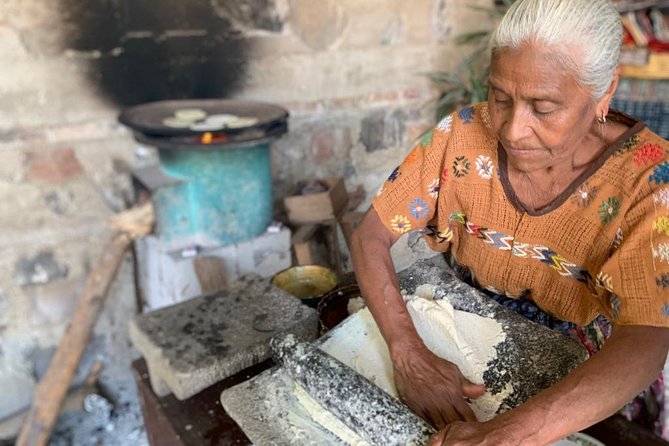
A family-run chocolate shop has been making its product by hand for more than five generations. Your guide explains the cacao process and the place chocolate holds in Guatemalan food culture. You also get a warm tasting, which gives this stop more substance than a quick shop visit.
Chocolate here is not just a souvenir flavor. The visit connects the bean, the grinding and preparation, and the finished drink you taste. Ask your guide about the difference between the chocolate made for drinking and the forms used in cooking. The exact demonstrations can vary, but the main value is seeing a family tradition treated as working food production rather than a staged museum display.
Nearby, the Loquat Museum focuses on a golden fruit that is a signature of the village. The fruit becomes wine, jams, and preserves, and you have the chance to sample some of these products. This is a small stop, but it adds an unusual local detail to the route. Many visitors know coffee and chocolate before arriving in Guatemala. Fewer expect loquat wine to be part of the food story.
You should allow about an hour here. The stop includes tastings, but it is not lunch. If you need a substantial breakfast, eat before the 8:30 a.m. departure, or confirm the chosen start time if you book an afternoon option.
San Pedro Las Huertas: a working village beside volcano views
San Pedro Las Huertas has a quieter feel than central Antigua. The name points to its farming past and present, with tomatoes, beans, and lettuce grown in the area. You walk through the streets toward a traditional communal wash basin, where several washing spots serve local residents.
The communal sink is one of the most useful details on the tour because it shows how village life has been organized around shared facilities. It is not a grand monument. It is an everyday place, and that is exactly why it matters.
At the plaza, the Spanish Colonial church provides a strong visual contrast with the practical farming village around it. The church’s Baroque style reflects the area’s colonial past, while the surrounding streets show how people live and work there today.
This is also one of the best places for photographs. Views toward Fuego and Agua volcanoes can frame the church, fields, and village streets. Volcano visibility depends on weather, so do not treat a clear view as guaranteed. Still, the stop gives you a chance to see Antigua’s setting from outside the usual city viewpoints.
A jade factory may be added if everyone in the group agrees. Because it is optional, you should not assume it will be part of every departure. The same applies to some stops described in past outings, such as textile work, coffee, or a family meal. The core route listed for this experience centers on the villages, chocolate, loquat, and macadamia farm.
Passing the first Spanish capital and the farming country around it
Between village visits, the bus passes through the area associated with the first capital of the Spanish Crown in the Americas. The drive also opens views across farmland where flowers and vegetables are grown for local and international markets.
This section is easy to underestimate. You are not stopping at every field or farm, but the drive gives context to Antigua’s food and trade. The city’s restaurants, markets, and hotels exist alongside a productive agricultural zone, and this route lets you see that connection.
Your guide’s commentary matters here. Juan Jesus has been praised for explaining religion, history, and local culture in clear English. Esteban is also known for handling questions in both English and Spanish, while Felix has led groups through a mix of village history, food production, and craft work. The guide you receive will vary, but the experience depends heavily on having someone who can explain the passing views instead of letting them blur into a bus ride.
Same city, a different seat on the bus:
- Rome: City Sightseeing Hop-on Hop-off Bus with Audioguide
★ 4.0 · 16,045 reviews - Amsterdam: Zaanse Schans, Edam, Volendam & Marken Bus Tour
★ 4.6 · 15,034 reviews - 1-Day Tokyo Bus Tour
★ 5.0 · 14,250 reviews - From Reykjavik: Northern Lights Bus Tour with Hot Cocoa
★ 4.3 · 13,947 reviews
Valhalla Experimental Station: the tour’s strongest working stop
Valhalla Experimental Station is an organic macadamia farm and one of the most distinctive parts of the route. You learn how macadamia trees are grown and how the project supports Indigenous communities through sustainable agriculture.
The visit goes beyond tasting nuts. The guide explains the plant’s uses in skin care, food, and medicine, as well as the environmental side of growing macadamias. The point is to show how a small product can connect farming, local employment, health products, and food sales.
I especially like this stop for visitors who want more than pretty views. Chocolate and loquat are easy to enjoy, but the macadamia farm explains a broader economic story. You see how a local agricultural project can give communities another source of income while making use of the land.
The farm also gives the day a different rhythm. San Juan del Obispo focuses on family food traditions, and San Pedro Las Huertas focuses on village life and architecture. Valhalla shifts toward farming methods and social impact. That variety keeps the tour from feeling like a string of identical shops.
The stop is listed as about an hour. Bottled water and snacks are included during the outing, but lunch is not. You may encounter additional tastings or products for sale, yet the tour does not require you to buy anything. The best approach is to treat purchases as optional support for the local producers, not as a condition of the visit.
What the guides add to the day
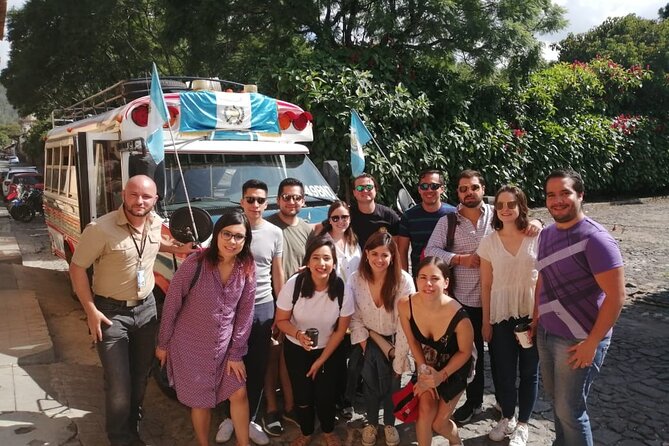
The strongest praise for this experience centers on the guides, not the bus. Juan Jesus, often called JJ, has led groups through the villages with humor and detailed explanations of Guatemalan history and culture. He has also been praised for sharing practical suggestions about restaurants and other activities.
Esteban is another frequently requested guide. His strength is a friendly, flexible approach, and he has rearranged the order of a day to suit a group’s needs. Felix is known for explaining the stops in detail, from chocolate and coffee to hand-made textiles and village traditions. Katy has led an outing that included chocolate, wine, coffee, and a meal with a local family.
You should expect a bilingual guide, but the exact style will depend on who leads your departure. Some guides are talkative and humorous. Others may focus more on facts and questions. The experience works best if you speak up. Ask about the church, the crops, the bus, the products, and the communities you pass.
The guide can also help with the practical side of the day. Past outings have included help with photos, local food suggestions, and attention to young children. Those touches are useful, especially for families, but they are individual guide strengths rather than promised inclusions.
Price, group size, and practical value
At $95 per person, this is not the cheapest way to leave Antigua. You are paying for a bilingual guide, private tour transportation, several village visits, admission and tasting costs, snacks, bottled water, and the convenience of covering a wide area in five to six hours.
The price makes more sense if you would otherwise hire separate transport to San Juan del Obispo, San Pedro Las Huertas, and the macadamia farm. It also pays for interpretation. Without a guide, you might see the plaza, church, and fields, but you could miss the meaning of the communal sink, the family chocolate tradition, or the connection between macadamia farming and Indigenous communities.
The value is weaker if you want a full public-bus experience, a long independent walk, or a relaxed lunch. Lunch is not included, and the schedule gives you several one-hour stops rather than a slow day in one village. You also need to accept that some optional elements, including the jade factory, depend on group agreement.
The maximum group size is 15. That is a reasonable compromise between cost and personal attention. If the group is small, the guide may have more room to adjust the pace. If it is full, expect a shared outing with a fixed route and limited time at each stop.
The listed meeting point is Casa de la Mandarina, at 2a Calle Poniente 2 in Antigua. The standard start time provided is 8:30 a.m., although the experience is also described as offering morning or afternoon choices. Confirm the time shown when you book. The outing returns to the meeting point, though individual arrangements are not guaranteed.
Free cancellation is available if you cancel at least 24 hours before the local start time. Changes made inside that window are not accepted, and the tour requires a minimum number of participants.
Who should book this Antigua village outing
I would choose this tour early in a Guatemala trip if you want an introduction to the area beyond Antigua’s streets. It gives you history, food production, farming, architecture, volcano views, and a look at small family businesses in one organized morning.
It suits families particularly well because the bus keeps the day moving, the stops are varied, and guides have shown care with young children. It also works for couples and friends who want local context without arranging complicated transport.
You may want a different plan if your main goal is public transport. The bus is authentic, but it is private to the tour. You also may prefer an independent day if you want to linger, shop without a schedule, or spend a long lunch in one village.
Wear practical walking shoes and bring sun protection. The tour includes walking through village streets and farm areas, but no demanding hike is described. Most people can participate, and service animals are allowed.
Should you book the chicken bus tour?
Book it if you want a well-organized route through Antigua’s surrounding villages and care about meeting small producers. The chocolate, loquat, and macadamia stops give you tastes and stories that are hard to find on a standard city tour, while San Pedro Las Huertas adds everyday village life and volcano views.
Skip it if the phrase chicken bus promises a crowded public ride with local passengers. That is not what you receive. You get a private, colorful bus, a bilingual guide, and a useful route through communities that would take more effort to reach alone.
At $95, the experience earns its price through transport, interpretation, variety, and time saved. For a half-day look at the working communities around Antigua, it is a strong choice, especially when you request a guide such as JJ, Esteban, or Felix if scheduling allows.
FAQ
How long does the Antigua villages tour last?
The tour lasts approximately five to six hours and returns to the meeting point in Antigua.
Where does the tour begin?
The standard meeting point is Casa de la Mandarina, 2a Calle Poniente 2, Antigua Guatemala 03001.
What time does the tour start?
The listed start time is 8:30 a.m. The experience is also described as offering morning or afternoon start choices, so confirm the time available when booking.
Is the chicken bus a public bus?
No. It is a real Guatemalan chicken bus that was used between villages, but it is reserved for the tour group. You will not ride it as a regular public passenger route.
Is lunch included?
No. Bottled water and snacks are included, but lunch is not.
What is the cancellation policy?
You can cancel for a full refund at least 24 hours before the experience starts. Cancellations or changes made less than 24 hours before the start time are not accepted.
Just added around the world
- 2 Days 1 night Sapa Tour from Hanoi by Limousine/Sleeper bus★ 4.5 · 6 reviews
- Halong Bay Luxury Cruise Day trip: Buffet lunch, limousine bus★ 5.0 · 2 reviews
- Hoa Lu – Tam Coc Luxury Small group 1D: Limousine bus, biking, boat trip, Lunch★ 5.0 · 6 reviews
- Halong Bay Luxury cruise Day trip: Buffet Lunch, Limousine bus★ 5.0 · 25 reviews
- Halong bay Luxury Cruise Day trip: Buffet lunch & Limousine bus★ 5.0 · 3 reviews
- Limousine Bus Transportation from Hanoi to Sapa★ 5.0 · 2 reviews
- From Hanoi- Halong Bay 1 Day Save Cost With Limousine Bus Option★ 5.0 · 8 reviews
- Halong bay Luxur Cruise Day trip: Buffet lunch & Limousine bus★ 5.0 · 21 reviews
Tours, compared.
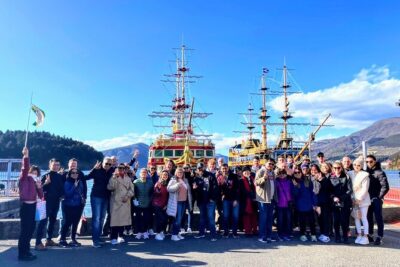
Mt Fuji and Hakone 1-Day Bus Tour Return by Bullet Train
Read our review →
Warner Bros. Studio Harry Potter Tour & Branded Bus
Read our review →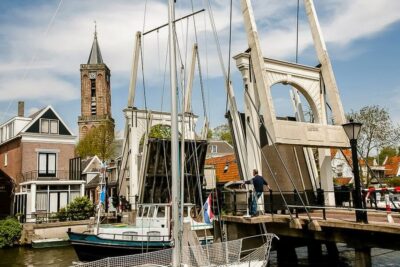
Zaanse Schans, Edam, Volendam & Marken Bus Tour
Read our review →


London Big Bus Hop-On Hop-Off Tour with Optional River Cruise
Read our review →