
REVIEW · WARSAW
Warsaw: 2.5-Hour Dark Side – Praga District by a Retro Bus
Praga is Warsaw’s rough-edged counterpoint to the polished Old Town. This 2.5-hour outing takes you across the Vistula in a vintage bus, then into streets where old courtyards, colorful shrines, street art, former factories, and stories of crime give the city a different face. I especially like the live storytelling and the stop for E. Wedel hot chocolate. The one drawback is that the meeting point can be hard to spot, and the amount of walking may feel tiring on a hot day.
I also like that this is not just a drive-by city tour. You get out at several places, including the Basilica of the Sacred Heart of Jesus and the former Koneser vodka factory. The exact bus depends on group size: up to eight people may ride in a smaller Nysa, while larger groups use the famous Jelcz cucumber. Guides Max and Konrad have earned particular praise for their humor and clear English, though the bus sound system may be harder to hear from the back.
Key points at a glance
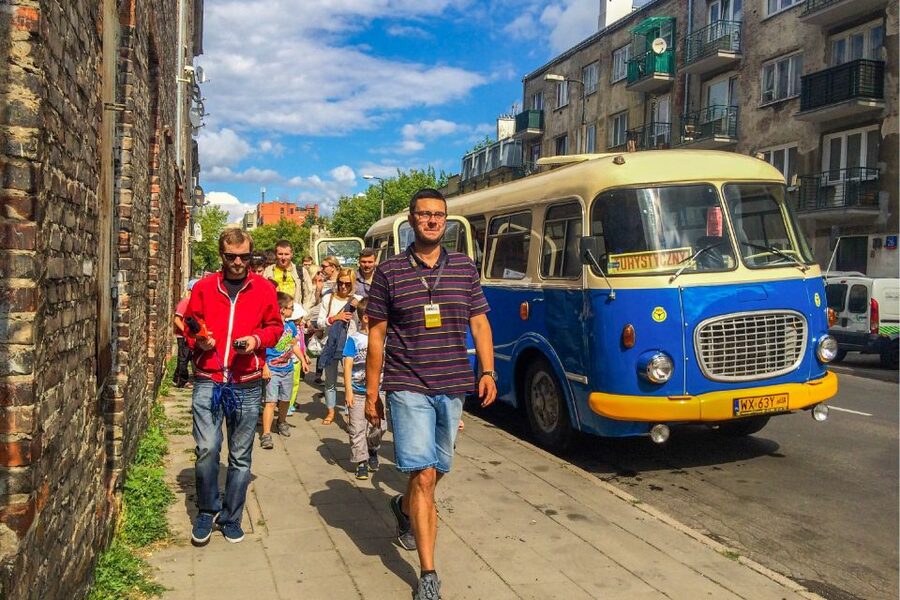
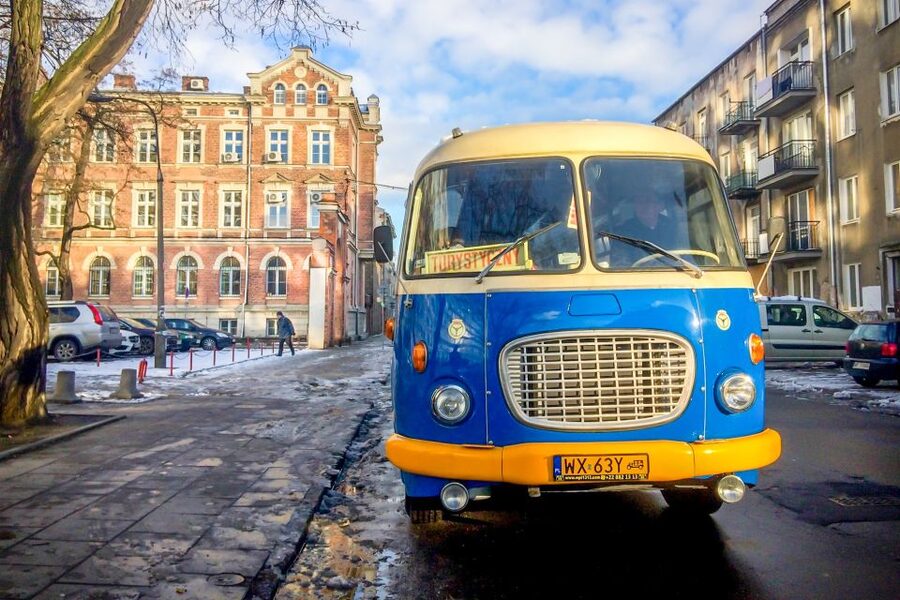
- Ride a real 1980s retro bus: Larger groups use the Jelcz cucumber, while groups of eight or fewer may use a smaller Nysa retro bus.
- Hear Praga’s uneasy past: Your guide explains why the district was once seen as Warsaw’s most dangerous area.
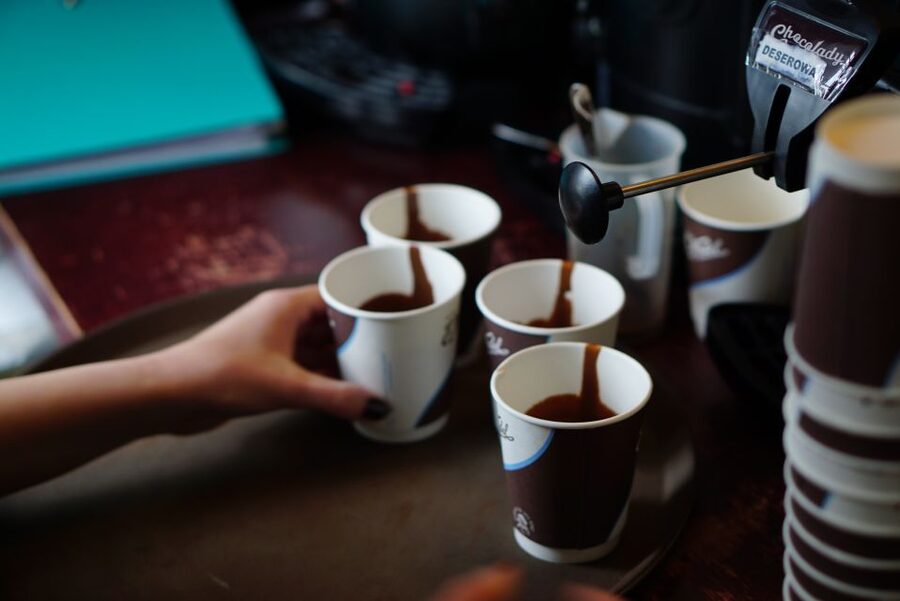
- Taste Warsaw’s chocolate tradition: A cup of hot chocolate at the E. Wedel chocolate factory adds a welcome sweet break.
- See old Praga up close: Walk along Ząbkowska, Brzeska, and Stalowa Streets, with courtyards, shrines, and pre-war buildings.
- Visit Koneser: Learn what was produced at the former vodka factory and how the complex is used today.
- Expect a small amount of walking: Comfortable shoes matter, and the tour is not suitable for wheelchair users.
Why Praga gives Warsaw a different face
Most first-time visits to Warsaw focus on the rebuilt Old Town, the Royal Route, museums, and the Palace of Culture and Science. Those places matter, but they do not tell the whole story. Praga, on the east bank of the Vistula, escaped much of the destruction that struck the left bank during the Second World War.
That survival helps explain the district’s older buildings and courtyards. It also explains why Praga can feel less polished and more layered than central Warsaw. Some streets show neglect beside fresh street art, restored buildings, cafés, and new cultural spaces.
The tour uses the phrase dark side because Praga once had a reputation for crime and poverty. That label is part of the district’s past, not a reason to treat the neighborhood as a sideshow. A good guide gives you the context: how people lived, how the streets changed, and why film directors have found the area useful.
Roman Polański filmed parts of The Pianist here, and the old façades and enclosed courtyards help explain the choice. You are not simply looking at pretty architecture. You are seeing fragments of a Warsaw that survived, changed, and is still being reshaped.
A few more bus tours around the world worth a look
- Mt Fuji and Hakone 1-Day Bus Tour Return by Bullet Train
★ 5.0 · 26,383 reviews - Barcelona: 24 or 48-Hour Hop-On Hop-Off Bus Tour
★ 4.4 · 20,872 reviews - London: Warner Bros. Studio Harry Potter Tour & Branded Bus
★ 4.7 · 19,194 reviews
Meeting at the Palace of Culture and Science
The tour begins at 11:00 AM on Saturday near the Tourist Information point at the Palace of Culture and Science. The building is easy to recognize, but the exact bus position can be less obvious. Several people have found the pickup area confusing, especially when instructions point toward the front of the building while the bus is waiting in a nearby car park.
Give yourself extra time. Look for the retro bus rather than relying only on a map pin, and confirm the location with the operator if needed. This is the main practical weakness of an otherwise well-liked outing.
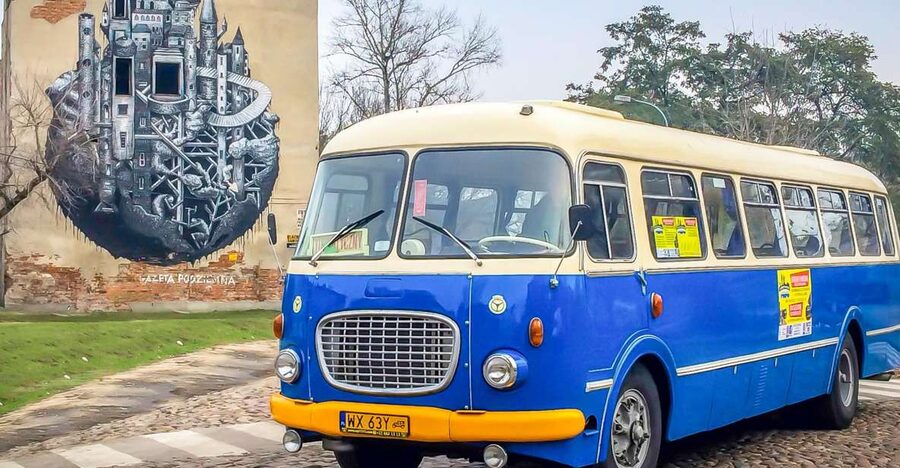
Once aboard, the bus is part of the attraction. The Jelcz model is often called the cucumber because of its rounded shape. It dates from the communist era, and riding through present-day Warsaw in a preserved vehicle adds a useful bit of atmosphere.
Do not assume the large Jelcz will always be used. If the final group has eight or fewer people, the operator provides a smaller Nysa mini retro bus. That can make the experience feel more intimate, but it may disappoint anyone booking mainly for the famous cucumber. The transport is still period-style either way.
Crossing the Vistula into Praga
As the bus heads east, your guide sets up the story of Warsaw and Praga. The live commentary is the heart of the experience. Guides Max and Konrad are especially noted for mixing facts with jokes, while other guides have also been praised for clear English and a friendly manner.
That personal delivery matters here. Praga is not a district where every important detail is neatly labeled for you. A courtyard may look plain until someone explains its former use. A factory may appear abandoned until you hear what was made there and how the site has changed.
The best seats are likely to be near the guide or the front of the bus, especially if you want to hear every word. One weak point is the sound system at the rear. People talking nearby can make some commentary difficult to catch, so move forward if you can.
E. Wedel and the hot chocolate stop
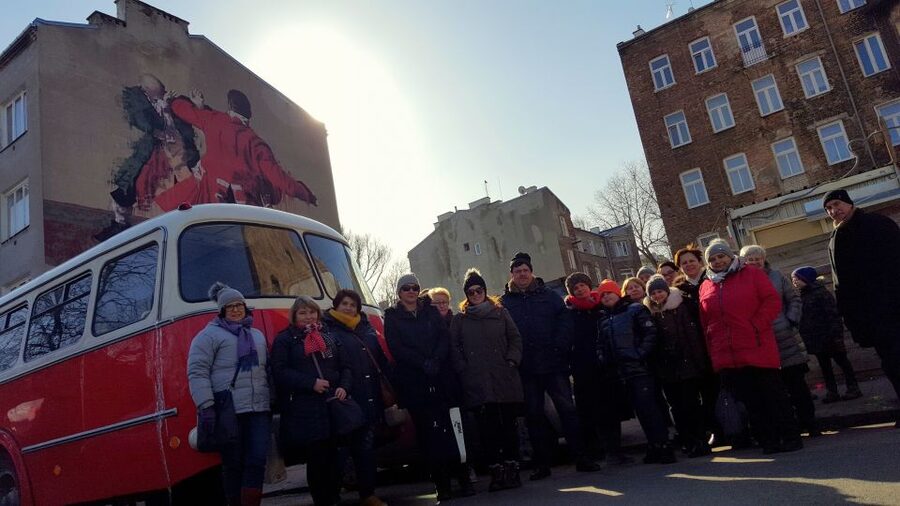
The first stop after crossing the river is connected with Warsaw’s long chocolate-making tradition. You visit an E. Wedel chocolate facility and hear about the company’s history in the city, dating back to the mid-19th century.
The included cup of hot chocolate is a small but well-judged part of the route. It gives you time to warm up in winter, take a break from walking, and enjoy something strongly tied to Polish city life. The drink also makes the $41 price easier to assess, since the tour includes both transport and a refreshment rather than charging you extra at every stop.
Keep your expectations clear. This is a tasting and historical stop, not a full factory tour. You do not appear to tour the production floor, so anyone hoping to watch chocolate being made may find this part brief. Still, it is a pleasant pause and more distinctive than an ordinary bus stop.
Same city, a different seat on the bus:
- Rome: City Sightseeing Hop-on Hop-off Bus with Audioguide
★ 4.0 · 16,045 reviews - Amsterdam: Zaanse Schans, Edam, Volendam & Marken Bus Tour
★ 4.6 · 15,034 reviews - 1-Day Tokyo Bus Tour
★ 5.0 · 14,250 reviews - From Reykjavik: Northern Lights Bus Tour with Hot Cocoa
★ 4.3 · 13,947 reviews
The Basilica of the Sacred Heart of Jesus
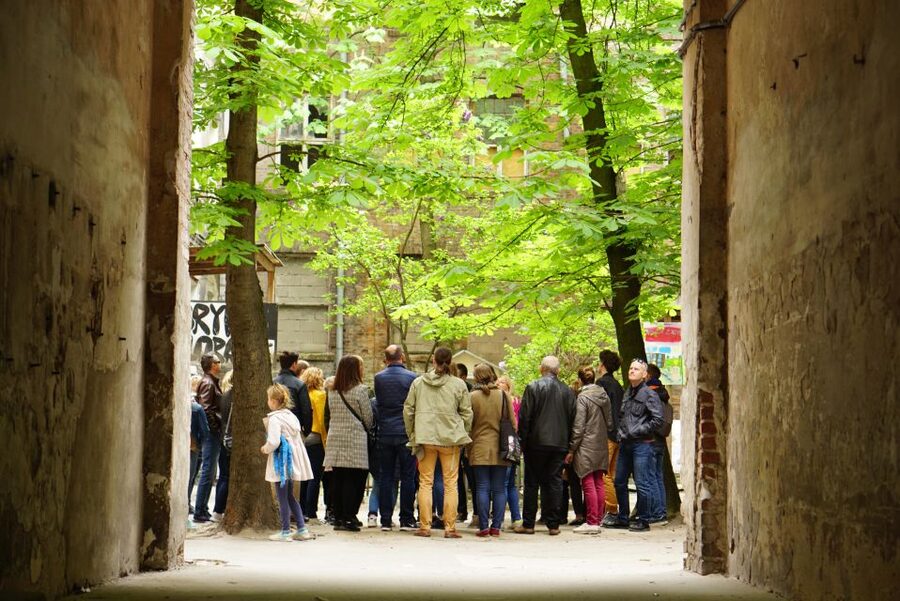
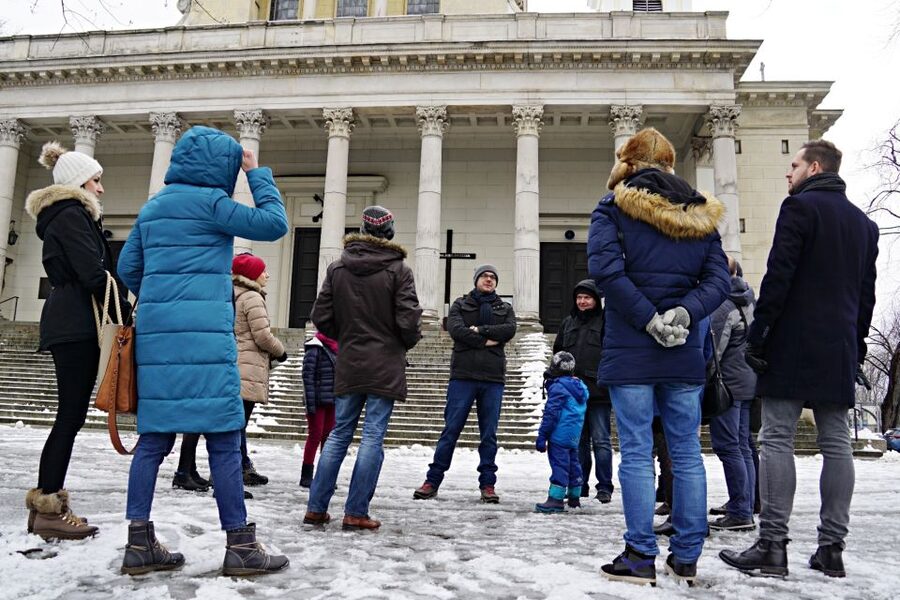
The next stop is the Basilica of the Sacred Heart of Jesus, one of Praga’s major religious buildings. Its design drew inspiration from the Basilica of St. Paul in Rome, giving the guide a chance to explain both the building and the religious setting around it.
This stop works best as part of the wider route. You are not spending a long stretch of the day inside one monument. Instead, the basilica helps show the variety of Praga: old industry, religious architecture, residential streets, and rougher urban corners all appear within one short tour.
The amount of time at each stop can depend on the group and the guide. The tour is designed to keep moving, so you should not expect a detailed architectural lecture on every building. You will get a broad picture, supported by selected stops that make the district easier to understand.
Koneser and the former vodka factory
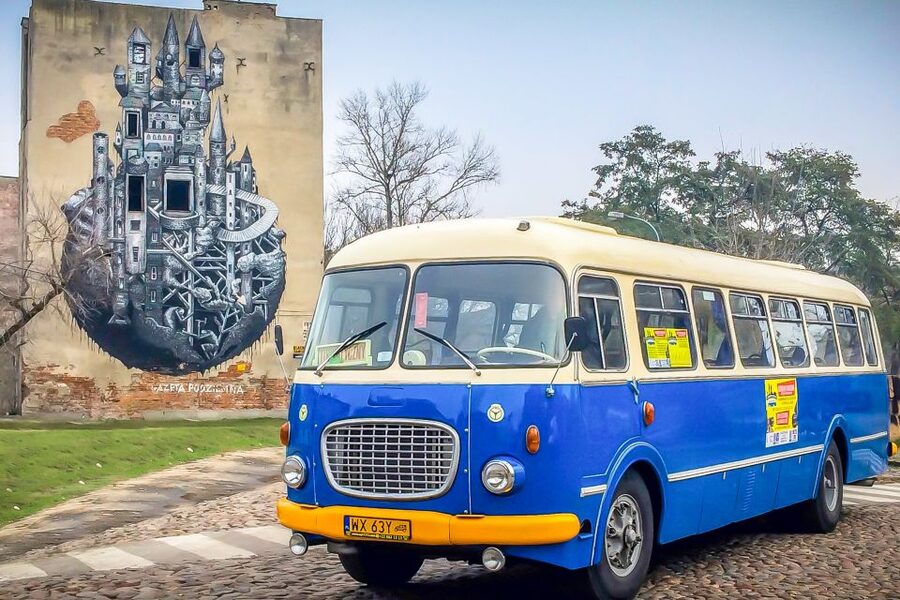
Koneser is one of the most interesting stops because it connects Praga’s industrial past with its newer identity. The complex was once a vodka factory. Your guide explains what was produced there and what the site has become.
The value here lies in the contrast. You see how an old working complex can gain a new role without losing all connection to its past. The stop also gives you a useful reference point for exploring Praga on your own later.
One visitor returned to the area after the tour, which is a good sign that Koneser can work as more than a passing photo stop. If you have extra time in Warsaw, you may want to return to see the complex at a slower pace. The tour gives you the background, but it cannot cover every corner in detail.
The Praga Bermuda Triangle
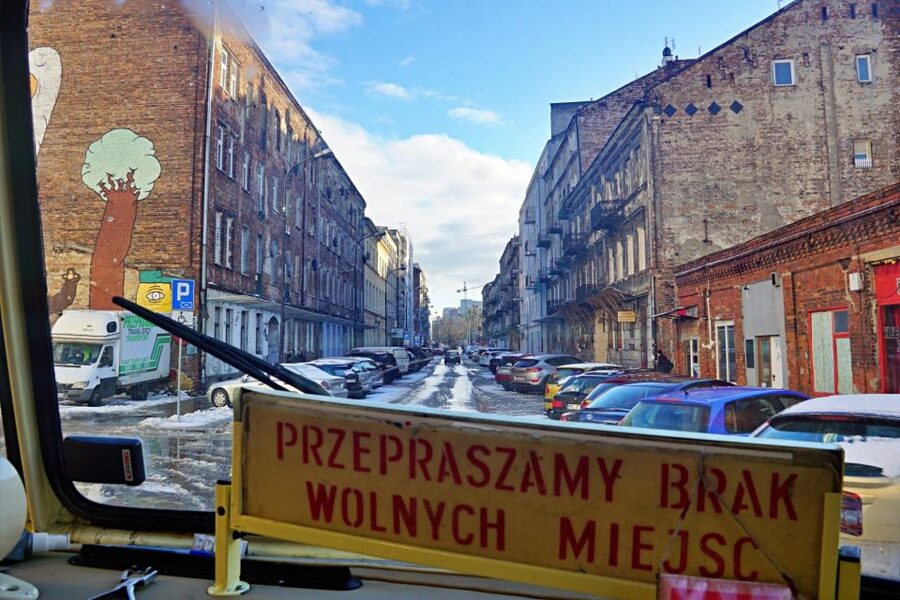
The tour then moves into an area known as the Praga Bermuda Triangle. Your guide explains where the nickname came from and leads you through streets with older buildings, courtyards, and small colorful shrines.
This is the section where the tour feels most different from a standard sightseeing route. Streets such as Ząbkowska, Brzeska, and Stalowa show older Praga in a direct, unpolished way. You may see peeling façades beside signs of renewal, and quiet courtyards hidden behind street entrances.
The shrines are especially useful clues to local life. They are not grand monuments, but they show how faith and neighborhood traditions were kept close to home. The courtyards also give you a sense of how people once shared tight residential spaces away from the main road.
You should bring comfortable shoes. The walking is not described as extensive, but it is enough to matter, especially during a hot Warsaw summer. The route is not suitable for wheelchair users, and the mix of pavement, streets, and older buildings may be difficult for anyone with limited mobility.
Street art, films, and the old neighborhood feel
Street art is another reason to choose this trip. The route includes some of Praga’s most notable examples, adding modern color to buildings that carry much older stories.
The guide helps you see the art as part of the district rather than as isolated decoration. You may also hear about films made in the area, including The Pianist. That film connection gives the older streets extra meaning, but the tour does not reduce Praga to a movie set.
I like this balance. You get visual material for photographs, but you also hear about the people, buildings, and events behind it. The streets can feel atmospheric without being artificially dressed up for visitors.
How the group size changes the experience
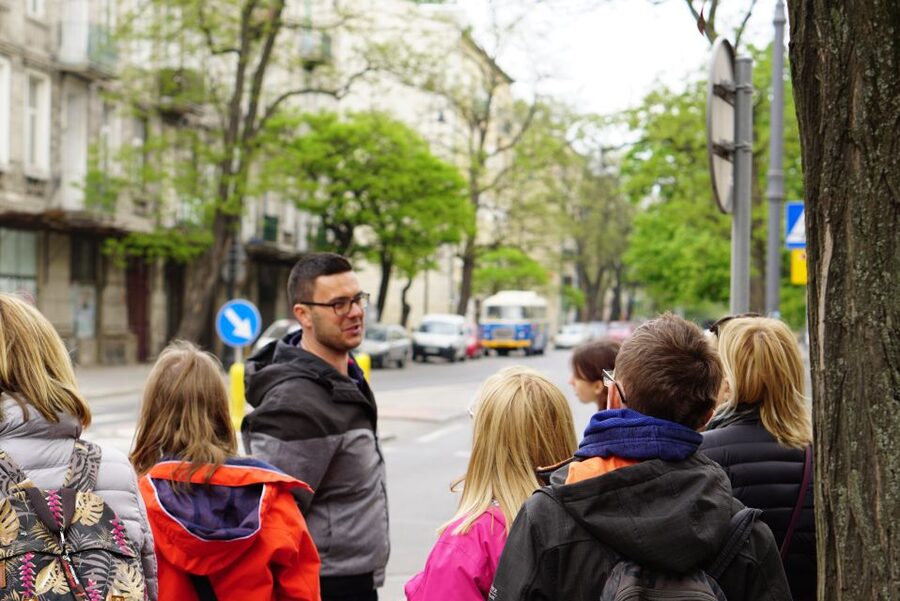
The operator uses a smaller Nysa retro bus for groups of up to eight and the Jelcz cucumber when more than eight people attend. This means the vehicle and group atmosphere are not fixed.
A small English-language group can feel almost private. One tour had only four English-speaking participants, allowing the guide to answer questions and adjust the pace more easily. That setup is ideal if you enjoy conversation and personal attention.
A larger group gives you the full visual effect of the Jelcz, but you may need to be more deliberate about where you sit and when you move off the bus. Keep close to the guide at walking stops, and arrive on time. A delayed start or slow return to the bus can affect a tightly timed route.
The tour is offered in English with a live guide. The strongest part of the experience depends on that person’s delivery, and the guides named by participants, particularly Max and Konrad, have been praised for humor, clear explanations, and cultural context.
Is $41 a fair price?
At $41 per person, this is not the cheapest way to see Praga. You are paying for a 150-minute guided outing, period-style transport, live commentary, several stops, and a cup of hot chocolate.
I think the value is solid if you want structure. You could visit Ząbkowska Street, Koneser, and parts of Praga independently, but you would miss much of the background that ties the sites together. The guide is what turns a ride through unfamiliar streets into a coherent story.
The price is less convincing if you prefer to explore slowly, spend a long time at one museum, or avoid organized transport. It is also worth knowing that the bus may be smaller than expected and the chocolate stop does not appear to include a factory-floor visit.
Free cancellation up to 24 hours before departure and the option to reserve now and pay later make the booking less rigid. Those policies are useful if your Warsaw schedule is still changing, but the main decision is simple: do you want a guided introduction to Praga, or do you want an unplanned neighborhood walk?
Who should book this Praga tour?
I would choose this for you if you have already covered Warsaw’s main sights and want a district with more local texture and less polish. It also suits anyone interested in twentieth-century Warsaw, old industrial sites, street art, film locations, or unusual city transport.
It is a good choice for first-time visitors who might not feel confident finding Praga’s courtyards and lesser-known streets alone. A guide can also help you understand the district without relying on its old dangerous reputation.
You may want another option if you use a wheelchair, dislike walking, or need a completely predictable vehicle. If the famous Jelcz is essential, remember that small groups may ride in a Nysa instead. And if you have hearing difficulty, try to sit near the front because the bus audio may be less clear at the back.
FAQ
Where does the tour start?
It starts at the Palace of Culture and Science, by the Tourist Information point. The listed Google location is 52.23081290854057, 21.005298793209906.
What time does the tour depart?
The tour runs every Saturday morning at 11:00 AM.
How long does the tour last?
The experience lasts 150 minutes, or 2.5 hours.
What type of bus will I ride?
Groups larger than eight use a Jelcz cucumber retro bus. Groups of up to eight may use a smaller Nysa mini retro bus.
Is hot chocolate included?
Yes. The tour includes a cup of hot chocolate during the stop connected with the E. Wedel chocolate company.
Is the tour offered in English?
Yes. It includes a live English-speaking guide and commentary on board.
Is the tour suitable for wheelchair users?
No. The experience is listed as unsuitable for wheelchair users, and a small amount of walking is involved.
Should you book it?
Book this tour if you want Warsaw beyond the postcard version. The combination of an old bus, Praga’s courtyards, Koneser, street art, the basilica, and a strong live guide gives you a useful two-and-a-half-hour introduction to the district.
I would be less eager if you expect a full chocolate factory visit, a guaranteed Jelcz bus, or a slow private tour. For most visitors with comfortable shoes and an interest in Warsaw’s less polished side, the tour offers a well-priced way to reach places you might otherwise skip, with enough history and humor to make the ride worthwhile.
Just added around the world
- 2 Days 1 night Sapa Tour from Hanoi by Limousine/Sleeper bus★ 4.5 · 6 reviews
- Halong Bay Luxury Cruise Day trip: Buffet lunch, limousine bus★ 5.0 · 2 reviews
- Hoa Lu – Tam Coc Luxury Small group 1D: Limousine bus, biking, boat trip, Lunch★ 5.0 · 6 reviews
- Halong bay Luxury Cruise Day trip: Buffet lunch & Limousine bus★ 5.0 · 3 reviews
- Limousine Bus Transportation from Hanoi to Sapa★ 5.0 · 2 reviews
- Halong Bay Luxury cruise Day trip: Buffet Lunch, Limousine bus★ 5.0 · 25 reviews
- From Hanoi- Halong Bay 1 Day Save Cost With Limousine Bus Option★ 5.0 · 8 reviews
- Halong bay Luxur Cruise Day trip: Buffet lunch & Limousine bus★ 5.0 · 21 reviews
Warsaw Bus Tours, compared.
Warsaw: City Sightseeing Hop-On Hop-Off Bus Tour
Read our review →
Discover the Dark Side of Warsaw in Praga District by Retro Bus
Read our review →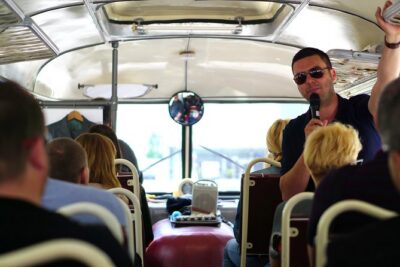
Warsaw: Evening History and Pubs Tour by Retro Minibus
Read our review →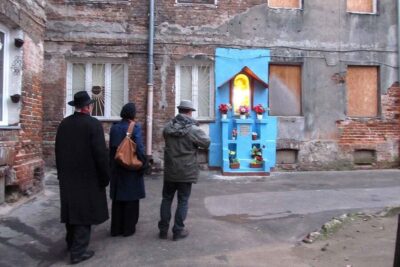
Warsaw: WWII Private Tour by Retro Minibus with Hotel Pickup
Read our review →Browse the lists this tour appears in