
REVIEW · WARSAW
Discover the Dark Side of Warsaw in Praga District by Retro Bus
Praga is Warsaw’s rough-edged, more complicated face. This 2.5-hour ride takes you across the Vistula in a 1980s retro bus, then into courtyards, old factories, murals, markets, and streets that escaped much of the wartime destruction. It is less about grand monuments and more about how ordinary Warsaw changed after WWII and communism.
I like the hot chocolate at E.Wedel and the chance to see Praga without spending half a day figuring out its far-flung streets. I also like the guides’ personal style. Konrad, Marcin, and Paweł have all been praised for clear English, humor, and strong storytelling. The drawback is that the dark side label promises something grittier than the tour delivers, and a large or late group can make some stops feel rushed.
Key points to know before you book
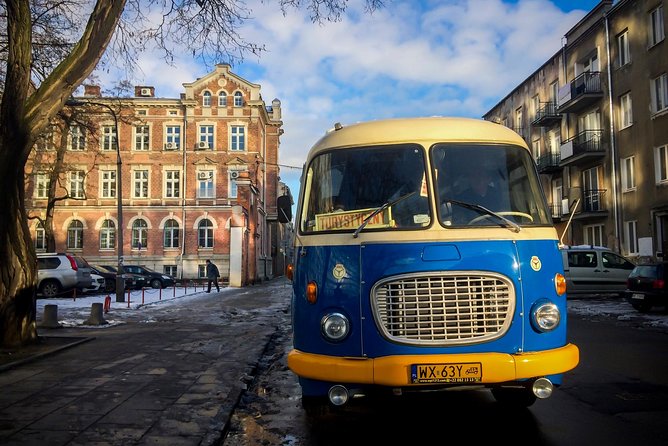
- Ride a genuine-feeling 1980s coach: The bus is part of the experience, not just a way to get around, though it may lack air conditioning and can occasionally be temperamental.
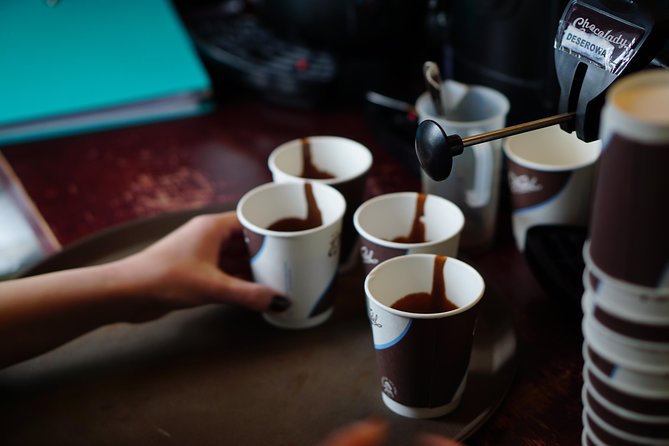
- Taste E.Wedel hot chocolate: This 20-minute stop adds a welcome treat and introduces one of Warsaw’s best-known chocolate makers.
- See a different Warsaw: Praga offers prewar buildings, inner courtyards, street art, old industrial sites, and streets linked with The Pianist.
- Expect history with jokes: Guides such as Konrad, Marcin, and Paweł bring stories about WWII, communism, vodka, and daily life under the Iron Curtain.
- Budget about $42.34: The price is fair if you value transport, a guide, and access to several scattered areas in one outing.
- Prepare for changing group sizes: The stated maximum is 40 people, though larger departures have been split among several buses.
Why Praga makes a good change from central Warsaw
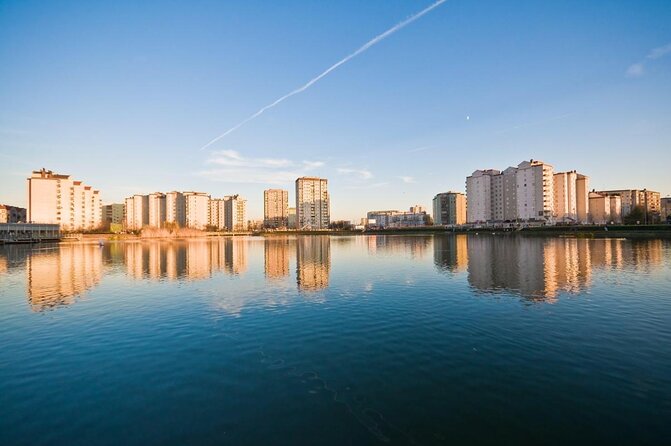
Most first-time visits to Warsaw focus on the Old Town, the Royal Route, the Palace of Culture and Science, and the rebuilt center. Those areas matter, but they do not tell the whole story. Across the Vistula, Praga offers a different set of clues: old brick buildings, worn facades, enclosed courtyards, former factories, and streets where postwar life was not polished for visitors.
Praga was once a separate city before it became part of Warsaw. Its location east of the river also shaped its fate during WWII. Parts of the district survived the bombing that destroyed much of the central city, leaving older buildings that help you picture Warsaw before the war. That does not make Praga an untouched historic quarter. It is a district still being repaired and reshaped.
The bus lets you cover more ground than a walking tour. You will cross the Vistula, move through several neighborhoods, and get a running commentary between stops. I find this useful because Praga’s sights are spread out. You are not simply walking from one postcard view to the next. You are watching the city change through the bus window.
The tour leaves from the Warsaw Tourist Information Office beside the Palace of Culture and Science. The building itself is hard to miss. It was presented as a gift from Joseph Stalin and remains one of Warsaw’s most recognizable landmarks. The meeting point is central and close to public transport, but check your confirmation carefully: the supplied details give both 10:30 a.m. and 11 a.m. as the start time.
A few more bus tours around the world worth a look
- Mt Fuji and Hakone 1-Day Bus Tour Return by Bullet Train
★ 5.0 · 26,383 reviews - Barcelona: 24 or 48-Hour Hop-On Hop-Off Bus Tour
★ 4.4 · 20,872 reviews - London: Warner Bros. Studio Harry Potter Tour & Branded Bus
★ 4.7 · 19,194 reviews
The retro bus is part of the story
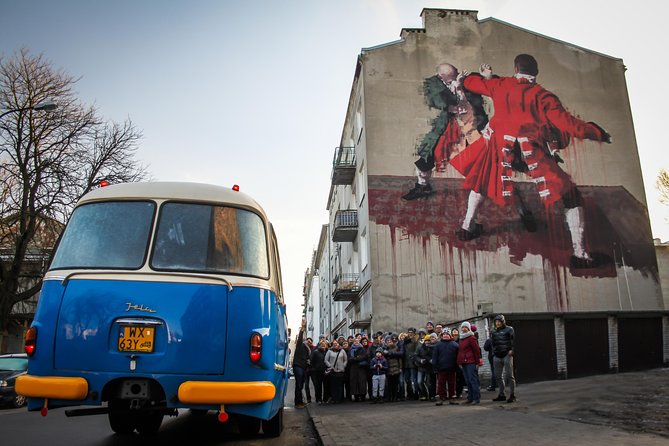
The 1980s coach gives this outing its character. You are not being carried in a standard modern minibus that could belong to any city. The old vehicle fits a tour about Warsaw’s communist period and makes the journey feel connected to the stories being told.
That charm comes with trade-offs. The bus is not described as air-conditioned, and one hot-weather outing was uncomfortable. Another ride had a battery problem, and passengers helped push the bus. That sort of mishap may become a funny memory, but it also reminds you that this is a vintage vehicle rather than a luxury coach.
You should dress for the weather because the tour operates in rain or shine. Bring water, especially on a warm day. One departure had no easy chance to buy drinks during the outing. The coach is also a poor place for a long, quiet rest if the group is loud.
Group size matters. The stated maximum is 40 people, but one larger departure had around 80 people divided among three buses. If you want the best chance of hearing every story, arrive early, stay close to your assigned group, and pay attention to which guide and bus you are using. A small group may mean a smaller bus, but that can work in your favor. You may get a more personal experience and spend less time waiting for people to reboard.
Crossing the Vistula with Warsaw stories
The first part of the journey gives your guide room to set the scene. You may hear about the date palm in central Warsaw, the National Museum basement during WWII, the football stadium built for the 2012 UEFA European Championship, and the changing shape of the city after the war.
These details may seem scattered at first, but they create useful links between central Warsaw and Praga. You will also pass the Warsaw East railway station and hear the story of the city’s longest building. The tour is not only about getting to Praga. The bus commentary turns the ride into a moving introduction to Warsaw’s politics, architecture, war damage, and postwar rebuilding.
The crossing of the Vistula is brief, yet it marks a clear change. On the central side, Warsaw often feels planned and monumental. In Praga, the streets and buildings reveal more of the city’s working life and its long periods of neglect and repair.
E.Wedel: a sweet stop with industrial roots
The E.Wedel stop is one of the clearest crowd-pleasers. You receive a cup of hot chocolate and spend about 20 minutes hearing about the 19th-century chocolate factory. It is a simple inclusion, but it gives the tour a pleasant pause after the ride.
The chocolate stop also adds a human scale to the history. Factories are not only shells or museum pieces. They shaped employment, neighborhoods, and the identity of Warsaw. Even in warm weather, the hot chocolate can be enjoyable, though you may not want to linger over a steaming cup on a very hot day.
Do not expect a full factory visit or a long tasting session. The information provided points to a cup of hot chocolate and stories about the factory. Think of it as a short cultural stop, not a chocolate workshop.
Same city, a different seat on the bus:
- Rome: City Sightseeing Hop-on Hop-off Bus with Audioguide
★ 4.0 · 16,045 reviews - Amsterdam: Zaanse Schans, Edam, Volendam & Marken Bus Tour
★ 4.6 · 15,034 reviews - 1-Day Tokyo Bus Tour
★ 5.0 · 14,250 reviews - From Reykjavik: Northern Lights Bus Tour with Hot Cocoa
★ 4.3 · 13,947 reviews
Kamionek and the old industrial edge
The Kamionek neighborhood shows how Praga has changed. Former industrial areas now sit beside hip bars and cafes, creating a mix of old workspaces and newer city life. This is one of the tour’s useful themes: Praga is not frozen in the past.
You can see why the district attracts people looking for a less formal side of Warsaw, but you also get reminders that change is uneven. A cafe may occupy one building while the next courtyard still looks worn. That contrast is part of the point. If you prefer perfectly restored streets, Praga may feel untidy. If you want to see a district in transition, this section gives you plenty to notice.
Murals on Brzeska and Stalowa
The streets of Brzeska and Stalowa bring the strongest visual element of the outing. Murals here refer to Polish history and political life, and the painted walls offer a quick way to see how public art comments on the past and present.
The tour includes street art, but it does not appear to be a long mural walk. You may stop for photographs and an explanation, yet the schedule also covers several other parts of Praga. If murals are your main reason for booking, keep your expectations in check. You will see them as part of a wider history tour rather than as the central subject.
The area also helps explain why Praga has been called Warsaw’s dark side. That phrase points to its old reputation, black markets, rough courtyards, and difficult postwar years. It should not be taken as a promise of a frightening or shocking excursion.
Różycki’s Bazaar and the old vodka factory
Różycki’s Bazaar is tied to some of Praga’s most colorful stories. It was once a place where customers could find forged documents and other goods outside official channels. The tour also identifies the longest-operating marketplace in Warsaw and gives you a chance to see what is sold there now.
This is a useful stop because it connects the district’s past with its everyday present. Markets reveal more about a place than a polished monument often can. You may not spend long browsing, but the story helps explain how people managed during periods when official shops offered little choice.
At Koneser, the former Warsaw Vodka Factory, the focus shifts to industry and drinking culture. You hear how the factory affected the district and whether vodka played a role in Praga’s identity. The stop lasts about 20 minutes. The old factory complex also shows how industrial buildings can find a new life as Warsaw changes.
Do not confuse this stop with a vodka tasting. The included refreshment is hot chocolate, and the factory visit is presented as a historical stop.
The Basilica and Praga’s prewar courtyards
The Basilica of the Sacred Heart of Jesus is listed as a 20-minute stop. It is described as one of Poland’s most beautiful churches, giving you a chance to step away from factories, markets, and graffiti for a more formal piece of Praga.
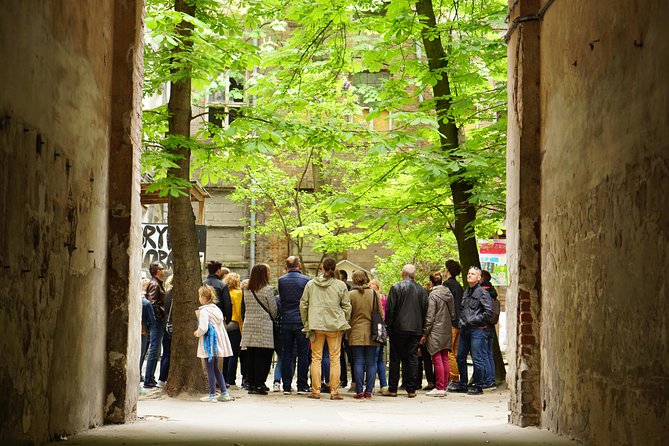
The strongest architectural moments come later, in the courtyards and streets of Praga Polnoc and New Praga. Some residential buildings survived the war, and their inner courtyards offer a glimpse of how people lived before the city was rebuilt. These spaces are not grand palace interiors. Their appeal comes from scale, texture, and the feeling that you are seeing a working neighborhood rather than a staged attraction.
The New Praga section includes a story about the founder of the district and a visit to the inner courtyard of a prewar residential building. It lasts about 15 minutes, so you will get an introduction rather than a long architectural study.
The Pianist, Warsaw Zoo, and the return across the river
A picturesque street in Praga was used as a filming location for Roman Polański’s The Pianist. The connection matters because the film helped many viewers picture wartime Warsaw, but the street itself is not a film set preserved for visitors. You are seeing a real part of the district with a screen history attached to it.
The tour also points out Warsaw Zoo, known to many people through The Zookeeper’s Wife. According to the route, you pass or view the zoo rather than take a separate zoo visit. If you want to enter, you would need to plan that for another time.
On the return journey, the bus crosses the Vistula again. You may see the Royal Castle panorama and the Warsaw Nike monument, which commemorates those who died in Warsaw during WWII. The route also includes Warsaw’s main street, widened after the war. These sights bring the day back toward the city center and tie Praga’s story to the larger story of Warsaw’s destruction and rebuilding.
How the time and price work for you
At roughly 2 hours and 30 minutes, this is a compact way to reach several parts of Praga. You get transport, live commentary, an English-speaking guide, a vintage coach, and hot chocolate for about $42.34 per person.
I consider that reasonable if you are short on time or prefer not to piece together the district by tram and foot. The value comes from the guide’s interpretation and the transport between scattered stops. It is less compelling if you only want a long look at murals or a relaxed cafe outing.
The schedule is busy. Several stops last 15 or 20 minutes, while the main Praga Polnoc section takes about an hour. You should expect a steady pace and short photo windows. One delayed group had to rush through parts of the route, so punctuality matters. Arrive at the Palace of Culture and Science early, and do not assume the bus will wait for late arrivals.
The tour is offered in English and confirmation is provided at booking. Most people can take part, and the route is near public transport. Free cancellation is available up to 24 hours before the start time. If the minimum number is not reached, the provider offers another date or a full refund.
Who will enjoy this Praga tour most
I would choose this outing if you:
- Want Warsaw beyond the Old Town and major central monuments
- Like social history, WWII stories, communism, and city change
- Enjoy unusual transport and a bit of harmless vintage-bus drama
- Prefer a guide to explain what you are seeing
- Have only a few hours for Praga
- Want a tour that mixes buildings, markets, murals, film locations, and local stories
I would hesitate if you want a quiet, polished sightseeing ride, a serious street-art tour, or a genuinely dark and unsettling experience. The word dark refers more to Praga’s old reputation and difficult past than to anything scary.
Should you book the retro-bus tour?
Book it if you want an accessible introduction to Praga and value stories as much as sights. The E.Wedel chocolate, Koneser factory, old courtyards, Różycki’s Bazaar, and The Pianist location give the route variety, while the bus saves you from working out the connections yourself.
Go with realistic expectations. Praga is an ordinary district in transition, not a perfectly preserved historic quarter. The bus can be warm, the group can be large, and the schedule can feel quick. Still, with a strong guide such as Konrad, Marcin, or Paweł, the outing gives you a useful view of Warsaw that a standard center-city tour will miss.
FAQ
Where does the tour start and finish?
It starts and ends at the Warsaw Tourist Information Office beside the Palace of Culture and Science at pl. Defilad 1. The activity returns to the original meeting point.
What time does the tour start?
The supplied details list both 10:30 a.m. and 11 a.m. Because of this discrepancy, check your booking confirmation for the exact departure time.
How long does the experience last?
The tour lasts approximately 2 hours and 30 minutes.
Is the tour offered in English?
Yes. The experience is offered in English with live commentary from a guide.
What is included in the price?
The price includes a professional guide, live commentary on board, transport by a 1980s coach, and one cup of hot chocolate.
Is the hot chocolate included?
Yes. You receive a cup of hot chocolate during the E.Wedel stop.
How many people can join the tour?
The stated maximum is 40 people. A larger departure has also been described as being divided among three buses, so group arrangements may vary.
Just added around the world
- 2 Days 1 night Sapa Tour from Hanoi by Limousine/Sleeper bus★ 4.5 · 6 reviews
- Halong Bay Luxury Cruise Day trip: Buffet lunch, limousine bus★ 5.0 · 2 reviews
- Hoa Lu – Tam Coc Luxury Small group 1D: Limousine bus, biking, boat trip, Lunch★ 5.0 · 6 reviews
- Halong Bay Luxury cruise Day trip: Buffet Lunch, Limousine bus★ 5.0 · 25 reviews
- Halong bay Luxury Cruise Day trip: Buffet lunch & Limousine bus★ 5.0 · 3 reviews
- Limousine Bus Transportation from Hanoi to Sapa★ 5.0 · 2 reviews
- From Hanoi- Halong Bay 1 Day Save Cost With Limousine Bus Option★ 5.0 · 8 reviews
- Halong bay Luxur Cruise Day trip: Buffet lunch & Limousine bus★ 5.0 · 21 reviews
Warsaw Bus Tours, compared.
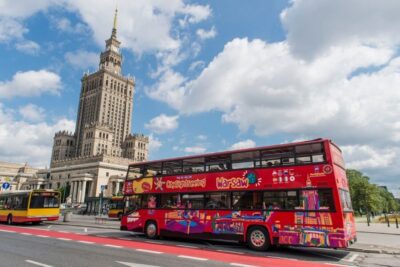
Warsaw: City Sightseeing Hop-On Hop-Off Bus Tour
Read our review →
Warsaw: 2.5-Hour Dark Side – Praga District by a Retro Bus
Read our review →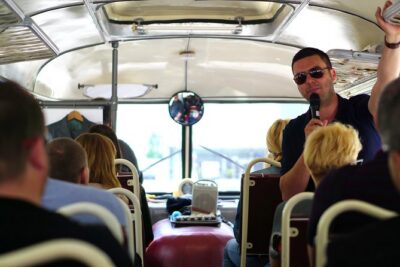
Warsaw: Evening History and Pubs Tour by Retro Minibus
Read our review →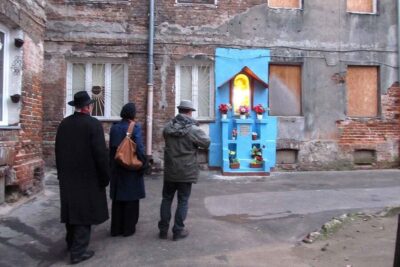
Warsaw: WWII Private Tour by Retro Minibus with Hotel Pickup
Read our review →Browse the lists this tour appears in