
REVIEW · JAPAN
7 Day Bus Pass: Tokyo, Kanazawa, Takayama, Kyoto and More
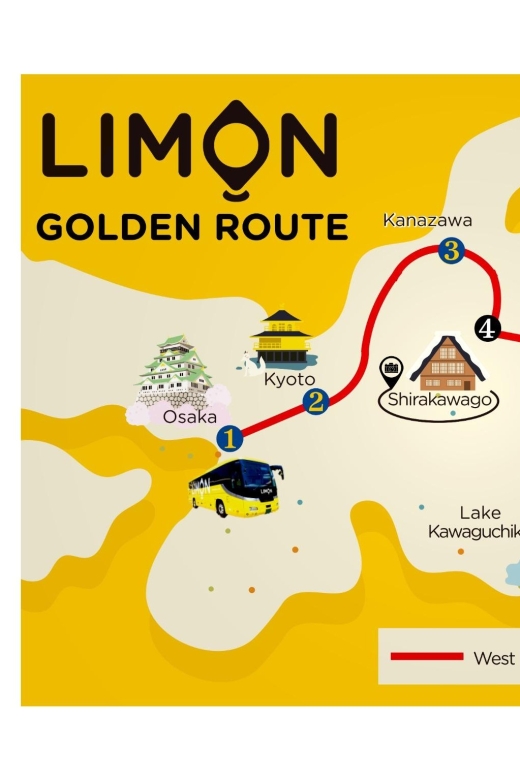
The clever part of this pass is that it links Tokyo, the Japanese Alps, Kanazawa, Kyoto, and Osaka without making you piece together every long-distance transfer yourself. I like the freedom to set your own route, and I like that daily departures reach places such as Takayama and Shirakawago that can be less simple by train. The catch is that every seat must be reserved after purchase, and all passengers under one booking must travel together.
I also like the practical touch of taxi arrangements for the Tokyo to Kawaguchiko and Tokyo to Takayama connections. Clean, comfortable buses and excellent drivers add to the appeal. Still, $242 is worthwhile only if you use several legs, and your baggage must fit strict limits.
Key points to know before booking
- Seven days of route flexibility: Build your own journey between Tokyo or Osaka and Kyoto, using the included bus network.
- Useful stops beyond the main cities: Reach Kawaguchiko, Hirayu Onsen, Takayama, Kanazawa, Kyoto, and Osaka.
- Selected sightseeing departures: Some services include Mt. Fuji 5th Station or Shirakawago.
- Daily departures: Regular service makes it easier to fit transport around your plans.
- Reservations are essential: After buying, use your GetYourGuide booking reference to reserve each seat.
- Baggage has limits: You may bring up to three pieces, including one large suitcase, one small suitcase, and one small carry-on.
A seven-day route across Honshu

I see this pass as a transport plan for a multi-city Japan trip, not as a guided tour. You choose the direction, cities, and length of each stay, then use LIMON buses for the long connections.
The route can begin in Tokyo or from the Osaka and Kyoto side. That makes it useful for a one-way journey across Honshu, especially if you want to finish in a different city from where you started.
The included network reaches Tokyo, Lake Kawaguchiko, Hirayu Onsen, Takayama, Kanazawa, Kyoto, and Osaka. Select departures also include sightseeing at Mt. Fuji 5th Station and Shirakawago. You should check the exact departure and route before building your schedule, since these sightseeing features do not apply to every service.
This freedom is the main reason to consider the pass. You are not locked into a fixed group itinerary, hotel plan, or restaurant schedule. You can spend extra time in Takayama, stop in Kanazawa, or use Kyoto as your base before continuing to Osaka.
The tradeoff is that you must do the planning yourself. The pass does not include accommodation, meals, or a guide. I would map out your intended route before buying and confirm that the included departures match your dates.
Other bus tours people book around Japan:
- Mt Fuji and Hakone 1-Day Bus Tour Return by Bullet Train
★ 5.0 · 26,383 reviews - 1-Day Tokyo Bus Tour
★ 5.0 · 14,250 reviews - PERFECT KYOTO 1-Day Bus Tour
★ 5.0 · 13,518 reviews
Tokyo to Kawaguchiko and the Mt. Fuji option
Kawaguchiko is included as a stop, giving you access to one of the best-known viewing areas around Mt. Fuji. Selected departures also visit Mt. Fuji 5th Station, a much higher viewpoint on the mountain itself.
The 5th Station option is especially useful if you want a Fuji experience without arranging several local connections on your own. It is not included on every departure, so treat it as a route-specific feature rather than a standard part of the pass.
The Tokyo to Kawaguchiko connection has a practical wrinkle. LIMON arranges a taxi for customers making this journey, which can help when the bus route and local station connection do not line up neatly. The same taxi arrangement applies between Tokyo and Takayama, with the taxi running from Highland Resort Hotel and Spa to Kawaguchiko Station.
That detail matters because transport around Fuji can involve several separate steps. You should read your assigned itinerary carefully so you know where the taxi connection fits and where you need to manage the next leg yourself.
Hirayu Onsen and the road toward Takayama
Hirayu Onsen gives the route a different flavor from the major cities. It is one of the listed stops on the bus network and can work well for a trip focused on mountain scenery and hot-spring areas.
Takayama is one of the strongest reasons to choose this pass. The city offers a slower pace than Tokyo, Kyoto, or Osaka, and it is a useful base for seeing central Japan. The direct bus connection is valuable because this part of the country is not always as straightforward to reach as the major urban centers.
The Tokyo to Takayama option includes a taxi arrangement from Highland Resort Hotel and Spa to Kawaguchiko Station. You should not assume every part of the journey is one single coach ride. Read the itinerary for the exact meeting point and transfer instructions.
Buses can be a good choice here because they let you link Fuji and Takayama in one broader route. The drawback is travel time and road dependence. Unlike a train, a bus journey can be affected by traffic or weather, so avoid planning a tight connection immediately after arrival.
Takayama to Kanazawa and the Shirakawago choice
The route also connects Takayama with Kanazawa, two stops that complement each other well. Takayama gives you a smaller city and access to the central mountain region, while Kanazawa offers a larger cultural stop before you continue toward Kyoto or Osaka.
Some departures include Shirakawago sightseeing. This is a major practical advantage if the village is on your wish list, since reaching it independently can require careful bus planning and advance seat reservations.
Do not treat Shirakawago as guaranteed on every journey. It is listed for select departures, so check the precise route before booking. If you specifically want to stop there, choose the departure that names it rather than assuming the pass automatically includes the visit.
The bus format also lets you see more than you would on a simple Tokyo to Kyoto transfer. You can break up the long east-west trip with mountain towns and regional cities. That is the real value here: not just getting from one big city to another, but adding places that are harder to fit into a standard rail itinerary.
A few more bus tours around Japan worth a look
- Peaceful Hiroshima & Miyajima UNESCO 1 Day Bus Tour
★ 5.0 · 5,309 reviews - Kyoto: Fushimi Inari, Kinkakuji, Bamboo Grove 1 Day Bus Tour
★ 4.8 · 4,316 reviews - Tokyo: Meiji Shrine, Asakusa, Skytree Bus Tour and Cruise
★ 4.7 · 1,986 reviews - Mt Fuji & Hakone Cruise, Drum Show Bus 1 Day from Tokyo
★ 4.0 · 1,287 reviews
Kanazawa, Kyoto, and Osaka connections
Kanazawa is included as a stop, with onward travel toward Kyoto and Osaka. This makes the pass useful for a westbound route after Fuji and Takayama.
Kyoto and Osaka are both available on the network, and you can choose the city that fits your plans. Kyoto works well as a cultural base, while Osaka is a practical finish for a trip that ends in the Kansai region. The pass lets you decide how long to stay in each place, provided you reserve the required bus seats.
There is no included sightseeing tour in either city. You are buying transportation, not a guided introduction. I like that arrangement for independent visitors, but you need to be comfortable handling your own sightseeing days and local transit once you arrive.
The route can also work in reverse, beginning around Osaka or Kyoto and finishing in Tokyo. That flexibility may help if your international flights use different airports or if your wider Japan plans already determine your arrival and departure cities.
What the $242 price really buys you
At $242 per person, this is not a cheap single transfer. If you only need one ride, I would compare the fare with a normal bus or train ticket instead.
The value improves when you use several long-distance legs over the seven-day period. A route covering Tokyo, Kawaguchiko, Takayama, Kanazawa, Kyoto, and Osaka could otherwise require multiple bookings, different operators, and more work checking each timetable. The pass puts those connections under one transport plan.
It also has value for destinations where the train is not the easiest answer. Takayama, Hirayu Onsen, Kawaguchiko, and Shirakawago are the key examples. You are paying partly for access and planning convenience, not only for mileage.
I would buy it only after sketching a realistic seven-day route. Count the long journeys you expect to use. If you will make only two short connections, the price may not work in your favor. If you will cross much of Honshu and include several regional stops, the pass becomes easier to justify.
Meals and accommodation are not included, so your actual trip cost will be much higher. That is normal for a transport pass, but it is worth keeping the full budget in view.
Clean buses, daily service, and comfort
The service is built around daily departures, which gives you useful planning flexibility. You are not limited to one weekly coach or a seasonal departure, although the exact times depend on the route and date you choose.
The buses are described as clean and comfortable, and the drivers receive strong praise for their service. That matters on long Japanese road journeys, where a dependable vehicle and a calm driver can make a real difference.
The exact vehicle may change according to passenger numbers. You should therefore expect the transport format to vary slightly rather than assuming one fixed coach model for every departure.
Baggage storage is available, but you remain responsible for your belongings. The operator does not accept responsibility for lost, damaged, or forgotten items when negligence is not recognized. Keep valuables and essential documents in the small carry-on that stays with you.
The baggage allowance is specific:
- One large suitcase with maximum overall dimensions of 208 centimeters
- One small suitcase with maximum overall dimensions of 126 centimeters
- One small carry-on bag for your seat
That means three pieces in total. If you are carrying ski gear, oversized luggage, or several large cases, this may not be the right transport option. Measure your bags before you leave home, rather than guessing at the station.
How reservations affect your freedom
The pass offers flexibility, but not unlimited spontaneity. After purchase, you must log in using your GetYourGuide booking reference ID and reserve a seat for every stop you plan to use.
Your itinerary is sent to the lead traveler’s email address. Keep that message available and check every meeting point, since the location can vary with the option booked.
All people under a single booking must travel together. You cannot use one booking as a loose pool of seats for a group that plans to split up. If your party has different schedules, separate arrangements may be needed.
You can change your reservation or departure point until noon on the day before departure. That is helpful when your plans shift, but it is not a reason to postpone every decision until the last moment. Popular routes and sightseeing departures may have fewer suitable choices by then.
The booking page describes the activity as valid for one day, while the product itself provides travel along the route for seven days. I would pay close attention to the dates and route instructions shown when you select your option, since the individual departure reservation and the seven-day pass period serve different purposes.
Who should choose this pass
I would recommend the pass to you if you want to combine major cities with regional stops and prefer one organized bus network over several separate transport purchases.
It suits independent visitors who enjoy setting their own itinerary but do not want to research every connection from scratch. It is also useful if Takayama, Kawaguchiko, Kanazawa, or Shirakawago is important to your trip.
Families and groups may appreciate the daily service and the ability to keep a route together. Just remember that everyone under one booking must travel together, and every passenger’s baggage must meet the limits.
This is less suitable if you prefer rail travel, want complete last-minute freedom, or plan to carry a lot of luggage. It is also not the right choice if your trip centers on just one city. In that case, a multi-city pass may add cost and planning work without enough benefit.
Cash and comfortable clothing are recommended, while pets and smoking are not allowed. The cash note is worth remembering for small expenses during your route, since meals and accommodation are separate.
Cancellation and final booking advice
You may cancel up to 11 days in advance for a 95 percent refund. That gives you a useful window to confirm your wider Japan itinerary before the cutoff.
Before booking, I would check four things: your starting side, your must-see stops, the baggage rules, and the exact departure reservations available for your dates. If Shirakawago or Mt. Fuji 5th Station matters to you, confirm that the selected departure includes it.
The strongest praise for this service centers on clean, comfortable buses and excellent drivers. Those are simple qualities, but they matter when you are spending several days on the road.
Should you book the LIMON Pass?
Book it if you want a seven-day route linking Tokyo and the Kansai region with worthwhile stops in between. The combination of daily departures, direct access to Takayama and Kanazawa, and selected Fuji and Shirakawago services makes it a practical choice for a broad Honshu itinerary.
Skip it if you need only one transfer, carry oversized baggage, or want to make every decision at the last minute. At $242, the pass earns its keep through several long journeys, not through a single ride. Plan the route first, reserve each seat promptly, and it can take much of the transport hassle out of a busy Japan trip.
FAQ
How long is the LIMON Pass valid?
The pass provides travel along the route for seven days. The activity page also displays a one-day validity period for the individual booking, so check the dates and option details when booking.
Where can I start the route?
You can choose a route departing from Tokyo or from the Osaka and Kyoto area.
Which cities and stops are included?
The listed stops are Tokyo, Lake Kawaguchiko, Hirayu Onsen, Takayama, Kanazawa, Kyoto, and Osaka.
Does the pass include Mt. Fuji?
Selected departures include sightseeing at Mt. Fuji 5th Station. It is not stated as an inclusion on every departure, so check the route option before booking.
Does the pass include Shirakawago?
Shirakawago is included for select departures. You should reserve a departure that specifically includes the sightseeing stop if you want to visit.
Do I need to reserve seats after buying the pass?
Yes. After purchase, use your GetYourGuide booking reference ID to reserve a seat for each stop on your trip.
Can people on the same booking travel separately?
No. All members under one booking must travel together.
How much baggage can I bring?
You may bring up to three pieces: one large suitcase with maximum overall dimensions of 208 centimeters, one small suitcase with maximum overall dimensions of 126 centimeters, and one small carry-on bag for your seat.
Are meals and hotels included?
No. Meals and accommodation are not included in the pass.
Can I change my departure point?
You can modify your reservation or departure point until 12 PM on the day before departure.
Just added around Japan
- Fukuoka Open Top Bus and Hakata Doll Painting Experience with Guide★ 3.5 · 3 reviews
- Huis Ten Bosch Full Day Bus Tour From Hakata★ 3.5 · 3 reviews
- Tokyo: A Half-Day Trip Bus Tour in the Morning★ 4.6 · 236 reviews
- 3-Row Luxury Bus Tour to Mt. Fuji, Lake Kawaguchi from Tokyo★ 4.3 · 3 reviews
- Tokyo: 1 Day Bus Tour with Meiji-Jingu,Odaiba,lunch&Skytree★ 4.6 · 156 reviews
- Full Tokyo: Meiji Shrine, Imperial Palace, Asakusa & Skytree★ 4.4 · 7 reviews
- Tokyo: Mount Fuji Views and KABA Amphibious Bus Day Tour★ 5.0 · 4 reviews
- Shirakawago and Takayama 1 Day Bus Tour from Nagoya★ 4.5 · 2 reviews
Japan Bus Tours, compared.
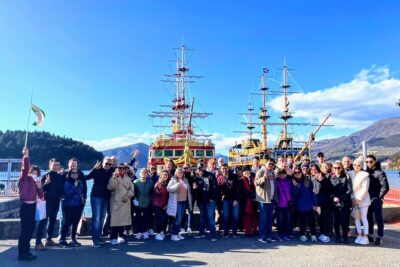
Mt Fuji and Hakone 1-Day Bus Tour Return by Bullet Train
Read our review →
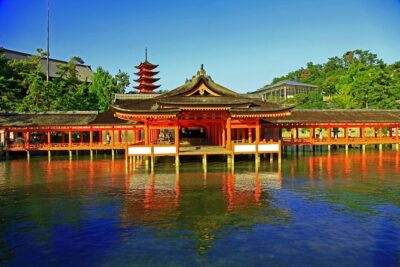
Peaceful Hiroshima & Miyajima UNESCO 1 Day Bus Tour
Read our review →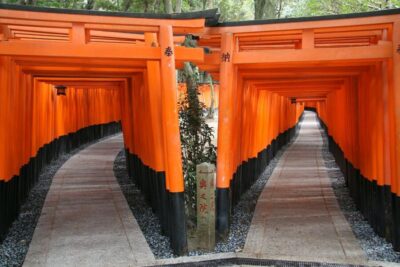
Fushimi Inari, Kinkakuji, Bamboo Grove 1 Day Bus Tour
Read our review →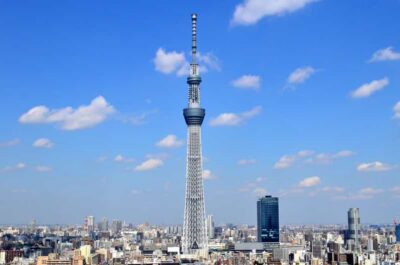
Meiji Shrine, Asakusa, Skytree Bus Tour and Cruise
Read our review →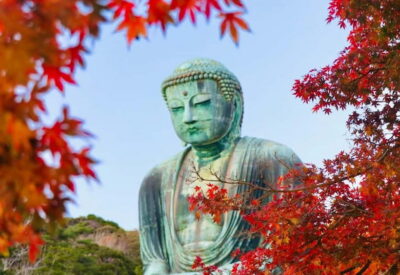
Kamakura & Enoshima Day Trip including Temple Tickets
Read our review →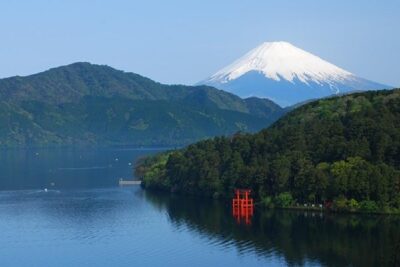
Mt Fuji & Hakone Cruise, Drum Show Bus 1 Day from Tokyo
Read our review →
Kyoto/Osaka: Nara, Fushimi Inari Taisha, Arashiyama Bus Tour
Read our review →Browse the lists this tour appears in