
REVIEW · WARSAW
Warsaw: WWII Private Tour by Retro Minibus with Hotel Pickup
Warsaw’s wartime story is easier to grasp when you are looking at the actual walls, streets, and empty spaces where it happened. This three-hour private tour uses a retro Żuk minibus, archival photographs, and sharp storytelling to connect modern Warsaw with the Nazi occupation, the Jewish Ghetto, Soviet repression, and the 1944 uprising.
I especially like the preserved Ghetto Wall fragment and the ruined tenement on Waliców Street. I also like the way the guide compares old photographs with the same streets today, helping you see what war erased and what the city chose to preserve. Guides named Konrad, Lucas, and Adam have led this experience.
The main consideration is the vehicle. Classic minibuses may have no air conditioning, and some have no seat belts, as allowed for historic vehicles. Hotel transfers count within the three-hour tour, so meeting in central Warsaw can give you more time at the important sites.
Key points to know before you book
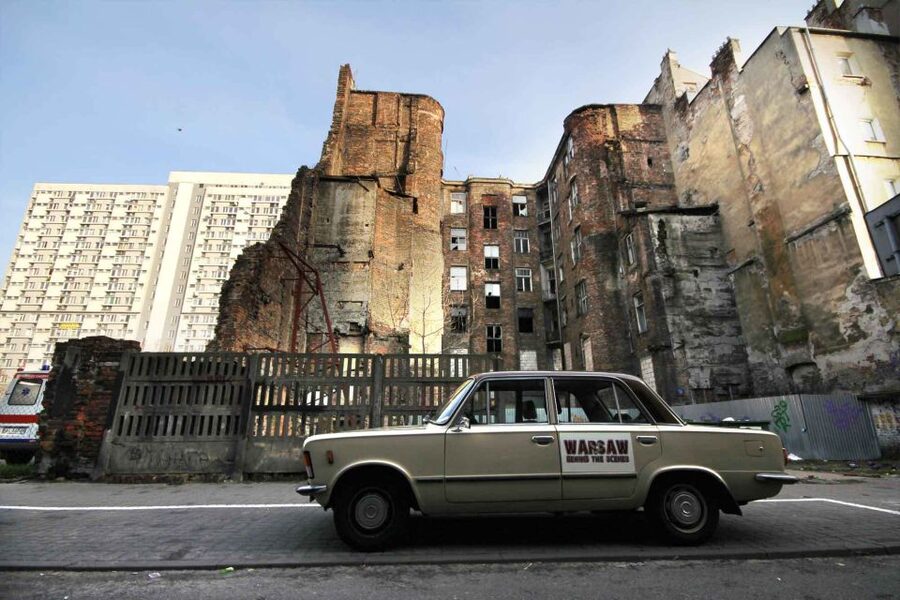
- A rare view of wartime Warsaw: See Ghetto remains, bullet-marked buildings, memorials, ruins, and streets rebuilt after near-total destruction.
- The Jewish Ghetto is central: Visit a surviving wall fragment, Waliców Street, Chłodna Street, Muranów, and the area near the Ghetto Heroes Monument.
- Both major uprisings are explained: The tour covers the 1943 Warsaw Ghetto Uprising and the 1944 Warsaw Uprising.
- Archival photos add useful context: You compare wartime images with the streets in front of you, rather than relying on dates alone.
- The minibus saves time: A private group of up to eight people can cover more ground than a walking tour.
- Best for history-focused adults and older children: The subject is serious, and the tour is not suitable for children under 15.
Why a retro Żuk makes sense for this Warsaw tour
The old communist-era minibus is not just a decorative extra. Warsaw’s wartime sites are spread across the city, and a vehicle lets you move between them without spending much of your three hours on public transport or long walks.
The minibus is used mainly for transfers. At each location, you get out and walk, so comfortable shoes matter. A single vehicle holds up to eight people, and the operator has a fleet of five minibuses. Since the experience is private, your group does not have to follow the pace of a large coach party.
There are tradeoffs. These are historic vehicles, not modern touring vans. They do have heating for winter, but they are not air-conditioned. Some do not have seat belts, which is permitted for historic vehicles in Poland. In warm weather, you should dress lightly and expect the ride to feel more old-fashioned than polished.
That old-fashioned quality will appeal to you if you enjoy transport with character. If you need modern climate control or the latest safety fittings, a standard minibus tour may feel more comfortable.
A few more bus tours around the world worth a look
- UNESCO Tour: Alberobello and Matera by private bus from Bari
★ 4.8 · 2,871 reviews - Cozumel: Private Excursion – Van or MiniBus
★ 5.0 · 427 reviews - 6 Hours – Singapore Tour in Private Car or Minibus with Driver
★ 4.5 · 390 reviews
The road to war: Poland between Germany and the Soviet Union
The tour begins before the first German bombs. Your guide explains the international situation before 1939, then sets out how Poland was attacked by Nazi Germany while the Soviet Union occupied the country’s eastern territories.
This opening matters because Warsaw’s wartime story was shaped by two separate systems of force. German occupation brought terror, forced labor, mass murder, and the destruction of the city. Soviet rule brought arrests, deportations to Siberia, and the killing of Polish officers and intellectuals, including the Katyń massacres.
You also learn how ordinary life changed under occupation and how resistance grew. Warsaw became home to one of Europe’s largest resistance movements, but the tour does not treat resistance as a simple heroic tale. The guide places it within a city where people faced hunger, imprisonment, fear, and impossible choices.
This broad introduction is one of the strongest reasons to choose the tour over a basic monument-to-monument outing. You receive the political setting first, then see how it affected neighborhoods and families.
The Warsaw Ghetto Wall and the physical limits of persecution
Before the war, Warsaw had a Jewish population of about 300,000. In 1940, Nazi authorities created the Warsaw Ghetto and forced hundreds of thousands of people into a sealed area with inhumane living conditions.
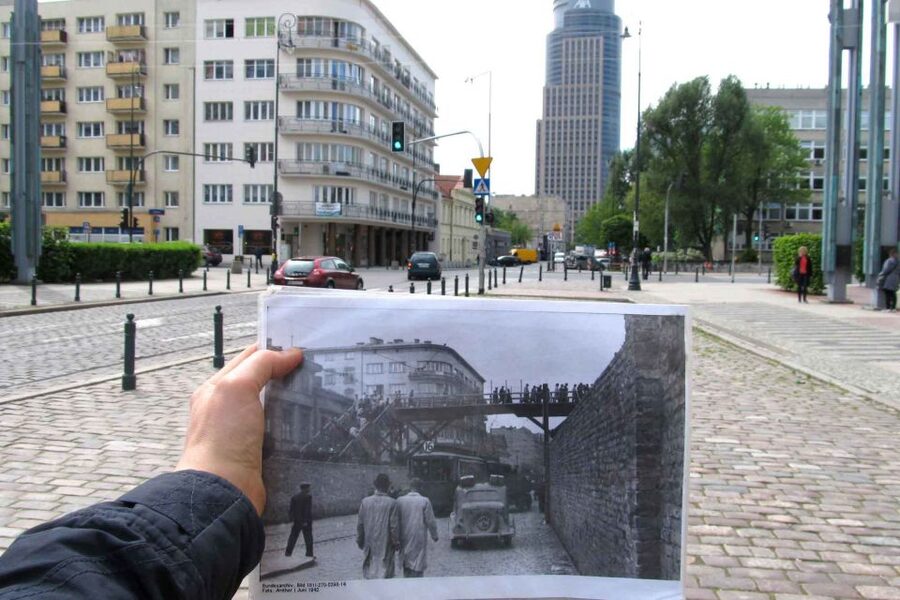
A preserved fragment of the former Ghetto Wall gives that policy a physical scale. You are not simply told that the ghetto was closed off. You can look at a remaining section of the barrier and consider how it divided homes, streets, and families.
The fragment is small, and that is part of the point. Much of wartime Warsaw was destroyed or rebuilt, so the surviving pieces can be easy to miss without a guide. This is a stop where the explanation matters as much as the object itself.
Archival photographs help bridge the gap between the fragment you see and the much larger ghetto that once surrounded it. Your guide can show how the street looked during the occupation, then help you orient yourself in present-day Warsaw.
Waliców Street and the ruined tenement
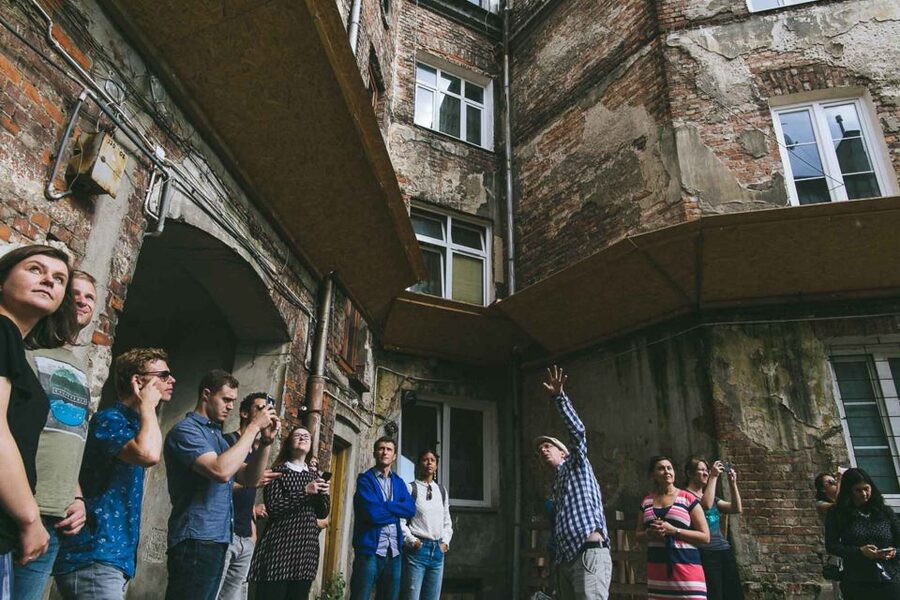
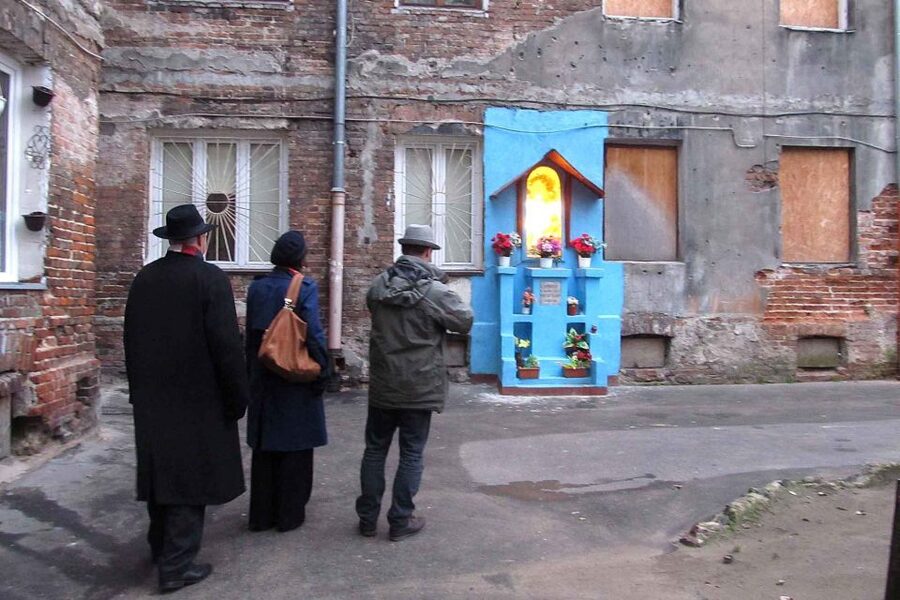
At Waliców Street, you see one of the last ruined tenement houses deliberately left unrestored. Its damaged walls are a direct reminder that Warsaw was not simply repaired after the war and returned to normal.
The building is useful precisely because it lacks polish. A memorial plaque can mark an event, but a ruined structure shows the scale of physical destruction. You can look at the masonry, empty windows, and damaged surfaces while the guide explains the neighborhood’s wartime role.
This stop also gives the tour a more personal scale. Large monuments can feel formal and distant. An old tenement suggests homes, staircases, neighbors, and daily life interrupted by occupation and violence.
You should not expect a preserved medieval quarter here. Warsaw’s wartime remains are often fragments surrounded by modern construction. That contrast is one of the city’s defining features, and the guide helps you read it instead of passing by without context.
Same city, a different seat on the bus:
- Mt Fuji and Hakone 1-Day Bus Tour Return by Bullet Train
★ 5.0 · 26,383 reviews - Barcelona: 24 or 48-Hour Hop-On Hop-Off Bus Tour
★ 4.4 · 20,872 reviews - London: Warner Bros. Studio Harry Potter Tour & Branded Bus
★ 4.7 · 19,194 reviews - Rome: City Sightseeing Hop-on Hop-off Bus with Audioguide
★ 4.0 · 16,045 reviews
Chłodna Street and the famous wooden bridge
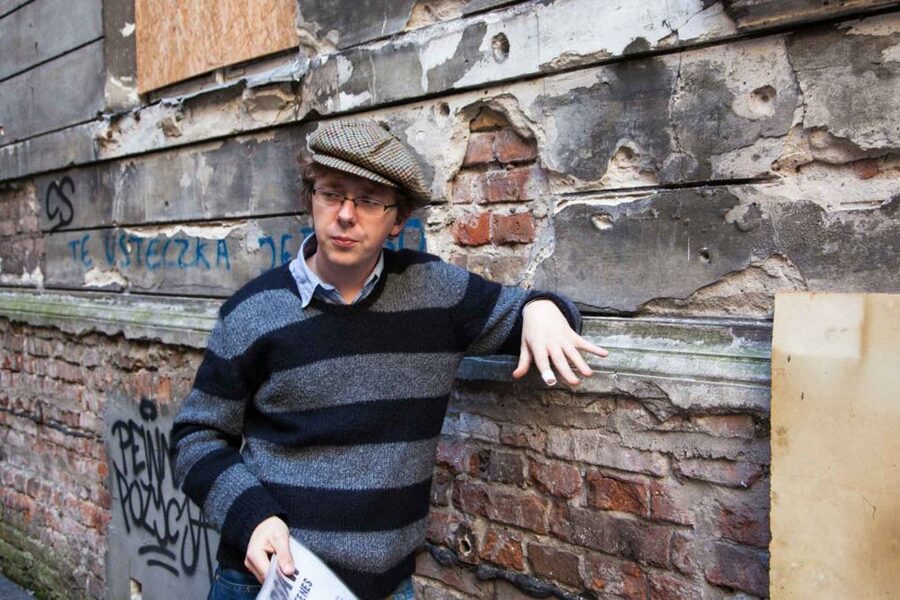
The tour also explains the wooden footbridge once built high above Chłodna Street. It connected the two sealed sections of the Ghetto while street traffic continued below.
The bridge is no longer there, so this part relies on photographs and explanation. That does not make it less valuable. In fact, it shows why archival images are so important in Warsaw. Many of the most striking wartime structures disappeared, but their locations can still be understood.
Standing on or near the modern street, you can compare the busy road below with images of the bridge overhead. The arrangement reveals the cold logic of the ghetto system: people were confined, divided, and controlled, while the city outside continued to function.
This is a good example of the tour’s method. It does not only bring you to surviving ruins. It also takes you to places where photographs and a precise explanation restore a lost scene.
Muranów, the Ghetto Heroes Monument, and POLIN
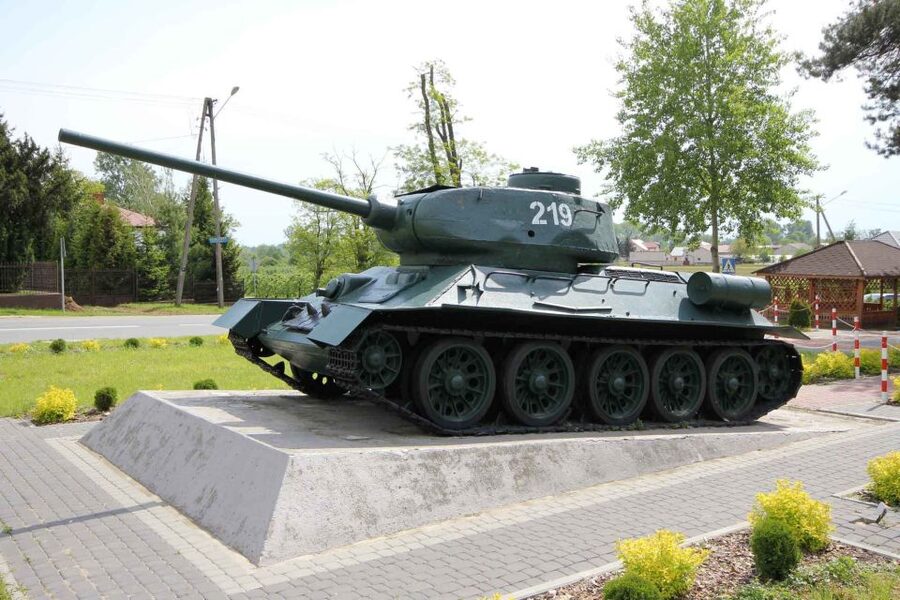
Muranów was built almost entirely on the rubble left by the destroyed Ghetto. That fact changes the way you see the district. Modern streets and apartment blocks do not sit on empty ground. They occupy a place shaped by destruction and forced removal.
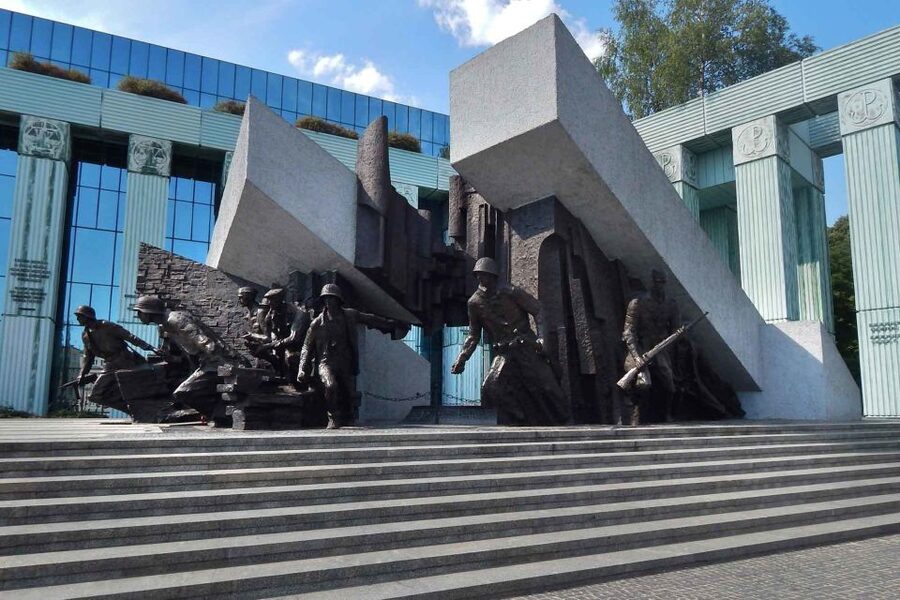
The tour visits the area around the Monument to the Ghetto Heroes and the POLIN Museum of the History of Polish Jews. The monument is near the location of the first armed clashes of the 1943 Ghetto Uprising.
This is a place of remembrance and dialogue, but the tour’s focus remains the wartime setting. Your guide explains how the uprising began, why resistance took place under overwhelming odds, and how the destruction of the Ghetto followed.
If you have time after the tour, POLIN can make a strong companion visit, but admission to the museum is not included in this experience. The tour gives you the outdoor setting and the historical framework. It does not replace a full museum visit.
Muranów also shows how Warsaw handles memory in a rebuilt city. You may see modern life continuing around memorials and public spaces. The setting can feel ordinary at first, which is why the guide’s photographs and narration are so useful.
Soviet repression at the Monument to the Fallen and Murdered in the East
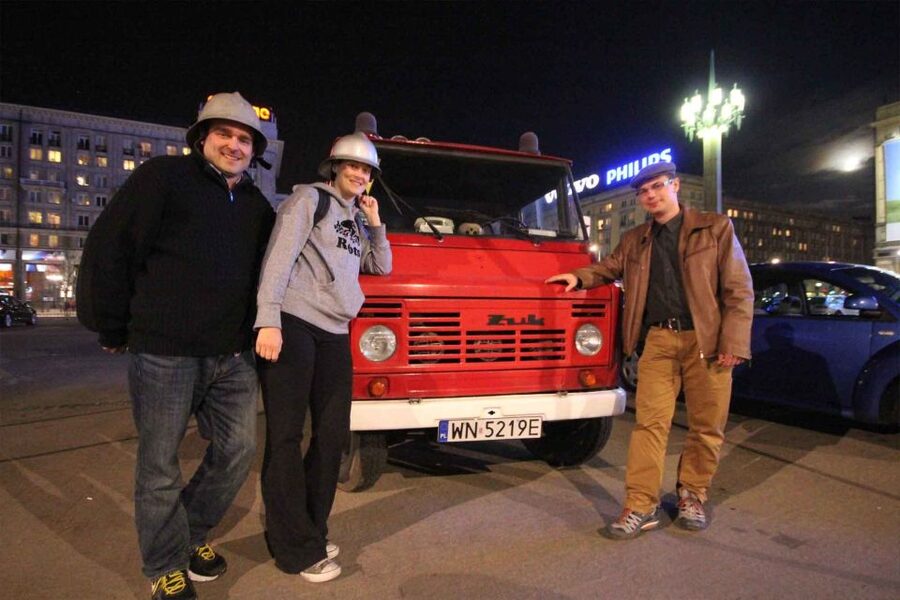
The Nazi occupation is only one part of the story. The tour also covers crimes committed by the Soviet Union against Polish citizens, including deportations to Siberia and the Katyń massacres.
At the Monument to the Fallen and Murdered in the East, the focus shifts toward those who were arrested, transported, and killed under Soviet rule. The monument commemorates people who suffered in the eastern territories and in exile.
This stop helps prevent a common misunderstanding of Polish wartime history. The end of German occupation did not mean the immediate return of independence. For many Poles, one oppressive system was replaced by another political order backed by the Red Army.
The subject is heavy, but it belongs in any serious account of Warsaw during and after the war. You receive a fuller picture of why memories of 1939, 1944, and 1945 remain closely linked in Poland.
The 1944 Warsaw Uprising and the city’s destruction
The final major chapter concerns the Warsaw Uprising of 1944. It was the city’s last attempt to regain independence before Soviet forces arrived.
The timing and aftermath are important. After the uprising failed, Nazi forces deliberately destroyed most of Warsaw. The Soviet army entered the ruins in January 1945, and a new political era began.
Your guide places this episode after the Ghetto story, making clear that the two uprisings were separate events with different participants, dates, and aims. Both were responses to occupation, but they should not be blended into one general story of resistance.
The tour’s strength here is its connection between military events and the city you see today. Warsaw is largely rebuilt, so a visitor can easily underestimate how thoroughly the old city was destroyed. Archival photographs give you a before-and-after view that modern streets alone cannot provide.
Because the tour lasts three hours, the explanation cannot cover every battle or political dispute. If you want a detailed military account, you may need a museum or a longer specialist tour. But for a citywide introduction, the coverage is focused and useful.
Archival photographs turn streets into evidence
The photographs are more than visual decoration. They give you a way to compare the wartime city with the present one.
You might look at a road now lined with modern buildings and then see the same place under occupation. A ruined facade, a ghetto boundary, or a missing bridge becomes easier to understand when you can match the old image to the current street plan.
I find this especially helpful in Warsaw because so much of the city was rebuilt. In places with many original buildings, the architecture can tell part of the story. In Warsaw, the absence of buildings often tells it instead.
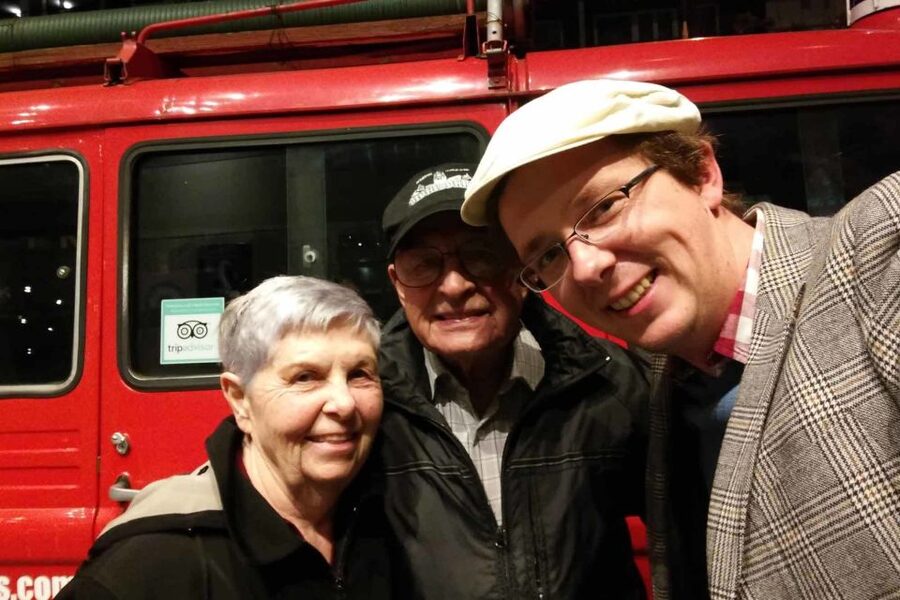
The guide’s role is important here. The experience depends on clear narration, and the available guide names include Konrad, Lucas, and Adam. Konrad has been noted for combining historical detail with humor and for connecting easily with a quiet teenager. Lucas has been described as an engaging historian and storyteller. Those details suggest a guide style that can keep a serious subject accessible without making it feel shallow.
You should still expect a somber experience. Humor may help with attention and conversation, but the material includes murder, starvation, deportation, and mass destruction.
Is $165 per person a fair price?
At $165 per person, this is not a budget sightseeing ride. Its value depends heavily on your group size and your interest in the subject.
For a private group, the price includes a professional English-speaking guide, a retro minibus, and pickup and drop-off within three kilometers of central Warsaw. You are paying for focused attention and transport between sites, not simply a seat on a standard bus.
The price makes the most sense for a small group that wants a serious introduction without arranging several separate visits. It is also useful if you have only a short time in Warsaw and want to cover the Ghetto area, Soviet memorials, and uprising sites in one outing.
The value is weaker if you mainly want a general city tour, dislike walking at stops, or plan to spend several days visiting museums and memorials independently. Food and drinks are not included, though the three-hour length makes this easy to manage before or after the tour.
Hotel pickup is available for hotels and apartments within three kilometers of the city center. Remember that the transfer time counts toward the three hours. If your accommodation is farther away, or if traffic makes the transfer slow, meeting in central Warsaw may give you more historical time.
Who will get the most from this experience?
I would choose this tour if you want the difficult parts of Warsaw’s past explained with care and connected to real places. It suits adults, older teenagers, history students, and anyone who feels that a standard sightseeing route leaves too many questions unanswered.
It is not suitable for children under 15. Children over 150 centimeters can be booked online, while younger or shorter children require confirmation about a booster seat. Polish law requires boosters for children under 150 centimeters, and availability should be checked ahead of time.
Wear weather-appropriate clothing and practical shoes. The minibus moves between locations, but each stop includes walking. Do not bring luggage or large bags, and unaccompanied minors are not allowed.
The tour is conducted in English and is offered as a private group experience. Free cancellation is available up to 24 hours before departure, and you can reserve now and pay later, which helps if your Warsaw schedule is still changing.
Should you book the Warsaw WWII private tour?
Book it if you want a compact, serious look at Warsaw’s wartime past, especially the Jewish Ghetto, both uprisings, Soviet repression, and the destruction of the city. The strongest features are the small private format, the archival photographs, the broad route, and the chance to see physical remains that are easy to miss alone.
Think twice if you need air conditioning, modern vehicle fittings, or a relaxed ride with little walking. Also consider meeting in central Warsaw instead of using hotel pickup if your accommodation is near the outer edge of the pickup zone.
For the right audience, $165 buys more than transport. It buys a guide who can explain why a wall fragment, a ruined tenement, a memorial, and a rebuilt neighborhood belong to the same story.
FAQ
How long does the Warsaw WWII private tour last?
The tour lasts three hours, including hotel pickup and drop-off time when those services are used.
Is hotel pickup included?
Yes. Pickup and drop-off are available for hotels and apartments located within three kilometers of Warsaw city center.
What language is the tour conducted in?
The tour is conducted in English with a live English-speaking guide.
How many people can travel in one minibus?
Each retro minibus holds up to eight passengers. The operator has a fleet of five minibuses.
Does the tour visit the Warsaw Ghetto?
Yes. The route includes a preserved fragment of the former Ghetto Wall, Waliców Street, Chłodna Street, Muranów, and the area around the Monument to the Ghetto Heroes and POLIN Museum.
Does the tour cover both Warsaw uprisings?
Yes. It explains the 1943 Warsaw Ghetto Uprising and the 1944 Warsaw Uprising.
Are food and drinks included?
No. Food and drinks are not included in the tour price.
Is the tour suitable for young children?
The tour is not suitable for children under 15. Children over 150 centimeters can be booked online, while children under 150 centimeters require advance confirmation about booster seat availability.
Just added around the world
- 2 Days 1 night Sapa Tour from Hanoi by Limousine/Sleeper bus★ 4.5 · 6 reviews
- Halong Bay Luxury Cruise Day trip: Buffet lunch, limousine bus★ 5.0 · 2 reviews
- Hoa Lu – Tam Coc Luxury Small group 1D: Limousine bus, biking, boat trip, Lunch★ 5.0 · 6 reviews
- Halong Bay Luxury cruise Day trip: Buffet Lunch, Limousine bus★ 5.0 · 25 reviews
- Halong bay Luxury Cruise Day trip: Buffet lunch & Limousine bus★ 5.0 · 3 reviews
- Limousine Bus Transportation from Hanoi to Sapa★ 5.0 · 2 reviews
- Halong bay Luxur Cruise Day trip: Buffet lunch & Limousine bus★ 5.0 · 21 reviews
- From Hanoi- Halong Bay 1 Day Save Cost With Limousine Bus Option★ 5.0 · 8 reviews
Warsaw Bus Tours, compared.
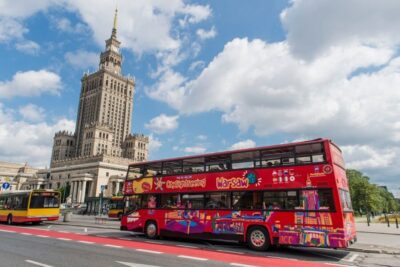
Warsaw: City Sightseeing Hop-On Hop-Off Bus Tour
Read our review →
Discover the Dark Side of Warsaw in Praga District by Retro Bus
Read our review →
Warsaw: 2.5-Hour Dark Side – Praga District by a Retro Bus
Read our review →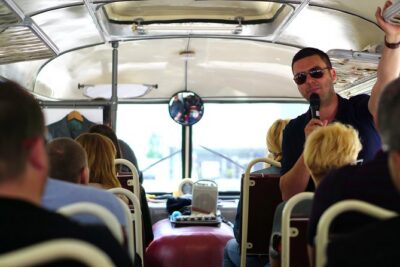
Warsaw: Evening History and Pubs Tour by Retro Minibus
Read our review →Browse the lists this tour appears in