
REVIEW · SPAIN
La Palma: Island Highlights Guided Bus Tour
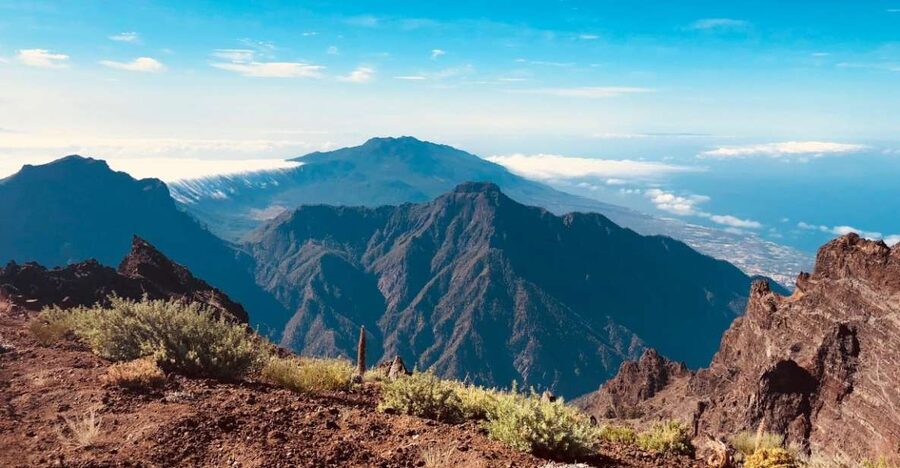
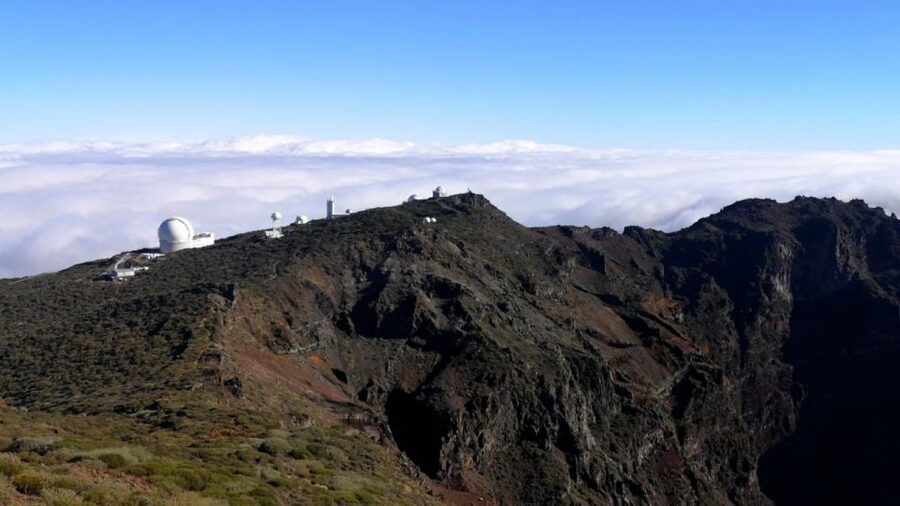
The day’s great prize is Roque de Los Muchachos, La Palma’s highest point, where the Caldera de Taburiente drops away below you and, on a clear day, neighboring islands appear on the horizon. I like that the route also tackles the island’s recent volcanic story at Tajuya and its everyday food culture at Puntagorda’s farmers market.
I also like the changing views as you cross from the west side to the east, ending above Santa Cruz de La Palma. The drawback is the long bus day, with steep, narrow, winding roads and several short walks. An early pickup mix-up has also happened, so arrive early and confirm your bus and language.
Key points to know before booking
- Roque de Los Muchachos is the main event: You reach La Palma’s highest point and see the Caldera de Taburiente, observatories, and possibly El Hierro, La Gomera, and Tenerife.
- The route covers both sides of the island: You ascend through the west and return along the east, giving you a broad view rather than one small corner of La Palma.
- Tajuya connects the tour to recent volcanic history: Plaza de Tajuya became a viewpoint for the eruption in Cumbre Vieja.
- Puntagorda adds local flavor: The weekly market sells products from farmers, artisans, and pastry makers, with time to browse and buy food.
- The day runs long: Allow 7.5 to 9 hours, and bring water, food, sun protection, and a windbreaker.
- It suits walkers who can manage short stops: Folding wheelchairs may be carried if requested ahead, but the tour is not suitable for people with reduced mobility.
Why this bus tour makes sense on La Palma
La Palma is not an island you can understand from one resort or one coastal drive. Its steep interior rises quickly, and the best viewpoints are spread across roads that climb through changing vegetation and mountain terrain. This tour gives you a practical way to connect the main sights without arranging a rental car or handling the mountain roads yourself.
You spend most of a full day on the move, but the route is not simply a long drive with one photo stop. It links a volcano viewpoint, a valley overlook, a country market, a high mountain summit, a religious site, and a final view over the capital. That range is the tour’s real strength.
The air-conditioned bus matters here. You can watch the terrain change through the windows while the driver handles the steep route. Past participants have singled out drivers such as David and Andres for their skill, particularly on the narrow road to Roque de Los Muchachos. That is useful reassurance, since the road itself is part of the experience.
Pickup times are early. The published stops include Fuencaliente at 8:00 am, Santa Cruz de La Palma’s Line 500 bus stop at 8:50 am, and two Los Cancajos stops at 9:00 and 9:10 am. Check your chosen pickup point carefully. One reported problem involved confusion over languages and bus assignments at the start, so I would arrive early, look for the correct bus, and make sure the guide knows which language you need.
A few more bus tours around Spain worth a look
- From Madrid: Guided Day Trip to Toledo by Bus
★ 4.1 · 5,280 reviews - Madrid: Panoramic Open-Top Bus Day or Night Tour with Guide
★ 4.2 · 916 reviews - Madrid: Open-Top Big Bus Sightseeing Tour with Live Guide
★ 4.2 · 838 reviews
Tajuya and the view of Cumbre Vieja
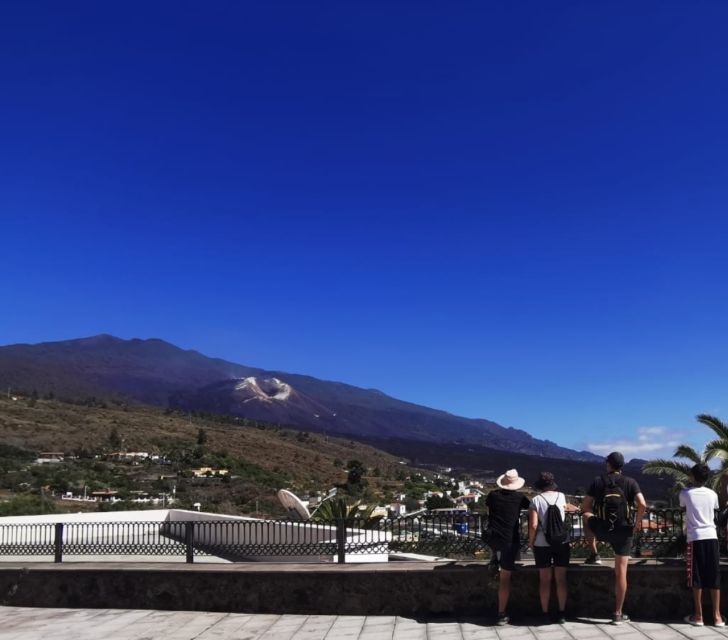
The first major stop is Plaza de Tajuya, a square that became an improvised viewing point during the recent eruption in Cumbre Vieja. This gives the excursion a direct connection to a powerful and very recent event in La Palma’s story.
Tajuya is not presented as a long walking visit. Think of it as a short stop to look out, take photographs, and hear the guide explain what happened. The value is the setting. You are not studying a volcano from a distant museum display. You are standing at a place used to watch the eruption and its lava flow.
Photography can be hit or miss. The position of the sun affects the view, and one afternoon it shone directly toward the viewing area, making pictures less satisfying. Keep that in mind if you care about photographs. The guide’s explanation may be more rewarding than trying to capture a perfect image.
El Time and the Aridane Valley
From Tajuya, the bus continues toward the Mirador de El Time, about 594 meters above sea level. This is one of the day’s best stops for seeing how La Palma’s western side fits together.
From the overlook, you can look across the Aridane Valley and toward the Caldera de Taburiente National Park. The view is broad and helps explain the island’s dramatic shape: high interior ridges, deep valleys, and settlements spread across the slopes.
El Time is a good reason to bring a windbreaker even on a warm day. Mountain viewpoints can feel cooler and breezier than the coast. Wear shoes that are comfortable for short walks and uneven ground. You do not need hiking gear, but sandals or stiff dress shoes would make a full day of stops less pleasant.
The stop also gives you a chance to settle into the pace of the excursion. You are not rushing from one attraction to the next every few minutes. The bus does much of the hard work, then you step out for a clear purpose: see the view, listen, take photographs, and return to the group.
Puntagorda market and the taste of local life
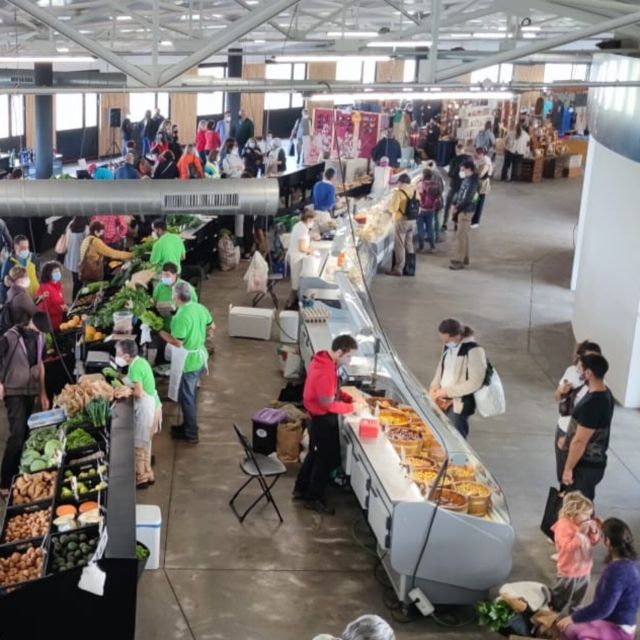
The Puntagorda farmers market is the most down-to-earth stop on the route. Held weekly, it brings together farmers, artisans, and pastry makers. Instead of looking at La Palma only through grand viewpoints, you get time to see what local producers put on their tables.
This is also one of the more useful stops for food. Since food and drinks are not included, the market gives you a chance to buy something for the rest of the day. I would bring some food and water anyway, but the market may add a local snack or product to your supplies.
The amount of time here matters. A very short stop would turn the market into a quick glance, while the tour description indicates a longer visit. That makes it possible to browse rather than simply take one photograph and leave.
Do not expect a polished tourist attraction built around a single famous product. The appeal is the mix of ordinary local goods, handmade items, and pastries. If you enjoy seeing how a place feeds and presents itself, this stop adds balance to the mountain viewpoints.
Same city, a different seat on the bus:
- Barcelona: 24 or 48-Hour Hop-On Hop-Off Bus Tour
★ 4.4 · 20,872 reviews - Barcelona: City Sightseeing Hop-On Hop-Off Bus Tour
★ 4.4 · 10,061 reviews - City Sightseeing Barcelona Hop-On Hop-Off Bus Tour: 24 or 48-Hour
★ 4.0 · 5,250 reviews - Seville: City Sightseeing Hop-On Hop-Off Bus Tour
★ 4.0 · 4,633 reviews
Roque de Los Muchachos, the high point of the day
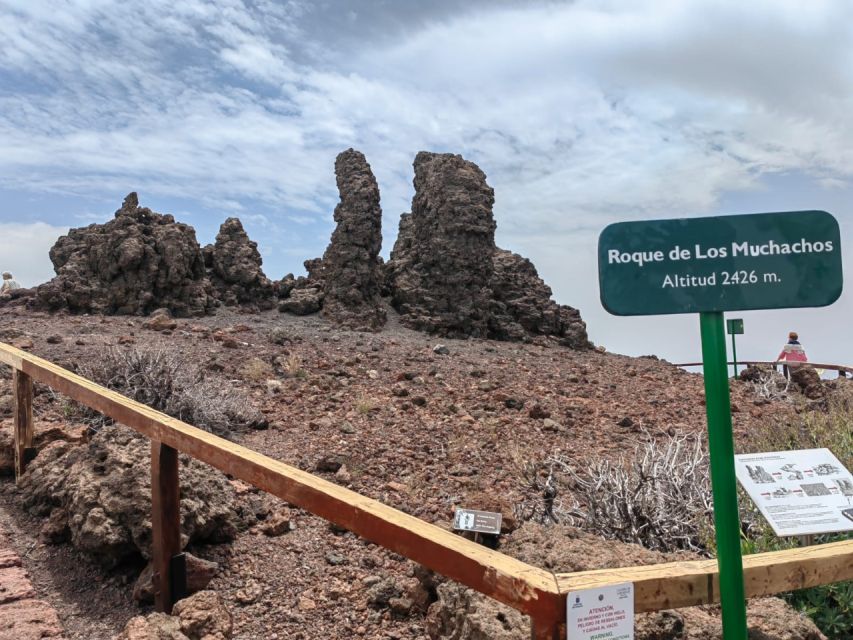
The bus then takes a winding mountain road to Roque de Los Muchachos. At the top, you reach La Palma’s highest point and one of the most memorable viewpoints on the island.
The road up is steep, narrow, and winding. If you dislike mountain roads, this will be the hardest part of the day. If you enjoy scenic driving, it becomes part of the fun, especially because the views open up as the bus climbs.
Roque de Los Muchachos is also an important center for astronomical observation. The quality of La Palma’s sky has led to internationally recognized telescopes being placed here. You will see the observatories and have time to take in the mountain setting, though this is not described as a technical observatory tour.
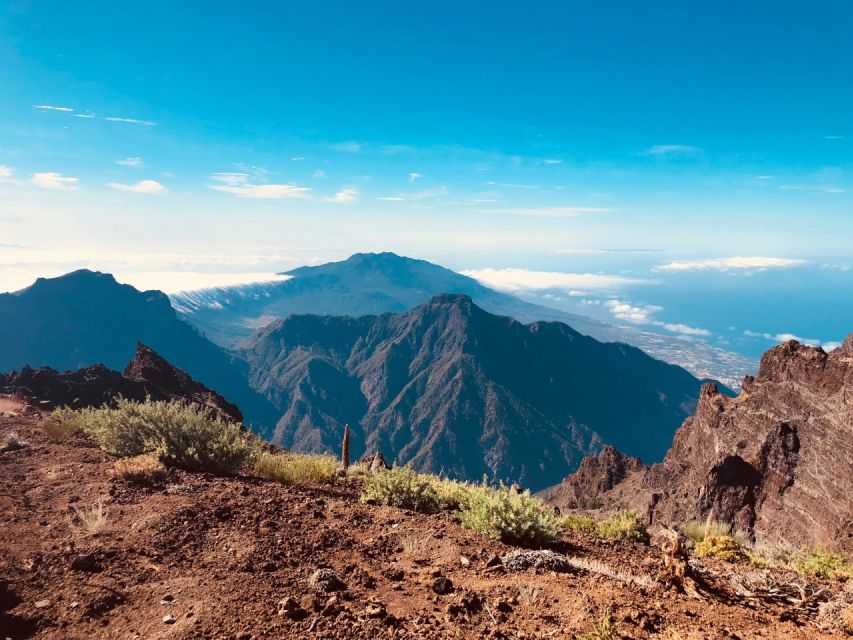
The main view is down into the Caldera de Taburiente, a huge erosion crater and one of La Palma’s most striking geological features. From the summit, ridges and viewpoints spread in different directions, creating a sense of height that is hard to get from the coast.
On a clear day, the horizon may include El Hierro, La Gomera, and Tenerife. Weather and haze control how much you see, so do not treat the neighboring islands as guaranteed. Even with less-than-perfect visibility, the caldera and observatories make the stop worthwhile.
You should have enough time to walk around the viewpoints and look at the observatories without feeling hurried. Bring a hat, sunglasses, sunscreen, and a windbreaker. High mountain sun can be strong, while the wind can make the temperature feel much lower than it did at your pickup point.
The eastern descent and Mirador de Los Andenes
The return route crosses the eastern side of La Palma. This is more than a shortcut back to Santa Cruz. The descent lets you watch the vegetation change as the altitude drops, with spring flowering adding another layer of interest.
At the Mirador de Los Andenes, you can see almost the full bed of the Barranco de Las Angustias. This is a good reminder that La Palma’s character comes from its ravines and steep folds, not just its summit views.
You will likely appreciate this stop after Roque de Los Muchachos because it gives you a different angle on the island. The high point looks outward and down into the caldera. Los Andenes helps you read the shape of the ravine and the slopes below.
The tour includes stops and short walks, not a demanding hike. Still, you should expect a lot of getting on and off the bus. Comfortable clothes and shoes will make the day easier.
Royal Sanctuary and the final view over Santa Cruz
The Royal Sanctuary of Our Lady of the Snows brings a cultural and religious stop into a day otherwise filled with geology and viewpoints. The sanctuary houses the image of the island’s patron saint.
This is a shorter, quieter counterpoint to Roque de Los Muchachos. You can see an important place of devotion on La Palma rather than spending the whole day on scenic overlooks. If churches and local religious traditions interest you, this stop gives the route more depth.
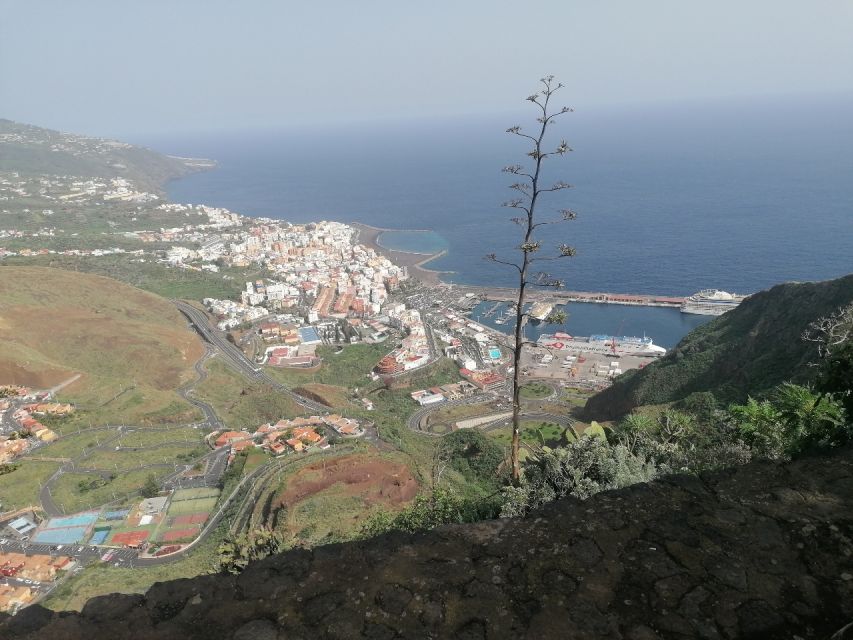
The final viewpoint is Mirador de La Concepción. From here, you look over Santa Cruz de La Palma, Las Breñas, and the eastern coast. It is a fitting last stop because it shifts your attention from the remote interior to the island’s capital and populated eastern side.
The view also helps you understand the route you have just taken. You began with volcanic ground and western valleys, crossed into the high interior, and descended toward the east. By the end, you have seen La Palma as a connected island rather than a string of isolated sights.
Guide quality and the pace of the day
The guide can make or break a full-day bus tour. The strongest reports single out clear, lively guides, including Pauline and Norberto. Norberto was praised for being both funny and well informed, while Pauline was credited with keeping the long coach periods interesting. Another guide was described as trilingual in English, German, and Spanish.
The tour is offered in those three languages, but you should confirm your language when you meet the group. The early confusion over which passengers belonged on which bus is a reason to pay attention at pickup, not a reason to reject the excursion outright.
A good guide is especially useful between stops. La Palma’s roads can take time, and the island’s story is easier to follow when someone connects the volcano, ravines, observatories, market, sanctuary, and capital. The best part of the commentary is likely to come while you are riding, not only when you are standing at a viewpoint.
The day can feel tiring. One person described returning exhausted after seeing and learning a great deal. That is a fair description. You gain a wide view of the island, but you pay for it with an early start, many hours on the road, and repeated short stops.
Is $50 good value?
At $50 per person, this is a strong value if you want a broad first look at La Palma. The price includes pickup from selected areas, an air-conditioned bus, and a live guide. It does not include food or drinks, so budget for your own lunch and water.
The value comes from the distance covered and the road skill required. Reaching Roque de Los Muchachos, seeing both sides of the island, and stopping at several viewpoints would take careful planning in a rental car. The bus also removes the pressure of driving the narrow mountain road.
The tradeoff is control. You cannot choose to stay longer at El Time, skip the market, or linger at the sanctuary. You follow the group’s schedule, and the day’s length depends partly on road conditions and pickup arrangements.
I would choose this tour early in a La Palma stay if you want an overview before deciding where to spend more time. I would not choose it for a relaxed day or for a trip built around long walks at each stop.
Who should book this experience?
This tour suits you if you want:
- A first look at La Palma’s major viewpoints
- A guided explanation of the recent Cumbre Vieja eruption
- A visit to the island’s highest point without driving there
- Time at a local farmers market
- A mix of geology, scenery, astronomy, and religious culture
- Commentary in English, German, or Spanish
It is less suitable if you need step-free access or have reduced mobility. Folding wheelchairs can be taken on the bus only if requested in advance, and they may need to remain on board during some stops.
You should also think carefully about mountain roads. The winding ascent is safe in the hands of a skilled driver, but it may still be uncomfortable if you are prone to motion sickness. Bring water, food, a charged smartphone, sunscreen, sunglasses, a hat, and a windbreaker.
FAQ
How long does the La Palma highlights bus tour last?
The tour lasts approximately 7.5 to 9 hours, depending on the available departure time and the day’s route.
What languages are available?
The live guide service is available in English, German, and Spanish.
Where does the bus pick up passengers?
Published pickup points include Fuencaliente at 8:00 am, Santa Cruz de La Palma Line 500 southbound bus stop at 8:50 am, Los Cancajos Tourist Information Office bus stop at 9:00 am, and Los Cancajos Pharmacy bus stop at 9:10 am.
Is food included?
No. Food and drinks are not included. You are advised to bring food and water, and you can also look for local products at the Puntagorda farmers market.
Is the tour suitable for wheelchair users?
The tour is not suitable for people with reduced mobility. A folding wheelchair may be taken on the bus if requested in advance, but it may need to remain on board during some stops.
Can I cancel the booking?
You can cancel up to 24 hours in advance for a full refund. The reserve-now-and-pay-later option lets you hold a place without paying immediately.
Should you book the La Palma Island Highlights tour?
Book it if you want the island’s big picture in one day and prefer a guide and driver to a rental car. Roque de Los Muchachos is the clear highlight, but the tour earns its $50 price through the variety of stops: volcano history at Tajuya, the Aridane Valley from El Time, local food at Puntagorda, the sanctuary, and Santa Cruz from La Concepción.
Skip it if you want a slow day, dislike winding mountain roads, or need full accessibility. For most visitors with one free full day, comfortable shoes, and a willingness to spend hours on a bus, this is a practical and rewarding introduction to La Palma.
Just added around Spain
- Bus to the local market of Puerto de Mogan★ 4.5 · 25 reviews
- Picos de Gran Canaria by Minibus: Firgas, Teror, Aloe Vera and More★ 3.5 · 2 reviews
- Tourist Bus Velez Malaga to Torre del Mar★ 3.0 · 2 reviews
- City Sightseeing Cordoba Hop-On Hop-Off Bus Tour★ 4.0 · 213 reviews
- Guided tour of Medina Azahara in Spanish with Bus. Official Guides★ 5.0 · 51 reviews
- Guided tour of Medina Azahara in Spanish without Bus. Official Guides★ 5.0 · 27 reviews
- Cadiz Shore Excursion: City Sightseeing Cadiz Hop-On Hop-Off Bus Tour★ 4.0 · 124 reviews
- City Sightseeing Cadiz Hop-On Hop-Off Bus Tour★ 3.5 · 163 reviews
Spain Bus Tours, compared.

City Sightseeing Barcelona Hop-On Hop-Off Bus Tour: 24 or 48-Hour
Read our review →
Palma de Mallorca: City Sightseeing Hop-On Hop-Off Bus Tour
Read our review →
Granada City Train 1 or 2-Day Hop-On Hop-Off Ticket
Read our review →
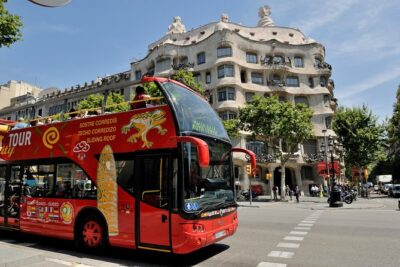
Barcelona City Tour Hop-On Hop-Off with Optional Boat
Read our review →Browse the lists this tour appears in