
REVIEW · JAPAN
Kyoto/Osaka: Nara, Fushimi Inari Taisha, Arashiyama Bus Tour
Nara’s friendly deer, Fushimi Inari’s endless red gates, and Arashiyama’s bamboo forest make this a strong introduction to the Kansai region. You get three major sights in one day, with an English or Chinese guide to explain what you are seeing and keep the schedule moving.
I like the air-conditioned bus and the chance to travel from Osaka to Kyoto without piecing together several train rides. I also like the mix of wildlife, shrines, bridges, gardens, and shopping streets. The tradeoff is clear: this is a greatest-hits day, so you will not have much time to linger or explore every temple in depth.
Key points at a glance
- Nara Park deer: Feed sacred deer with shika senbei and watch their polite, sometimes pushy, snack-seeking habits.
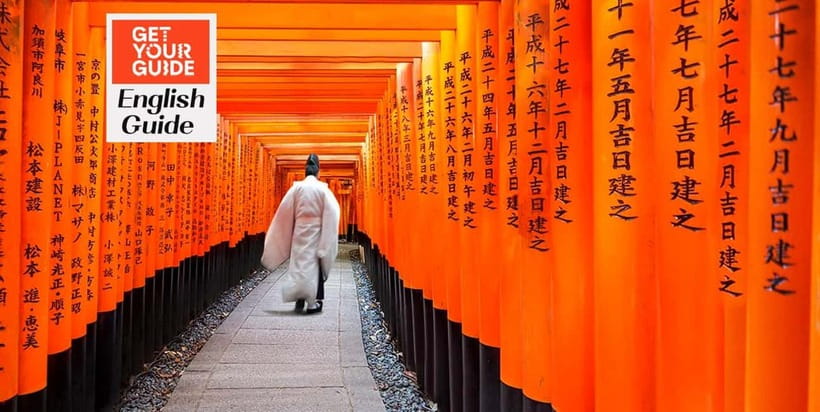
- Fushimi Inari Taisha: Walk beneath a section of the shrine’s famous 10,000-plus vermilion torii gates.
- Arashiyama variety: Combine the bamboo forest, Nonomiya Shrine, Togetsukyo Bridge, Kimono Forest, and optional Tenryu-ji.
- Good transport value: For $52, the tour covers a full 9 to 10 hours in an air-conditioned vehicle, with fuel, parking, and taxes included.
- A tightly managed day: Guides such as Amy, Willa, Fiona, Christine, and Laura are praised for clear instructions, humor, and keeping people on time.
- Important limitation: The route involves walking, steps, uneven ground, and timed returns, so it is not suitable for wheelchair users or people with mobility impairments.
Three famous places without three separate travel plans
This tour is built for the first-time visitor who wants to see the main sights around Kyoto and Nara without spending hours studying train maps. From Osaka, you leave around 8:00 AM. From Kyoto, departure is around 9:00 AM. The day lasts about 9 to 10 hours, and you return to either Osaka or Kyoto, depending on the arrangement you make when booking.
The route makes good geographic sense, even though it is full. Nara gives you deer and old religious sites. Fushimi Inari gives you one of Japan’s most recognizable shrine walks. Arashiyama adds bamboo, a Zen temple, a river bridge, and a few modern photo stops.
I would not choose this if your ideal day means sitting quietly in one garden for half a morning. I would choose it if you want to cover ground, get useful orientation, and decide which place deserves a longer return visit.
The $52 price is fair for what is included. You are paying for the vehicle, guide, fuel, parking, taxes, and the convenience of not arranging three separate stops yourself. Food, drinks, entrance fees, and personal purchases are extra. Tenryu-ji also requires an additional admission fee.
A few more bus tours around Japan worth a look
- Mt Fuji and Hakone 1-Day Bus Tour Return by Bullet Train
★ 5.0 · 26,383 reviews - 1-Day Tokyo Bus Tour
★ 5.0 · 14,250 reviews - PERFECT KYOTO 1-Day Bus Tour
★ 5.0 · 13,518 reviews
Nara Park and the art of feeding deer
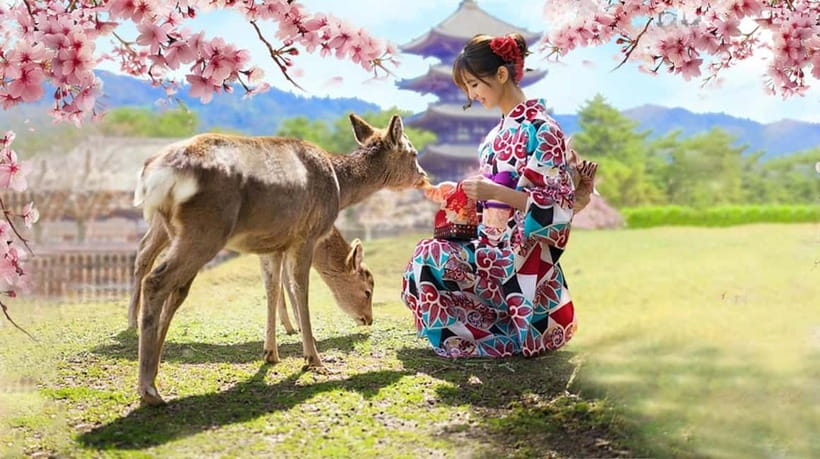
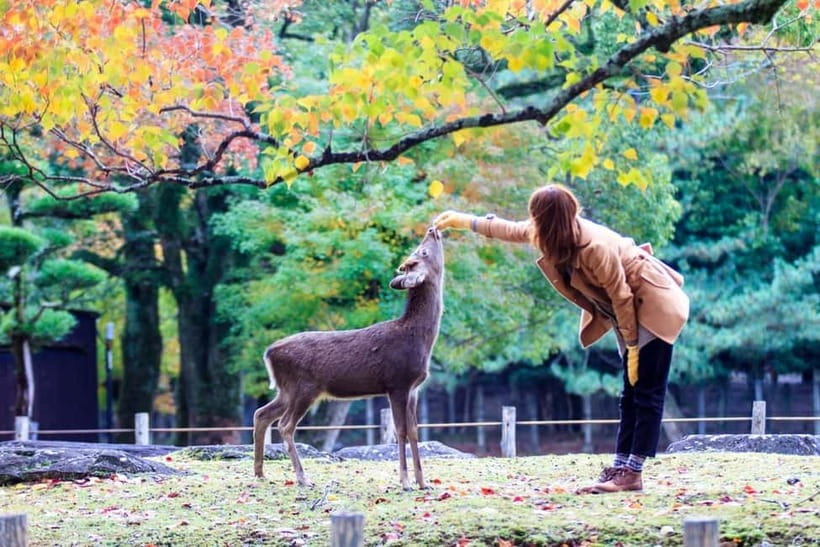
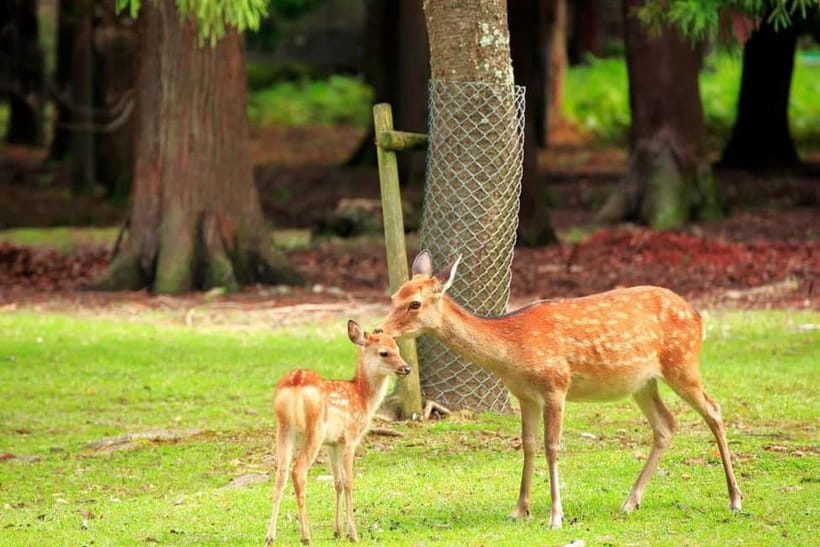
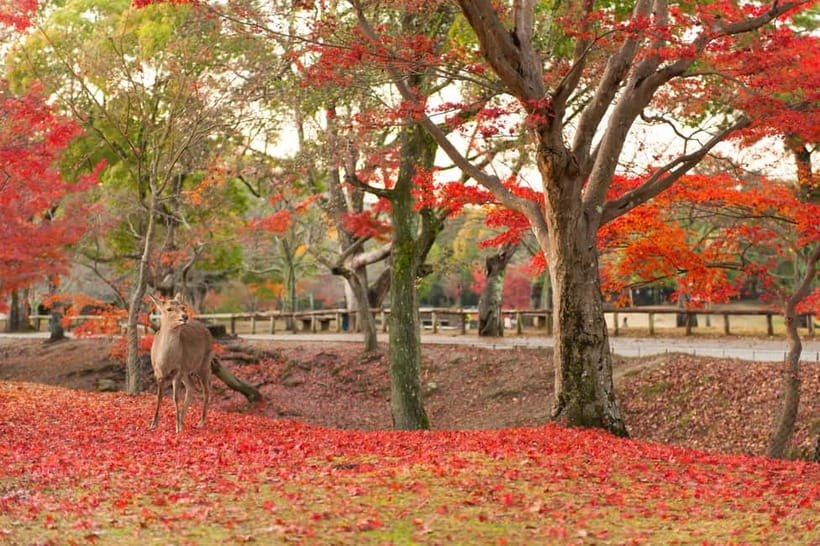
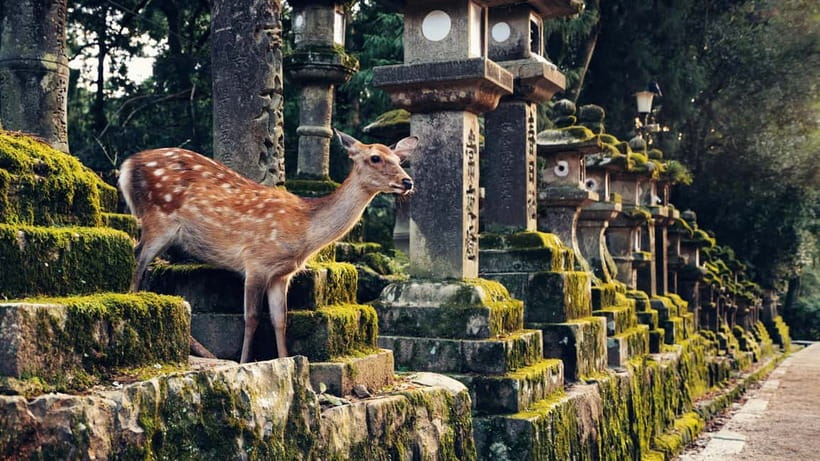
Nara Park is the most playful stop of the day. More than 1,000 deer roam freely here, and they are treated as sacred messengers connected with the gods. The first sight of deer wandering among people, trees, paths, and temple grounds can feel wonderfully strange.
You can buy shika senbei, the special deer crackers, and feed the animals. Some deer bow their heads, and many quickly learn which people are carrying food. Keep the crackers moving and your fingers clear. Once your supply is gone, show empty hands so the deer understand that snack time has ended.
The stop lasts about one hour. That is enough to feed deer, take pictures, and get a quick look around. It is not enough for a full visit to every major temple and museum in the park, so keep your expectations realistic.
I like beginning here because the experience is active rather than purely observational. Children usually have an easy time enjoying it, and adults get plenty of memorable photos. The drawback is that Nara Park can feel touristy around the main deer-feeding areas, especially when several groups arrive together.
Wear shoes that can handle walking. Bring water, and keep a little room in your schedule for the simple pleasure of watching the deer when you are not holding food.
Fushimi Inari Taisha beneath 10,000 gates
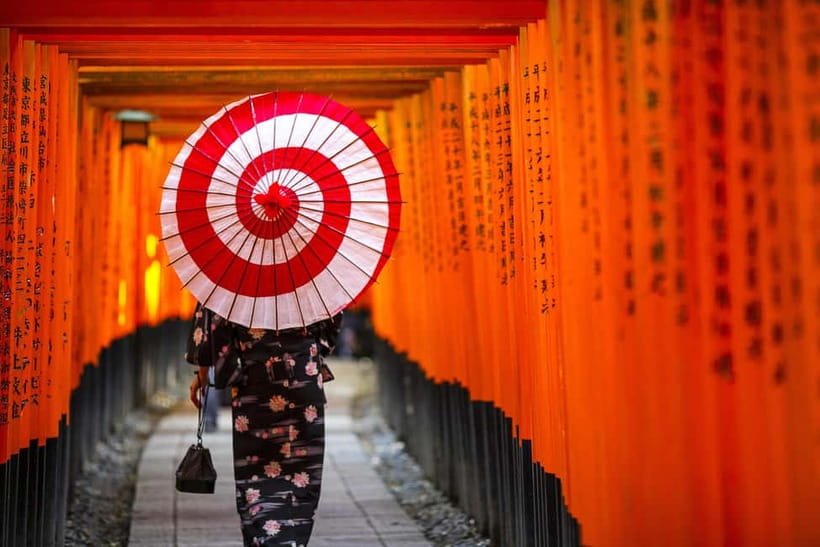
Fushimi Inari Taisha is the most atmospheric stop. The shrine honors Inari, a deity associated with prosperity, rice, business, and success. Its famous torii gates were donated over many years by individuals and companies seeking good fortune.
The gates form a red-orange corridor that climbs the wooded mountain. You will not walk the whole route during the roughly 70-minute visit. Instead, the guide points you toward a manageable section, giving you time to take photos and feel the change from the busy entrance to the quieter uphill path.
This is a place where the visual effect matters. One torii gate is striking. Hundreds in a row create a tunnel of color and shadow. The path can be crowded near the lower entrance, but walking farther uphill usually changes the mood.
The time limit is the main issue. If you want to climb deep into the forest, pause at each small shrine, and explore every side path, one hour and ten minutes will feel short. You must watch the clock and return to the meeting point on time.
Your guide may share connections between the shrine and Japanese popular culture. Fushimi Inari has appeared in films and anime-related settings, including Memoirs of a Geisha and Detective Conan. Even without those references, the torii walk is one of Kyoto’s most rewarding short visits.
Arashiyama gives you the longest pause
Arashiyama is the day’s broadest stop, with about two and a half hours in the area. That sounds generous, but the time is divided among several sights, so you still need to make choices.
Same city, a different seat on the bus:
- Peaceful Hiroshima & Miyajima UNESCO 1 Day Bus Tour
★ 5.0 · 5,309 reviews - Kyoto: Fushimi Inari, Kinkakuji, Bamboo Grove 1 Day Bus Tour
★ 4.8 · 4,316 reviews - Tokyo: Meiji Shrine, Asakusa, Skytree Bus Tour and Cruise
★ 4.7 · 1,986 reviews - Tokyo: Kamakura & Enoshima Day Trip including Temple Tickets
★ 4.5 · 1,375 reviews
Bamboo Forest
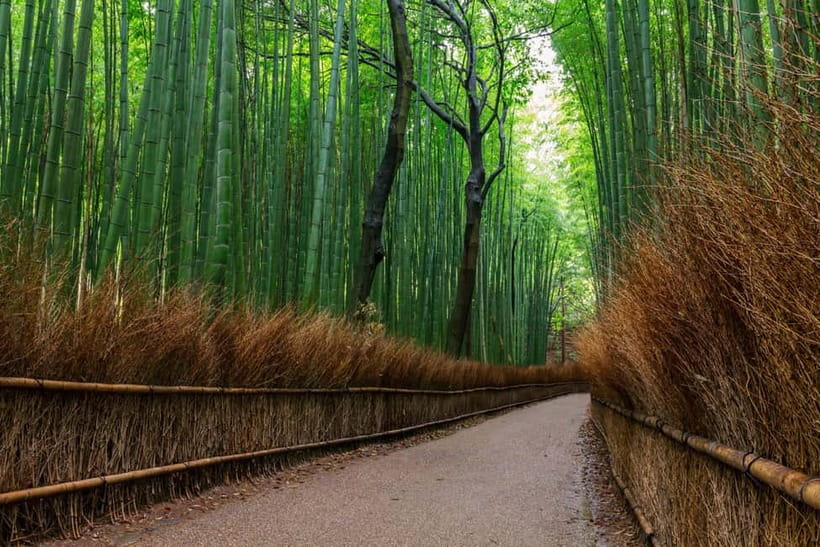
The bamboo grove is the image most people carry in their minds before arriving in Arashiyama. Tall stalks rise on both sides of the path, and filtered light gives the walk a calm, enclosed feel. The grove itself is not huge, and the central path can be crowded.
Go in expecting a short scenic walk, not a remote forest trek. The listed schedule gives about 15 minutes specifically for the bamboo forest, though your wider Arashiyama time lets you walk through the area and continue toward other sights.
The bamboo is best appreciated slowly, but this tour asks you to move along. Take your photos, look up at the shifting stalks, and then keep an eye on the time.
Nonomiya Shrine
Nonomiya Shrine sits near the bamboo forest and dates to the Heian period, more than 1,000 years ago. It is associated with love and academic success, making it a useful stop for visitors interested in local religious customs rather than only famous views.
The shrine is known for its Kuroki Torii, an unpainted wooden gate. It has a darker, more natural appearance than the vermilion gates at Fushimi Inari. The visit takes around 15 minutes, which is enough for a quick look and a few photographs.
Tenryu-ji Temple
Tenryu-ji is the most substantial cultural option in Arashiyama. It is a UNESCO World Heritage Site and is known for the Sogenchi Garden, where the design uses the surrounding hills as part of the view.
Admission is extra, so decide in advance if the garden matters to you. I would make it a priority if you enjoy Zen gardens, temple architecture, or seasonal scenery. If your main goals are bamboo and the bridge, you might prefer to keep the admission money for lunch or return later on your own.
The schedule allows self-guided exploration. That is useful because you can move at your own speed inside the grounds, but you should not expect a long guided temple lecture.
Togetsukyo Bridge
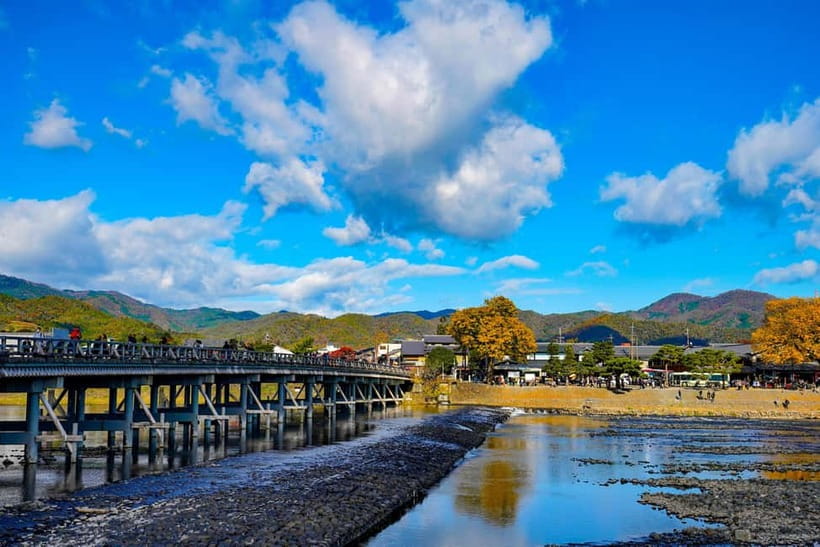
Togetsukyo Bridge crosses the Katsura River and gives you the classic Arashiyama river view. The bridge itself is a quick 15-minute stop, but the surrounding scene is worth a pause.
Look toward the hills, watch the water, and notice the rickshaws passing through the area. They add an old-fashioned touch, though a rickshaw ride is not included. This is also a good place to take a group photo before moving on.
Kimono Forest and the station footbath
Kimono Forest is a modern installation of about 600 pillars decorated with Kyo-Yuzen textile patterns. It is a bright, easy photo stop near Arashiyama Station and gives the afternoon a change of pace after temples and woodland paths.
You may also have time for local street food, a café, the Rilakkuma Tea House, or the Arashiyama Station footbath. These are optional choices, not guaranteed long visits. If you want to use the footbath, check the available time carefully and bring a small towel if you have one. The activity information does not state that towels are supplied.
A guide-led day that depends on good timing
The guide is one of the most important parts of this experience. The strongest pattern in the feedback is not a single attraction, but the guides’ organization. Amy is repeatedly praised for warm communication, clear timing, humor, and helping people stay together. Willa is noted for her friendly explanations and care with the group. Fiona, Christine, Laura, Frederick, Tracy, and others are also singled out for useful advice and an upbeat approach.
That matters on a day with several short stops. A good guide tells you where to go, when to return, and what not to miss. Several guides also share restaurant suggestions, photo help, and practical reminders before the bus arrives.
The arrangement is not a formal lecture from start to finish. You get guided information, then free time at each location. This suits you if you want context but also prefer to wander alone for a while.
The bus itself is air-conditioned, and the driver handles the long transfers between Osaka, Nara, Kyoto, and Arashiyama. Many of the strongest comments focus on smooth driving and punctual departures. That is especially valuable after a full morning of walking.
Still, a bus tour cannot erase traffic. The schedule may change because of road conditions, weather, or other delays. Your return time is not guaranteed to the exact minute, so avoid booking a tight evening reservation immediately afterward.
What to bring and how to prepare
Wear comfortable shoes. You will walk through shrine grounds, park paths, temple areas, and busy streets. Fushimi Inari and Arashiyama can also involve slopes or uneven surfaces.
Bring water, an umbrella, and comfortable clothing. Smoking is not allowed on the activity. Tell the operator in advance if you have an infant, stroller, or large luggage, since the vehicle needs suitable space and Japanese traffic rules count babies as passengers.
Arrive 10 to 15 minutes before departure. The bus leaves on time, and waiting for late arrivals would affect the entire group. Confirm your chosen pick-up point carefully, since the options are Harimaya Nippombashi 1-chome in Osaka and Kyoto Station Hachijo Entrance Square Sunken Garden.
You also need to state your preferred drop-off point, Osaka or Kyoto. If you do not provide that information, the return defaults to the same place as pick-up.
The tour is not suitable for wheelchair users or people with mobility impairments. Pregnant passengers and people aged 70 or above are asked to sign a waiver on arrival.
Who gets the best value from this tour
I would recommend this for a first visit to Osaka or Kyoto, especially if you want to see major sights before choosing where to spend more time later. It also works well for solo visitors, couples, and families who prefer a planned day over a complicated rail itinerary.
It is a good match if you value:
- A guide who keeps the day moving
- Transport between three major sightseeing areas
- A mix of animals, shrines, nature, and city attractions
- Free time rather than a fully scripted walk
- The ability to start in Osaka and finish in Kyoto, or return to Osaka
I would hesitate if you dislike group schedules or want long, quiet visits. One guide notes that some stops can feel stressful because there is so much to see. That is the central compromise: you gain range, but you give up control over how long you stay.
Should you book it?
Book this tour if you want a practical introduction to Nara, Fushimi Inari, and Arashiyama in one day. At $52, the included transport and guide support make the price attractive, particularly when train connections and parking would otherwise take your attention.
Skip it if Tenryu-ji, the full Fushimi Inari mountain walk, or a slow Arashiyama afternoon is your main goal. In that case, visit independently and give one area a full day.
For most first-time visitors with limited time, I would choose the tour, arrive early, wear solid shoes, and treat the day as an orientation to three places you may want to revisit.
FAQ
How long does the tour last?
The tour lasts about 9 to 10 hours, though traffic and weather can affect the schedule and return time.
Where can I join the tour?
You can choose from Harimaya Nippombashi 1-chome in Osaka or Kyoto Station Hachijo Entrance Square Sunken Garden. The exact meeting point depends on the option you book.
Can I finish in Osaka if I start in Kyoto?
Yes. You should tell the operator your preferred drop-off point, Osaka or Kyoto, when making the reservation. If you do not, the default is the same location as pick-up.
Is Tenryu-ji Temple included in the price?
Tenryu-ji can be visited during the Arashiyama stop, but its admission fee is extra. Food, drinks, and other personal expenses are also not included.
What languages are available?
Live guides are available in English and Chinese.
Is the tour suitable for wheelchair users?
No. The tour is not suitable for wheelchair users or people with mobility impairments. You should also mention infants, strollers, or large luggage when booking so suitable transportation arrangements can be considered.
Just added around Japan
- Fukuoka Open Top Bus and Hakata Doll Painting Experience with Guide★ 3.5 · 3 reviews
- Huis Ten Bosch Full Day Bus Tour From Hakata★ 3.5 · 3 reviews
- Tokyo: A Half-Day Trip Bus Tour in the Morning★ 4.6 · 236 reviews
- 3-Row Luxury Bus Tour to Mt. Fuji, Lake Kawaguchi from Tokyo★ 4.3 · 3 reviews
- Tokyo: 1 Day Bus Tour with Meiji-Jingu,Odaiba,lunch&Skytree★ 4.6 · 156 reviews
- Full Tokyo: Meiji Shrine, Imperial Palace, Asakusa & Skytree★ 4.4 · 7 reviews
- Tokyo: Mount Fuji Views and KABA Amphibious Bus Day Tour★ 5.0 · 4 reviews
- Shirakawago and Takayama 1 Day Bus Tour from Nagoya★ 4.5 · 2 reviews
Japan Bus Tours, compared.

Mt Fuji and Hakone 1-Day Bus Tour Return by Bullet Train
Read our review →
Peaceful Hiroshima & Miyajima UNESCO 1 Day Bus Tour
Read our review →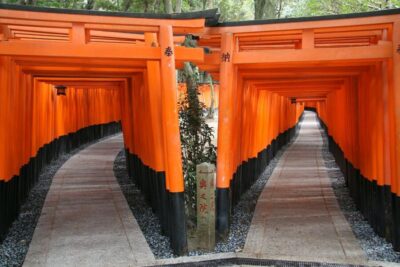
Fushimi Inari, Kinkakuji, Bamboo Grove 1 Day Bus Tour
Read our review →
Meiji Shrine, Asakusa, Skytree Bus Tour and Cruise
Read our review →
Kamakura & Enoshima Day Trip including Temple Tickets
Read our review →
Mt Fuji & Hakone Cruise, Drum Show Bus 1 Day from Tokyo
Read our review →
Mt Fuji and Hakone 1-Day Bus Tour Return by Bus
Read our review →Browse the lists this tour appears in