
REVIEW · ITALY
Verona: Hop-on Hop-off Tour 24 or 48-Hour Ticket
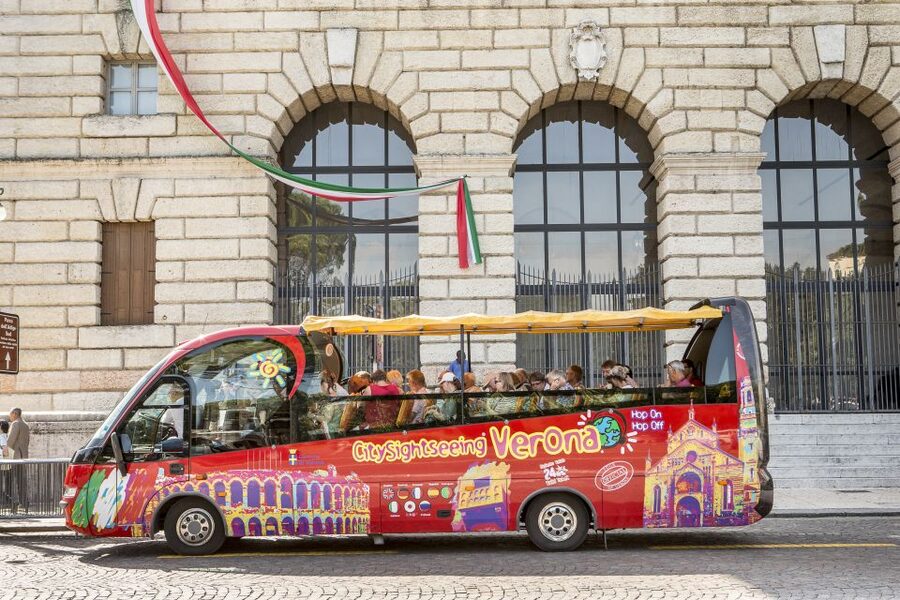
Verona is easy to love from street level, but its open-top bus gives you the city’s shape quickly. From Piazza Bra, you can ride past the Roman Arena, medieval walls, San Zeno, Castelvecchio, Juliet’s House, and the hill above the river without spending the first hours guessing where everything is.
I like the two different routes, especially the smaller blue-line bus that reaches the hilltop near Castel San Pietro. I also like the practical 24-hour ticket, which can cover parts of two calendar days if you start early enough. The main drawback is the hourly service: miss a bus, and a short stop can become a long wait.
Key points to know before you ride
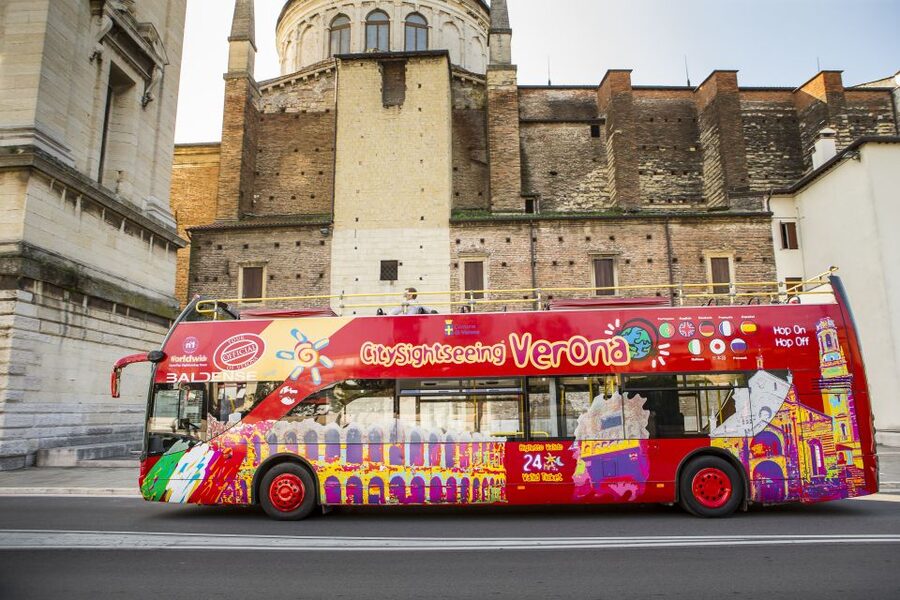
- Two routes, two different views: The red line gives you a broad city circuit, while the blue line uses a smaller bus to reach tighter streets and the hilltop viewpoint.
- Both lines begin at Piazza Bra: The Arena Square is easy to pair with Verona’s main sights and is the central starting point.
- The hilltop stop is the highlight: The blue route reaches Castel San Pietro, where you can pause for wide views over Verona.
- Each circuit takes about an hour: That makes the tour useful even if you only have a few hours, though hourly departures limit quick hop-offs.
- Audio commentary comes in 12 languages: You can listen in English, Italian, Spanish, French, German, Portuguese, Japanese, Russian, Arabic, Chinese, Danish, or Dutch.
- Attraction admission is separate: The ticket covers the bus and commentary, not the Arena, Teatro Romano, Juliet’s House, or other paid sights.
Start at Piazza Bra beside Verona’s Arena
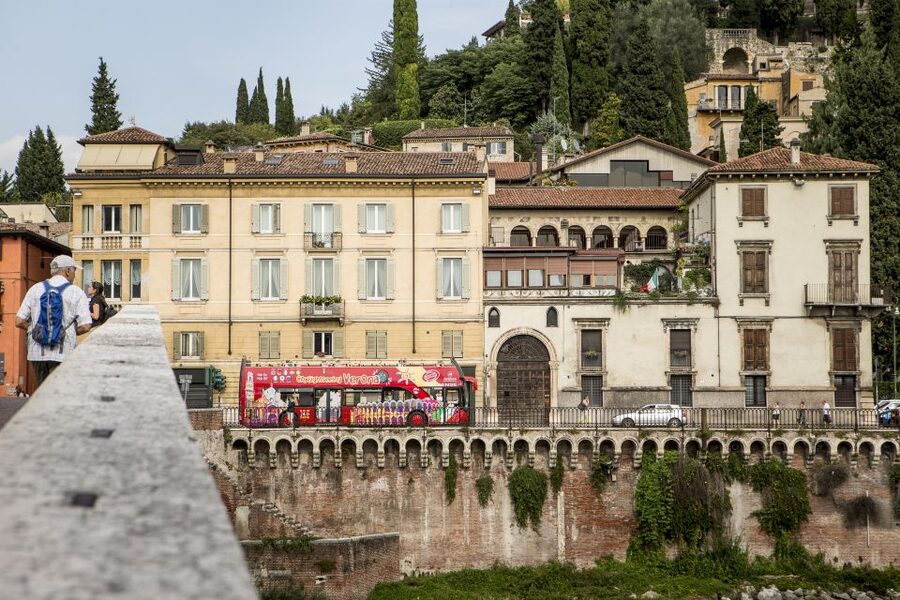
Both routes start at Piazza Bra, the broad square in front of the Arena di Verona. This is a useful place to begin because the Roman amphitheater is one of Verona’s essential sights, and the square is also a natural meeting point for the old city.
You can begin with a complete loop to get your bearings, then return to the places that catch your eye. The full ride on either route takes about an hour, so you can see quite a lot without turning the day into a march.
The bus ticket lasts for 24 or 48 hours, depending on the option you choose. A 24-hour ticket can be especially useful if you start late morning and continue into the next morning, as long as the operating timetable allows it. The 48-hour choice makes more sense if you want to split the routes across two days or use the bus as a practical way to reach sights away from the central streets.
The buses run about once an hour on each route. That is the key timing fact to keep in mind. The ticket says hop-on, hop-off, but this is not a frequent city bus. A quick ten-minute stop may not be worth it if you then face a long wait.
More Hop-On Hop-Off Bus Tours in Italy
- Rome: City Sightseeing Hop-on Hop-off Bus with Audioguide
★ 4.0 · 16,045 reviews - Rome: Big Bus Hop-on, Hop-off Open-Top Sightseeing Tour
★ 4.1 · 9,537 reviews - Florence: Hop-on Hop-off Bus Tour: 24, 48 or 72-Hour Ticket
★ 4.0 · 6,283 reviews
The red route connects Verona’s main sights
The red route is the larger circuit and the better first ride for most people. It begins at Piazza Bra, passes through Corso Porta Nuova, and continues toward Verona’s train station before looping back through the old city.
Piazza Bra and Corso Porta Nuova
Piazza Bra gives you the classic first look at the Arena. From the top deck, you can see the amphitheater in relation to the square and the surrounding streets. This broad view helps you understand Verona as a compact city rather than a string of separate monuments.
The bus then runs along Corso Porta Nuova and past Giardini Pradaval. This is a useful stretch if you are staying near the railway station or arriving by train. The Porta Nuova station stop can also make the bus handy for getting between the station and the historic center, although the service is designed for sightseeing rather than rapid transport.
Piazza Pozza and San Zeno
The red route continues toward Piazza Pozza and the San Zeno quarter. This part gives you a break from the busiest central sights and introduces one of Verona’s most important churches, the Basilica of San Zeno.
San Zeno is known for its Romanesque architecture and its famous bronze doors. The bus does not replace a proper visit inside, but it gets you close enough to make the church a planned stop. If you want a quieter part of Verona with a strong medieval feel, this is one of the best places to hop off.
The route also shows you sections of Verona’s old defensive walls. These walls help explain the city’s position and long military importance better than a quick look at a postcard view. From the bus, you get a broad sense of how the old city was protected and how the modern streets grew around it.
Same city, a different seat on the bus:
- Milan: City Sightseeing Hop-On Hop-Off Bus with Audio Guide
★ 4.0 · 6,256 reviews - City Sightseeing Rome Hop-On Hop-Off Bus Tour
★ 3.5 · 5,446 reviews - Naples: Hop-on Hop-off Bus Tour 24-Hour Ticket
★ 4.3 · 5,157 reviews - Rome: Hop-on Hop-off Sightseeing Bus Tour with Audioguide
★ 4.1 · 4,801 reviews
Castelvecchio and Via Diaz
Castelvecchio is another important red-route stop. The castle was built as a defensive stronghold, and today it is one of Verona’s major landmarks. Its red-brick form is easy to spot from the road, and the nearby bridge makes this a worthwhile place to leave the bus and explore on foot.
From Castelvecchio, the route moves toward Via Diaz and Porta Borsari. Via Diaz is a good stop for a different side of Verona, with shops and an upscale feel close to the old center. Porta Borsari, one of the city’s Roman gateways, is a reminder that Verona’s street plan still follows routes established in antiquity.
I would use this part of the route to combine sightseeing with a little shopping. You can see Roman remains, browse along Via Diaz, and walk back toward Piazza Bra without covering a huge distance.
Teatro Romano and Porta Leoni
The red line also reaches Teatro Romano, the ancient Roman theater on the far side of the river. This is a more useful hop-off point than simply passing by. The theater itself is a separate attraction, so admission is not included, but the bus makes it easier to place it on your plan.
Porta Leoni brings you back toward the center. Like Porta Borsari, it gives you a direct link to Verona’s Roman past. The stop is also near the area associated with Juliet’s House, so you can combine ancient city remains with one of Verona’s most famous Shakespeare-related sights.
The blue route reaches Verona’s best viewpoint
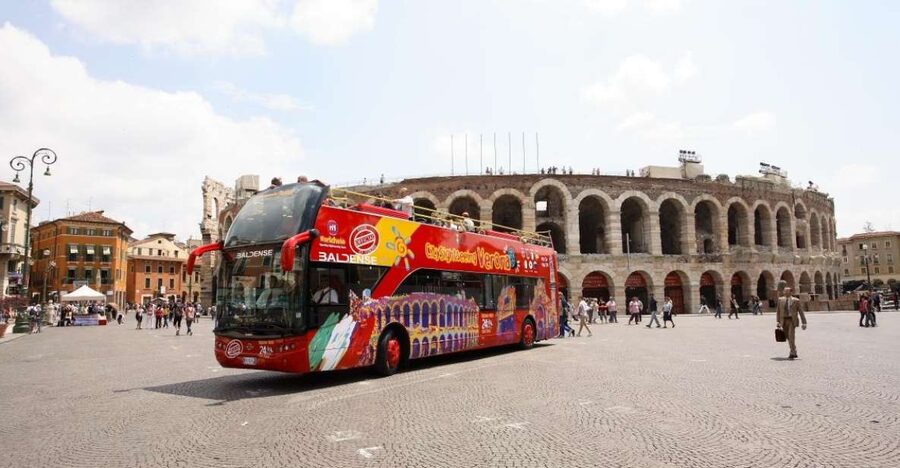
The blue route is the more distinctive of the two. It uses a smaller bus because it goes through tighter streets and climbs toward the hill above the city. If you have time for only one route, I would still take the red line first for orientation, then make a point of riding the blue line.
Via Pallone and Tomba Giulietta
The blue route leaves Piazza Bra and passes Via Pallone and Tomba Giulietta. The latter is connected with Juliet’s Tomb, one of the city’s Romeo and Juliet sites. These places are part of Verona’s literary and romantic identity, but it is worth keeping expectations sensible: the bus gives you context and access, not a full guided visit to each attraction.
The blue line also reaches the area around Juliet’s House and Piazza Erbe. Piazza Erbe is one of Verona’s central squares, surrounded by historic buildings and daily city life. This is a strong place to hop off if you want to continue on foot through the old center.
Via Giusti, Santo Stefano, and Teatro Romano
The route then moves through Via Giusti and toward Santo Stefano and Teatro Romano. This side of the city feels less like a standard coach circuit because the streets are smaller and the bus reaches areas a large double-decker cannot manage.
The smaller vehicle is a plus, but it can also fill up. If you see a busy bus at the stop, you may not get on immediately. Build a little patience into your plan, especially during popular periods.
Castel San Pietro and the hilltop view
The blue route’s best feature is Castel San Pietro. The bus climbs to the hill above Verona and pauses long enough for photographs. From here, you can look across the river toward the historic center, the Arena area, church towers, and the clustered rooftops.
This view is worth the ride even if you do not care much for narrated bus tours. Verona makes more sense from above. You can see how the river bends around the old city and how the main landmarks fit together.
Do not treat this as a long hilltop visit. The bus stop is mainly a scenic pause, and the timetable matters. If you get off, you may need to wait for the next blue-line bus, so check the departure pattern before leaving the vehicle.
The audio guide adds context, but bring your own headphones
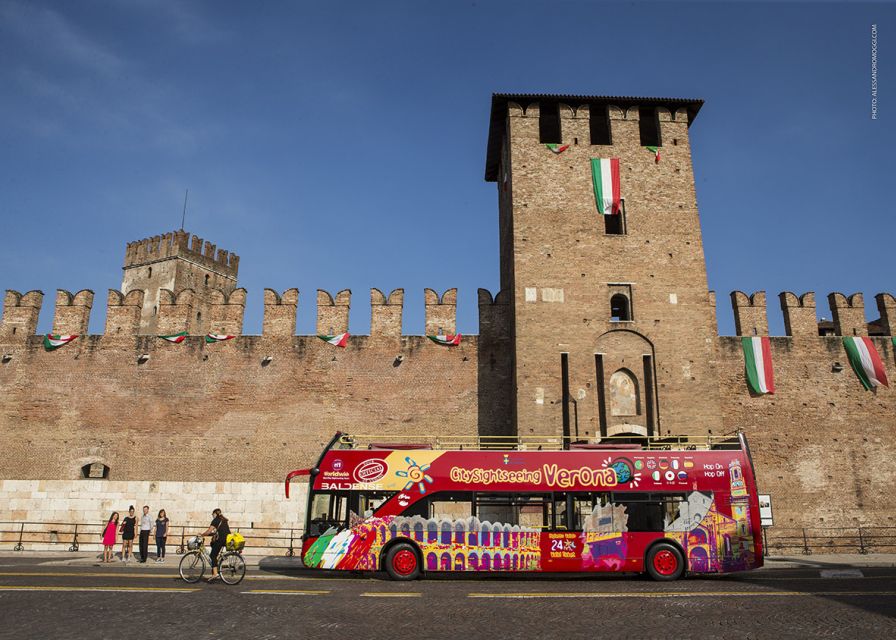
The multilingual commentary is included in all ticket options. It covers Verona’s Roman beginnings, medieval past, connection with Shakespeare’s Romeo and Juliet, and the city’s place as both a historic center and a modern industrial city.
The commentary is useful when you are riding the full circuit and want more than a silent view from the upper deck. It also helps point out sights before the bus reaches each stop, giving you time to decide if you want to leave the bus.
The quality is not perfectly consistent. The audio has been described as clearer on the red line than on the blue line, and some of the material repeats between the two routes. The narration may also feel less lively than a live guide.
The supplied headphones have received criticism for poor quality, so bringing your own compatible headphones is a sensible move. You can listen in English, Italian, Spanish, French, German, Portuguese, Japanese, Russian, Arabic, Chinese, Danish, or Dutch.
How to use one ticket without wasting time
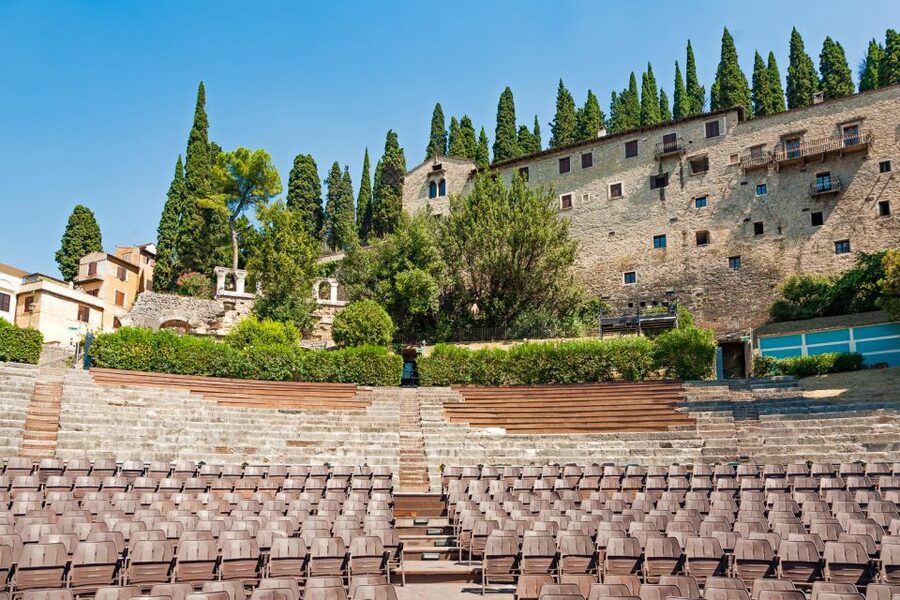
If you have only one day, start at Piazza Bra as early as the current timetable permits. Take the red route first and stay aboard for the complete circuit. This gives you a clear map of the city before you choose where to walk.
After the red loop, use the blue route for the hilltop view and the smaller streets. Then hop off near Piazza Erbe, Juliet’s House, Teatro Romano, or San Zeno, depending on your interests.
A practical one-day plan looks like this:
- Ride the red route for the overall picture.
- Visit the Arena or walk around Piazza Bra.
- Take the blue route to Castel San Pietro.
- Get off near Piazza Erbe or Juliet’s House for a central walking circuit.
- Return to the bus only when the stop and timetable make it worthwhile.
With two days, use the first ride as orientation and save the second day for selected stops. The 48-hour ticket is also useful if you are staying near Porta Nuova station and want an easy ride toward the Arena. Just remember that the service may finish in the late afternoon, so a 48-hour ticket does not necessarily mean round-the-clock use.
What the $29 price gets you
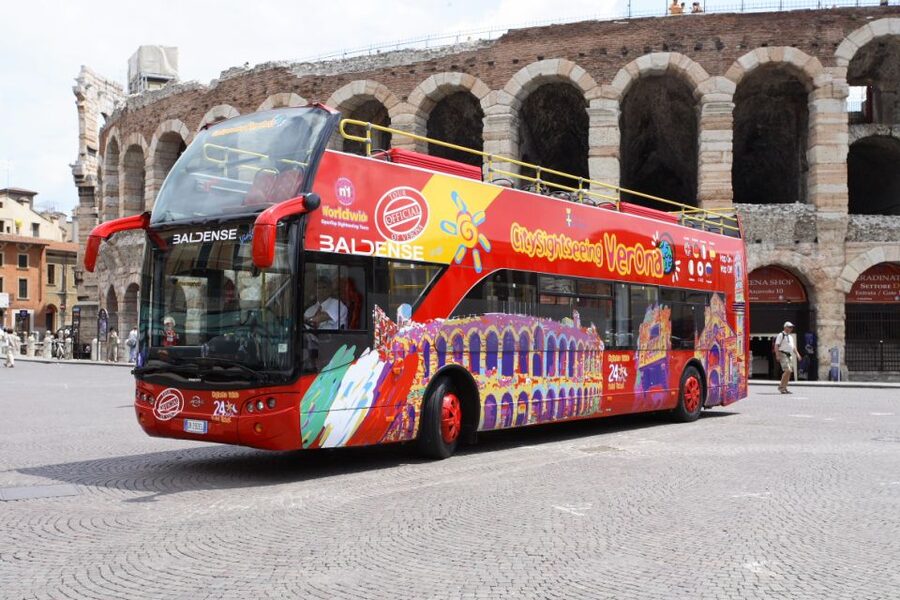
At $29 per person, the bus is reasonably priced if you use both routes or need help covering ground. It is less compelling if you stay on for one circuit and spend the rest of the day walking, since Verona’s central sights are close together.
The strongest value comes from three situations. You have only a few hours, you are visiting in very hot weather, or you want to reduce walking for a child or someone who tires easily. The bus also gives you a useful break after visiting several churches, museums, and squares on foot.
The ticket does not include entry to the Arena, Teatro Romano, Juliet’s House, or any other attraction. Think of it as a sightseeing and transport pass, not a city attraction pass. If you plan to enter several sights, you will need to budget for those separately. A Verona Card can be combined with the bus if you want admission coverage, but the two products serve different purposes.
Comfort, crowds, and weather
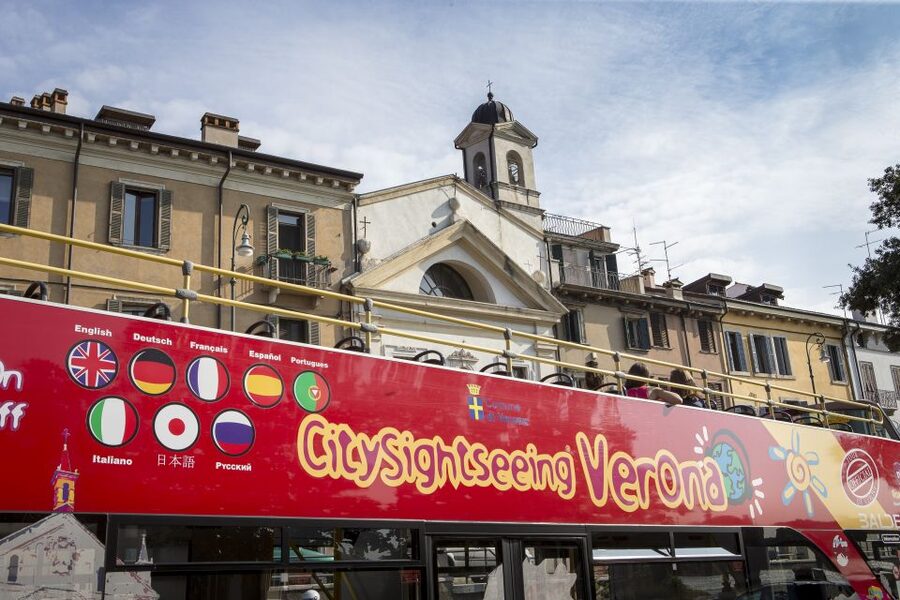
The open-top format gives you the best views, especially from the upper deck. It also leaves you exposed to sun and heat, so an early ride can be much more pleasant in summer. In rainy weather, the bus still offers shelter, though visibility and comfort will depend on where you sit.
The buses are generally described as clean and comfortable, but the smaller blue-line vehicle can become crowded. The first bus of the day may also operate later than you expect, so check the current schedule rather than assuming a very early departure.
Staff service has been praised as friendly and helpful, and the meeting point at Piazza Bra is straightforward once you know to look near the Arena. Stops near the railway station make the tour convenient for a short Verona visit, but finding the correct stop after hopping off can be confusing. Take a photo of the stop sign or route map before you leave the bus.
Who should choose this Verona bus tour?
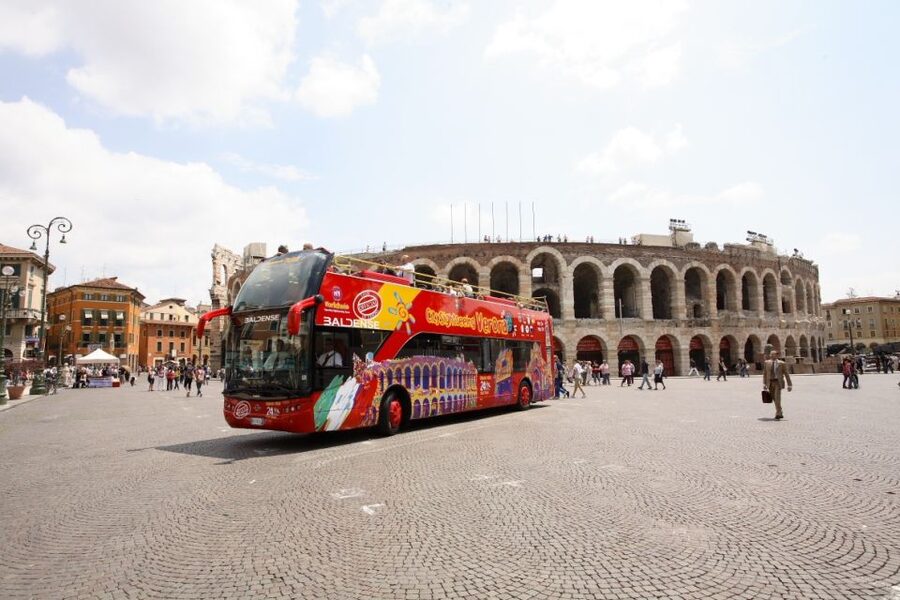
I would choose this tour if you are visiting Verona for one day, arriving by train, traveling with a young child, or trying to avoid a long walk in hot weather. It is also a good first activity because it shows you where the Arena, San Zeno, Castelvecchio, Teatro Romano, and the hilltop viewpoint sit in relation to one another.
It suits independent visitors who want flexibility but do not need a private guide. You can listen to the commentary, leave the bus when you like, and decide how much time to spend at each stop.
I would skip it if you have several days and prefer to explore every street slowly on foot. You should also think twice if you dislike waiting for transport or want detailed live explanations at every monument. The hourly schedule and repeated audio are the main limits.
Should you book it?
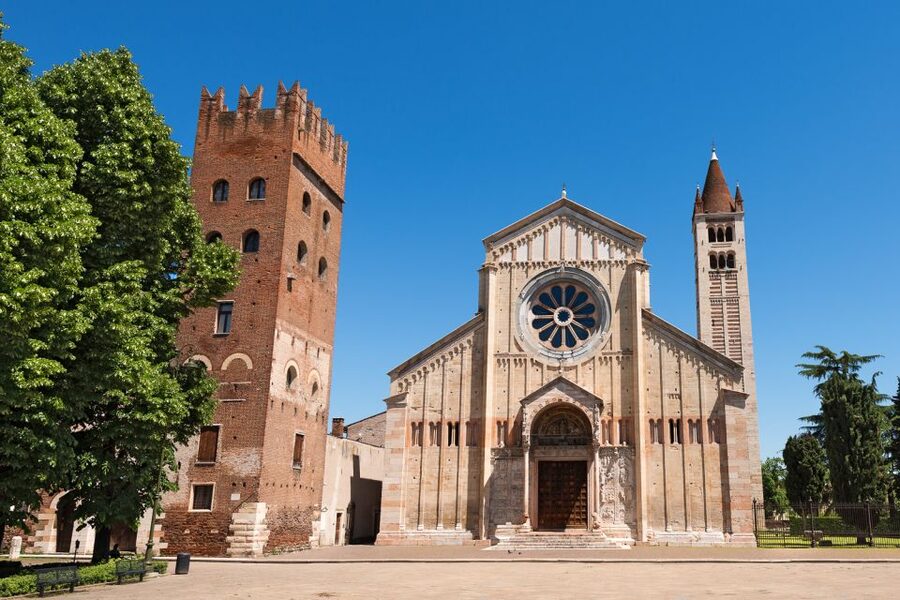
Book this tour if you want a fast, low-effort introduction to Verona and will use both routes. The blue line, especially the ride to Castel San Pietro, adds real value beyond a standard city loop.
For a short visit, take the complete red circuit first, then ride the blue line for the hilltop view. For a longer stay, the 48-hour option gives you more freedom to split the routes and use the bus between the station and the center. At $29, it is a fair purchase when it saves time, walking, or confusion, but it is not a replacement for entering Verona’s major sights.
FAQ
Where do both Verona sightseeing routes begin?
Both the red and blue routes begin at Piazza Bra, the square beside the Arena di Verona.
How long is the ticket valid?
You can choose a 24-hour or 48-hour ticket. Check the current availability and operating times for the dates you want to ride.
How often do the buses run?
Each route runs about once an hour.
What sights are included on the routes?
The routes pass Piazza Bra, the Arena area, Porta Nuova station, San Zeno, Castelvecchio, Via Diaz, Porta Borsari, Teatro Romano, Porta Leoni, Juliet’s House, Piazza Erbe, the Duomo, Santo Stefano, and Castel San Pietro.
Is the hilltop viewpoint included?
Yes. The blue route goes to Castel San Pietro, where you can stop for views over Verona and take photographs.
Is admission to the Arena or other attractions included?
No. The ticket includes the bus and multilingual audio commentary only. Attraction admission must be paid separately.
Which languages are available for the audio commentary?
Audio commentary is available in English, Italian, Spanish, French, German, Portuguese, Japanese, Russian, Arabic, Chinese, Danish, and Dutch.
Just added around Italy
- City Sightseeing Genoa Hop-On Hop-Off Bus Tour★ 3.0 · 259 reviews
- Open Top Van!! Half Day in Chianti with Wine Tasting★ 5.0 · 8 reviews
- Chianti Wine Tour with Tuscan Lunch Open Top Van★ 5.0 · 89 reviews
- Villages of Chianti with lunch and tasting in Open Top Van★ 5.0 · 5 reviews
- Cinque Terre Day Trip from Florence: Guided Round-Trip Bus★ 4.5 · 24 reviews
- Brunello Vineyards Bus Tour★ 5.0 · 11 reviews
- Shared CAPRI Tour – 360° experience by Bus, Boat & Guide★ 3.5 · 5 reviews
- Bologna City Red Bus and Food tasting★ 3.5 · 46 reviews
Italy Bus Tours, compared.
Big Bus Hop-on, Hop-off Open-Top Sightseeing Tour
Read our review →
Hop-on Hop-off Bus Tour: 24, 48 or 72-Hour Ticket
Read our review →
City Sightseeing Hop-On Hop-Off Bus with Audio Guide
Read our review →
City Sightseeing Rome Hop-On Hop-Off Bus Tour
Read our review →

Hop-on Hop-off Sightseeing Bus Tour with Audioguide
Read our review →
Stresa: 3 Borromean Islands Hop-On Hop-Off Boat Tour
Read our review →
UNESCO Tour: Alberobello and Matera by private bus from Bari
Read our review →Browse the lists this tour appears in