
REVIEW · MEXICO
Turibus Hop On Hop Off Mexico City Tour
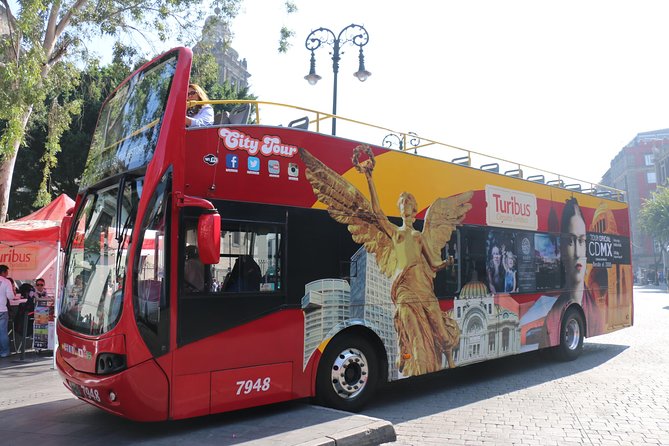
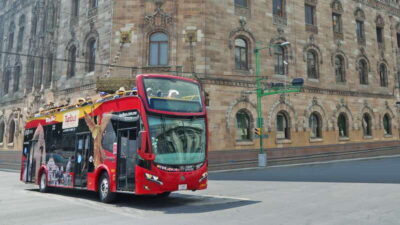
Mexico City’s Turibus gives you a quick way to understand a huge capital city before deciding where to spend more time. The four routes cover the Historic Center, Polanco, the southern districts, and the Basilica, so you can trade subway maps and taxi negotiations for an open-top seat and a clear route.
I like the freedom to build your own day and the chance to hear commentary in your language while the city rolls past. The included coupon booklet is another useful touch, especially if you plan to visit several paid attractions or local businesses. The main catch is important: only the Historic Downtown Route is currently listed as operating from 9 a.m. to 7 p.m. until further notice, so confirm which routes are running before you set your plans.
Key points to know before you ride
- Four themed routes cover very different sides of Mexico City: central monuments, upscale Polanco, university country and Coyoacán, plus the Basilica and Tlatelolco.
- One ticket covers all routes and stops for one operating day, with a two-day option available depending on your booking.
- The open-top deck offers the best views, while the lower level gives you air conditioning and shelter from weather and traffic fumes.
- The audio system is multilingual, and headphones are provided at the ticket office.
- Sunday morning route changes are normal: the Ciclotón closes some streets from 8 a.m. to 2 p.m.
- Service can change without notice because of demonstrations, celebrations, traffic, road closures, or safety measures.
Why the Turibus works well for a first look at Mexico City
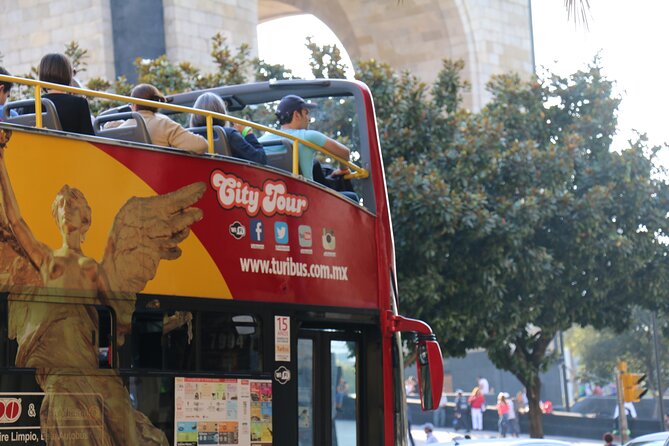
Mexico City is too large to grasp in a single neighborhood. The Turibus helps you connect the dots. You can begin near the National Auditorium, pass Chapultepec and the Angel of Independence, reach the Zócalo, then use another route to see Polanco, Coyoacán, or the National Autonomous University.
I especially like this as a first-day orientation ride. You get a sense of distance and district character without spending your first hours figuring out public transportation. The audio commentary also gives the ride some structure, though you should treat it as an introduction rather than a full guided tour.
The advertised duration is about three hours, but that applies best to a continuous ride. Once you hop off for museums, markets, lunch, or a walk, the day becomes your own. Bus frequency and travel time can vary, so avoid booking a timed attraction immediately after a planned stop.
The tour is offered in English, and the included system is described as multilingual. You pick up headphones at the ticket office, then show your mobile voucher when boarding at the designated stops. You can finish at any stop on the routes rather than returning to your starting point.
More Hop-On Hop-Off Bus Tours in Mexico
- Mexico City: Hop-on Hop-off Bus Tour
★ 4.0 · 1,043 reviews - Mexico City: Hop-on Hop-off City Tour by Turibus 1-Day Pass
★ 4.1 · 691 reviews - Hop On Hop Off Tour with Free Stops in Puerto Vallarta
★ 4.0 · 647 reviews
Start at Auditorio and cross Chapultepec
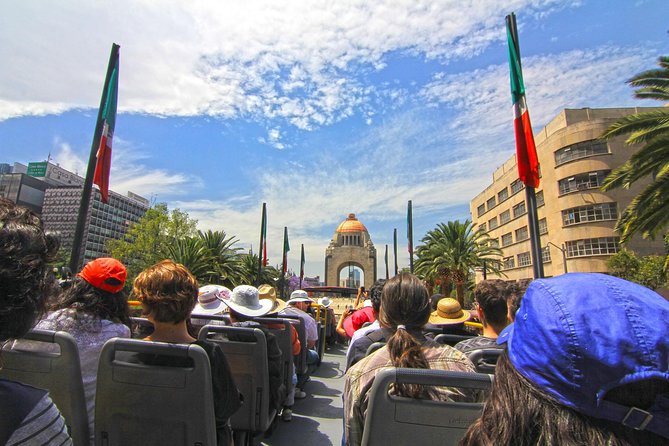
The Historical Center route begins at Auditorio Nacional, a practical northern starting point beside one of Mexico City’s main cultural venues. From there, the bus moves toward Museo de Arte Moderno and Chapultepec, giving you an early look at the city’s major museum district.
Museo de Arte Moderno is a sensible stop if you want Mexican and international modern art. The route then reaches La Condesa, one of the city’s best-known neighborhood areas for cafés, streets, and local life. The bus cannot give you the full feel of Condesa from the road, so get off if this is the part of the city you want to explore on foot.
At Fuente de Cibeles, you can change your focus from museums to the Roma and Condesa area. Casa Lamm offers another cultural stop, while the Angel of Independence gives you one of the city’s most recognizable views along Paseo de la Reforma.
The next section includes Reforma 222, Museo de Cera, and the Monument to Cuauhtémoc. These stops work well for a broad city sampler. Reforma 222 is a modern commercial complex, Museo de Cera suits families and fans of wax figures, and the monument gives you another landmark along the avenue.
Walk the Historic Center around the Zócalo
As the route approaches the center, stops on Avenida Juárez, at the Zócalo, and around Plaza Manuel Tolsá put you close to some of the city’s most important public spaces. The Zócalo deserves more than a quick photograph. If you have time, get off here and walk rather than trying to see the area only through a bus window.
Plaza Manuel Tolsá leads toward several central museums and grand civic buildings. Museo Franz Mayer is a good choice if you want a quieter museum stop, while Plaza de la República and the Museo San Carlos offer different angles on Mexico City’s art and architecture.
The route includes several Reforma stops and returns to the Angel of Independence before passing Paseo de la Reforma near Río de la Plata and the Museo Nacional de Antropología. That final stop is one of the strongest reasons to use the route. The museum is large, so it is not a quick hop-off visit. Give it several hours if it is a priority, and consider building your entire day around it.
There is a practical limit here: the bus route shows many worthwhile stops, but you cannot properly visit all of them in one three-hour ride. Use the first circuit to mark places for later, then hop off only at the two or three stops that matter most to you.
Polanco brings museums, shopping, and family stops
The Polanco route begins at Auditorio, with a stop identified as Bicigratis, then continues along Calle Arquímedes and Avenida Presidente Masaryk. This is the route for a more polished, modern side of the city, with major shopping and cultural venues.
Antara is a useful stop for shopping and a break from sightseeing. Museo Soumaya is the major cultural draw in this section. Its unusual exterior is easy to spot, and the museum gives you a strong reason to leave the bus rather than simply pass by it.
The route also includes Hipódromo de las Américas and Papalote Museo del Niño. The latter is especially useful if you are visiting with children. Polanco can be more appealing as a half-day district than as a quick drive-through, so check the bus schedule before getting off. A long museum visit can mean waiting for the next service or adjusting the rest of your route.
This route is also where the open deck can be less useful if the sun is strong or traffic is slow. The lower air-conditioned level may be the better choice when you want a calmer ride between stops.
Same city, a different seat on the bus:
- Cancun City Sightseeing and Shopping Tour on a Double Decker bus
★ 4.0 · 540 reviews - Cozumel: Private Excursion – Van or MiniBus
★ 5.0 · 427 reviews - Puerto Vallarta: Hop-On-Hop-Off City Bus Tour
★ 4.1 · 386 reviews - Mexico City: Double Decker Bus Night Tour
★ 3.8 · 373 reviews
The South route reaches Coyoacán and UNAM
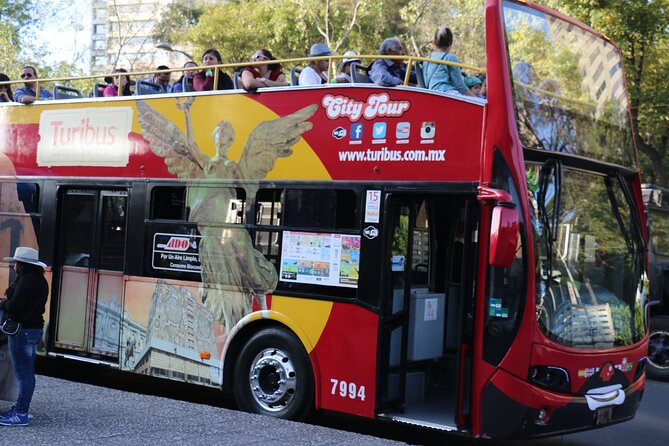
The South route starts at Fuente de Cibeles and heads through Mercado Roma, then past the World Trade Center and Monumental Plaza de Toros México. These early stops show a different rhythm from the central route, with commercial districts, a major arena, and everyday city streets.
The route continues toward Avenida de la Paz, Estadio Olímpico Universitario, and Perisur. If you want to explore the university area, this route gives you a useful framework. It also reaches Avenida Centro Comercial and the Mercado de flores San Ángel, where the name alone signals a more local, specialized stop than the central monuments.
Further south, you will see stops for Tlalpa Linares María Isabel, Universum, University City, and Rectoría de la UNAM. These are not interchangeable. Universum is a science museum, while University City and Rectoría relate to the university campus and its architecture. Plan your hop-off based on your interest rather than trying to cover the whole section.
The Alfredo Guati Rojo National Watercolor Museum leads toward Coyoacán, Aguayo, and the Frida Kahlo Museum. Coyoacán is one of the most tempting places to leave the bus, with plazas and streets suited to walking. The Frida Kahlo Museum is also one of the route’s most obvious attractions, but the bus ticket does not include admission. Lunch, drinks, and other services are not included either.
This route has the greatest distance between the main central area and the southern stops. It can be very useful, but it is less forgiving if buses are delayed. If Coyoacán or the Frida Kahlo Museum is your main goal, allow extra time and do not plan a tight return connection.
The Basilica route combines Garibaldi and Tlatelolco
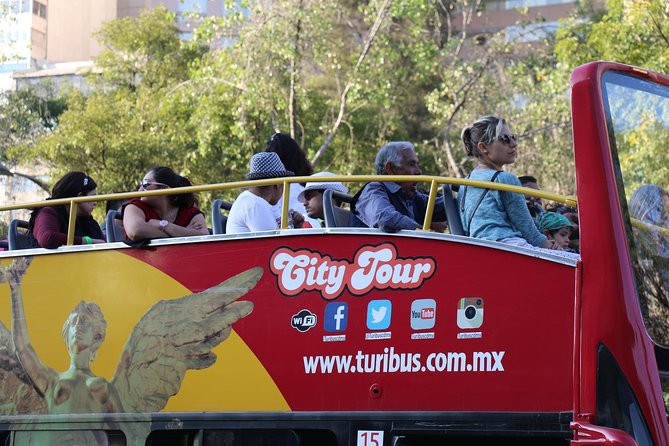
The Basilica route is shorter, with stops at the Zócalo, Garibaldi Plaza, Tlatelolco, and the Basilica. It also includes a Turibus stop at the Palace of the Counts of Miravalle.
Garibaldi Plaza gives you a different look at Mexico City’s musical traditions and nightlife districts. It is a clear contrast with the formal museums and monuments along Reforma. Tlatelolco is an important historical and architectural stop, and it deserves time on foot if you want more than a quick view from the bus.
The Basilica is the main destination on this route. However, the service notes that if the bus cannot reach it for reasons beyond the operator’s control, the route may go instead to Plaza de las Tres Culturas. That is not a minor change, so check the route on the day you ride.
The Basilica route is best for you if these specific places are high on your list. It is not the route to choose simply because you want another general city circuit. With only a handful of stops, it functions more like a targeted excursion.
Open-top views versus the lower deck
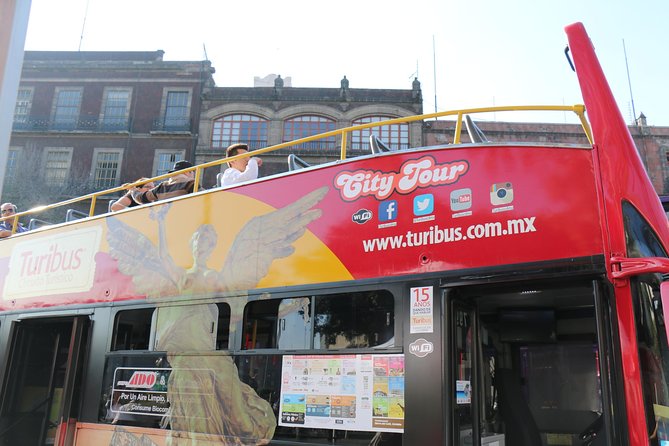
The open top is the classic Turibus choice. You get a wider view of Reforma, monuments, museums, and city streets, and it is easier to orient yourself when the bus turns through a new district. Keep your belongings secure and expect the ride to be affected by weather.
The lower level is air-conditioned. I would choose it during hot afternoons, in poor weather, or when you want a break from noise and sun. You may lose some of the best sight lines, but comfort matters on a long circuit.
The supplied headphones connect you to the digital audio commentary. Since the system is multilingual and the tour is offered in English, this is a useful way to add context without joining a fixed group. Still, audio commentary cannot answer personal questions or adapt the day to your interests. If you want a detailed guide at every stop, this is not that kind of tour.
Timing, route changes, and the real value of the ticket
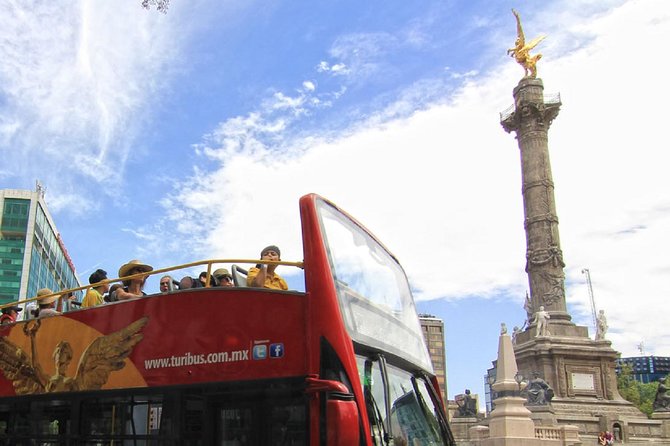
The ticket covers transportation between stops on all four routes, and the ticket may be offered for one or two days depending on the option selected when booking. The stated tickets are valid for one operating day, so read the selected option carefully rather than assuming a calendar-day or 24-hour system.
The value comes from flexibility, not from seeing every attraction. If you ride continuously for three hours, you get a broad overview. If you hop off several times, the ticket can replace multiple taxi rides and simplify transfers between districts. That can be worthwhile in a city where distances are large and traffic is unpredictable.
The coupon booklet adds possible savings on local experiences, but its value depends on which discounts you can actually use. Treat it as a bonus, not the main reason to book. The included Mexico City Tour Stops guide can help you decide where to get off.
Be realistic about delays. Routes may run less often or change because of traffic, public celebrations, demonstrations, road closures, or safety protocols. On Sundays from 8 a.m. to 2 p.m., the Ciclotón closes some streets, and the buses use alternative ways on certain tours.
The most important current warning is the operating schedule: the service is listed as running only on the Historic Downtown Route from 9 a.m. to 7 p.m. until further notice. That may make the four-route ticket less useful on your date. Confirm the actual operating plan before you depend on Polanco, South, or Basilica service.
Who should book this Mexico City bus tour?
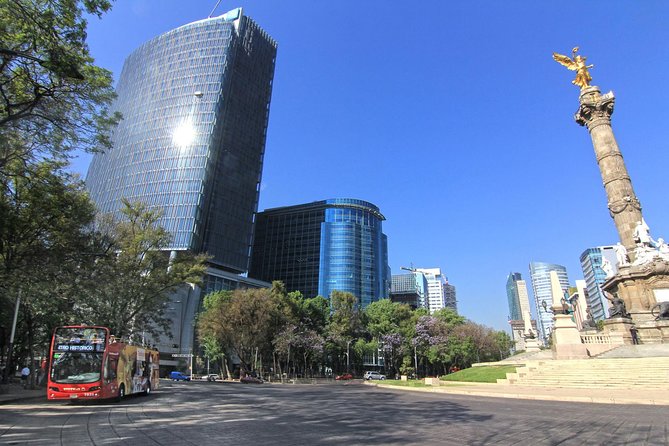
I would recommend the Turibus to you if you are visiting Mexico City for the first time, want a low-stress overview, or prefer to avoid navigating public transit on your first day. It also suits families and visitors who want the option of sitting rather than walking between distant areas.
It is less suitable if you already know the city well, need exact arrival times, or want a guide who walks with you through each attraction. The ride is a transport and orientation service, not a full museum tour or private city tour.
Most people can participate, and the tour is near public transportation. Since lunch, beverages, entrance fees, and other services are not included, budget separately for the places where you get off.
Free cancellation is available when you cancel at least 24 hours before the start time. Changes or cancellations inside that window are not accepted for a refund.
Should you book the Turibus?
Book it if you want a simple first look at Mexico City and plan to use the hop-on feature with purpose. The Historic Center route alone can be useful for Reforma, Chapultepec, the Zócalo, and the major central museums.
Before booking, confirm that the route you want is operating on your date. If only the Historic Downtown Route is running, the ticket is no longer a full-city transport plan, but it can still be a practical three-hour introduction. Choose the open deck for views, the lower level for comfort, and leave generous time between stops. That approach gives you the best value without pretending one bus ride can cover all of Mexico City.
FAQ
How long is the Turibus Mexico City tour?
The continuous sightseeing ride takes approximately three hours. You can hop off at stops and continue later, so your total day can be longer.
How many routes does the ticket cover?
The ticket covers the Historical Center, Polanco, South, and Basilica routes, with all listed stops and transportation between stops. Current operations may be limited, so confirm which routes are running on your date.
Is the audio commentary available in English?
Yes. The tour includes a multilingual digital audio system, and the experience is offered in English. Headphones are provided at the ticket office.
Can I ride on the open top or inside the bus?
Yes. You can choose the open-top deck or the lower air-conditioned level.
Does the ticket include food, drinks, or attraction admission?
No. Lunch, beverages, museum admission, and other services not specifically listed are not included.
What happens if I need to cancel?
You can receive a full refund if you cancel at least 24 hours before the experience start time. Cancellations or changes made less than 24 hours before the start time are not refunded or accepted.
Just added around Mexico
- Bus Wine Tour by Ansell Tours★ 5.0 · 24 reviews
- Cozumel: Private Excursion – Van or MiniBus★ 5.0 · 427 reviews
- Open Top City Tour & Beach Break★ 4.0 · 120 reviews
- Discovering Isla Mujeres on a Double Decker Catamaran★ 4.0 · 12 reviews
- Hop-on Hop-off City Tour Cancun plus Submarine or Bodyboard Experience★ 3.5 · 8 reviews
- Full-Day Tour Chichen Itza, Valladolid and Cenote open bar in bus★ 3.5 · 10 reviews
- Private Party Bus Loop in Cancun★ 5.0 · 13 reviews
- Cancun City Tour by Downtown and Turistic Hightlights on Open Bus★ 3.5 · 12 reviews
Mexico Bus Tours, compared.


Hop On Hop Off Tour with Free Stops in Puerto Vallarta
Read our review →
Cancun City Sightseeing and Shopping Tour on a Double Decker bus
Read our review →


Browse the lists this tour appears in