
REVIEW · HANOI
Sapa – Bac Ha Trek Tour – Night Train & Bus & Homestay overnight
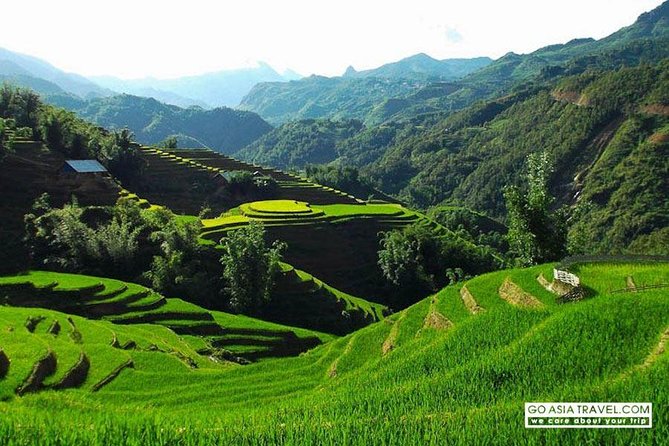
Sapa’s best moments come on foot, and this trip takes you from Cat Cat’s waterfall and old hydro plant to rice terraces, bamboo forest, and village paths in the Muong Hoa Valley. The overnight Ta Van homestay adds a useful dose of local life, while Bac Ha gives the trip a second setting and a Sunday market worth planning around.
I like the small-group limit of 15 and the way transport, meals, a guide, and lodging are bundled into one low price. I also like the choice of overnight train or bus from Hanoi, plus the private car and guide used for Bac Ha.
The main catch is the pace. A 9-kilometer trek, an overnight train, basic shared homestay facilities, and a long return journey ask a lot from you in three days. Rain can also make the trails harder.
Key points to know before booking
- The trek covers several ethnic villages: Cat Cat, Lao Chai, Ta Van, and Giang Ta Chai.
- Ta Van homestay is simple: expect a shared room or single mattress and a public bathroom, not hotel comforts.
- Bac Ha Market only runs on Sunday morning: the date of your trip matters.
- The overnight train leaves Hanoi at about 9:30 p.m.: pickup at Lao Cai is scheduled for around 5 a.m.
- Most meals are covered: dinner, three lunches, and three breakfasts are listed, while drinks and personal costs are extra.
- The route is for reasonably fit walkers: older people, children under six, and people with mobility limits should not join the long trek.
From Hanoi station to Sapa before breakfast

The trip begins at 160 Tran Quang Khai in Hanoi’s Old Quarter area. If you take the rail option, you meet the group at Hanoi Train Station for an overnight service listed as SP1, SP2, or SP3, leaving at about 9:30 p.m. You then reach Lao Cai around 5 a.m., where a driver takes you the remaining 40 kilometers to Sapa.
That timing is the key trade-off. You save a hotel night and wake up near the mountains, but sleep on a train is rarely as restful as sleep in a room. Pack a small overnight bag rather than digging through your main luggage when you arrive. Warm clothes, a hat, and a scarf are useful because Sapa can be cold from September through March, and fog is common in December, January, February, and March.
The tour also offers bus or limousine-bus arrangements depending on the option selected. Since the details list both rail and bus transfers, check your exact departure method at booking. The price and included transport can change with the option, and the rail itinerary does not necessarily apply to every booking.
After reaching Sapa, you have breakfast at a hotel and leave larger luggage behind while preparing a light bag for the trek. That is a smart setup. You do not want a full suitcase on steep, wet village paths.
More Hiking Trips in Hanoi:
- 2-Day Sa Pa Ethnic Homestay Tour & Trek with Limousine Bus
★ 4.8 · 440 reviews - 2-Day Trekking Adventure of Sapa from Hanoi with Night Bus
★ 5.0 · 134 reviews - From Hanoi: 2-Day Sapa-Fansipan Peak & Trek & Ha Giang Bus
★ 4.8 · 52 reviews
Cat Cat Village and the first short trek
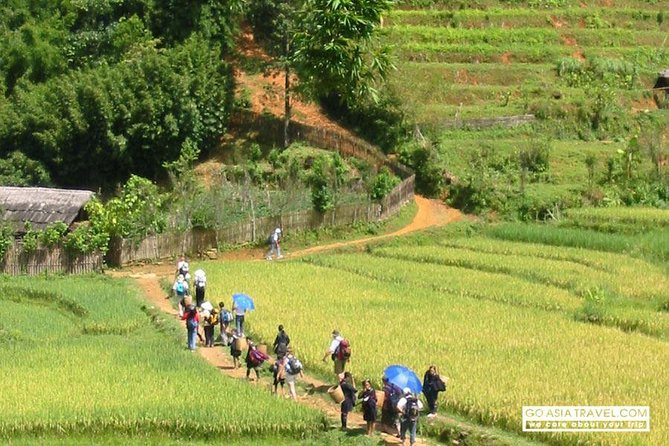
The first walk heads to Cat Cat Village with a local H’Mong guide. The stated walking time is about three hours, with roughly one hour allocated to Cat Cat itself. The village is associated with the Black H’Mong community and sits among rice terraces, Muong Hoa Stream, and a waterfall.
The visit includes the waterfall and an old hydroelectric power plant built during the French colonial period. You can also see village schools and the surrounding terraces. These details give the first section more shape than a simple viewpoint stop. You are seeing how water, farming, schooling, and small-scale village life fit together in a mountain community.
The route is not just a photo stop. Paths around Sapa can be uneven, and rain changes the footing quickly. Wear proper trekking shoes with a firm sole. Sunglasses, sunscreen, and insect repellent are also recommended, even on cool or cloudy days.
Cat Cat is a good introduction because the walking is shorter than the main route. Still, the day grows more demanding as you continue toward Lao Chai and Ta Van. Keep your pace steady rather than spending all your energy at the first stop.
Lao Chai and the Muong Hoa Valley route
The route continues toward Lao Chai, a Black H’Mong village at the foot of Fansipan and beside the Muong Hoa Valley and stream. The stated time for this part is about 20 hours, which clearly refers to the broader overnight sequence rather than 20 hours of continuous walking. You should expect the main trek to take a substantial part of the day, with the exact walking time affected by weather and the selected route.
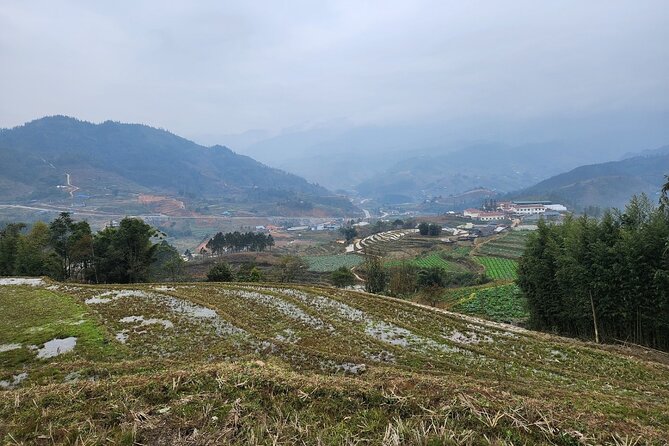
This is the section where the tour earns its price. You move through rice terraces and mountain paths rather than simply looking at them from a roadside viewpoint. The valley scenery changes with the season, and rain can make the terraces, streams, and footpaths feel quite different from a dry-weather visit.
Your local guide matters here. The trip is designed around village routes and ethnic communities, and a guide helps you move between stops without having to solve transport and directions yourself. The information provided does not name the guide in advance, so do not expect a particular person unless the operator confirms one before departure.
The long trek is also the clearest test of fitness. The operator advises a moderate fitness level and specifically warns older people against the 9-kilometer walk because of its challenge and the extra danger in wet weather. Take that warning seriously. This is not a gentle town stroll.
Ta Van homestay and a simple night in the valley
Ta Van is home to the Zay people and sits near Muong Hoa Stream. After the day’s walking, you stay with a local family in a homestay. The accommodation uses a shared room or a single mattress and a public bathroom.
That arrangement gives you a more direct connection to village life, but it is basic. If you need a private bathroom, reliable hotel-style facilities, or a quiet room, this is not the right place to compromise. Bring a small towel and keep your overnight belongings compact, though the supplied information does not specify all homestay amenities.
The value is less about comfort and more about location and simplicity. Instead of returning to Sapa town, you sleep in the valley near the walking route. You also get dinner at the homestay or as part of the tour meal plan, with three lunches and three breakfasts listed among the inclusions.
Vegetarian food is available if you request it when booking. Drinks are not included, so carry Vietnamese dong for small purchases. The operator notes that banking services in Sapa can sometimes fail, and cash is also useful for personal expenses.
More Train Trips in Hanoi:
- Hanoi City Tour: Bat Trang, Train Street, Lunch & Luxury Bus
★ 4.9 · 15 reviews - 1 Day – 1/2 Day Hanoi City – Luxury Bus, Lunch, Train Street
★ 4.9 · 8 reviews - Explore Sa Pa with Overnight Train & Sleeper Bus & Trekking
★ 3.9 · 7 reviews - Sapa 2 Days 1 night By Bus/Train – Overnight in Hotel 3* With Mountain View
★ 4.0 · 2 reviews
Giang Ta Chai, bamboo forest, and the second morning
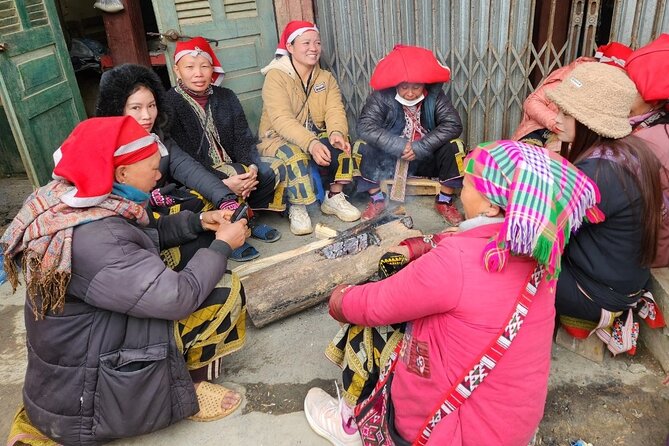
The next section visits Giang Ta Chai, where Red Dao, Zay, and Black H’Mong communities live. The village is known for views across the Muong Hoa Valley, bamboo forest, and rice terraces. The stated visit time is about two hours.
After sleeping in a simple homestay, this morning walk gives you another look at the valley rather than rushing straight back to town. The cultural mix is also important. Sapa is not a single-community destination, and the route introduces you to several groups with different identities and village settings.
The supplied plan says you can stay with the host at the homestay, but it does not explain every transfer between Giang Ta Chai and the next part of the trip. Ask the operator to confirm the morning schedule, luggage handling, and pickup time before departure. The basic outline is clear, but the exact handoff between the trek and Bac Ha matters on a short three-day program.
Bac Ha Market on Sunday morning
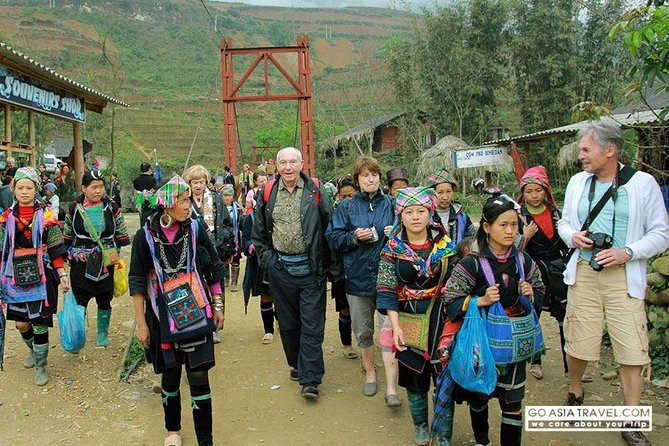
The Bac Ha portion is one of the trip’s most unusual features. Bac Ha Market operates only on Sunday morning, so this tour is best booked when the third day lines up with Sunday. If it does not, the market visit cannot offer its main attraction.
The market is presented as a place where local people exchange goods such as pigs, hens, souvenirs, and everyday products. That makes it more than a shopping stop. You see a working market tied to local trade, though the supplied schedule does not promise a particular market section or livestock area.
You have about four hours at Bac Ha Market. That is enough time to walk through the stalls and take in the activity without treating the visit as a quick photo break. Bring Vietnamese dong, since drinks and personal purchases are not included and card service may not be dependable.
The timing may be tiring after the overnight train and trek. Still, the contrast is worthwhile. Sapa gives you valley walks and homestay life, while Bac Ha shifts the focus to a larger weekly meeting point for surrounding communities.
Hoang A Tuong’s Castle and Pho Village

The private Bac Ha tour also stops at Hoang A Tuong’s Castle for about 30 minutes. The building was once the home of the H’Mong ruler and his family, who governed local ethnic communities. Entrance is included.
Thirty minutes is enough for a compact visit, not a long architectural study. The stop works well after the market because it adds political and historical context to the area. You see a former center of local power after experiencing the market as a center of present-day exchange.
You then have about 30 minutes in Pho Village, close to Bac Ha Market. The planned activity is a walk along peaceful roads to observe daily life. This short stop gives you a quieter ending after the market’s noise and activity.
The Bac Ha transport is listed as a private car with a guide, which is a useful improvement over a large coach. It allows the final day to feel more personal, although the overall trip still has a firm schedule.
Price, meals, and what the $54.20 covers
At $54.20 per person, the tour offers strong value if you want a packaged introduction to northern Vietnam. The fee includes Hanoi to Sapa transport according to the chosen option, a local English-speaking guide in Sapa, a Ta Van homestay, a private Bac Ha car and guide, listed entrance fees, government tax, dinner, three lunches, and three breakfasts.
That is a lot of moving parts for a modest price. You are paying less for luxury and more for convenience. The operator handles the major transfers, food, guiding, and accommodation, so you do not have to arrange a night train, mountain pickup, village trek, and Bac Ha excursion separately.
There are important exclusions. Drinks, travel insurance, personal spending, and a single supplement are not covered. The homestay is shared unless you arrange otherwise, and transport details vary by the selected option. Read the booking choice closely, especially if you expect the overnight train rather than a bus.
The tour has a maximum of 15 people. That is small enough to make village walking easier than it would be with a large coach group, though the experience will not feel private except for the Bac Ha portion.
Weather, clothing, and the real difficulty
Sapa weather can change fast. The operator advises warm clothes from September through March, and fog is especially possible from December through March. Rain is not a reason to dismiss the trip, but it can turn a scenic trail into a slippery one and make the long walk more tiring.
Pack trekking shoes, sun protection, insect repellent, and a light bag for the walking days. Bring medicine you may need, since there are chemist shops in Sapa but you should not rely on finding a specific item. Cash in Vietnamese dong is the safest choice.
The tour is not suitable for children under six, people with disabilities, or older people who may struggle with a 9-kilometer trek. You need a moderate fitness level. If you enjoy walking but dislike steep or wet trails, ask how difficult the day’s route is before paying.
Free cancellation is available up to 24 hours before the start time. Changes or cancellations inside that period are not accepted for a refund. The activity begins and ends at the Hanoi meeting point, unless you choose the extra onward option to Ha Giang.
Should you book the Sapa and Bac Ha route?
Book this tour if you want a low-cost, tightly arranged introduction to Sapa and do not mind an overnight train, a long walk, and basic accommodation. It suits people who value rice terraces, village paths, local food, and a real homestay more than hotel comfort.
The tour is especially appealing when your dates include Sunday, letting you see Bac Ha Market as intended. It also works well if you want to continue toward Ha Giang instead of returning directly to Hanoi, since an extra bus option is listed from Sapa at 2:30 p.m. or 7 p.m.
Skip it if you need flexible timing, private facilities, or a relaxed pace. Confirm your transport option, check the Sunday market date, and prepare for rain. For fit walkers who want several distinct northern Vietnam experiences in three days, the price covers an impressive amount.
FAQ
How long does the tour last?
The tour lasts approximately three days and includes an overnight train or bus journey from Hanoi, trekking around Sapa, a homestay night in Ta Van, and a Bac Ha excursion.
Where does the tour start and end?
It starts at 160 Tran Quang Khai in Hanoi and normally ends back at the same meeting point. An extra option allows you to continue from Sapa to Ha Giang instead of returning to Hanoi.
Is the overnight train included?
The overnight Hanoi to Sapa train is included depending on the option selected. Bus or limousine-bus transfers are also available depending on the booking choice.
What accommodation is provided?
You stay at a homestay in Ta Van with a local family. The accommodation has a shared room or single mattress and a public bathroom, with simpler facilities than a hotel.
Is Bac Ha Market open every day?
No. Bac Ha Market takes place only on Sunday morning. Check that your tour date matches the market day if this stop is important to you.
What meals are included?
The tour includes dinner, three lunches, and three breakfasts. Drinks and personal expenses are not included, and vegetarian food is available if requested at booking.
How difficult is the trek?
You should have a moderate fitness level. The long trek is about 9 kilometers and can be challenging or dangerous in rain, so the tour is not advised for older people, children under six, or people with disabilities.
More Evening Tours in Hanoi
- 2-Night Sapa Tour with Fansipan Peak by Bus from Hanoi
★ 4.5 · 23 reviews - 2 Days 1 night Sapa Tour from Hanoi by Limousine/Sleeper bus
★ 4.5 · 6 reviews - Sapa 2 Days 1 Night Tour From Hanoi By Bus (Hotel Overnight)
★ 3.0 · 5 reviews - Private Sapa 2 Days 1 Night By Bus
★ 4.5 · 2 reviews
Just added around Hanoi
- 2-Day Trekking Adventure of Sapa from Hanoi with Night Bus★ 5.0 · 134 reviews
- Sapa 2 Days 1 Night Tour From Hanoi By Bus (Hotel Overnight)★ 3.0 · 5 reviews
- Sapa 2 Days 1 night By Bus/Train – Overnight in Hotel 3* With Mountain View★ 4.0 · 2 reviews
- Sapa Express Bus From Hanoi To Sapa Or Return★ 4.5 · 17 reviews
- Sapa Trek Tours -2D1N Stay At 3*** -TRANSFER BY SLEEPING BUS★ 5.0 · 17 reviews
- LUXURY SAPA TOUR 2D1N -Stay At 5 Star Hotel-Transfer by sleep bus★ 5.0 · 41 reviews
- The Best Sapa Tour 2D1N Stay At 3* Hotel -Transfer by Sleep BUS★ 4.5 · 22 reviews
- Sapa 3 Days Trekking Tour By Bus from Hanoi (2 Nights in Hotel)★ 3.0 · 2 reviews
Hanoi Bus Tours, compared.

Ninh Binh Day Trip: Bai Dinh-Trang An-Mua Cave, Buffet, Boat, Bus
Read our review →

2-Day Sa Pa Ethnic Homestay Tour & Trek with Limousine Bus
Read our review →
Halong bay 5star Cruise Day Trip: Buffet lunch & Limousine bus
Read our review →
Halong Bay Day Tour 6Hour Deluxe Cruise Limousine Bus Small Group
Read our review →


Browse the lists this tour appears in