
REVIEW · ROME
Rome: Capuchin Crypt Experience & Hop-On Hop-Off Transfer
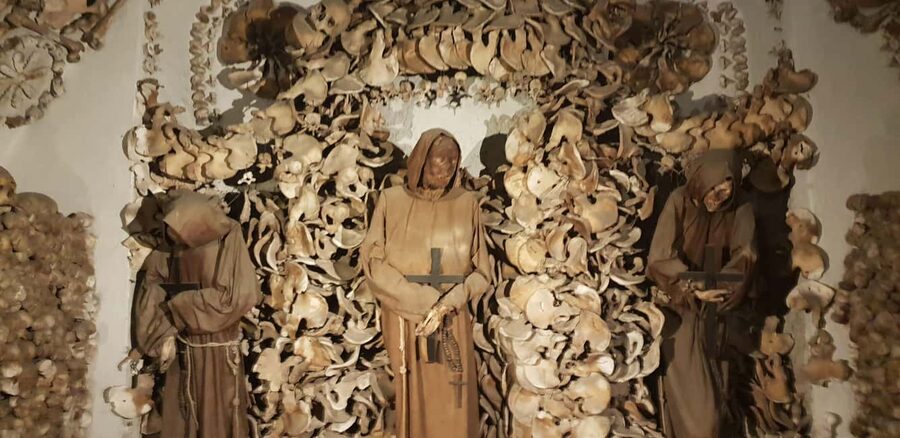
Rome’s Capuchin Crypt is one of the city’s most unusual sights. Beneath the church of Santa Maria della Concezione, the bones of Capuchin friars form a quiet, highly symbolic cemetery. The visit also includes a small museum and a possible Caravaggio painting, so you get more than a quick stop among human remains.
I like the direct bus connection from Piazza d’Aracoeli to Barberini, and I like the museum’s focus on the friars’ simple life, service to the poor, and missionary work. The main drawback is the subject itself: the crypt can feel intense, and it is not a good choice if you are claustrophobic or uncomfortable around human remains.
Key points to know before you go
- The crypt visit begins with eight museum rooms, covering Capuchin convent life, saints, liturgical objects, missions, and art.
- A possible Caravaggio painting of Saint Francis in meditation is one of the museum’s artistic highlights.
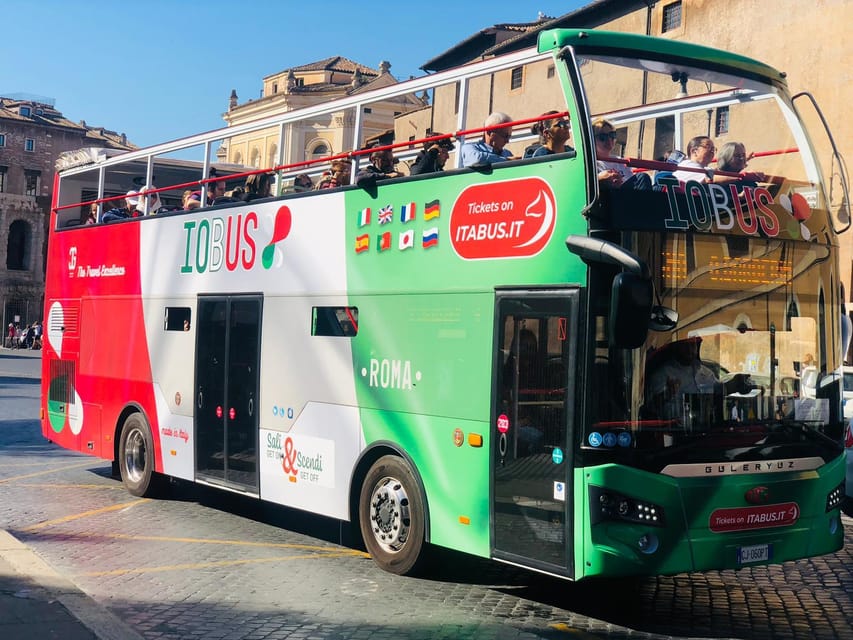
- The bus ticket is one run only, taking you from the Touristation office near Piazza Venezia to the Barberini stop.
- The Capuchin Crypt is a sacred cemetery, not a theatrical horror attraction. You need suitable clothing and a respectful manner.
- Photography is not allowed inside, including the crypt, so bring a camera only for the areas where photography is permitted.
- The $64 price makes the most sense if you want both the museum entry and a simple transfer across central Rome.
Start at Piazza d’Aracoeli with the right expectations
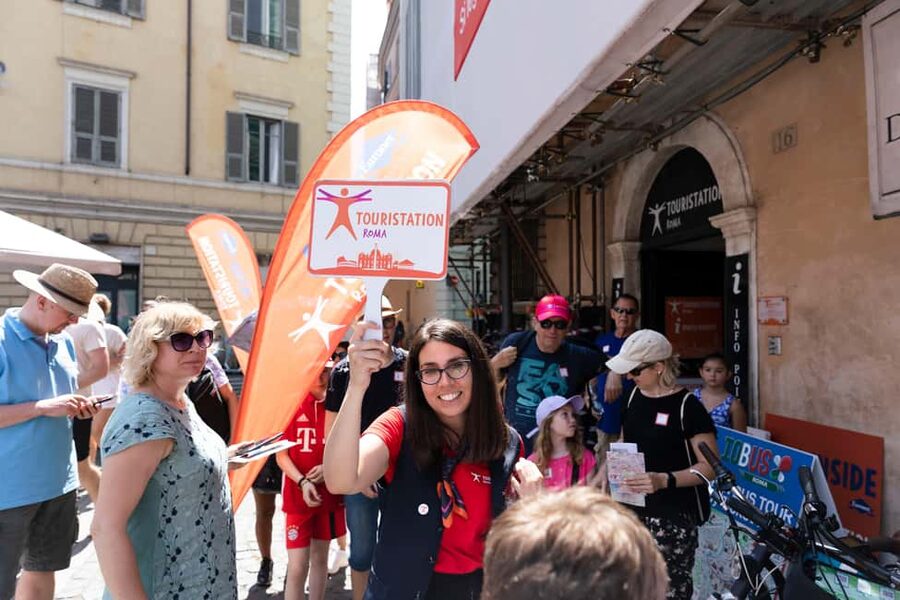
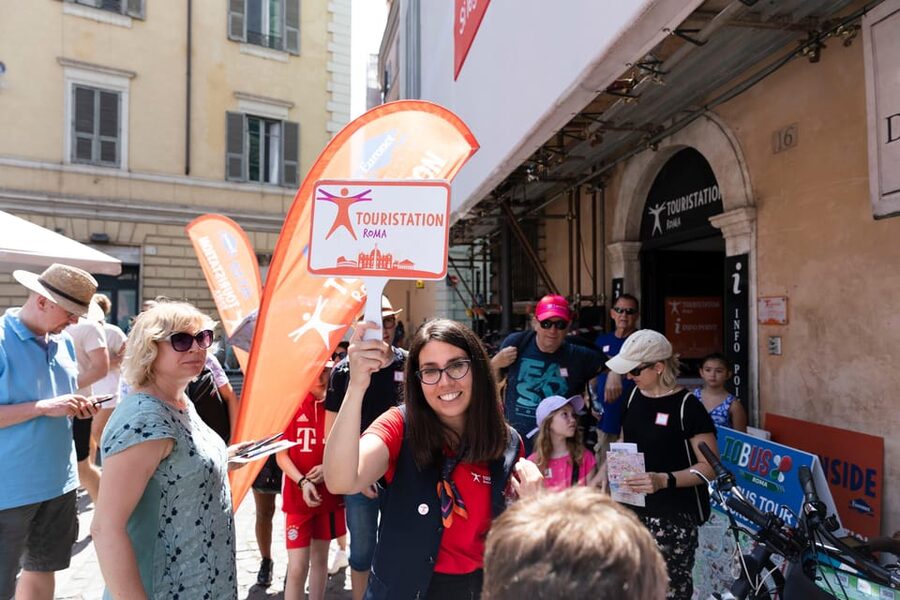
Your visit begins at the TOURISTATION ARACOELI office at Piazza d’Aracoeli 16. Look for the small fountain and orange flags outside the office. This meeting point is near Piazza Venezia and the Capitoline Hill, so allow enough time to reach it before your selected starting time.
At the office, you receive the priority entry arrangement for the Capuchin Crypt, the one-run panoramic bus ticket, and access to the Rome audio guide app with more than 170 points of interest. The bus ticket is given to you there, not at the Barberini stop.
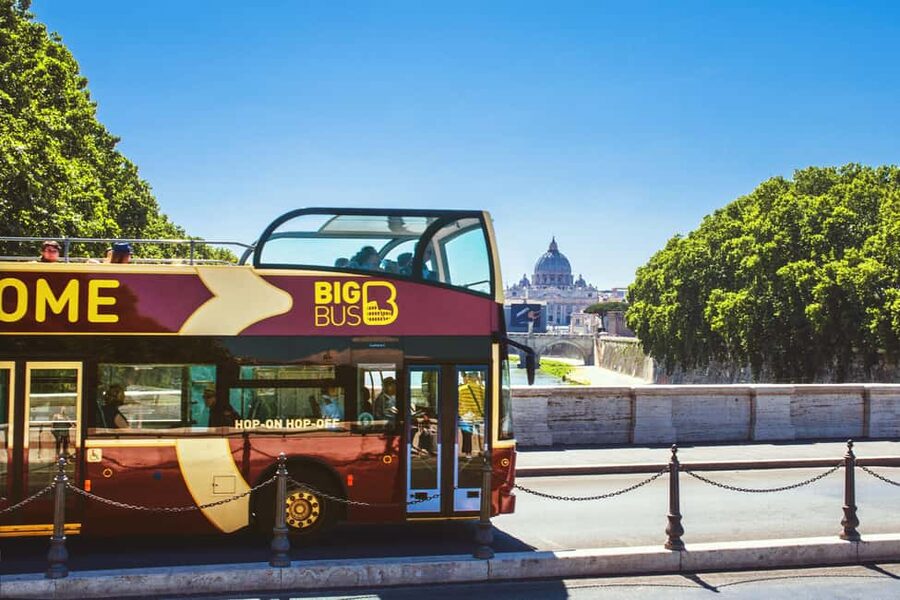
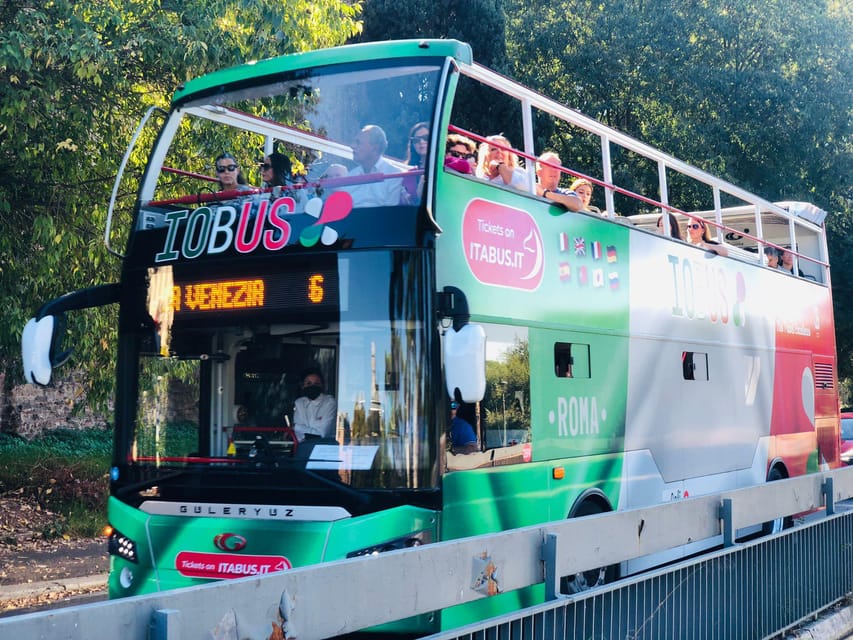
This is important: the experience is described as a hop-on hop-off transfer, but the included ride to the crypt is a single journey. It is not a full-day bus pass. You use the panoramic bus directly in front of the meeting point, then get off at the Barberini stop.
The office staff set a helpful tone for the experience. A Spanish-speaking customer specifically praised the staff and the activity, which matters here because the first step involves collecting several pieces of information and understanding where to board.
More Hop-On Hop-Off Bus Tours in Italy
- Rome: City Sightseeing Hop-on Hop-off Bus with Audioguide
★ 4.0 · 16,045 reviews - Rome: Big Bus Hop-on, Hop-off Open-Top Sightseeing Tour
★ 4.1 · 9,537 reviews - City Sightseeing Rome Hop-On Hop-Off Bus Tour
★ 3.5 · 5,446 reviews
Ride from Piazza Venezia to Barberini
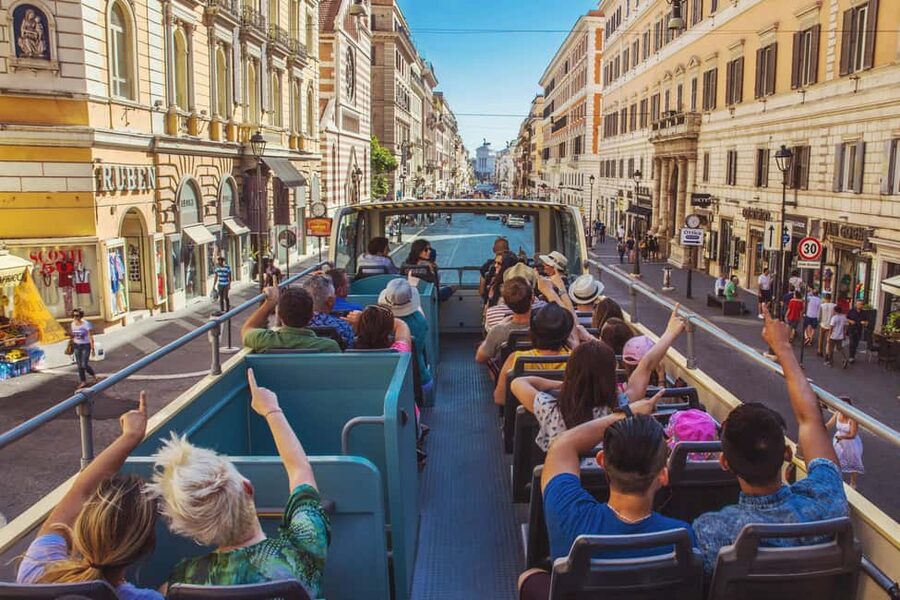
The panoramic bus carries you from the meeting point to the Barberini area, where the Capuchin Crypt is located on Via Veneto. During the ride, you can use the audio guide for Rome, which covers more than 170 sights and points of interest.
This transfer is useful if you are already near Piazza Venezia. It saves you from arranging a separate taxi or navigating public transport for this short connection. It also gives you a broad look at central Rome before the more focused museum visit.
The audio guide adds context along the way, but you should think of it as an app rather than a live guided tour. You will not have a named guide walking with you through the museum. The Capuchin Crypt itself comes with its own audio guide, giving the visit a second layer of recorded explanation.
The ride also helps explain the city’s layout. You begin among the grand civic and ancient sights around Piazza Venezia, then move toward Piazza Barberini and Via Veneto, an area associated with Rome’s baroque churches, grand hotels, and elegant avenues. The bus is practical, but it is also part of the experience because it connects two very different parts of central Rome.
Arrive at Santa Maria della Concezione
The museum sits on Via Veneto, a short distance from Piazza Barberini, and is attached to the baroque church of Santa Maria della Concezione. The church connection matters. This is not an isolated display about bones. It is part of a working religious setting tied to the Capuchin order.
The Capuchins are a branch of the Franciscan tradition. Their identity centers on humility, brotherhood, prayer, and closeness to people in need. The museum uses objects, artwork, and stories to show how those values shaped daily life in Lazio and later influenced Capuchin activity around the world.
You should dress as you would for any sacred place in Rome. Appropriate attire is required, and the crypt should be approached with quiet respect. The setting is solemn rather than sensational.
The first room explains the convent’s beginnings
The museum opens with the story of the convent commissioned by the Barberini family and completed in 1631. The design is associated with Fra Michele da Bergamo, a Capuchin architect.
This opening section gives you a useful foundation. You learn that the convent was not simply a residence for friars. It was a structured religious community shaped by the order’s beliefs and by the patronage of an influential Roman family.
The museum’s presentation is especially useful for visitors who know the crypt only from photographs. Without this background, the bone decorations can seem like a strange curiosity. The opening rooms place them within the life of a religious order that emphasized simplicity and service.
More Hop-On Hop-Off Bus Tours in Rome
- Rome: Hop-on Hop-off Sightseeing Bus Tour with Audioguide
★ 4.1 · 4,801 reviews - Rome: Big Bus Hop-on, Hop-off Open-Top Sightseeing Tour
★ 3.5 · 2,580 reviews - I Love Rome : Hop on Hop off Open Bus Tour
★ 3.5 · 895 reviews - Rome: Hop-On Hop-Off Open-Top Bus City Tour
★ 3.8 · 648 reviews
Learn how Capuchin spirituality shaped daily life
The next two rooms present the Capuchin order through images and stories of its saints. The focus is not only on famous individuals. You also get a sense of the ideals the order wanted its members to follow.
The Capuchins were known for a simple way of living and for their closeness to poor communities. Those themes make the museum more thoughtful than a short crypt-only visit. You are asked to consider why the friars preserved and displayed these remains, and how death, humility, and brotherhood fit into their spiritual outlook.
The audio guide helps you move through the rooms at your own pace. Since there is no live guide, you control how long you spend with each display. That is convenient if you prefer a quiet visit, though visitors who enjoy asking questions will find the experience less personal than a small group tour with a guide.
See vestments, church objects, and everyday items
The fourth section displays vestments, liturgical objects, and artifacts from everyday Capuchin life. These objects are valuable because they bring the order down from broad religious ideas to ordinary practice.
Vestments show the formal side of worship. Everyday objects point toward the modest routines of the convent. Together, they help you picture a community that balanced ceremony with a plain, disciplined way of living.
I find this section important because it slows down the visit. The crypt is the part most people remember, but the objects give the experience its meaning. They show the people behind the cemetery: friars who prayed, worked, taught, traveled, and served communities.
You should not rush these rooms simply because the crypt is waiting at the end. The museum is arranged as a progression, from the convent and its founders to spirituality, daily life, missionary work, and finally the cemetery.
Pause before Saint Francis in meditation
The fifth section centers on a painting of Saint Francis in meditation, possibly made by Caravaggio for the Capuchin convent. The attribution is presented with care, and that uncertainty is part of the interest.
Caravaggio’s dramatic treatment of religious subjects is a major part of Rome’s artistic story. If this painting is indeed his work, it connects the Capuchin setting to one of the city’s most important painters. Even without a firm attribution, the subject fits the museum’s themes of humility, prayer, and withdrawal from worldly display.
This is a good place to slow down and use the audio guide. The painting offers a quiet pause before the final sections and the crypt. You are moving from objects and institutional history toward a more personal image of spiritual reflection.
Photography rules matter here. Photography is not allowed inside the crypt, and flash photography is not allowed. Follow the museum’s directions rather than assuming that a quick phone photo is acceptable.
Follow the order beyond Lazio
The sixth and seventh sections explain the spiritual, cultural, missionary, and artistic work of the Capuchins during the twentieth century and in other parts of the world. These rooms widen the story beyond the Roman convent.
The order’s influence was not limited to the building on Via Veneto. Its members worked in different communities and carried their religious and social mission abroad. This part of the visit helps you see the Capuchins as an active religious network rather than a group remembered only for an unusual cemetery.
The material also gives the museum a modern connection. The Capuchin story continues through teaching, missions, cultural work, and religious service. If you are mainly interested in old art, these sections may feel less immediate than the painting or the crypt. If you want to understand the order itself, they are essential.
Enter the Crypt-Cemetery with respect
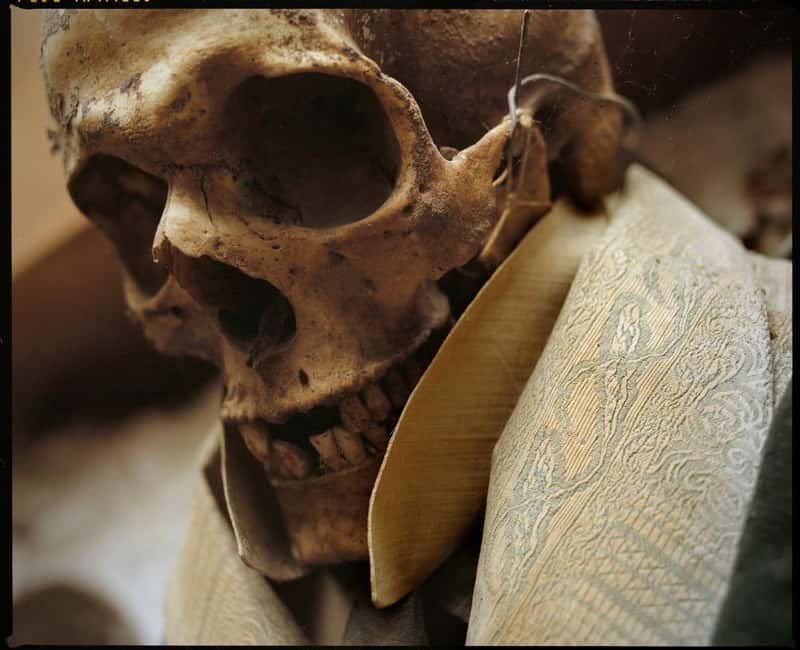
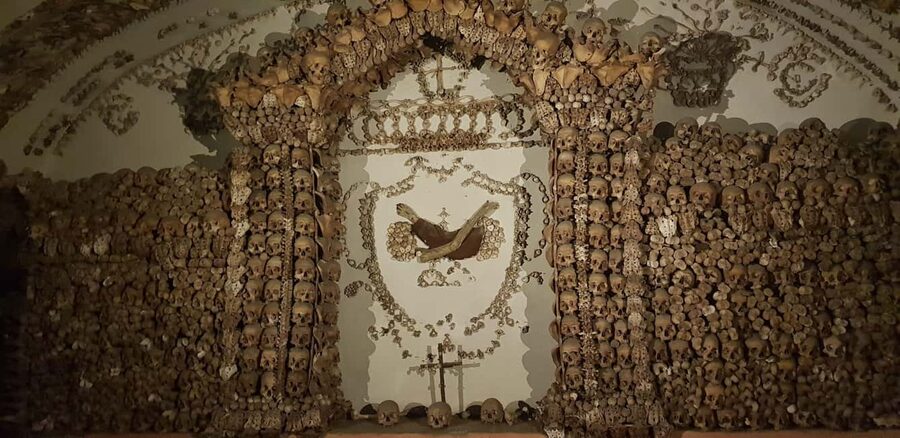
The eighth section introduces the Crypt-Cemetery, the final and most evocative part of the visit. Here, the bones of Capuchin friars are arranged in chapels and decorative patterns.
The effect is memorable, but it should not be treated as a macabre photo stop. The crypt is a sacred cemetery, and its message is tied to mortality, humility, and the temporary nature of earthly life. The arrangements are striking precisely because they combine artistic design with real human remains.
Some people find the crypt moving and reflective. Others may find it disturbing. The experience is not recommended if you are sensitive to human remains or claustrophobic. The rooms are underground and enclosed, so you should take that warning seriously rather than treating it as a minor note.
You cannot take photographs inside the crypt. That restriction protects the dignity of the site and also encourages you to pay attention to the atmosphere rather than viewing the space through a phone screen.
How long the visit takes
The stated activity duration is two hours. That includes the transfer and the museum visit, so your time inside the Capuchin complex will be shorter than two full hours.
The panoramic bus ticket is valid for the one journey to the Barberini stop, while the museum visit follows there. Starting times vary, so check availability when choosing your date. You should also build in time to reach Piazza d’Aracoeli, especially if you are crossing Rome on foot or coming from a distant neighborhood.
The experience works best as a focused half-day plan. You can begin near Piazza Venezia, take the bus to Barberini, visit the museum, and then continue exploring central Rome on your own. The included transfer does not return you to the starting point.
Is $64 a fair price?
At $64 per person, this is not the cheapest way to see a Roman church or museum. The value depends on how much you want the organized transfer and bundled audio material.
The price includes:
- Entry to the Capuchin Crypt
- A Capuchin Crypt audio guide
- One panoramic bus ride to Barberini
- A Rome audio guide app with more than 170 points of interest
If you are already staying near Via Veneto or Piazza Barberini, the transfer may not add much value. You could reach the museum on your own, making the package less attractive. If you are near Piazza Venezia, however, the direct bus ride simplifies the visit and gives you city commentary along the way.
The priority entry is another practical benefit. Rome can involve queues, and having the museum entry arranged saves you one task. Still, the experience is not a private tour and does not include food, drinks, hotel pickup, hotel drop-off, or personal expenses.
I would consider the price reasonable for someone who wants a short, organized visit with transportation and audio guides. I would be more cautious if your main goal is only to see the crypt and you are comfortable making your own way there.
Who will enjoy this experience most?
This visit suits you if you enjoy religious art, unusual historical sites, or the quieter side of Rome. It is also a good choice if you want to understand the Capuchins before entering the cemetery rather than seeing the bones without context.
You may especially appreciate it if you like:
- Sacred art and baroque Rome
- The history of religious orders
- Small museums with a clear theme
- Audio-guided visits at your own pace
- Unusual sites that carry a serious message
The experience is less suitable for young children who may not understand the setting, people who dislike enclosed spaces, and anyone who is uncomfortable seeing actual human remains. It is also not suitable for wheelchair users according to the stated accessibility information.
Comfortable shoes are a sensible choice because you will be moving through central Rome and walking between the bus stop, Via Veneto, and the museum. Bring a camera if you want it for permitted areas, but do not plan on photographing the crypt.
Should you book the Capuchin Crypt and bus transfer?
Book this experience if you want an unusual Roman sight with real religious and cultural context. The best part is the full sequence: you begin with the convent, learn about Capuchin spirituality, see objects from daily life, consider a possible Caravaggio, and only then enter the Crypt-Cemetery.
The bus transfer makes the package most useful when you are near Piazza d’Aracoeli. If you are already near Barberini, compare the price with arranging your own visit. Also skip it if the thought of human remains or enclosed underground rooms makes you uneasy.
For the right visitor, this is a strong two-hour addition to a Rome itinerary. It is quiet, serious, and memorable, with the crypt providing the final image and the museum providing the meaning behind it.
FAQ
Where do I meet for the Capuchin Crypt experience?
Meet at the TOURISTATION ARACOELI office at Piazza d’Aracoeli 16. Look for a small fountain and orange flags outside the office.
What transportation is included?
You receive one run on the panoramic bus from the meeting point to the Barberini stop, where the Capuchin Crypt is located.
Does the bus ticket allow unlimited hop-on hop-off travel?
No. The included panoramic bus ticket is for one journey to the Capuchin Crypt.
What does the museum visit include?
The museum includes eight sections covering the Capuchin convent, the order’s spirituality, saints, liturgical objects, everyday items, missionary work, artistic activity, and the Crypt-Cemetery.
Is photography allowed inside the crypt?
No. Photography is not allowed inside the crypt, and flash photography is not permitted.
Is the visit suitable for people with claustrophobia?
The visit is not recommended for people who are claustrophobic or sensitive to human remains.
Is the experience wheelchair accessible?
No. The experience is not suitable for wheelchair users.
More Private Drivers in Rome
- Rome: Hop-On Hop-Off Bus and Optional Cruise Port Transfer
★ 3.6 · 367 reviews - From Dublin: Game of Thrones Studio Tour with Coach Transfer
★ 4.8 · 1,596 reviews - Reykjavík: Golden Circle Minibus Tour & Blue Lagoon Transfer
★ 4.9 · 546 reviews - 6 Hours – Singapore Tour in Private Car or Minibus with Driver
★ 4.5 · 390 reviews
Just added around Rome
- Rome: Hop-on Hop-off Bus & Vatican Museums Ticket★ 3.5 · 41 reviews
- Rome: Hop-On Hop-Off Bus, Roman Forum & Colosseum Tour★ 3.8 · 35 reviews
- Skip-the-Line Vatican Entry & Panoramic Open Bus Tour★ 5.0 · 7 reviews
- Rome Squares and Fountains Tour & River Boat Hop On Hop Off★ 4.6 · 16 reviews
- Rome Hop On Hop Off Tour from Civitavecchia by Train★ 3.2 · 22 reviews
- Rome: Tiber River Hop-On Hop-Off Boat Tour Ticket★ 3.7 · 238 reviews
- Rome: Nighttime Tour by Open-Top Bus★ 3.8 · 447 reviews
- Rome: Hop-on Hop-off Bus and Colosseum, Ancient Rome Tour★ 4.0 · 9 reviews
Rome Bus Tours, compared.
Big Bus Hop-on, Hop-off Open-Top Sightseeing Tour
Read our review →
City Sightseeing Rome Hop-On Hop-Off Bus Tour
Read our review →
Hop-on Hop-off Sightseeing Bus Tour with Audioguide
Read our review →Big Bus Hop-on, Hop-off Open-Top Sightseeing Tour
Read our review →
From Civitavecchia: Full-Day Panoramic Bus Tour of Rome
Read our review →
Browse the lists this tour appears in