
REVIEW · PARTY BUS & LIMO TOURS
Nairobi: Party bus(matatu) adventure experience
Nairobi’s party matatus turn an ordinary bus ride into a moving music venue, complete with bold artwork and loud sound systems. This experience lets you compare that scene with a calmer city bus, then walk through the CBD with a guide who explains how Nairobi’s transport culture grew.
I like the contrast between practical daily travel and transport built for entertainment. I also like the small-group format, which can make the walk and bus decisions more flexible. The main caution is safety: one recent booking involved a minor collision, and the party bus itself is a public ride, not a private vehicle reserved just for you.
Key points before you book

- You start at KICC: Meet at the entrance of Kenyatta International Convention Centre, opposite the Nairobi Governor’s office.
- You compare two bus cultures: A regular city bus shows Nairobi’s everyday commute, while a party matatu brings music, art, and a louder social mood.
- You walk through the CBD: The experience includes sightseeing, photo stops, and an introduction to Nairobi’s transport story.
- You may ride toward Westlands, Ngong Road, or Eastlands: The route depends on the available bus and the day’s plan.
- You pay bus fares separately: The advertised information lists 500 Kenyan shillings, while one booking paid 100 KES per person each way. Confirm the current amount before setting out.
- You get a private guide service, not necessarily a private bus: The booking is for a private group, but you may share the bus with local commuters.
Why Nairobi’s party bus culture is worth seeing
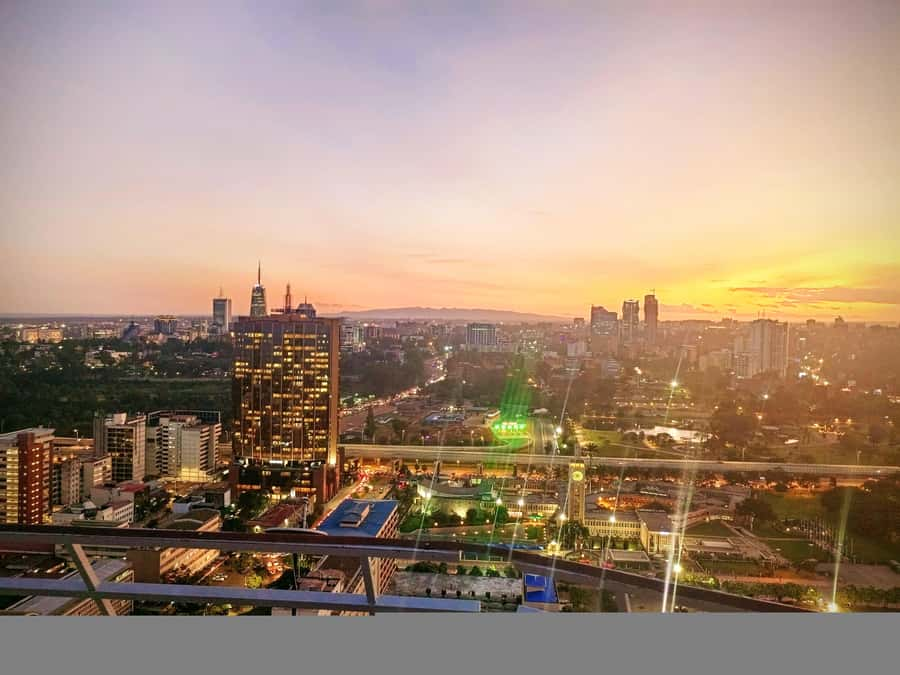
Nairobi’s matatus are more than simple vehicles. They are privately owned minibuses used for daily commuting, but many are decorated with striking graphics, custom interiors, and powerful sound systems. The party matatu takes those features further, making the ride itself part of the entertainment.
That difference matters because Nairobi’s transport system serves two very different needs. A regular city bus helps people get to work, school, and appointments at a modest price. A party bus turns the same basic idea into a social outing, often linked to nightlife, music, and special events.
I like this experience because it puts both sides next to each other. You do not only look at a colorful bus and take a picture. You first see how ordinary public transport works, then consider why some vehicles have become rolling pieces of urban art.
At $32 per person, the value is less about covering famous sights and more about access to a local subject that is easy to miss on a standard city tour. You are paying for a guide, a planned comparison, transport context, water, and security support. You are not paying for a private luxury vehicle, meals, entry tickets, or all bus fares.
More Party Bus Tours in the world:
- Istanbul Party Pub Crawl with Party Bus in Sultanahmet and Taksim
★ 5.0 · 1,882 reviews - Nashville’s Wildest Honky Tonk Public Party Bus (21+)
★ 5.0 · 1,305 reviews - Aruba Nightlife and Barhopping on Chogogo Party Bus
★ 4.5 · 1,201 reviews
Meeting at KICC and getting your bearings
The tour begins at the entrance of the Kenyatta International Convention Centre, commonly called KICC. The meeting point is opposite the office of the Governor of Nairobi, so you should identify the correct entrance before the start time and keep your phone available in case the guide needs to contact you.
KICC is a practical place to begin because it puts you in the heart of the Central Business District. From here, the experience moves on foot through the city center before you board a bus. That first walk helps you understand the setting instead of appearing beside a party matatu with no context.
The exact itinerary lists several walking, sightseeing, and photo-stop portions, but it does not name every street or building. Think of this as a guided look at the CBD and Nairobi’s transport culture rather than a checklist of major landmarks.
You can also pay to enter KICC separately if you want to visit the building. The entry charge is not included, and card payment is available. This is optional, so the main tour does not depend on going inside.
The regular city bus gives you the useful comparison
The first transport portion uses a normal city bus, with Citi Hoppa and Super Metro identified as examples. These buses are built for straightforward commuting. The mood is usually quieter and more functional than on a party matatu, with passengers focused on getting across the city.
The route described heads toward Westlands, an important commercial area. The point is not simply to cover distance. You get to notice the gap between a bus designed for routine travel and one designed to make a statement.
I find this comparison especially useful if you have never used Nairobi’s public transport. A visitor can easily see a decorated matatu and assume that all city buses work the same way. This tour shows that the loudest vehicles are part of a wider system that also includes calmer, ordinary services.
The regular bus is still public transport, so you may wait while it fills with passengers and share the ride with people traveling for work or other daily purposes. That is part of the experience, but it also means the schedule is less controlled than a private sightseeing vehicle.
Reading Nairobi’s bus art on the party matatu
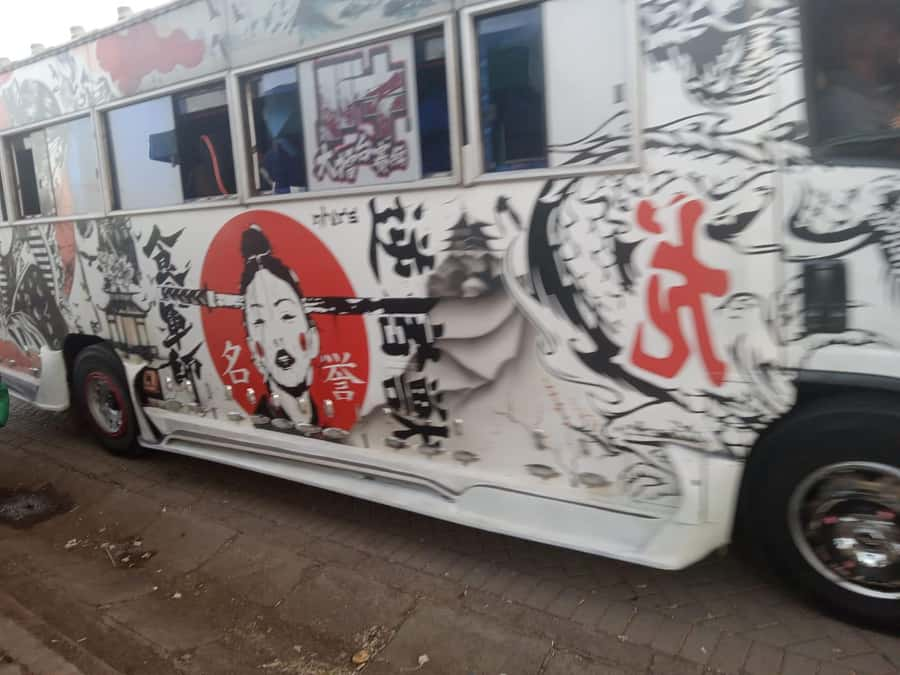
After the regular bus segment, the focus shifts to party matatus. These vehicles use music, graphics, color, and custom styling to create a very different mood. The bus is not only taking you somewhere. It is also presenting an identity.
The guide helps explain how Nairobi’s transport culture connects with local creativity. The artwork can turn a minibus into a moving billboard for music, fashion, neighborhood pride, or urban style. The sound system changes the atmosphere again, especially when compared with the quiet ride on a normal commuter bus.
You may need to wait for a party bus to fill with other passengers. One recent booking found that the wait was not especially long, but this is still worth understanding before you book. You are not stepping into a reserved party coach with your own group. The bus carries ordinary paying passengers, and the exact vehicle depends on what is operating at the time.
That arrangement gives you a more genuine view of how the system functions, but it also limits control. If you want guaranteed seating, a fixed route, and a quiet ride, this is probably the wrong activity.
A few more bus tours around the world worth a look
- Mt Fuji and Hakone 1-Day Bus Tour Return by Bullet Train
★ 5.0 · 26,383 reviews - Barcelona: 24 or 48-Hour Hop-On Hop-Off Bus Tour
★ 4.4 · 20,872 reviews - London: Warner Bros. Studio Harry Potter Tour & Branded Bus
★ 4.7 · 19,194 reviews - Rome: City Sightseeing Hop-on Hop-off Bus with Audioguide
★ 4.0 · 16,045 reviews
Ngong Road and Eastlands show different sides of matatu culture
Two routes are named as part of the party bus exploration: Ngong Road and Eastlands. The tour description presents both as important parts of Nairobi’s matatu culture, though the exact route used on your day is not stated.
Ngong Road is presented as the creative route, where the visual and musical side of matatu culture comes into focus. If your ride goes this way, expect the route to support the tour’s main theme: seeing how transport becomes a public display of art and sound.
Eastlands is described as the heart of matatu culture. This route places greater emphasis on the role of privately owned minibuses in ordinary city life. The contrast is useful because the party matatu is not an isolated novelty. It belongs to a much larger network used by Nairobi residents every day.
Do not expect the route to function like a normal sightseeing circuit with a long stop at each neighborhood. The main attraction is the ride and the explanation around it. Your guide may point out features, arrange photo stops, and explain the local transport scene, but the published plan does not promise specific attractions in Ngong Road or Eastlands.
What the guide adds to the ride
The guide’s role is important here. Without explanation, you might enjoy the music and artwork but miss the larger story. The experience is designed to cover the history of Nairobi transport, the difference between regular buses and matatus, and the effect of party buses on city life.
The guide also helps with the practical side of the day. You may need help choosing a suitable bus, understanding where to board, and returning to the CBD. In one booking, two guides adjusted the plan after the group became uncomfortable following a minor crash. They helped arrange a normal matatu back toward the KICC area rather than pushing ahead with the original ride.
That flexibility is one of the strongest points of the experience. It does not remove the risks of public transport, but it means the day is not treated as a rigid script. If a bus is too crowded, delayed, or unsuitable, speak up early and ask what alternatives are possible.
No guide names are provided, and the tour operates in English. The group is listed as private, which can give you more room to ask questions and discuss the route. Remember, private group refers to the guide arrangement. It does not mean every bus passenger will belong to your booking.
Safety, comfort, and the public-transport reality
The activity includes security and bottled water. Those are useful inclusions, especially during a three-and-a-half-hour outing that combines walking, waiting, and bus travel.
Still, security support is not the same as a private secure vehicle. You will be using public buses and moving through central Nairobi. One booking raised a direct concern about traveler security, and another involved a minor collision between a matatu and a car. The incident was not described as serious, but it was frightening enough for a family with two children to stop the party bus portion.
I would treat this as an urban transport experience with normal public-road uncertainty. Keep valuables secure, follow the guide’s instructions, and tell the guide if you feel uncomfortable. Families with young children should consider whether loud music, crowded buses, and unpredictable traffic suit their group.
Alcohol and drugs are not allowed. Drones are also prohibited, and you should not feed animals. These rules are simple, but they reinforce the fact that this is a guided city activity, not an open-ended party event.
The real cost is more than the $32 booking price
The listed price is $32 per person. That covers the professional guide, bottled water, security, and the planned walking and transport experience. For a private group, the price can be reasonable if you want a focused introduction to Nairobi’s matatu scene rather than a broad city tour.
You should budget extra for bus fares. The activity information lists 500 Kenyan shillings as not included. However, one booking paid 100 KES per person for a roughly 20 to 30 minute ride in one direction and the same amount on the return. That group later paid 20 KES per person for a short normal matatu ride back toward KICC.
Because the figures do not match, ask the provider what the current fare arrangement means before you go. Carry Kenyan shillings anyway. Food and drinks are not included, and the KICC entry fee is separate. The optional heli pad visit mentioned by one booking also required its own payment, so do not assume extra stops are covered by the $32.
The value is strongest for people who want interpretation and local transport access. It is weaker for anyone expecting a full meal, a private party coach, major attraction tickets, or a polished nightlife package.
Timing, flexibility, and the return to KICC
The full activity lasts 210 minutes, or about three and a half hours. That includes the opening walk, the regular bus portion, the party matatu experience, neighborhood sightseeing, and the return to KICC.
The day may not move at an exact minute-by-minute pace. Public buses fill at different speeds, and the available party matatu can affect the route. Build in patience, especially if you have another booking soon after.
The final stop is back at KICC. That makes the start and finish easy to understand, and it gives you a clear place to arrange a taxi or continue sightseeing in central Nairobi.
The return may look different from the outward ride. If the party bus is unsuitable or the plan changes, a regular matatu may be used instead. This flexibility helped one family end the activity comfortably after stopping the main ride.
Free cancellation is available up to 24 hours before the start for a full refund. You can also reserve and pay later. If you book late or do not receive a response, contact Tour Guru Kenya directly before heading to KICC.
Who should book this Nairobi matatu experience?
I would choose this activity if you are curious about how Nairobi actually moves and want more than a photo of a decorated bus. It suits adults, older children, music fans, urban-art followers, and visitors who enjoy comparing daily life with the city’s more theatrical side.
It is also a good fit if you prefer a private guide conversation but do not mind sharing public transport. The guide can provide context that you would not get by simply flagging down a matatu yourself.
I would hesitate if you need a guaranteed private vehicle, predictable road conditions, quiet transport, or a tightly timed itinerary. Families with small children should think carefully about the loud music, crowds, and the possibility of an uncomfortable ride. The safety concern is not a reason to reject the activity automatically, but it is a reason to keep expectations realistic.
Final verdict: a revealing ride for the right kind of visitor
Book this experience if your idea of sightseeing includes watching a city function, not just visiting monuments. The best part is the comparison between a plain commuter bus and a decorated party matatu. You see how Nairobi mixes necessity with music, art, and social energy.
The $32 price is fair for the guide and local context, but extra fares and optional entries add to the total. Confirm the transport cost, carry cash, and leave room for delays. If you accept the public-bus setting and want a close look at Nairobi’s distinctive matatu culture, this is a worthwhile choice. If you want a controlled party tour with guaranteed safety and a private coach, choose something else.
FAQ
Where does the Nairobi party bus experience begin?
It begins at the entrance of Kenyatta International Convention Centre, opposite the office of the Governor of Nairobi.
How long does the activity last?
The activity lasts 210 minutes, which is about three and a half hours.
What language is the tour conducted in?
The live guide speaks English.
Is the group private?
Yes. The activity is listed as a private group experience. The bus itself may still include local passengers who are using it for normal transport.
Is the bus fare included in the price?
No. Bus fare is not included. The activity information lists 500 Kenyan shillings, while one booking paid 100 KES per person each way and 20 KES per person for a short return ride. Confirm the current fare with the provider and carry cash.
Is entry to KICC included?
No. Entry to the Kenyatta International Convention Centre is separate. Guests can pay the entry fee by card.
Are food and drinks included?
No. Food and drinks are not included. Bottled water is provided.
Can I cancel for a refund?
Yes. You can cancel up to 24 hours in advance for a full refund. You can also reserve now and pay later.
Just added around the world
- 2 Days 1 night Sapa Tour from Hanoi by Limousine/Sleeper bus★ 4.5 · 6 reviews
- Halong Bay Luxury Cruise Day trip: Buffet lunch, limousine bus★ 5.0 · 2 reviews
- Hoa Lu – Tam Coc Luxury Small group 1D: Limousine bus, biking, boat trip, Lunch★ 5.0 · 6 reviews
- Halong Bay Luxury cruise Day trip: Buffet Lunch, Limousine bus★ 5.0 · 25 reviews
- Halong bay Luxury Cruise Day trip: Buffet lunch & Limousine bus★ 5.0 · 3 reviews
- Limousine Bus Transportation from Hanoi to Sapa★ 5.0 · 2 reviews
- From Hanoi- Halong Bay 1 Day Save Cost With Limousine Bus Option★ 5.0 · 8 reviews
- Halong bay Luxur Cruise Day trip: Buffet lunch & Limousine bus★ 5.0 · 21 reviews
Party Bus & Limo Tours, compared.

Istanbul Party Pub Crawl with Party Bus in Sultanahmet and Taksim
Read our review →
Nashville’s Wildest Honky Tonk Public Party Bus (21+)
Read our review →
Aruba Nightlife and Barhopping on Chogogo Party Bus
Read our review →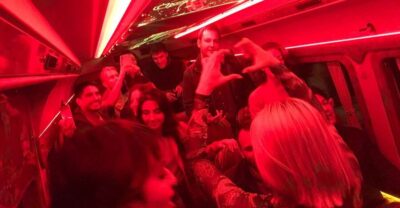



2-Day Sa Pa Ethnic Homestay Tour & Trek with Limousine Bus
Read our review →
Halong bay 5star Cruise Day Trip: Buffet lunch & Limousine bus
Read our review →Browse the lists this tour appears in