
REVIEW · EGYPT
From Aswan: Trip to Abu Simbel by Bus
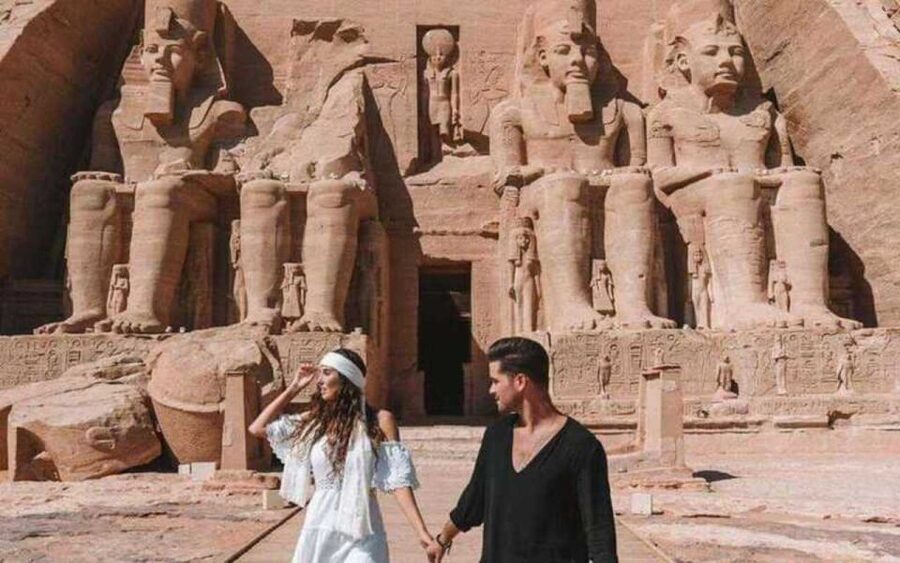
Abu Simbel is one of Egypt’s great payoffs: four enormous statues of Ramses II greet you at the end of a long desert road, with the temples cut into the rock behind them. This small-group bus trip from Aswan gets you there early, when the morning light can make the façade especially striking.
I like the included hotel pickup and return, plus the fact that the $110 price covers entrance fees, transport, bottled water, and an English-speaking guide. I also like the early start, since one quick group reached Abu Simbel among the first visitors and had fine morning views. The drawback is the long road journey, often about four hours each way, and the guide service may not be as steady or detailed as the price suggests.
Key points at a glance
- Leave around 4 a.m. for the roughly four-hour road trip from Aswan.
- See both Abu Simbel temples, including Ramses II’s four colossal façade statues.
- Learn the basic story of Ramses II, Nefertari, and the temple rescue project from an English-speaking guide.
- Travel in an air-conditioned vehicle with bottled water and hotel pickup included.
- Expect variable guide service, with one report describing only a brief explanation before free time.
- Check your pickup location carefully, since hotels on Soheil Island, Hisa Island, at Aswan airport, or in a Nubian hostel cost extra.
Why Abu Simbel is worth the long road from Aswan
The main reason to book this trip is simple: Abu Simbel is extraordinary, and it is far easier to reach from Aswan by organized road transport than by trying to arrange every part yourself.
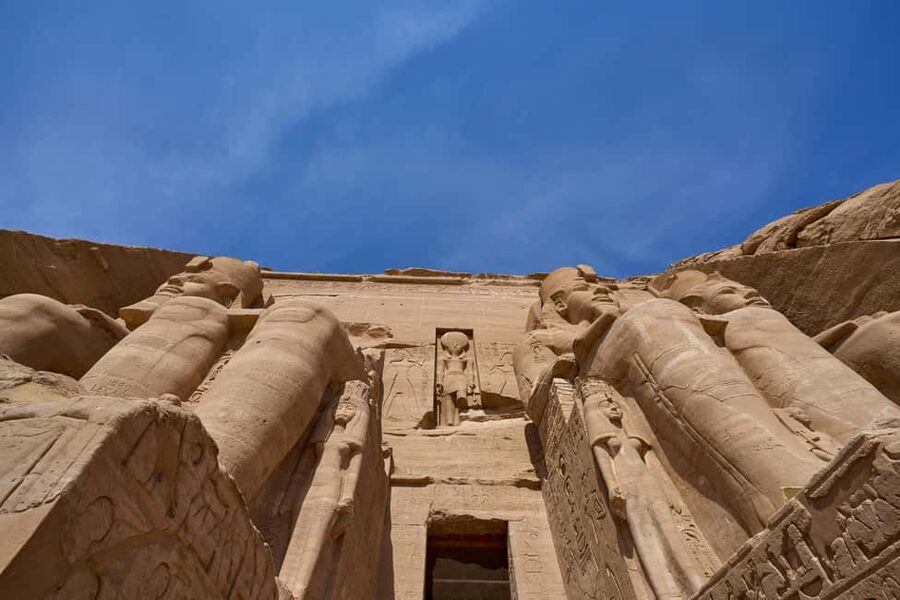
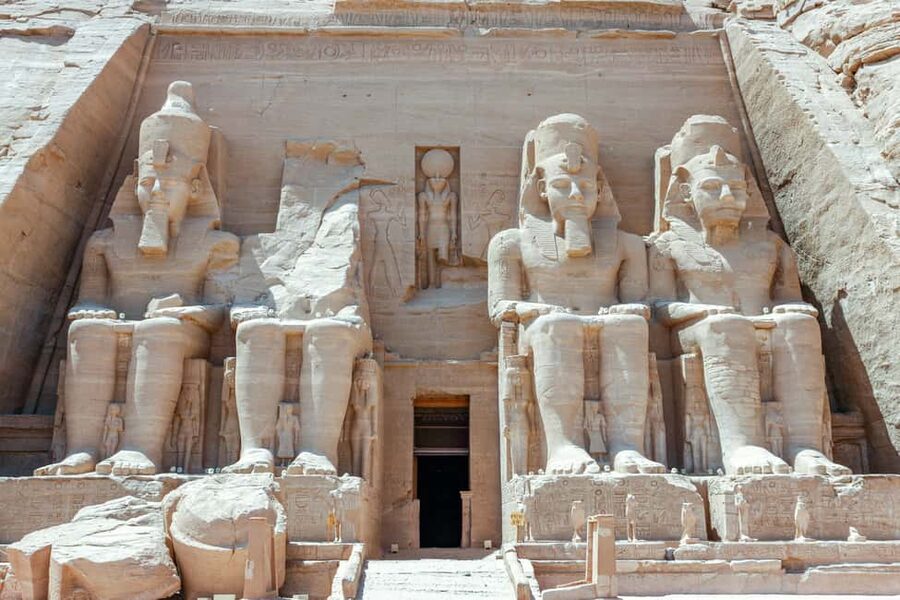
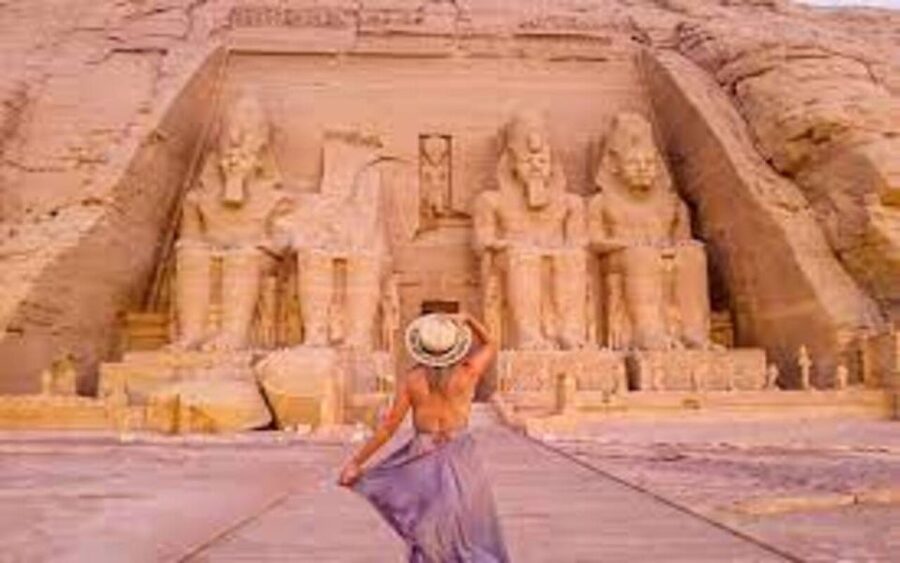
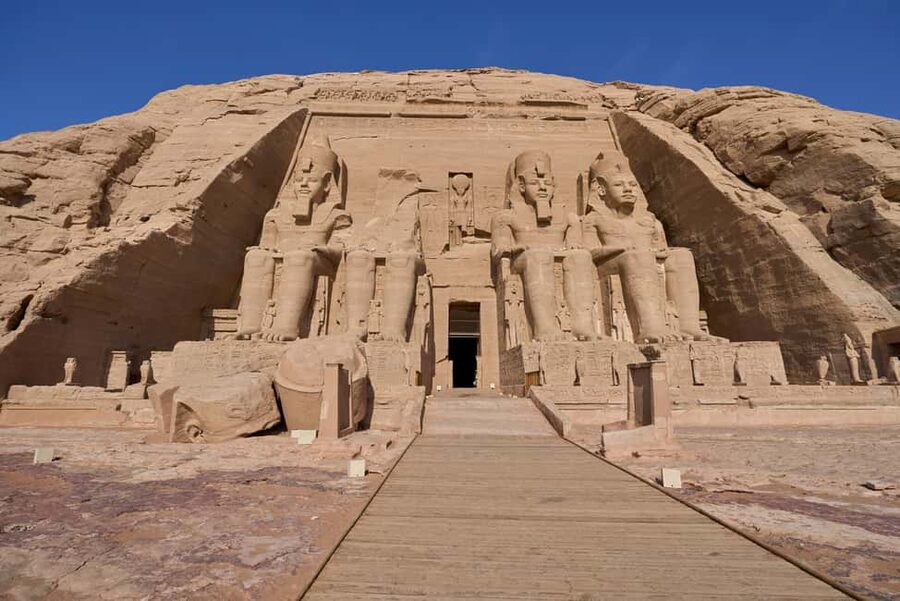
The great temple of Ramses II was carved into the rock during Egypt’s New Kingdom. Its façade is dominated by four giant seated figures of the king. Even before you enter, the scale gives you a clear message about royal power in ancient Egypt. Ramses II did not make a modest statement here.
Inside, the temple was dedicated to four major figures: Ptah, Re-Her-Akhtey, Amun-Re, and Ramses II himself. It is also called the Sun Temple of Ramses II. Your guide should help connect the statues, gods, royal images, and temple purpose, rather than leaving you to sort out the names on your own.
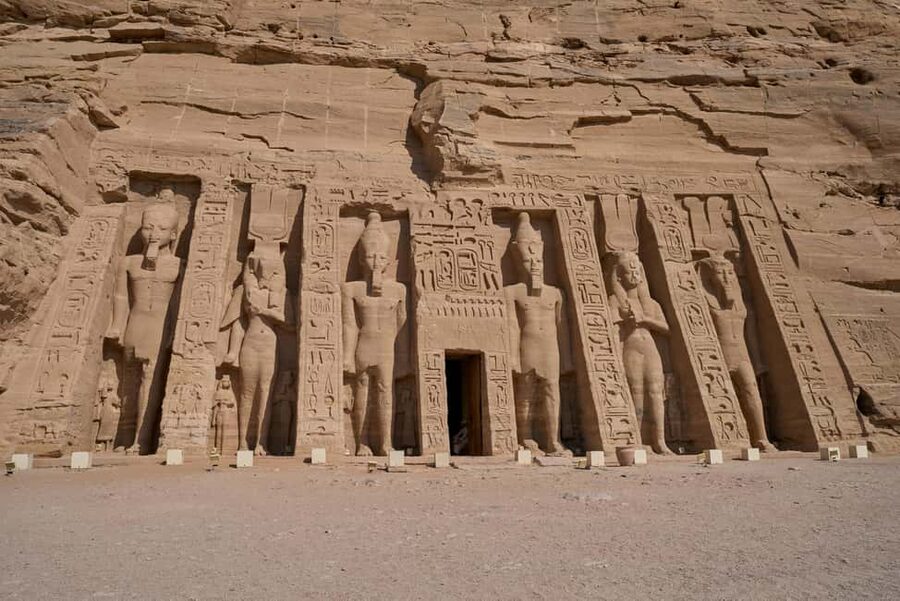
The second temple belongs to Queen Nefertari and is also linked with Hathor, the goddess associated with the sun god and with Nefertari’s role as royal wife. Together, the two temples create a deliberate pairing: Ramses II, Nefertari, Hathor, and the sun god are presented as part of one royal and religious message.
That pairing is one of the most worthwhile parts of the visit. You are not simply checking off two ancient buildings. You are seeing how an Egyptian ruler used architecture, religion, family, and sheer scale to shape his public image.
A few more bus tours around Egypt worth a look
- VIP Day Trip to Cairo by Bus with Top Tour operators
★ 5.0 · 739 reviews - Day trip to Cairo by bus from Sharm el Sheikh
★ 4.5 · 334 reviews - Sharm El Sheikh: Great Pyramids, Sphinx, Museum Tour by Bus
★ 3.7 · 287 reviews
The early pickup and four-hour road journey
The day begins very early, usually around 4 a.m. One booking was moved from a planned 10 a.m. departure to 4:15 a.m., so you should confirm the final pickup time before bed. The early departure is not a minor detail. It shapes the entire day.
The benefit is arrival before many later groups. A small van once moved quickly along the road and reached Abu Simbel early enough for excellent morning views. If your main goal is to photograph the façade with fewer people around, an early start can pay off.
The cost is sleep. You will spend much of the day on the road, with about four hours going out and four hours returning according to one detailed account. That makes this a demanding outing, not a gentle half-day excursion.
The transport is described as a modern, air-conditioned bus, with bottled water provided. Air conditioning matters on this exposed route, and hotel pickup removes the need to find a taxi before dawn. The trip is arranged as a small group, which should be easier to manage than a large coach with dozens of people.
Still, the vehicle itself may vary. One positive account described a small van rather than a full-size bus. That can mean a quicker, more compact ride, but it also means less room if the vehicle is full.
Driving quality deserves attention. One passenger found the driver’s speed worrying and had to ask several times for slower driving. I would treat this as a serious practical concern, even though it may not happen on every departure. If you feel uncomfortable, say so early and clearly. A spectacular archaeological site is not worth an unsafe ride.
Arriving at the four statues of Ramses II
The approach to the great temple is one of the strongest moments of the day. The four seated figures on the façade are the image most people carry home from Abu Simbel, and the real thing has an impact that photographs struggle to match.
The statues represent Ramses II, seated in royal form and facing outward from the temple entrance. Their size is the point. The façade was designed to make the king seem permanent, powerful, and closely tied to the gods.
Take time here before rushing inside. You can look at the symmetry of the entrance, the repeated royal imagery, and the way the rock-cut design makes the temple feel part of the cliff itself. Your guide may explain the major symbols and the connection to the four dedicated gods.
Guide time is the uncertain part. The excursion includes an English-speaking guide for the group, but service may be uneven. One account described a short explanation using pictures outside the temple, followed by about an hour to enter and take photographs. Another guide, who did not speak English, then led the group around the temple for another half hour.
That arrangement may be less satisfying if you are paying mainly for interpretation. You may receive enough context to understand the site, but not the sustained explanation you expect from a specialist Egyptologist. I would ask at the beginning how much guided time is planned and which parts you will visit together.
Inside the Sun Temple of Ramses II
The interior gives you a different experience from the façade. Outside, the temple is about size and royal display. Inside, the focus turns to gods, ritual, images of the king, and the controlled movement from the entrance toward the inner rooms.
The temple’s dedication to Ptah, Re-Her-Akhtey, Amun-Re, and Ramses II helps explain why the site was built with such force. Ramses II is placed within a divine setting, not shown as a separate human ruler. Your guide should make this connection clear.
The description of this temple as the Sun Temple of Ramses II is useful when you look at how light, royal identity, and the gods are brought together. The building was not only a place of worship. It was also a carefully planned royal statement.
You should allow yourself time to look before taking photographs. The stone decoration, scale of the chambers, and repeated images can blur together if you hurry. Since the visit may include free time, use it to return to details the guide covered too quickly.
Do not expect a long museum-style lecture inside. A guide may not be able to accompany you through every area, and one account described only a brief introduction before independent viewing. If you want a detailed reading of every scene, bring a dependable guidebook or prepare a short list of questions in advance.
Same city, a different seat on the bus:
- Sharm El-Sheikh: Full-Day Tour of Cairo and Pyramids by Bus
★ 4.8 · 237 reviews - Ras Mohamed National Park Half Day Tour by Bus In Sharm El Sheikh
★ 4.5 · 60 reviews - Abu Simbel Excursion 1 Day Trip from Aswan (Sharing Bus & Egyptologist Guide)
★ 4.0 · 52 reviews - Pyramids Of Giza And Egyptian Museum Day Tour By Bus From Sharm
★ 4.5 · 50 reviews
Nefertari’s Temple and the Hathor connection
The smaller temple beside Ramses II’s monument is dedicated to Queen Nefertari and linked with Hathor. It is easy to give it less attention because the great temple dominates the approach, but that would be a mistake.
The pairing is important. Ramses II’s temple presents the king in a powerful divine setting. Nefertari’s temple shows the queen connected with Hathor, who is described here as the wife of the sun god. The two temples work together as a royal family and religious statement.
For you, the practical value of a guide is clearest here. The connection between Nefertari, Hathor, the sun god, and Ramses II is not always obvious from a quick look. A good explanation can turn the second temple from a short side visit into an essential part of the site.
The supplied details do not give a separate amount of time for each temple, so your schedule may depend on the group and guide. If the guide gives you a free period, make sure you do not spend all of it at the larger façade. The smaller temple deserves a calm look too.
The story behind the temples’ rescue
Abu Simbel’s modern story adds another layer to the visit. The Egyptian government and UNESCO worked together to save the temples from flooding. That rescue explains why this remote site is preserved for you to see today.
The key point is practical as well as historical: Abu Simbel is not simply an untouched building sitting where ancient workers left it. The temples survived because a major international effort protected them from rising water.
Ask your guide about the rescue if it is not explained during the visit. The provided itinerary emphasizes the cooperation between Egypt and UNESCO, but the actual amount of discussion may vary. This is one subject worth bringing up directly, especially if the guide’s opening explanation is brief.
How much value do you get for $110?
At $110 per person, this is not a bargain bus ride. It can still be fair value, because the price includes hotel pickup in Aswan, return transportation, entrance fees, bottled water, taxes, and an English-speaking guide.
The entrance fee matters. So does the convenience of having a vehicle collect you before dawn and return you to your hotel after a tiring road trip. If you would otherwise need to arrange transport, admission, and a guide separately, the package is straightforward.
The value becomes weaker if you expect extensive guiding. One booking cost the equivalent of about 86 euros and described the experience as expensive because the main guide gave only a short explanation, then spent much of the time with another group. That account also described a second guide who did not speak English.
The overall rating supplied for the experience is 3.3 out of 5 from four reviews. That is a mixed result, not a clear warning or a strong endorsement. The best experience seems to come when the early departure works well, the driver is safe, and the guide gives proper attention to the group.
I would compare the price against what matters most to you. If convenience and included admission are the priority, $110 may be acceptable. If detailed Egyptology is the main reason you are booking, ask specific questions before paying: Who will guide the group, how long will the explanation last, and will the guide remain with you at both temples?
Who should book this trip?
This outing suits you if Abu Simbel is high on your Egypt itinerary and you are staying in Aswan. It is also a good fit if you want hotel pickup and a prearranged return rather than organizing a long desert drive on your own.
It works best for people who can handle an early morning and a full day with many hours in a vehicle. Families and small groups may like the simplicity, though the long ride and uncertain vehicle size are worth considering.
You may want a different arrangement if you dislike early starts, feel uneasy about fast driving, or need a guide who explains every temple in detail. The tour includes guiding, but the actual depth of service may not match the full-day travel time.
Pickup is included from your hotel in Aswan, but an extra cost applies if you are staying on Soheil Island, Hisa Island, at Aswan airport, or in a Nubian hostel. Confirm that charge before booking so the final price does not surprise you.
The booking terms are flexible: you can reserve and pay later, and cancellation up to 24 hours before departure is allowed for a full refund. Those terms help if your Aswan plans are still moving, but the key issue remains the early pickup time.
Should you book the Abu Simbel bus trip?
I would book this tour if you want the simplest shared transfer from Aswan and you are comfortable treating the guide as a possible bonus rather than the whole reason for the trip.
The early arrival is the most appealing feature. The temples themselves are the real prize, and reaching the four statues before the largest groups can make the long road feel worthwhile. Included admission, water, air conditioning, and hotel return also remove several chores.
I would hesitate if safety, guide quality, or a relaxed pace matters more than convenience. Before booking, confirm the departure time, pickup surcharge, vehicle type, driver arrangements, and the amount of English guiding included. If those answers are clear and acceptable, this can be a practical way to reach one of Egypt’s most powerful ancient sites.
FAQ
Where does the Abu Simbel trip begin?
The trip includes pickup from your hotel in Aswan and return transport to the hotel.
What time does the tour leave?
The departure is early in the morning, with reported pickup times around 4 a.m. to 4:15 a.m. Confirm your exact time before the trip.
How long is the journey to Abu Simbel?
One detailed account describes about four hours by road in each direction.
What type of transport is used?
The trip uses a modern, air-conditioned bus or similar vehicle. One departure used a small van.
Is a guide included?
Yes. An English-speaking guide is included for the group.
Are entrance fees included?
Yes. Entrance fees to the listed historical sites are included in the price.
Which temples will I visit?
You will visit the great temple of Ramses II and the temple of Queen Nefertari, also associated with Hathor.
Is bottled water provided?
Yes. Bottled water is provided on board the vehicle.
Is pickup from every Aswan accommodation included?
Pickup from hotels in Aswan is included, but an extra charge applies for Soheil Island, Hisa Island, Aswan airport, or a Nubian hostel.
Can I cancel for a full refund?
Yes. Cancellation up to 24 hours in advance is allowed for a full refund.
Just added around Egypt
- Full Day Cairo Tour from Hurghada by Minibus★ 5.0 · 2 reviews
- Luxor Full Day Sightseeing Tour by Bus from Hurghada★ 5.0 · 18 reviews
- 14 Days Egypt adventure Nile sahara desert bus tour★ 5.0 · 2 reviews
- Tour to Abu Simbel by bus★ 4.5 · 3 reviews
- Day Tour to Abu Simbel from Aswan by Bus★ 4.5 · 25 reviews
- Private Tour: Abu Simbel by Minibus from Aswan★ 4.0 · 42 reviews
- Abu Simbel Temples Private Guided Tour from Aswan by coach★ 4.5 · 16 reviews
- Day Tour to Abu Simbel from Aswan by Bus★ 5.0 · 8 reviews
Egypt Bus Tours, compared.
VIP Day Trip to Cairo by Bus with Top Tour operators
Read our review →
Sharm El Sheikh: Great Pyramids, Sphinx, Museum Tour by Bus
Read our review →
Sharm El-Sheikh: Full-Day Tour of Cairo and Pyramids by Bus
Read our review →
Ras Mohamed National Park Half Day Tour by Bus In Sharm El Sheikh
Read our review →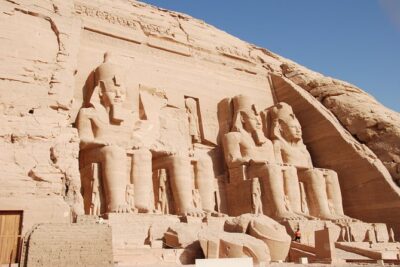
Abu Simbel Excursion 1 Day Trip from Aswan (Sharing Bus & Egyptologist Guide)
Read our review →
Pyramids Of Giza And Egyptian Museum Day Tour By Bus From Sharm
Read our review →
Browse the lists this tour appears in