
REVIEW · USA
Chicago’s Original Gangster Tour by Bus
Chicago’s mob story comes alive best when you connect it to real streets, churches, neighborhoods, and old business sites. This 1-hour-45-minute minibus tour follows that trail, passing about 10 places tied to John Dillinger, Dean O’Banion, and the gangs that shaped Chicago during the Prohibition era.
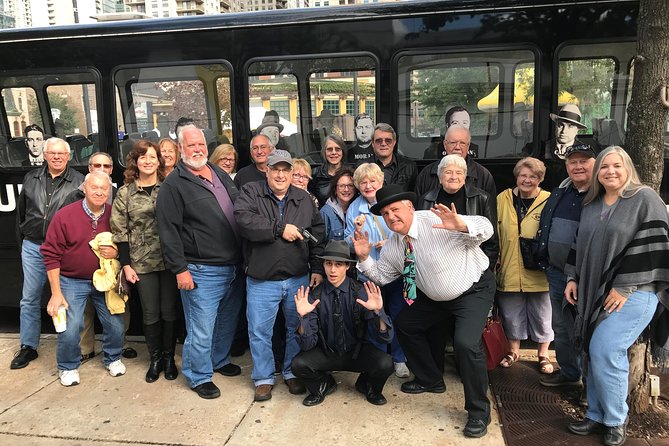
I like the costumed guides, who turn the ride into a lively bit of theater without losing the historical thread. I also like the climate-controlled bus, especially in Chicago’s heat, cold, rain, or humidity. The main trade-off is simple: you stay on the bus, so sightseeing depends on clear windows and a good seat.
Key points to know
- John Dillinger’s final location: You see the site where the famous bank robber was killed.
- Dean O’Banion’s Chicago connection: Holy Name Cathedral and the former flower shop across the street anchor one of the tour’s most memorable stories.
- About 10 locations: The route covers North Side, South Side, and West Side gang territory.
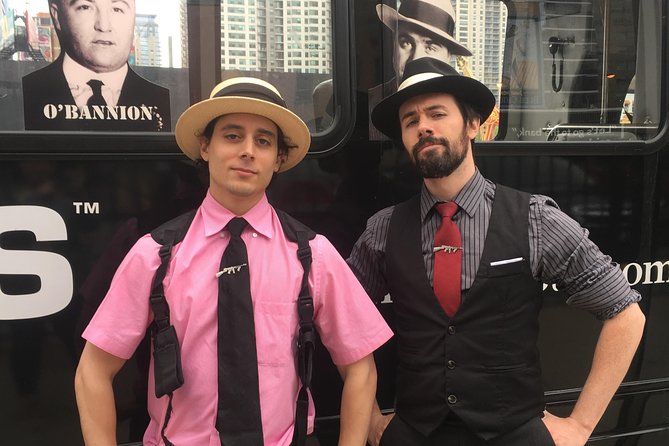
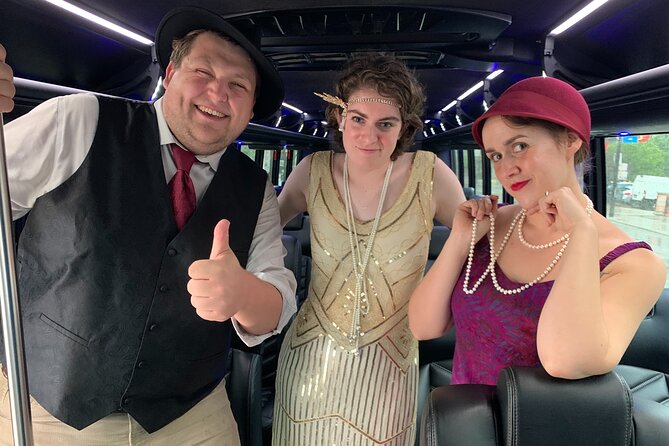
- A theatrical guide style: Guides such as Marie and Winnie use costumes, humor, Chicago accents, and historical storytelling.
- Small group format: The minibus holds a maximum of 10 people.
- No planned walking tour: Most sights are viewed from the vehicle, with the ride ending where it began.
Chicago’s mob story, told from a small bus
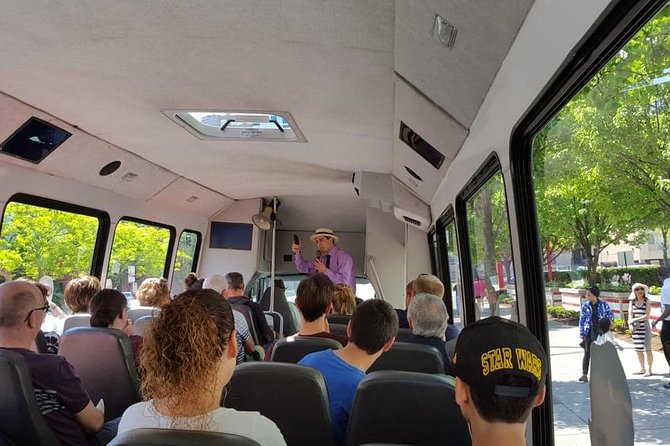
This is not a museum visit or a walking tour through preserved crime scenes. It is a moving history lesson. You ride through Chicago neighborhoods while the guide points out places tied to the city’s gangsters, political culture, funerals, businesses, and old rivalries.
That approach matters because many of the original locations no longer exist. Some sites are privately owned businesses, while others have changed beyond recognition. A bus lets the guide connect those scattered points without asking you to cover a large distance on foot.
The vehicle is a climate-controlled minibus with room for no more than 10 people. That small capacity should make it easier to hear the guide and keep the experience personal. It also means you are not dealing with a full-size sightseeing coach.
The tour lasts about 105 minutes. That is long enough to move beyond a few famous names, but short enough to fit into a busy Chicago day. You return to the starting point at 600 North Clark Street, making it easy to pair with other activities in the city.
A few more bus tours around Chicago worth a look
- Chicago Crime and Mob Bus Tour
★ 4.5 · 3,186 reviews - Big Bus Chicago: Hop-On Hop-Off Sightseeing Tour, 24/48/72hr Pass
★ 4.0 · 2,191 reviews - Chicago: Hop-on Hop-off Sightseeing Tour by Open-top Bus
★ 4.3 · 1,349 reviews
Holy Name Cathedral and Dean O’Banion’s flower shop
The Holy Name Cathedral stop gives the tour an unusual human angle. Dean O’Banion was a choir boy there as a child, long before his North Side Gang became part of Chicago’s criminal history.
Across the street stood Schofield’s flower shop, which O’Banion owned as an adult. The shop had a respectable public face, but it also handled flowers for mob funerals. In 1924, O’Banion was killed inside the flower shop.
You spend about 10 minutes at this location, and admission is free. The point is not to enter the cathedral or explore a preserved gangster site. Instead, you look at the setting and hear how one small area could connect childhood, business, religion, public respectability, and organized crime.
This stop is especially useful if you prefer social history to a simple list of shootouts. It shows how gangsters could operate within ordinary city life. A church, a flower shop, and a neighborhood street become part of the story.
Keep your expectations practical. The flower shop itself is not presented as a museum, and the original mob sites are not arranged like a formal attraction. The value comes from the guide’s explanation and the location’s connection to the past.
John Dillinger’s final site
Another key point is the place where John Dillinger was killed. Dillinger remains one of the best-known names connected with American crime history, so seeing the location gives the tour a clear anchor.
The experience does not turn this into a long walking stop. You view the site as part of the bus route, while the guide explains its connection to Dillinger and the wider period. That format is useful for keeping the tour moving, though it may disappoint you if you want time to get out, take photographs, or examine a site on foot.
The Dillinger stop works best as part of the larger story. You are not visiting one isolated crime landmark. You are following a route that links different people, neighborhoods, and types of gangster activity across Chicago.
About 10 locations across several Chicago neighborhoods
The route covers more than the city center. You travel through areas connected with North Side, South Side, and West Side gangs, seeing parts of Chicago that you might not otherwise reach during a short visit.
That wider route is one of the tour’s strongest features. You get a sense that Chicago’s gangster story was not confined to one famous block. It involved neighborhoods, businesses, funeral customs, local identities, and competing groups spread across the city.
The guide also adds general Chicago facts alongside the mob stories. This helps the tour appeal to people who are interested in the city itself, not only in gangsters. You may learn about the way the city developed and how different areas fit into the wider story.
Because the route covers so much ground in under two hours, the commentary moves at a steady pace. I would treat this as an overview with memorable examples, not a detailed academic course on organized crime. If you want a full account of every gangster or event, you will need another source to fill in the gaps.
Same city, a different seat on the bus:
- Chicago: Mob and Crime Bus Tour
★ 4.4 · 859 reviews - Chicago City Minibus Tour
★ 5.0 · 516 reviews - Chicago Night Crimes Tour by Bus
★ 5.0 · 478 reviews - Chicago Craft Brewery Barrel Bus Tour
★ 5.0 · 339 reviews
The guide makes or breaks the experience
The costumed guide is central to the tour. Guides who have led this experience include Marie, Maria, Winnie, and Westside Winnie. The names and exact presentation may vary by departure, but the format calls for a guide who performs the history rather than reading dry facts from a script.
Marie has been described as appearing in flapper-style clothing and using a Chicago accent, quick humor, and a strong sense of character. Winnie is also known for combining jokes with historical information. That style gives the ride energy and helps younger adults stay interested.
The best part of this approach is that humor makes a large amount of information easier to remember. The guide can explain the gangster era, point out locations, and add city facts without turning the ride into a lecture.
The risk is that theatrical storytelling is not for everyone. If you prefer quiet, formal interpretation, the costumed presentation may feel too playful. Most of the available feedback is strongly positive about the guides’ humor and historical detail, but one critical response found the tour poor value and complained that the bus felt hot.
A guide’s performance also cannot fix poor visibility. If you sit behind a large decal or beside a blocked window, the ride becomes more about listening than seeing. Ask about seating at the start if the vehicle allows it.
Why staying on the bus can be a good thing
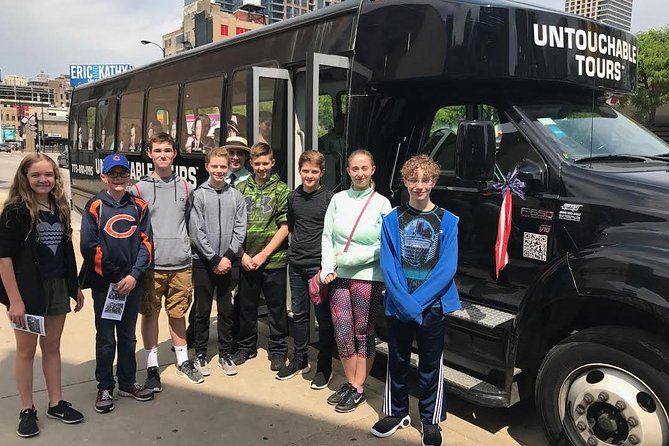
You do not normally get off the vehicle to explore each location. At first, that may sound like a weakness. In practice, it solves several problems.
Many of the sites are gone, privately owned, or ordinary working businesses. There may be no interior to visit and no preserved room waiting behind a door. Getting out at every point would add time without necessarily giving you more to see.
The bus also protects you from Chicago weather. Several people found the indoor seating especially helpful in rain, high humidity, and changing temperatures. A climate-controlled vehicle is a real advantage if you are visiting during a hot summer afternoon or a cold spell.
There is a trade-off. You cannot freely stop for photographs, walk around a site, or compare old and new views at street level. One person also found that a limousine-style bus made it hard to see because decals covered part of the viewing area.
The operator responded that this was a garage mix-up and that the usual vehicle has large windows. That suggests the problem may not be normal, but it is still worth keeping in mind. The bus is your viewing platform for nearly the entire tour.
Comfort, group size, and what to expect onboard
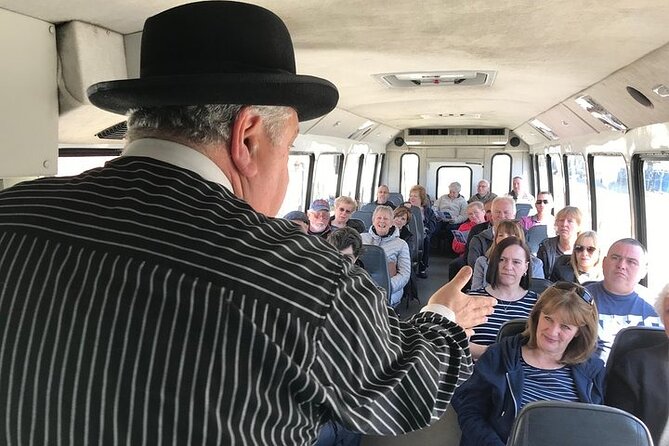
The maximum group size is 10 people. That is a useful middle ground. You get the ease of a vehicle tour without the scale of a large coach, and the guide should be close enough for questions and conversation.
The bus is described as comfortable and climate-controlled, though temperature control may not be perfect every day. One person found the vehicle too hot, so I would bring a light layer and dress for the outdoor weather in case you need to wait before boarding or spend time at the meeting point.
There is no mention of a scheduled restroom stop. One person specifically wished for a break midway through the 105-minute ride. For most people, that length should be manageable, but plan ahead before boarding.
Service animals are allowed, and the tour is near public transportation. Most people can participate. The activity is best suited to older children, teenagers, and adults who can follow a fairly fast-moving historical presentation.
Is $48 a fair price?
At $48 per person, this is not the cheapest way to ride around Chicago. The value depends on what you want from the experience.
You are paying for a small-group route, a guide in character, transportation between widely scattered sites, and nearly two hours of commentary. If you tried to reach several North Side, South Side, and West Side locations independently, you would spend time working out the route and would still lack a guide’s explanation.
The price is easier to justify if you want entertainment as well as facts. The tour includes humor, city history, gangster stories, and a view of neighborhoods outside the standard downtown circuit. It can also serve as a useful introduction before you explore Chicago’s history on your own.
The value drops if you expect a museum-style attraction, extensive walking, or access inside historic buildings. You are not buying a series of admissions. You are buying a guided ride through places that often look ordinary without context.
At the end, there may be a small giveaway or gangster-themed raffle, depending on the presentation. Treat that as a bonus rather than a reason to book.
Who will enjoy this most?
I would recommend this tour to you if you like history delivered with personality. It suits couples, friends, families with older children, and young adults who may not choose a formal history tour on their own.
It also works well for repeat Chicago visitors. Since the route reaches several neighborhoods, you see more of the city than you would on a standard downtown stroll. The gangster theme gives the ride a clear focus, while the general city facts keep it from becoming a narrow list of criminals and crimes.
Families should note that the subject matter concerns gangsters, killings, and Prohibition-era crime. The experience is aimed at older kids and adults, not very young children.
I would hesitate if your main goal is photography. You may have limited time to frame a shot, and you might not leave the bus at each location. I would also hesitate if you dislike theatrical guides or want a quiet, scholarly account of Chicago’s criminal past.
Practical details before you book
The tour starts at 600 North Clark Street in Chicago and returns to that same meeting point. It is offered in English and uses a mobile ticket.
You receive confirmation when you book. The activity can be canceled free of charge up to 24 hours before the start time, with a full refund. Changes or cancellations made inside that 24-hour window are not accepted for a refund.
The tour requires a minimum number of participants. If the operator cancels because that number is not reached, you are offered another date or experience, or a full refund.
Since the tour is often booked about 10 days ahead, reserve early if your Chicago dates are fixed. That is especially sensible if you want a particular departure or are visiting during a busy period.
Should you book Chicago’s Original Gangster Tour?
Book it if you want a lively, compact introduction to Chicago’s mob past and do not mind seeing most sites from a bus window. The strongest reasons are the small group, the citywide route, the Holy Name Cathedral and O’Banion story, the Dillinger location, and guides such as Marie and Winnie who bring humor and character to the ride.
Skip it if you need frequent stops, clear photography opportunities, or a formal museum experience. At $48, the tour earns its price through storytelling and transportation, not through entries to historic buildings.
For most visitors with an interest in Chicago history, I see this as a fun way to spend part of an afternoon. Just arrive ready to listen, choose your seat carefully, and remember that the city itself is the exhibit.
FAQ
How long does Chicago’s Original Gangster Tour last?
The tour lasts approximately 1 hour and 45 minutes.
Where does the tour begin?
It begins at 600 N Clark St, Chicago, Illinois 60610.
Where does the tour end?
The tour ends back at the original meeting point.
How many locations does the tour visit?
The minibus travels to about 10 locations connected with Chicago’s gangster history.
Does the tour visit the place where John Dillinger was killed?
Yes. The route includes the site where John Dillinger was killed.
Does the tour include Holy Name Cathedral?
Yes. You see Holy Name Cathedral, connected with Dean O’Banion’s childhood, and hear about his former flower shop across the street.
Is the tour suitable for children?
It is considered suitable for older kids and adults. The subject includes gangster history and killings, so it may not suit very young children.
Is the tour accessible with a service animal?
Yes. Service animals are allowed.
Is the tour offered in English?
Yes. The tour is offered in English.
How far in advance can I cancel for a full refund?
You can cancel at least 24 hours before the start time for a full refund. Cancellations made less than 24 hours before the start time are not refunded.
Just added around Chicago
- Luxury Minibus Chicago City Tour★ 5.0 · 4 reviews
- Chicago River Architecture Tour and Big Bus Hop-on Hop-off Tour★ 4.0 · 38 reviews
- Chicago Night Crimes Tour by Bus★ 5.0 · 478 reviews
- Chicago Gangsters and Ghosts Luxury Minibus Tour★ 5.0 · 33 reviews
- Chicago Hauntings Original Ghost Bus Tour★ 4.0 · 147 reviews
- Chicago Luxury Minibus City Tour and Architecture River Cruise★ 4.5 · 8 reviews
- Big Bus Chicago: Sunset Tour by Open-Top Bus with Live Guide★ 4.0 · 165 reviews
- Chicago City Minibus Tour★ 5.0 · 516 reviews
USA Bus Tours, compared.

Grand Canyon West Bus Tour with Hoover Dam and Optional Skywalk
Read our review →
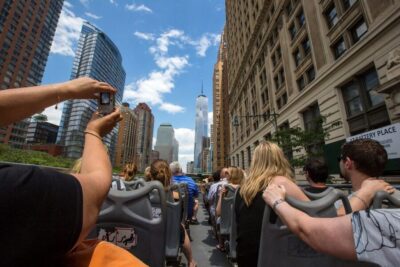
Hop-on Hop-off Sightseeing Tour by Open-top Bus
Read our review →
Boston Hop-On Hop-Off Trolley Tour with 13 Stops
Read our review →
Muir Woods and Sausalito (Return by Bus or Ferry)
Read our review →
New Orleans City Sightseeing Hop-On Hop-Off Bus Tour
Read our review →
Waikiki Trolley Hop-On Hop-Off Tour of Honolulu
Read our review →Browse the lists this tour appears in