
REVIEW · ITALY
Trieste Bus Tour with Audio Guide
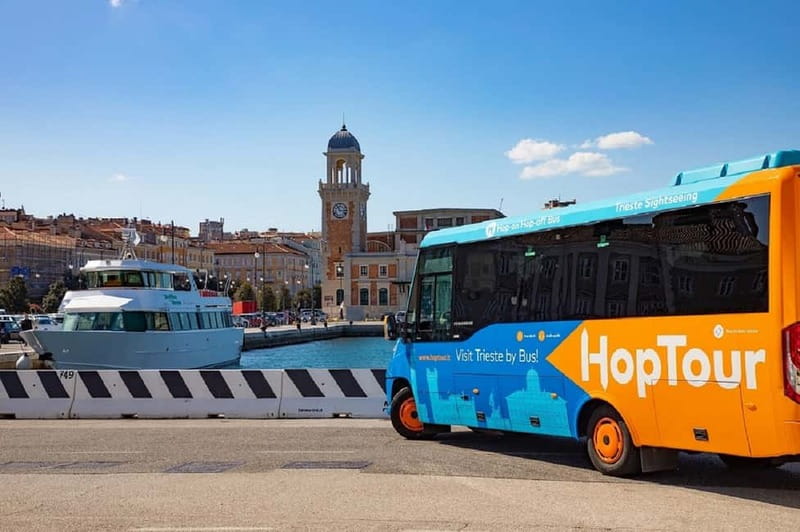
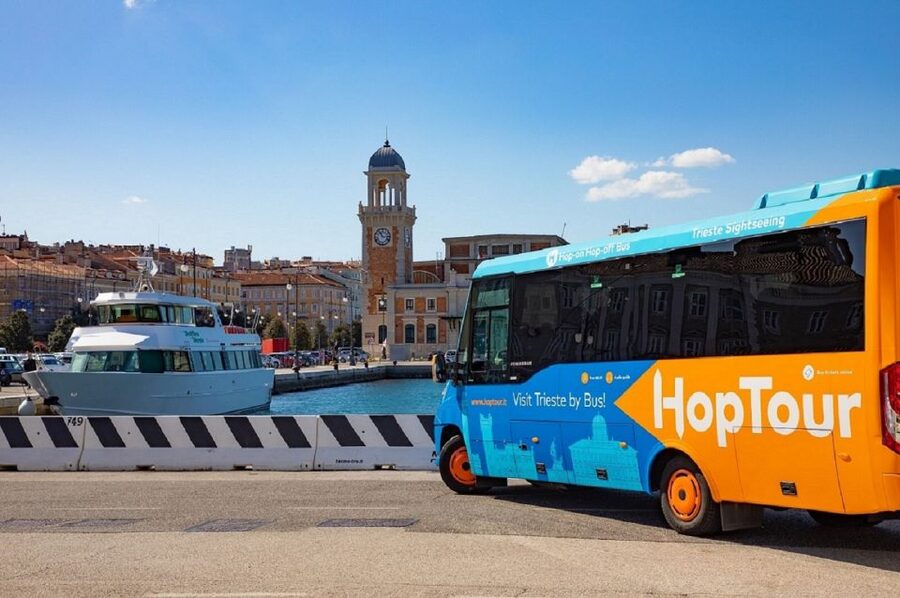
Trieste’s best introduction may begin on the waterfront, where this bus pulls away from Molo Audace and strings together the city’s grand squares, old port, hilltop sights, and seaside suburbs. You get the useful big picture before committing your limited time to walking uphill or chasing a distant castle.
I like the clear audio commentary, which follows the route and adds context without requiring a live lecture. I also like the 24-hour ticket, especially for cruise passengers and short-stay visitors who can ride once for orientation, then return to the places that catch their interest.
The main catch is timing. Buses may be about an hour apart, and popular departures can fill up. You may need to tell the on-board staff when you plan to return, so this is not a completely free-form hop-on, hop-off service.
Key points to know before boarding
- Miramare Castle is the star out-of-town stop: The bus reaches the Barcola seafront and Miramare area, giving you access to Trieste’s most famous palace and its sea views.
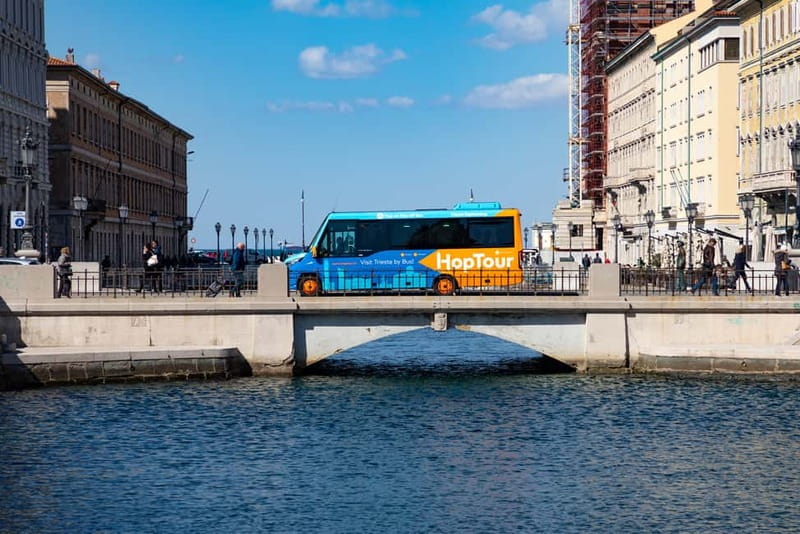
- The route covers far more than the center: You pass the Roman Theatre, Piazza della Borsa, the Orthodox churches, the old port, the Maritime Museum, Barcola, and the train station.
- Your ticket lasts 24 hours: You can use it beyond the initial 1.5-hour circuit, subject to the operating schedule and available seats.
- Seat planning matters: If you get off, give your name and planned return time to the staff so a seat can be arranged.
- San Giusto stop is suspended: Roadworks have removed the San Giusto stop for now, so you cannot rely on the bus to reach the castle and church there.
- It is a practical cruise-day option: The Molo Audace meeting point is close to the cruise port, and the bus can help you see Trieste without a long walking route.
Why this bus works well in Trieste
Trieste is easy to underestimate. The central squares sit close together, but the city also stretches along the old harbor and coastline, with Miramare Castle several kilometers outside the center. San Giusto rises above town, and Barcola has a different feel again, with open water, bathing spots, and a broad coastal road.
Walking the core is rewarding, but walking every part of this route in one short visit is another matter. At $20 per person, the bus gives you a moving orientation for less than the cost of many guided city activities. You see where the main areas sit, hear their basic stories, and save your legs for the places you want to explore properly.
The bus is advertised as air-conditioned and includes a USB charger, headphones, an audio guide, and on-board assistance. Most reports describe clean, comfortable transport and a good audio system. One report noted that the air conditioning was not working, and another found a faulty English speaker, so I would treat the equipment as useful rather than guaranteed perfection.
The route itself takes about 1.5 hours without a stop. That is enough time to understand Trieste’s shape, but not enough to visit every monument. The strongest use of the first circuit is to stay aboard, listen, and mark two or three places for a later stop.
More Self-Guided Tours in Italy:
- Milan: City Sightseeing Hop-On Hop-Off Bus with Audio Guide
★ 4.0 · 6,256 reviews - Rome: Colosseum, Forum Audio Tour with Hop-on Hop-off Bus
★ 3.9 · 6 reviews - Alberobello Self-Guided Tour Departing from Bari by GT Bus
★ 5.0 · 2 reviews
Starting at Molo Audace and Piazza Unità d’Italia
Board at Molo Audace, in front of Piazza Unità d’Italia. The pier is one of the most attractive starting points in the city, projecting into the Adriatic from the main waterfront. It was built on the wreck of an old ship, a detail that gives this otherwise elegant promenade a useful bit of local character.
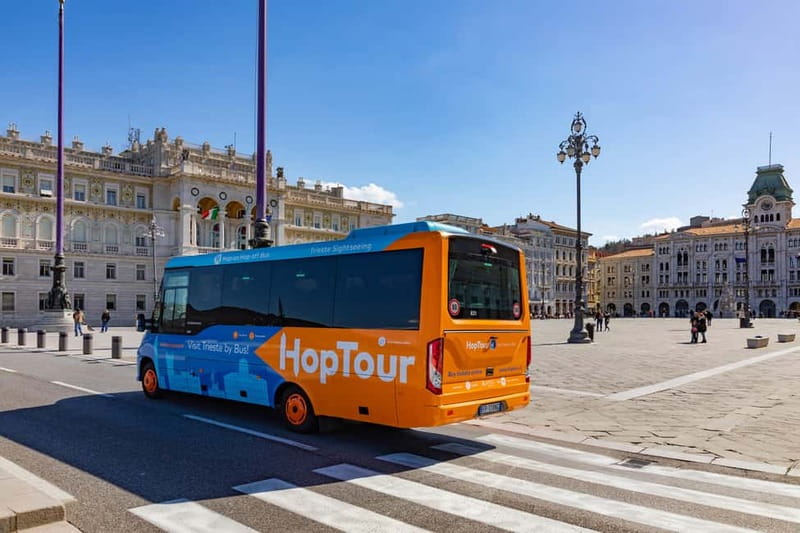
From here, the bus passes the waterfront district around the Prefecture, Teatro Verdi, and city hall. You then move along the Mandracchio shore beside Piazza Unità d’Italia, Trieste’s grand open square facing the sea.
This is a good place to return on foot after the circuit. The bus shows you the setting, but the square deserves time at street level, especially if you want to examine its buildings and waterfront edge instead of seeing them through a window.
From Salone degli Incanti to the Maritime Museum

The next stretch follows the Nazario Sauro shore, passing Salone degli Incanti and Eataly. The route then turns along Via Ottaviano Augusto, where you pass the lighthouse and the La Lanterna Baths area before reaching Campo Marzio station.
The Trieste Maritime Museum is another useful point of reference. Trieste grew through its relationship with shipping, ports, and the sea, so this part of the route helps explain why the city feels different from an inland Italian town.
You only pass the museum unless you choose to get off. Entrance tickets are not included, and the activity does not provide guided visits inside any attraction. That is a limitation, but it also keeps the bus fare simple. You can decide later which sights deserve your admission money.
Piazza Venezia and the Roman Theatre
The bus continues along the Grumula shore to Piazza Venezia, a pleasant transition from the port area toward the historic center. You then pass Via del Teatro Romano and Santa Maria Maggiore before reaching Trieste’s Roman Theatre.
The Roman Theatre is one of the route’s most useful historical markers. It sits close to the modern city, showing how old layers remain woven into everyday Trieste. From the bus, you get the location and a quick explanation. If ancient remains interest you, mark this as one of the stops to revisit on foot.
The route does not include entry to the theatre or church. You are paying for transport and commentary, not a series of interior tours. That makes this experience best for orientation and selection, not for a full day of monument visits.
More Audio-Guided Tours in Italy:
- Los Angeles: Hop-On Hop-Off Bus Tour with Audio Guide
★ 3.7 · 2,030 reviews - Zurich: City Bus Tour with Audio Guide and Lake Cruise
★ 4.3 · 1,195 reviews - City Sightseeing Hop-On Hop-Off Bus Tour with Audio Guide
★ 3.0 · 1,083 reviews - Istanbul: Hop-On-Hop-Off with Optional Audio Tour or Cruise
★ 4.2 · 1,058 reviews
Orthodox churches and Trieste’s mixed identity
Saint Spiridione Street brings you past the Serbian Orthodox Church of Saint Spyridon and toward Saint Antonio Square and the Church of Sant’Antonio Nuovo. The bus also passes the Maria Teresia area.
This is one of the more valuable parts of the commentary because Trieste’s identity is not limited to standard Italian city sights. Its position at the head of the Adriatic shaped a city with strong Central European and Mediterranean connections. The churches and formal squares make that mix visible.
You also pass Piazza Vittorio Veneto, the Grande Canal, Ponterosso Square, and the Greek Orthodox Church of Saint Nicholas later in the circuit. These stops help you see how different religious and cultural traditions fit into the compact center.
Piazza della Borsa, the hill, and the roadwork change
The bus reaches Piazza della Borsa and then heads toward the San Giusto area. Under normal conditions, the hilltop castle and church would be among the most useful stops for anyone who wants to avoid a steep climb.
At present, the San Giusto stop is suspended because of roadworks. The bus passes the area, but you should not plan on stepping off there. This is an important change from the printed route and one of the few details that can affect your day.
If San Giusto is a priority, plan to reach it separately and confirm the current road situation before you set out. The ticket remains useful for the rest of the route, but it cannot currently solve the hilltop access problem.
After the San Giusto section, the bus passes Piazza Goldoni, Via Giosuè Carducci, and Piazza Oberdan, where you see the tram station. These are less likely to be your main sightseeing stops, but they help connect the central squares with the wider city.
Train station, old port, and Barcola
The route then reaches Piazza della Libertà and Trieste’s train station. This is especially handy if you are combining a train arrival with a city visit, or if you need to understand how the waterfront and center connect to the station.
From there, the bus follows Miramare Boulevard past the Central Hydrodynamics building in the old port. The old port is a reminder of Trieste’s working maritime role, while the road toward Barcola shifts the mood from urban streets to open shoreline.
Barcola Pine Forest and Barcola Beach are appealing stops if you want a break from museums and squares. The route passes the Barcola crossroads, the seafront, and the Topolini Baths. You can see how locals use the coast for swimming and sitting by the water, although this bus ticket does not include any beach or attraction admission.
The coastal section is also where a window seat matters. Sit on the side with the clearest view as the bus follows the shore, and keep your camera ready. The route offers a change of pace that a standard old-town walking tour cannot provide.
Miramare Castle: allow more time than the bus ride
Miramare Castle is the main reason many people choose this route. The white palace sits above the sea outside Trieste and is surrounded by grounds with broad views. The bus passes the Miramare area, but the castle itself needs a proper stop, not a quick photograph from the road.
One practical point matters: the bus stop is about 700 meters from the castle entrance. That walk can feel long on a hot day, particularly for older visitors or anyone with limited stamina. The distance also cuts into your sightseeing time.
If you get off here, I would allow about two hours, as several people have done successfully. That gives you time to walk from the stop, see the house and grounds, and return for the bus. Do not assume you can step off and catch the next vehicle without planning. Tell the staff your name and intended return time, then follow the instructions they give you.
The castle admission is not included. That is worth factoring into your budget, especially if you are comparing this tour with a package that includes an interior visit. Still, the bus solves the hardest part for a short visit: reaching Miramare without arranging separate transport.
How the hop-on system really works
The ticket is valid for 24 hours, which is a strong feature for the price. You can make the full loop, then use the service again later or the next day within that period, provided the bus is operating and there is room.
The service is not quite as casual as city buses. When you hop off, the staff may ask for your name and the time you want to return. This helps protect your seat, but it means you should not wander off without checking the schedule.
Bus frequency is the main weakness. Reports describe gaps of roughly an hour between buses, and a full departure can leave you waiting longer. In busy periods, pre-booking your preferred time is sensible, especially if you have a cruise departure, train connection, or only half a day.
The staff is an important part of the operation. They help explain when the next bus will return, where to wait, and how to manage your stop. That support is useful because the audio guide explains the sights, but it does not manage your timetable for you.
Audio guide, comfort, and languages
The audio guide is synchronized with the route and available in English, Italian, German, and Spanish. It covers the attractions as you pass them, giving you enough context to understand why each square, church, port building, or coastal stop matters.
The best commentary has a practical balance of history and culture rather than filling every minute with dates. You can listen through the supplied earphones, and the bus also includes a USB charger. On-board assistance adds a human point of contact when you need help with a stop.
You will not get the same personal exchange as on a walking tour with a dedicated guide. On the other hand, the audio format lets you look out the window, rest in the air-conditioned cabin, and focus on the parts that interest you.
Pets are allowed only when wearing a muzzle. That is a firm condition to remember before booking with an animal.
Who gets the best value from $20
This is good value if you have one day, a cruise stop, older companions, or a strong interest in seeing Miramare without building your own transport plan. It is also useful at the start of a longer stay, since the first loop helps you decide where to spend your walking time.
The value is weaker if you want a slow, detailed tour of the historic center. Most sights are passed rather than visited, and the San Giusto stop is currently unavailable. You may spend more time waiting between buses than you expected if you hop off too often.
For the best return, ride the whole loop first. Then choose one central stop and Miramare, or two central stops if you prefer churches, squares, and Roman remains to the coast. Trying to visit every point in one ticket period will leave you watching the clock.
Should you book the Trieste bus tour?
I would book it for a first look at Trieste, particularly if your visit is short or begins near the cruise port. The combination of waterfront sights, central monuments, Barcola, and Miramare gives you a broad view that would take much more effort to assemble alone.
Book with a plan. Start early, ask the staff about return times, and reserve your seat after getting off. Choose Miramare only if you can spare the walk and enough time for the castle. If San Giusto is essential, make separate arrangements because that stop is suspended.
At $20, the tour earns its place as a practical orientation ride and a way to reach the coast. It is not a substitute for exploring Trieste on foot, but it can show you exactly where to begin.
FAQ
Where does the Trieste bus tour start?
Board at Molo Audace, in front of Unità d’Italia Square, on the Trieste waterfront.
How long is the bus tour?
The main circuit takes about 1.5 hours.
How long is the ticket valid?
The ticket is valid for 24 hours, subject to the operating schedule and available seats.
Can I hop on and hop off?
Yes. You can get off at stops and take a later bus if there is a seat. You should tell the on-board staff your name and intended return time when you leave.
Is Miramare Castle included?
The bus passes the Miramare Castle area, but entrance to the castle and other monuments is not included.
How far is the Miramare stop from the castle?
The stop is about 700 meters from Miramare Castle, so allow extra time for the walk in both directions.
Is the San Giusto stop operating?
No. The San Giusto stop is suspended because of roadworks.
Which languages are available on the audio guide?
The audio guide is available in English, Italian, German, and Spanish.
Are pets allowed on the bus?
Pets are allowed only when wearing a muzzle.
Is cancellation available?
You can cancel up to 24 hours in advance for a full refund. A reserve-now, pay-later option is also available.
Just added around Italy
- City Sightseeing Genoa Hop-On Hop-Off Bus Tour★ 3.0 · 259 reviews
- Open Top Van!! Half Day in Chianti with Wine Tasting★ 5.0 · 8 reviews
- Chianti Wine Tour with Tuscan Lunch Open Top Van★ 5.0 · 89 reviews
- Villages of Chianti with lunch and tasting in Open Top Van★ 5.0 · 5 reviews
- Cinque Terre Day Trip from Florence: Guided Round-Trip Bus★ 4.5 · 24 reviews
- Brunello Vineyards Bus Tour★ 5.0 · 11 reviews
- Shared CAPRI Tour – 360° experience by Bus, Boat & Guide★ 3.5 · 5 reviews
- Bologna City Red Bus and Food tasting★ 3.5 · 46 reviews
Italy Bus Tours, compared.
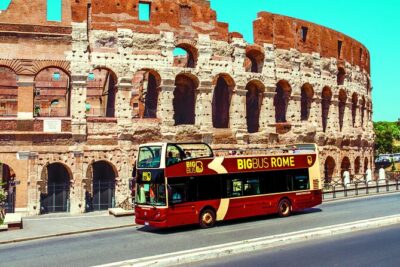
Big Bus Hop-on, Hop-off Open-Top Sightseeing Tour
Read our review →
Hop-on Hop-off Bus Tour: 24, 48 or 72-Hour Ticket
Read our review →
City Sightseeing Hop-On Hop-Off Bus with Audio Guide
Read our review →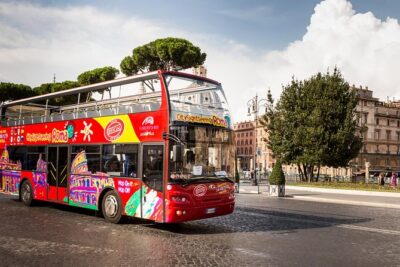
City Sightseeing Rome Hop-On Hop-Off Bus Tour
Read our review →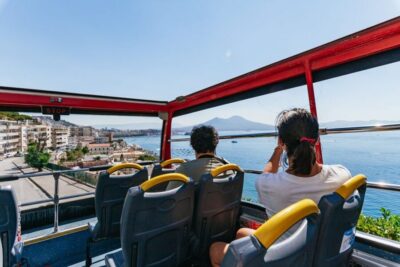
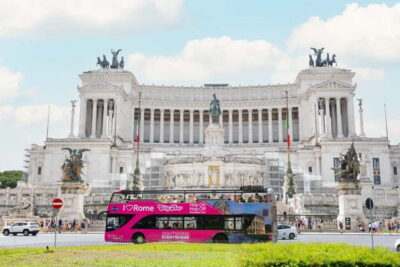
Hop-on Hop-off Sightseeing Bus Tour with Audioguide
Read our review →
Stresa: 3 Borromean Islands Hop-On Hop-Off Boat Tour
Read our review →
UNESCO Tour: Alberobello and Matera by private bus from Bari
Read our review →Browse the lists this tour appears in