
REVIEW · CANADA
Quebec City: Old Town and Montmorency Falls Bus Tour
Montmorency Falls is the star here, but the clever part is how easily this tour links it with Upper and Lower Old Quebec. In three hours, you see fortified streets, the riverfront, the Plains of Abraham, Parliament, and one of the area’s biggest natural sights without sorting out buses or parking.
I especially like the small bus, which can work through narrow Old Quebec streets, and the guides, who often drive and narrate at the same time. Jeff, Celine, Jean François, Peter, Dan, and Alex have all been singled out for clear, funny, engaging commentary. The main catch is time: roughly 45 to 60 minutes at the falls is enough for views and the footbridge, but not enough for a leisurely climb, every trail, and the gondola.
Key points
- Montmorency Falls in 45 minutes: Walk to the footbridge above the cascade and take in views toward Île d’Orléans.
- Small-bus city tour: The compact vehicle can reach narrow streets that are awkward for a large coach.
- Upper and Lower Old Quebec: See the city’s different levels, from Place d’Armes and Château Frontenac to the docks and lower town.
- Guides with personality: English and French commentary may come from guides such as Jeff, Celine, Jean François, Peter, or Dan.
- Local tastes included in the route: The experience includes a cider sample at Cidrerie Bilodeau and a visit to Vineyard of Mitan.
- Good first-day orientation: The route helps you decide which parts of Quebec City deserve a longer visit on foot.
Why Montmorency Falls makes this short tour worthwhile
Quebec City is easy to explore on foot once you understand its steep upper and lower levels. Montmorency Falls is different. It lies outside the old center, and getting there on your own takes extra planning. This tour handles the transfer in about 15 minutes, then gives you a compact look at both the city and the waterfall.
At $39 per person, the value is strongest if you want orientation rather than a full day at the falls. You get transport, live commentary, admission to Parc de la Chute Montmorency, and a guide who puts the sights into context. A taxi or separate transport to the falls would add cost, while public transport would require more of your limited vacation time.
The tradeoff is simple. You are buying breadth, not a slow visit. If your main goal is to climb every stair, linger at the base, or ride the cable car, plan a separate visit. If you want a practical introduction to Quebec City with a major waterfall added, this length works well.
A few more bus tours around Canada worth a look
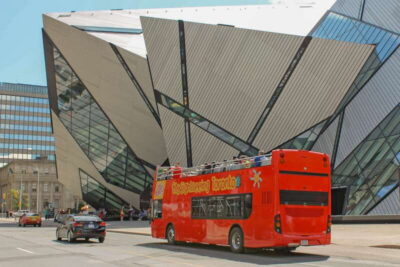
- Toronto: City Sightseeing Hop-On Hop-Off Bus Tour
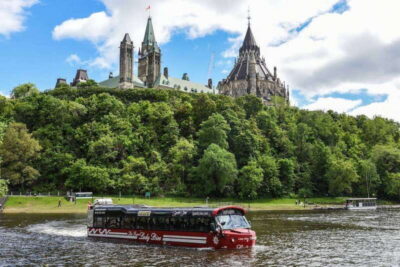
★ 4.3 · 2,544 reviews - Ottawa: Bilingual Guided City Tour by Amphibious Bus
★ 4.6 · 2,089 reviews - Quebec City: Hop-on Hop-off Open-Top Double Decker Bus Tour
★ 4.4 · 1,484 reviews
Meeting beside Château Frontenac
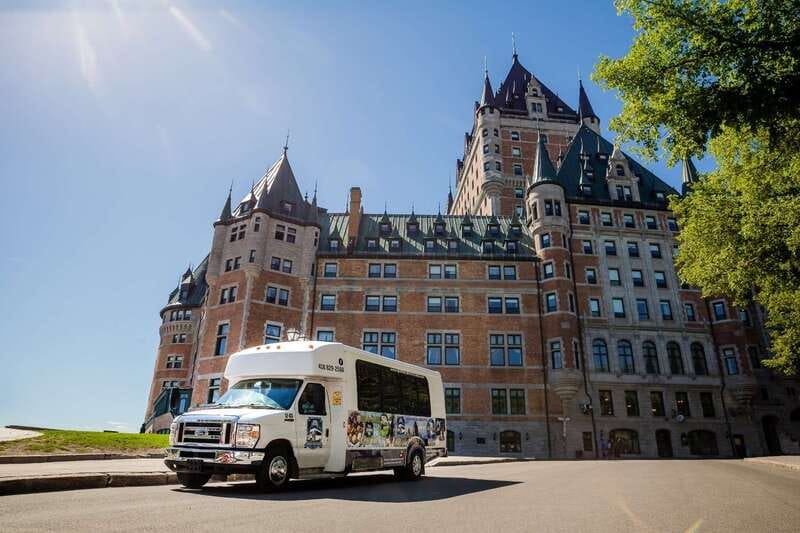
The tour begins at Place d’Armes, near the park beside Château Frontenac. Look for the colorful wrapped bus and arrive 10 to 15 minutes early. The pickup area can cause confusion because map markers may point toward the park rather than the bus lane across the street, so do not rely only on a phone map.
This is a bus tour from the start, not a walking tour followed by transportation. Once aboard, you can settle into a short ride through the city while the guide explains what you are seeing. Some buses have comfortable reclining seats, and the small vehicle is a real advantage in the older quarters.
The guides are part of the appeal. Commentary is offered in English and French, and guides such as Jeff and Jean François have been praised for mixing local stories, historical facts, humor, and practical suggestions. Celine has adjusted the route around poor weather, while Peter has been noted for slipping in restaurant and shopping recommendations. The experience depends somewhat on who leads your departure, but the pattern is clear: expect a personal, talkative guide rather than a recorded audio track.
One unusual touch is the colonial-era clothing. Your guide is dressed in 17th-century colonial attire, which fits the setting and gives the introduction a bit of theater without turning the whole outing into a staged show.
Upper Town sights, from Place d’Armes to Parliament
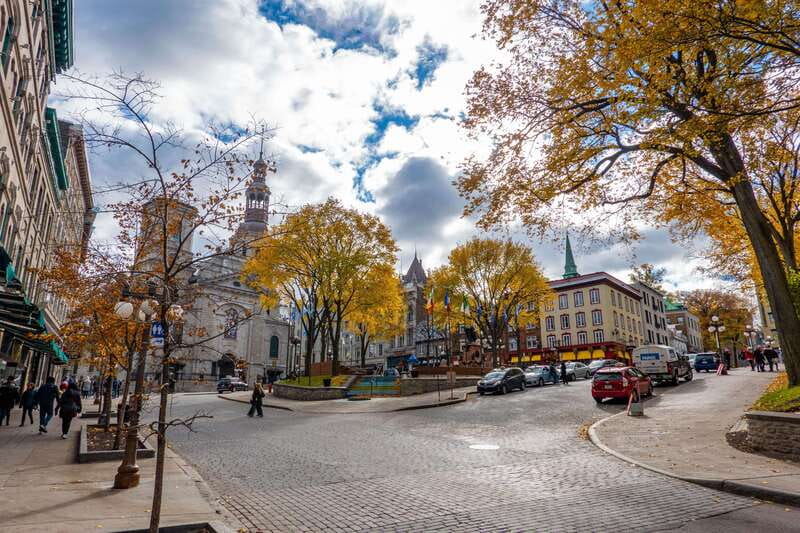
The first part gives you a moving overview of Upper Old Quebec. Place d’Armes is a natural starting point because it sits beside some of the city’s most recognizable buildings and streets. From there, you see the area around Château Frontenac, the Town Hall, and the Morrin Cultural Center.
You will not have long guided stops at every landmark. The benefit is coverage. You get a sense of where the major sights sit in relation to one another, then you can return later for a slower visit. This is especially useful if Quebec City is new to you and you are still sorting out the upper town, lower town, riverfront, and main public squares.
The architecture is not presented as decoration alone. The guide explains why the city developed in layers and how the first arrivals lived within a compact, defensible settlement. Keep your camera ready, but also listen for the small details about daily life. Those details make the stone walls and formal facades easier to understand.
The Fontaine de Tourny and the Parliament of Quebec add a change of scale. After the old streets and historic buildings, the route opens toward the grand civic district. The fountain is an easy photo stop, while Parliament helps place Quebec City in its role as the provincial capital.
Lower Town and the riverfront view
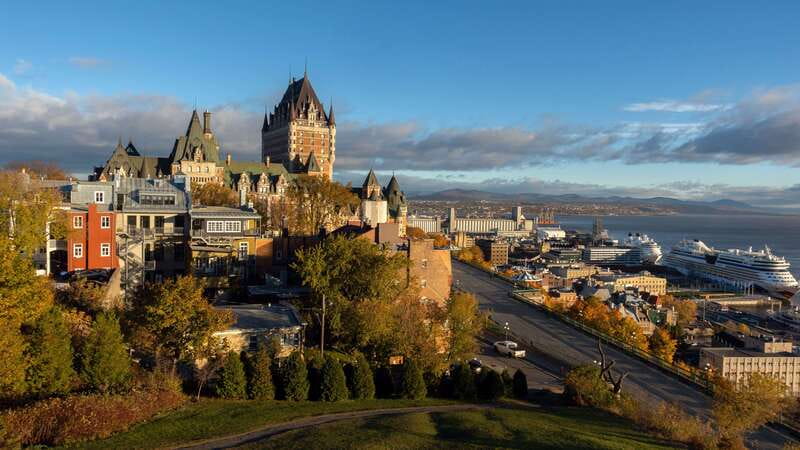
The bus also takes you into Lower Old Quebec, near the docks and the riverfront. This part feels different from the elevated streets around Château Frontenac. You see how steeply the city rises and why the distinction between Upper and Lower Town matters when planning your own walks.
The route can show you more than you could comfortably cover on foot in the same short period. A small bus is useful here because it can negotiate tighter streets and make turns that would be difficult for a full-size coach. You may pass through places you would otherwise miss while walking directly between the main sights.
Do not expect a long stop at each location. This portion works best as a visual primer. I would use the guide’s suggestions to mark a few places for later, then return on foot when you have time to browse, eat, or take photographs without watching the clock.
Same city, a different seat on the bus:
- Montreal: Guided Bus Tour
★ 4.4 · 3,064 reviews - Big Bus Vancouver Hop-On Hop-Off Sightseeing Tour
★ 3.5 · 3,028 reviews - Montreal: Hop-On Hop-Off Double-Decker Bus Tour
★ 4.1 · 2,760 reviews - Vancouver: Hop-on Hop-off Sightseeing Tour with 10 Stops
★ 3.9 · 1,807 reviews
Plains of Abraham and the Martello towers
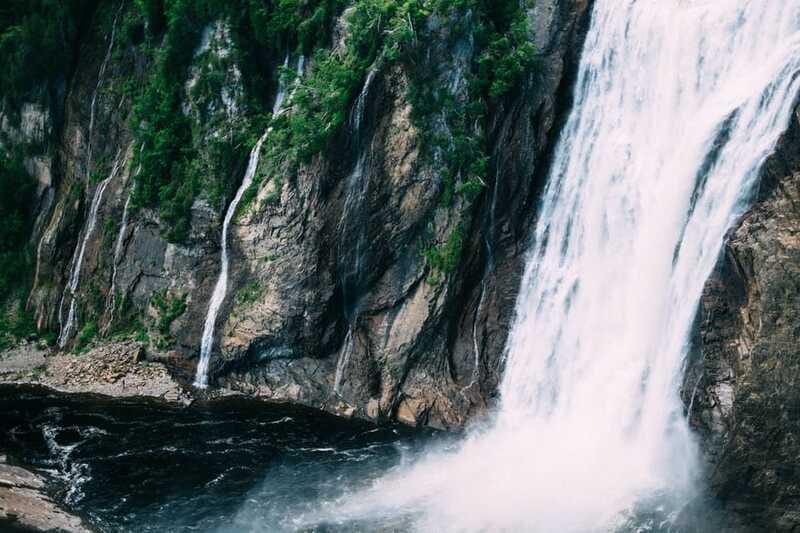
The tour continues to the Plains of Abraham, one of Quebec City’s key open spaces and a major part of its military story. You also see the Martello towers, which add a physical reminder of the city’s defenses.
This is where the live commentary earns its keep. A quick drive past a historic field can feel empty without context. With a guide explaining the people, conflicts, and changing role of the area, the stop becomes more than a green space beside the old walls.
If you have extra time in Quebec City, return to the Plains on your own. One useful tip is to pair that visit with the museum there, as the bus tour can introduce the setting but cannot provide the same amount of detail. The tour gives you the outline; a separate visit lets you spend time with it.
The short ride to Montmorency Falls
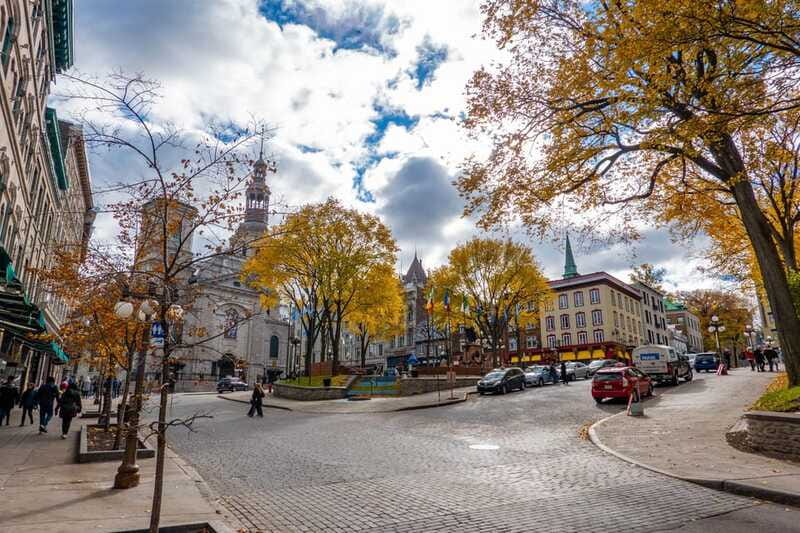
After the city circuit, the bus makes the roughly 15-minute trip to Parc de la Chute Montmorency. That quick transfer is one of the tour’s practical strengths. You leave the tight streets of Old Quebec and reach a very different setting without arranging another ride.
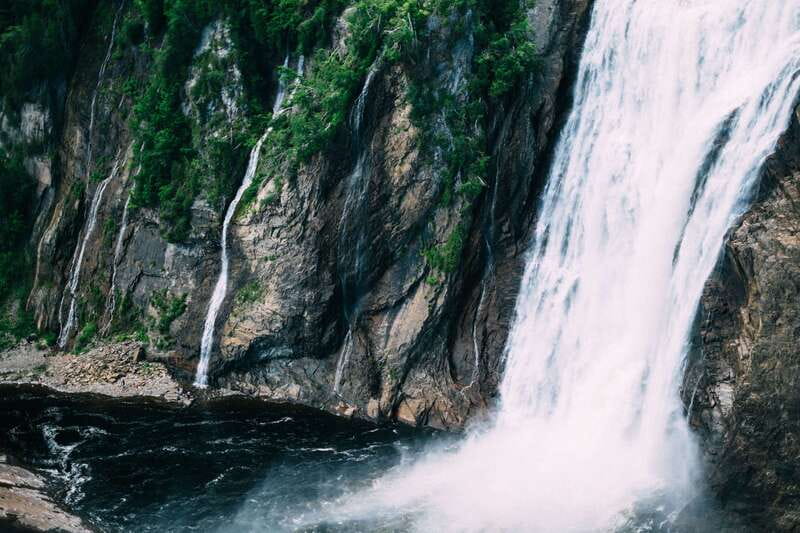
Montmorency Falls drops dramatically through a wooded park, and the first view is often the moment the outing changes pace. The falls are higher than Niagara Falls, though the experience here is more compact and scenic. The park offers several viewing points, and the footbridge above the cascade gives you a direct look into the rushing water.
You have about 45 minutes, sometimes close to an hour depending on the departure and timing. That is enough to walk across the bridge, stop for photographs, and take in views toward Île d’Orléans. On a clear day, the wide view beyond the falls is as important as the drop itself.
Wear comfortable shoes. Paths, stairs, and changing surfaces can make the stop harder for anyone who walks slowly or has limited mobility. The tour is not recommended for people with mobility impairments, and children must stay with an adult.
What you can and cannot fit into 45 minutes
The falls stop requires a little strategy. If you want the footbridge, head there first. It gives you the signature view and a strong sense of the height and force of the water.
You may also be able to walk toward the base or reach another viewing platform, but you probably cannot do everything. The climb involves more than 400 steps, and a gondola ride requires waiting in line. Several visitors have found that the allotted time is fine for the main views but too short for the full stair route or a gondola ride in both directions.
That is not a flaw if you treat the stop as an introduction. It becomes a problem only if you book this tour specifically for a full Montmorency Falls visit. For that goal, return separately with more time and a plan for the stairs or cable car.
The weather matters here. In rain, the rocks and paths can be slippery, while in winter the cold can make the exposed viewpoints demanding. The warm bus is a welcome refuge on cold days, and flexible guides have adjusted photo stops when rain was expected. Still, dress for the conditions rather than assuming the bus will solve everything.
Cider, vineyards, and the rural side of the region
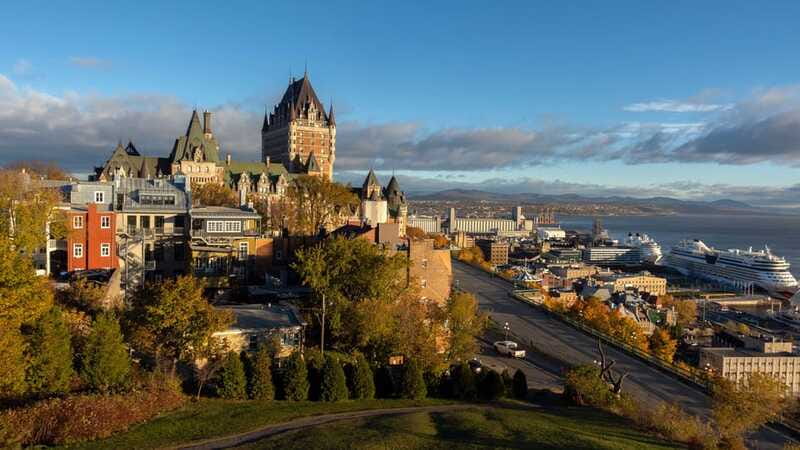
The experience also includes a taste of local cider at Cidrerie Bilodeau and a visit to Vineyard of Mitan. These stops add a welcome change from monuments and military history. You get a glimpse of the agricultural side of the area and a chance to connect local drinks with the nearby countryside.
Food and drinks are not included in the tour price, so treat the cider sample as a tasting opportunity rather than a meal. If you want a full snack or lunch, plan for that separately. The short duration means you should not count on a long restaurant stop during the outing.
These visits are especially useful if you like tours that mix scenery with local products. They also help break up the bus commentary. The city portion explains how Quebec developed, while the orchard and vineyard stops show another part of the region’s identity.
How the small bus changes the experience
The small vehicle is more than a comfort detail. It can move through narrow streets, approach less obvious corners, and give the guide a closer connection with the group. Several guides have also handled the driving, which means you get one continuous voice rather than a driver and separate narrator.
That setup has limits. A compact bus has less space than a large coach, and the ride can feel more personal and less anonymous. If you prefer to stay completely independent, you may find the steady commentary and fixed schedule restrictive.
For most first-time visitors, I see the small bus as a plus. You cover a lot of ground without spending the entire day in transit. The group size also makes it easier to hear the guide and ask a quick question.
How the $39 price holds up
At $39, this is a strong orientation tour. Admission to the waterfall park and transportation are included, and the three-hour route combines sights that would otherwise require separate planning. You also get bilingual live commentary and a guide who can point out places to revisit.
The price is less compelling if you already know Quebec City well or have arranged your own trip to Montmorency Falls. In that case, the city circuit may repeat ground you have covered, and the short falls stop may feel rushed.
For a first or second day, I think the cost is easy to justify. The tour helps you understand the city’s geography, identify restaurants and neighborhoods for later, and see the waterfall without spending a full day away from Old Quebec. It is also a sensible choice in cold weather, when a warm bus between stops has real value.
Who should book this tour
I would recommend it to you if you want a broad first look at Quebec City, prefer a guide to explain the setting, or have only a short stay. It works well for couples, families with supervised children, and anyone who wants transport to the falls without managing the route alone.
It is also a good fit if you enjoy history in manageable portions. The commentary covers architecture, early settlement, military sites, civic buildings, and local life without trying to turn a three-hour ride into a university lecture.
I would choose another plan if you have limited mobility, need a slow pace, or care most about the full Montmorency Falls trail system. The bus makes access easier, but the actual park visit still involves walking, stairs, and time pressure.
My practical verdict
Book this tour when your priority is seeing the main shape of Quebec City and adding Montmorency Falls in one efficient outing. Go early in your stay so the route can guide your later walks, museum visits, meals, and shopping.
Skip it if you want a leisurely day at the falls or prefer to explore every street independently. The best way to think about this experience is as a well-priced introduction, with a lively guide, a manageable bus, and just enough time at the waterfall to make you want a longer return visit.
FAQ
How long does the Old Town and Montmorency Falls tour last?
The tour lasts about three hours, with the stated duration ranging from 2.5 to 3 hours depending on the departure.
Where do I meet the bus?
Meet at Place d’Armes in Quebec City, near the park beside Château Frontenac. Look for the colorful wrapped bus and arrive 10 to 15 minutes before departure.
What languages are available?
Live commentary is available in English and French.
Is admission to Montmorency Falls included?
Yes. Admission to Parc de la Chute Montmorency is included in the tour.
How much time do I get at the falls?
You get about 45 minutes to explore the park and walk across the footbridge, though the exact time can vary slightly.
Can I climb all the stairs or ride the gondola during the stop?
The tour does not provide enough time to guarantee both options. The climb has more than 400 steps, and gondola lines may be too long for a return ride within the scheduled stop.
Is the tour suitable for children or people with limited mobility?
Children must be accompanied by an adult. The tour is not recommended for people with mobility impairments, and comfortable shoes are advised.
Just added around Canada
- Western Classic – One Way Calgary To Vancouver Rockies Bus Tour★ 5.0 · 9 reviews
- Johnston Canyon, Gondola and Banff Day★ 5.0 · 2 reviews
- Full Day Drumheller Tour from Calgary by Coach★ 4.0 · 5 reviews
- Banff Lake Louise Excursion – 3-Day Calgary To Vancouver Bus Tour★ 5.0 · 6 reviews
- Salt Spring Island “Artisan Trail” Hop On Hop Off Tour!★ 4.5 · 23 reviews
- Explore Moraine and Louise Roundtrip from Banff Shared Bus Tour★ 5.0 · 2 reviews
- Toronto City Tour: 2-Hour Open-Top Experience★ 4.4 · 64 reviews
- Toronto: Festive Lights Bus Tour★ 3.9 · 11 reviews
Canada Bus Tours, compared.

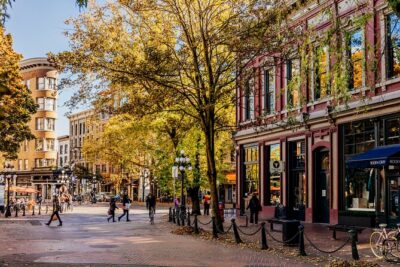
Big Bus Vancouver Hop-On Hop-Off Sightseeing Tour
Read our review →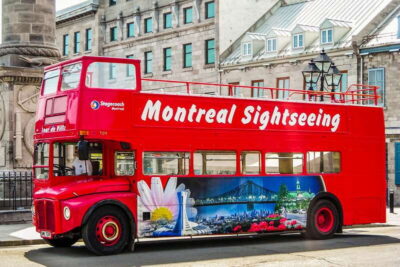
Ottawa: Bilingual Guided City Tour by Amphibious Bus
Read our review →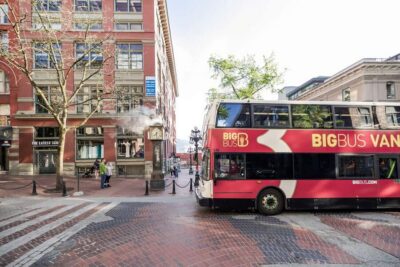
Hop-on Hop-off Sightseeing Tour with 10 Stops
Read our review →
Hop-on Hop-off Open-Top Double Decker Bus Tour
Read our review →
Browse the lists this tour appears in