
REVIEW · MILAN
Milan: City Sightseeing Hop-On Hop-Off Bus with Audio Guide
Milan’s hop-on hop-off bus is at its best when you want to get your bearings fast. One ticket covers four connecting routes, from the Duomo and La Scala to Navigli, Brera, CityLife, and San Siro. I especially like the open-top views and the freedom to change lines without buying another ticket. The audio also adds useful local details, including cotoletta alla Milanese and panettone.
I like this as a first-day activity, particularly if you have only a short visit or prefer not to walk all day. The main drawback is traffic and waiting time: a missed bus can mean a wait of about 50 minutes, and several routes repeat the central sights. Stop information can also be vague at Foro Bonaparte, so allow extra time to find the correct boarding point.
Key points to know before you board
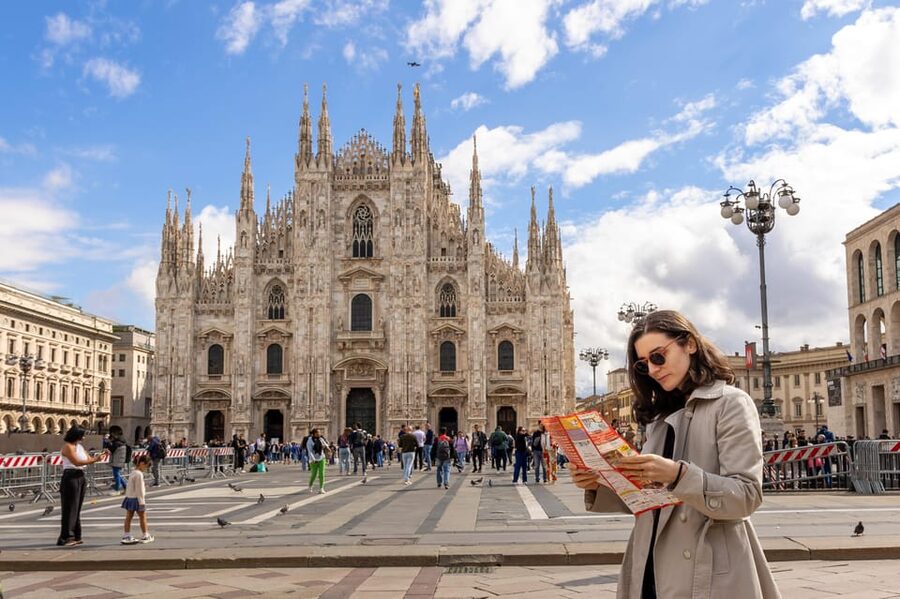
- Four routes on one ticket: Cover central Milan, the Navigli canals, Brera, CityLife, and San Siro without paying separately for each circuit.
- Best first stop: Lines A, C, and D begin at Foro Bonaparte, while Line B begins in Piazza Duomo.
- Useful audio content: Choose from 10 languages, with a separate audio option for children and food stories about Milanese specialties.
- A good short-stay tool: One day can give you a broad look at Milan, while two or three days allow more time to get off and explore.
- Bring patience for traffic: Buses can run late at busy junctions, and some audio sockets or speakers may not work.
- The $26 question: The ticket is strongest value when you use several routes or replace some taxi and metro trips with sightseeing.
Why this bus works well in Milan
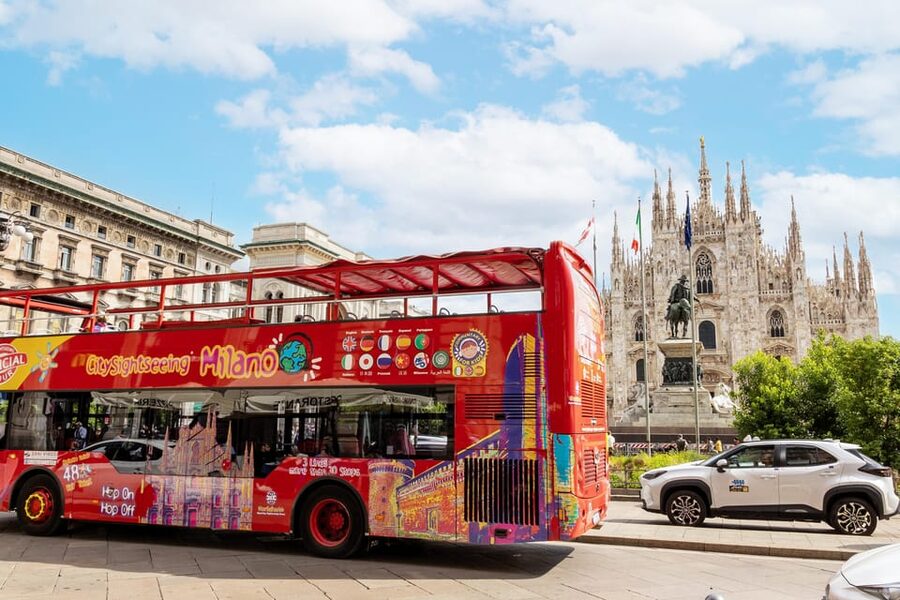
Milan is not difficult to walk, but its sights are spread across several districts. The Duomo, Castello Sforzesco, Last Supper area, Navigli, Brera, and San Siro do not form one neat walking route. The bus gives you a moving overview before you decide where to spend your limited time.
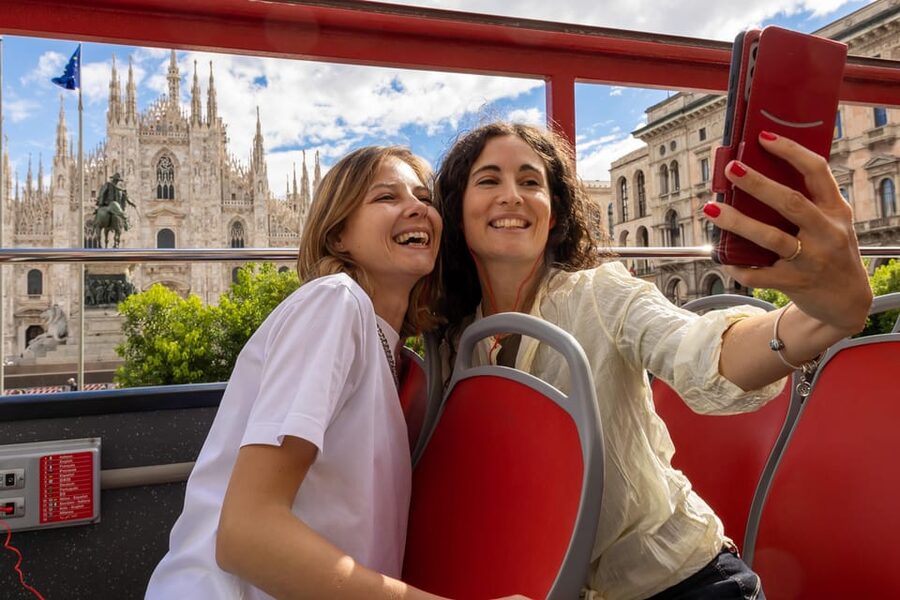
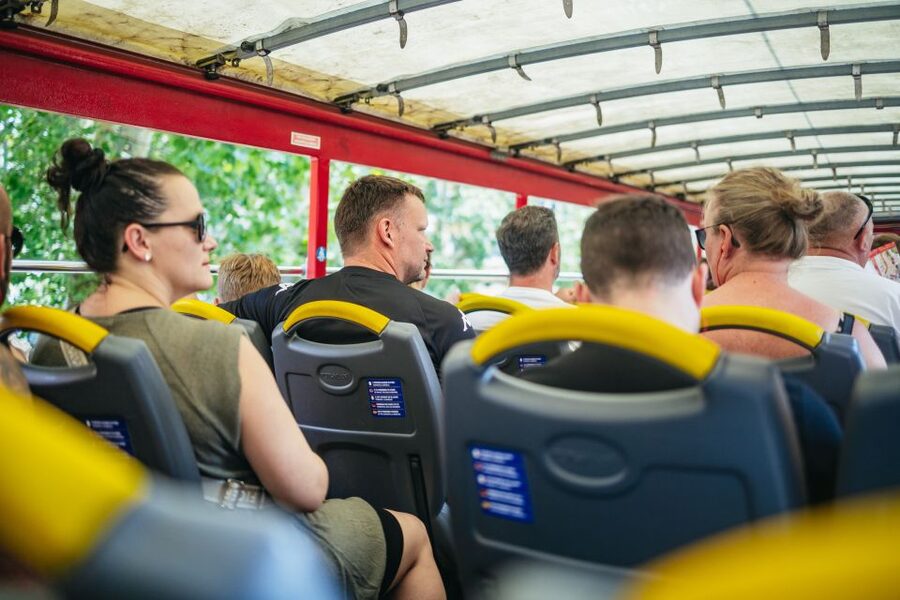
The open top is the real attraction. From an upper deck, you see more than a series of façades. You get a sense of the city’s scale, its broad avenues, its grand center, and the transition into quieter neighborhoods. On warm days, the breeze makes the ride pleasant, though sun protection is wise.
The ticket lasts for one, two, or three days. If your Milan visit is brief, a single day can work well for a first circuit and a few carefully chosen stops. With two days, you have a better chance to combine sightseeing with proper visits inside museums, churches, or stadium attractions. The three-day option makes sense if you want to use the bus as both transport and orientation.
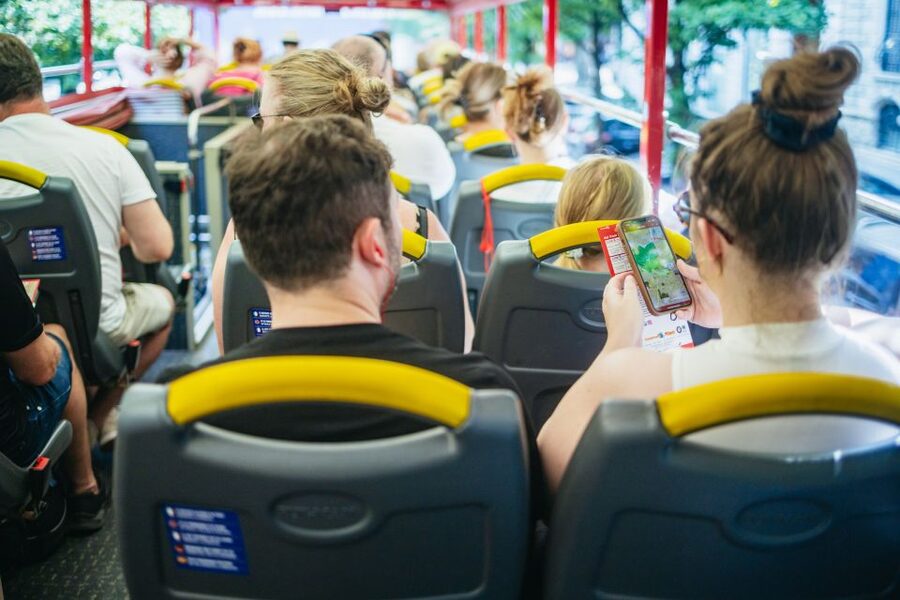
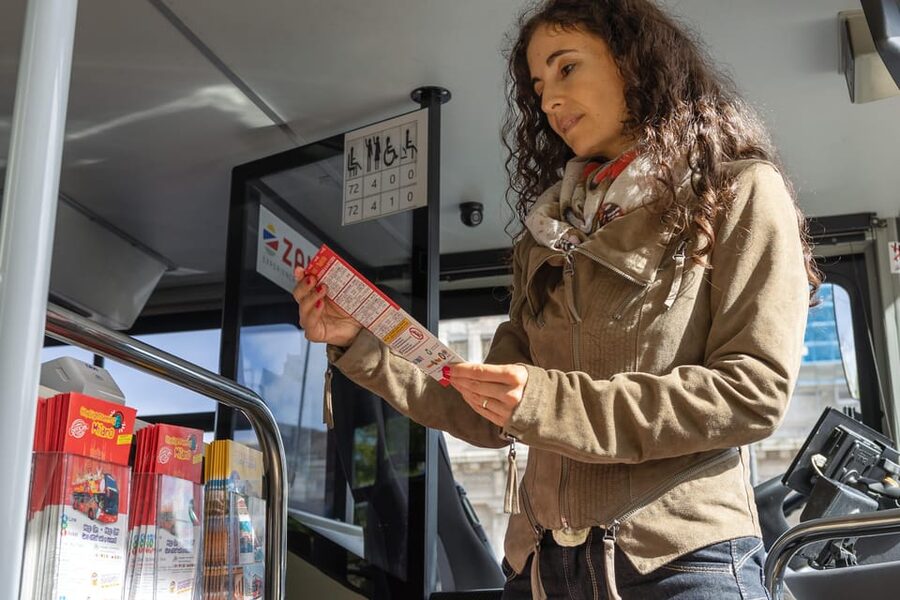
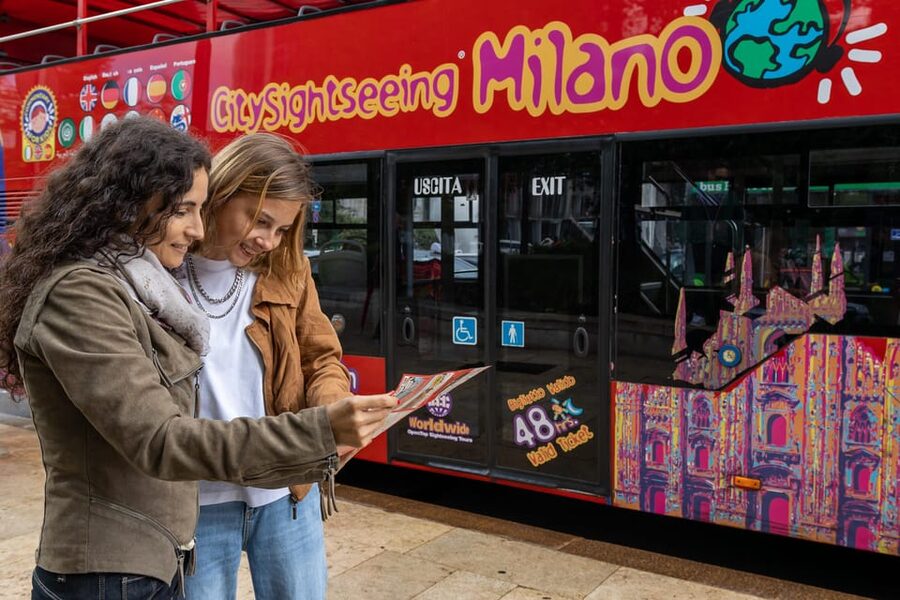
The audio commentary is available in English, Italian, Spanish, French, German, Russian, Portuguese, Japanese, Chinese, and Arabic. You also get a child-focused commentary option, Wi-Fi on board, a city map, and a free walking tour in the mobile app in five languages.
Do not expect the bus ticket to include entry to the Duomo, La Scala, Castello Sforzesco, San Siro, or any other attraction. It gets you close, then you arrange and pay for admission separately.
More Hop-On Hop-Off Bus Tours in Italy
- Rome: City Sightseeing Hop-on Hop-off Bus with Audioguide
★ 4.0 · 16,045 reviews - Rome: Big Bus Hop-on, Hop-off Open-Top Sightseeing Tour
★ 4.1 · 9,537 reviews - Florence: Hop-on Hop-off Bus Tour: 24, 48 or 72-Hour Ticket
★ 4.0 · 6,283 reviews
Line A, from Castello to Brera’s edge
Line A is a useful introduction to central Milan. Its stops are Castello, Cadorna, Cenacolo, Corso Magenta, Duomo, Monte Napoleone, Manin, and Moscova.
Castello is a natural starting point. The red-brick Castello Sforzesco gives this route a strong opening, with Parco Sempione nearby. From here, you can begin with Milan’s monumental side before moving toward shopping streets and the historic center.
Cadorna is a useful transport point and a practical place to join the route if you are staying outside the center. The Cenacolo stop serves the area of Leonardo da Vinci’s Last Supper. You must arrange a separate attraction ticket, and the bus ticket does not guarantee entry.
Corso Magenta takes you through one of the city’s central historic areas. The route then reaches the Duomo, the stop most people will use at least once. This is the heart of Milan sightseeing, with the cathedral, Galleria Vittorio Emanuele II, and La Scala within the central area.
Monte Napoleone shifts the mood from monumental Milan to designer shopping. Manin and Moscova offer access toward Brera and the city’s northern center. If you want cafés, galleries, and a slower wander after the main sights, this stretch is more appealing than simply riding the full circuit.
Line A is a good choice when you want the classic Milan landmarks. Its weakness is that several of its stops overlap with other lines, so do not feel obliged to complete every route from end to end.
Line B, from the Duomo to Porta Venezia
Line B begins at Piazza Duomo and runs through Monte Napoleone, Manin, Repubblica, Palazzo Lombardia, Stazione Centrale, Buenos Aires, Porta Venezia, and San Babila.
This is the practical city-center route. From the Duomo, you move toward Milan’s modern business side at Repubblica and Palazzo Lombardia, then continue to Stazione Centrale. The station is one of the city’s major transport landmarks and a useful stop if you arrive by train.
Buenos Aires and Porta Venezia show another side of Milan. They are useful stops if your accommodation is north of the center or if you want to get beyond the cathedral district. San Babila brings you back toward the Duomo and the main shopping area.
Line B is less focused on one single headline attraction than Line A. Its value is in connecting the center with the station and northern districts. I would use it as a practical link between sightseeing areas rather than treating it only as a narrated sightseeing loop.
Keep an eye on the route display before boarding. Some stops are shared between lines, and the buses can become crowded when people transfer near the Duomo. If you need a seat upstairs, boarding at a less central stop may be easier than joining at the busiest square.
Line C, the route for CityLife and San Siro
Line C is the longest and most varied route. It begins at Castello and continues through Triennale, Arco della Pace, CityLife, Casa Milan, Mico Congress Centre, Lotto Montebianco, Lido, Ippodromo, Stadio San Siro, Lotto Monterosa, Buonarroti, Pagano, Conciliazione, and Parco Sempione.
The early section covers some of Milan’s most pleasant public spaces. Triennale serves the design museum area, while Arco della Pace opens toward the broad park and arch beyond the castle. These stops are good choices if you want a break from dense city streets.
CityLife presents Milan’s newer architectural face. Casa Milan is the football-focused stop, and San Siro is the major draw farther along the line. If you want to see the stadium, check the timing before getting off. A short photo stop may be possible, but waiting for the next bus can take a long time, reportedly up to around 90 minutes on some stretches.
The route then returns through western neighborhoods, including Buonarroti, Pagano, Conciliazione, and Parco Sempione. This makes Line C useful even if San Siro is not on your list. It gives you a wider look at Milan than the compact central circuits.
The drawback is distance. Traffic can make this route slow, and you should not plan a tightly timed attraction visit immediately after leaving the bus. Use Line C for broad sightseeing, not for a schedule that depends on arriving at a precise minute.
More Sightseeing Bus Tours in Italy
- City Sightseeing Rome Hop-On Hop-Off Bus Tour
★ 3.5 · 5,446 reviews - Rome: Hop-on Hop-off Sightseeing Bus Tour with Audioguide
★ 4.1 · 4,801 reviews - Rome: Big Bus Hop-on, Hop-off Open-Top Sightseeing Tour
★ 3.5 · 2,580 reviews - Rome: City Highlights Open-Top Bus Night Tour
★ 4.1 · 2,038 reviews
Line D, the route through Navigli and Brera
Line D begins at Castello and follows Cadorna, Cenacolo, Navigli, Piazza XXIV Maggio, Duomo, Monte Napoleone, and Brera.
The Navigli stop is the reason to choose this route. Milan’s canal district feels different from the cathedral area, with water, bridges, and a more relaxed evening setting. The ride through this part of the city gives you an easy way to reach the canals without arranging another connection.
Piazza XXIV Maggio continues that southern city experience. You can get off here or at Navigli, walk around, and later use the route again if the timing suits. The bus is particularly useful for linking the canal district back to the Duomo.
The final stops return to Milan’s best-known center. Monte Napoleone covers the upscale shopping district, while Brera is one of the most rewarding places to leave the bus and walk. Brera has a strong artistic identity, and it is a better place to slow down than to view from a moving vehicle.
Line D is probably the most useful route for showing how different Milan’s districts can feel. It also makes a good evening plan, though the ticket information specifically includes a Milan Night Tour with the 72-hour weekend rate on Saturdays and Sundays from June through September. Check the current operating details before relying on that inclusion.
How to plan one day, two days, or three
With one day, start at the Duomo or Foro Bonaparte and take a full ride before choosing your stops. Then get off for the Duomo, continue toward Castello or Brera, and use Line D for Navigli if bus timing allows. This gives you a city overview plus two very different districts.
A one-day plan should not try to enter every attraction. The bus is excellent for seeing the outside of many places, but the Last Supper, La Scala, museums, and San Siro need separate time and tickets.
With two days, split Milan into zones. Use Line A or B for the Duomo, La Scala, Monte Napoleone, and the northern center on day one. Use Line C for CityLife and San Siro, then Line D for Navigli and Brera on day two.
Three days give you the most comfortable pace. You can use the first day for orientation, the second for the districts that interest you most, and the third as a transport backup or a second look at the Duomo area. The longer ticket is less about riding constantly and more about avoiding long walks between scattered stops.
Several routes pass through the Duomo, Monte Napoleone, Castello, or nearby central areas. That repetition is helpful for changing lines, but it also means four routes do not equal four entirely separate views. Plan around the unique sections: Navigli on D, San Siro on C, the station and Buenos Aires on B, and the central landmarks on A.
Audio, comfort, and the small practical details
The recorded commentary covers architecture, notable buildings, local food, and city stories. I like that the food content includes the recipe for cotoletta alla Milanese and the story of panettone. Those details give the ride more local flavor than a basic list of monuments.
The equipment is generally simple: select your language, plug in your headphones, and listen as the bus moves. Still, test the audio before the bus pulls away. Some seats may have faulty sockets or speakers, and moving to another seat can solve the problem.
If hearing the commentary clearly matters to you, the bus may be less predictable than a live guide. One passenger who is deaf found the experience difficult, and equipment problems have affected more than one seat on some buses. The mobile walking tour may provide a useful alternative, but the supplied information does not specify its accessibility features.
Staff are usually present at the main stops and are described as friendly and helpful. The first boarding point needs special care. Foro Bonaparte is a large area, so look for the travel information point or confirm the exact corner rather than relying only on the broad meeting-point name.
The buses are open-top panoramic vehicles, though some rides may use air-conditioned buses. Bring a light layer for the upper deck, and expect a different experience in direct sun or light rain. Wi-Fi is included, but the main benefit is still the route network rather than onboard connectivity.
Is $26 good value for Milan?
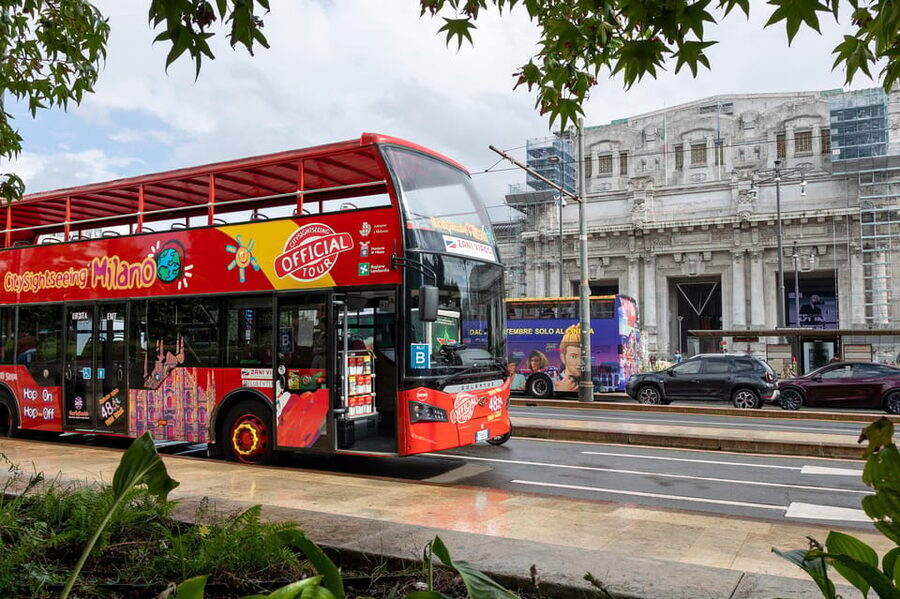
At $26 per person, this is fair value if you use the bus for several districts or replace some separate transport trips. It is especially useful for a first visit, a short stay, families, and anyone who finds a full day of walking tiring.
It is weaker value if you plan to stay around the Duomo, Galleria, La Scala, and Brera. Much of central Milan is walkable, and a single day may be enough to cover those areas on foot. In that case, the ticket works best as a sightseeing ride, not as a must-have transport pass.
The 72-hour ticket becomes more attractive if you will ride on several days. The weekend night-tour inclusion from June through September adds value for the right dates, but confirm that the special rate and schedule match your visit.
Free cancellation up to 24 hours before the activity and reserve-now, pay-later booking make it easier to keep plans flexible. Those terms are useful when weather, museum tickets, or train schedules are still uncertain.
Who should book this Milan bus tour?
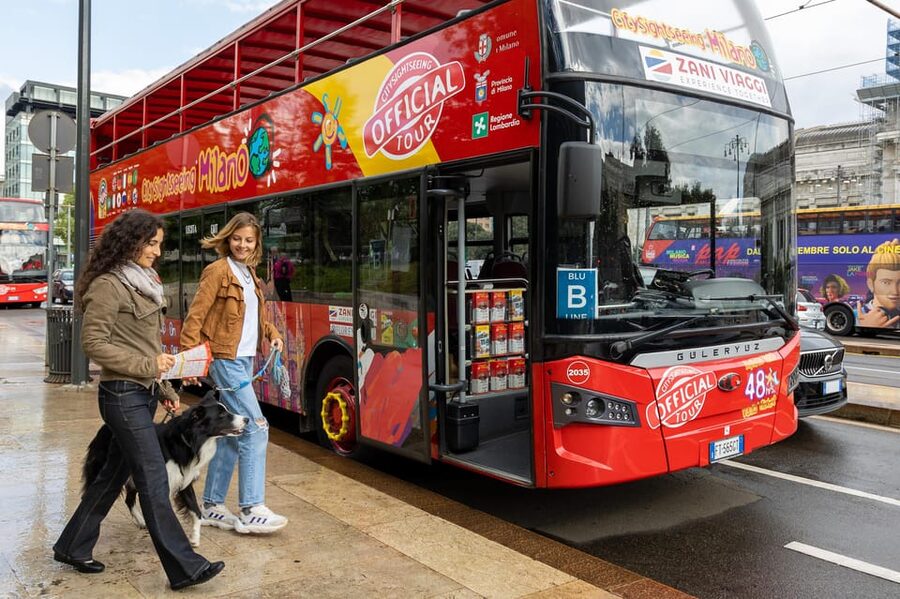
I would choose it for a first visit, a one-day stop, families with children, older visitors, and anyone who wants a broad view before selecting museums and neighborhoods. The four routes let you see places you might not reach on foot, including San Siro, CityLife, the canals, and the station district.
I would be more cautious if you dislike waiting, need guaranteed audio quality, or prefer a tightly scheduled walking day. Milan traffic can slow the buses, and the long gap between vehicles can punish a poorly timed hop-off.
Book it if you plan to use at least two routes and get off in more than one district. Skip it if your entire plan is already centered on the compact area around the Duomo. For most short visits, the smartest approach is to ride first, choose your priorities, then return to the places that deserve your time.
FAQ
How many bus lines are included?
The ticket includes four connected Milan sightseeing lines, listed as Lines A, B, C, and D.
Where do Lines A, C, and D begin?
The first stop for Lines A, C, and D is at Foro Bonaparte.
Where does Line B begin?
Line B begins in Piazza Duomo.
How long can I use the ticket?
You can choose a ticket valid for one, two, or three days. Availability and starting times should be checked for your chosen date.
Which languages are available for the audio guide?
The audio guide is available in Spanish, Chinese, English, French, German, Italian, Russian, Portuguese, Japanese, and Arabic.
Is there commentary for children?
Yes. A special audio commentary for children is included.
Are attraction entrance tickets included?
No. The bus ticket does not include admission to attractions such as the Duomo, La Scala, the Last Supper, or San Siro.
Can I cancel the booking?
Yes. You can cancel up to 24 hours in advance for a full refund. A reserve-now, pay-later option is also available.
More Audio-Guided Tours in Italy
- Zurich: City Bus Tour with Audio Guide and Lake Cruise
★ 4.3 · 1,195 reviews - City Sightseeing Hop-On Hop-Off Bus Tour with Audio Guide
★ 3.0 · 1,083 reviews - Istanbul: Hop-On-Hop-Off with Optional Audio Tour or Cruise
★ 4.2 · 1,058 reviews - Toulouse: City Sightseeing Tour by Bus with Audio Guide
★ 4.2 · 956 reviews
More Self-Guided Tours in Italy
- Trieste Bus Tour with Audio Guide
★ 4.4 · 2,170 reviews - Rome: Colosseum, Forum Audio Tour with Hop-on Hop-off Bus
★ 3.9 · 6 reviews - Alberobello Self-Guided Tour Departing from Bari by GT Bus
★ 5.0 · 2 reviews - Los Angeles: Hop-On Hop-Off Bus Tour with Audio Guide
★ 3.7 · 2,030 reviews
Just added around Italy
- City Sightseeing Genoa Hop-On Hop-Off Bus Tour★ 3.0 · 259 reviews
- Open Top Van!! Half Day in Chianti with Wine Tasting★ 5.0 · 8 reviews
- Chianti Wine Tour with Tuscan Lunch Open Top Van★ 5.0 · 89 reviews
- Villages of Chianti with lunch and tasting in Open Top Van★ 5.0 · 5 reviews
- Cinque Terre Day Trip from Florence: Guided Round-Trip Bus★ 4.5 · 24 reviews
- Brunello Vineyards Bus Tour★ 5.0 · 11 reviews
- Shared CAPRI Tour – 360° experience by Bus, Boat & Guide★ 3.5 · 5 reviews
- Bologna City Red Bus and Food tasting★ 3.5 · 46 reviews
Milan Bus Tours, compared.
Gray Line Milan Open Tour Hop-On Hop-Off Bus Tour
Read our review →
Milan Hop-On Hop-Off Bus Tour with Four Routes
Read our review →
Best of Skip-the-Line Duomo Rooftops Guided Tour
Read our review →
Milan Duomo Rooftops Tour + Optional Hop-on-Hop-off ticket
Read our review →
Duomo & Rooftop Tour with Optional Hop-On Hop-Off Bus
Read our review →
Skip-the-Line Duomo & La Scala Museum Tour + Hop On Hop Off
Read our review →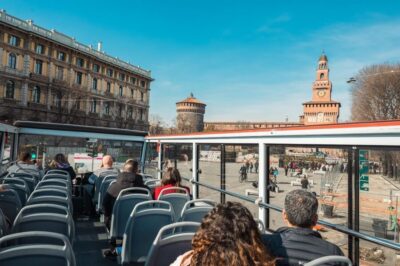
Skip-the-Line Duomo Guided Tour & Hop-on Hop-off Bus
Read our review →
Browse the lists this tour appears in