

REVIEW · LISBON
Lisbon: 3-in-1 Hop-On Hop-Off Bus and Tram Tours
Lisbon’s steep streets and scattered sights make this three-part ticket a useful way to get your bearings. Over 48 hours, you can ride two double-decker bus routes, then switch to a vintage tram for a close look at the old quarters around Alfama, Mouraria, and Baixa.
I like the freedom to hop off near Belém’s monuments, the Tile Museum, or the Oceanarium, then continue when you are ready. I also like the historic tram, where the old machinery and tight city streets give you a more local-feeling ride than a standard sightseeing loop.
The catch is timing. Buses run only during the day, the Hills tram has no stops along its route, and Lisbon traffic can slow the loops. You need to plan your stops rather than expect to see everything in one long afternoon.
Key points to know before you go

- Three ways to see Lisbon: Combine the Belém route, Modern Lisbon route, and Hills Tramcar Tour with one 48-hour ticket.
- The historic tram is a scenic loop: It passes Portas do Sol, Lisbon Cathedral, Graça, São Vicente, the Pantheon, and Martim Moniz, but does not stop at these places.
- Belém is the strongest sightseeing route: You can hop off for Jerónimos Monastery, Belém Tower, the Discoveries monument, MAAT, and the Coach Museum.
- Public tram access adds practical value: The ticket includes access to Yellow Carris trams during its validity.
- Audio commentary comes in 13 languages: English, Spanish, Chinese, Dutch, French, German, Italian, Japanese, Portuguese, and Russian are among the choices.
- Allow time for traffic and waits: Bus departures are generally every 30 minutes, while the Hills tram runs about every 35 minutes.
What the 48-hour ticket really gives you
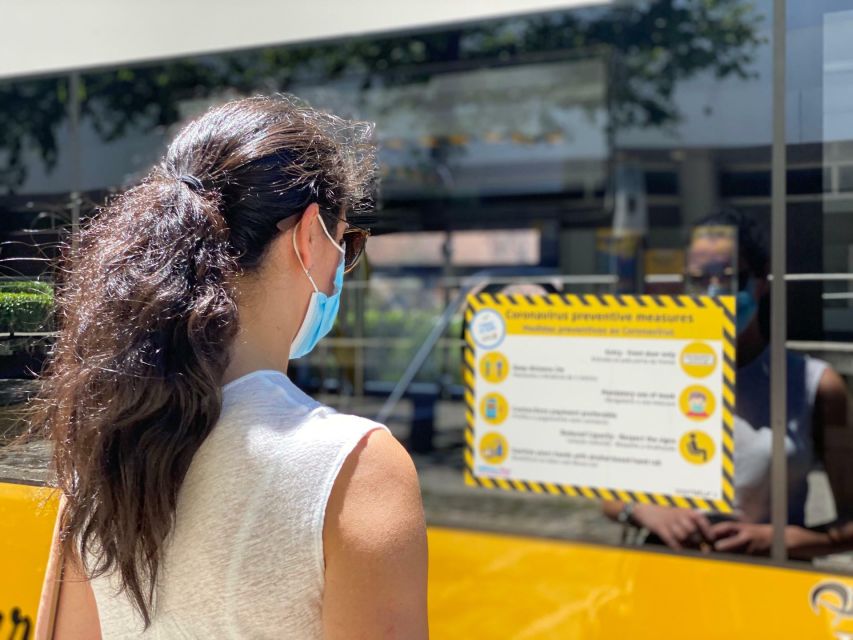
At $44 per person, this is not the cheapest way to move around Lisbon if you only want point-to-point transport. Its value comes from combining sightseeing, transport, and flexibility in one pass.
You get two 24-hour sightseeing bus routes and one historical tram ride within a 48-hour period. You can use the first day for a broad look at the city, then spend the second day returning to the places that caught your eye.
That two-day window matters. Lisbon is not a city to rush through by vehicle. The central streets are hilly, traffic can be slow, and major sights such as Jerónimos Monastery and Belém Tower deserve more than a quick glance from the top deck.
The ticket also includes access to Yellow Carris trams during its validity. That gives you another way to move through the older districts after the dedicated tram tour has finished, though you should check current operating information before relying on any one service.
You can cancel up to 24 hours before the activity for a full refund, and the reserve-now, pay-later option helps if your plans are still shifting. Road works can temporarily affect service, so check with the Yellow team shortly before using the pass.
More Hop-On Hop-Off Bus Tours in Portugal
- Lisbon: 1-or 2-Day Hop-On Hop-Off Bus Tour
★ 4.1 · 4,774 reviews - Lisbon: Hop-On Hop-Off Bus Tour
★ 3.9 · 4,043 reviews - Lisbon: 72/96-Hour Hop-On Hop-Off Bus, Tram & Boat Ticket
★ 4.4 · 2,170 reviews
Starting at Restauradores and Praça do Comércio
Both bus routes begin at Restauradores Square, near the Eden Theatre. This central starting point is convenient for Rossio, Avenida da Liberdade, and the lower Baixa area.
The Hills Tramcar Tour starts at Praça do Comércio, close to the large triumphal arch. Make sure you go to the correct starting point. The buses and tram do not all leave from the same square, and a missed connection can cost you a good part of the morning.
The buses are yellow, with route signs in the front window. The Belém route uses a blue sign, while the Modern Lisbon route uses a pink sign. That small detail is worth remembering because both services use yellow vehicles and begin near the same central area.
The first Belém bus leaves Restauradores at 9:00 a.m., with departures about every 30 minutes until 5:30 p.m. The Modern Lisbon route runs from about 9:15 a.m. to 5:15 p.m., also roughly every 30 minutes. The Hills tram runs from 9:30 a.m. to 5:05 p.m. at intervals of about 35 minutes.
These are daytime sightseeing services, not late-night transport. Start early if you want to combine several stops with a full loop.
The Belém route from Rossio to the Tagus
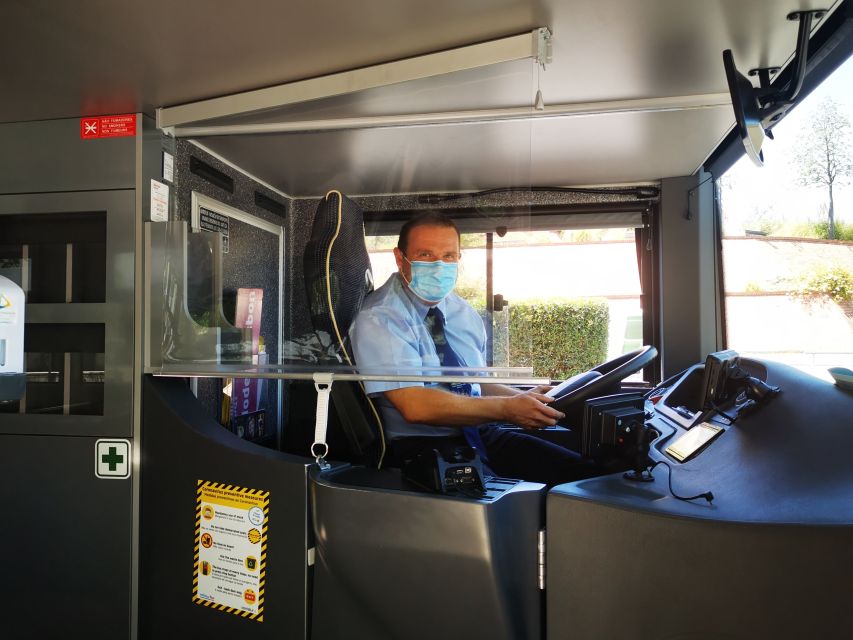
The Belém route is the natural first choice for most people. It links central Lisbon with the city’s grandest riverside monuments.
From Restauradores, the bus passes Rossio Square and heads toward Marquês de Pombal and Avenida António Augusto de Aguiar. You can also see El Corte Inglés, Parque Eduardo VII, Amoreiras Shopping, and the Basílica da Estrela before the route turns toward the river.
These early stops show how Lisbon changes from historic center to modern commercial districts and leafy public spaces. Parque Eduardo VII is a good place to get a sense of the city’s scale, while Estrela gives you access to one of Lisbon’s notable basilicas and a calmer part of town.
The route then reaches Pilar 7 and the Coach Museum in Belém. The Coach Museum is an appealing stop if you like royal transport and historic vehicles, while Pilar 7 offers a different sort of city view. Entrance fees are not included, so plan to pay separately if you go inside any museum or monument.
Jerónimos Monastery
Jerónimos Monastery is one of the key stops on the entire ticket. Its ornate stonework reflects Portugal’s maritime age, and the building is one of Belém’s essential sights.
Get off here if you want to explore at a slower pace. The bus gives you an efficient way to reach the monument, but it cannot replace time inside the cloisters and church. Since entry is not included, check opening arrangements and budget separately for admission.
More Hop-On Hop-Off Bus Tours in Lisbon:
- Lisbon: Boat Tour Ticket and Hop-on Hop-off 48-Hour Bus.
★ 4.1 · 1,252 reviews - Lisbon: City Sightseeing Hop-On Hop-Off Bus Tour
★ 3.8 · 1,220 reviews - From/To Lisbon: Sintra Hop-on Hop-off Tickets + Audio Guide
★ 3.7 · 119 reviews - Lisbon: Sightseeing Boat Tour with Hop-On Hop-Off Option
★ 3.3 · 58 reviews
Belém Tower and the Discoveries monument
The route continues to Belém Tower, one of Lisbon’s most recognizable buildings. Set beside the river, it is compact but visually striking, and the stop is useful for photographs even if you choose not to enter.
Nearby, the Monument to the Discoveries points toward Portugal’s seafaring past. The two stops work well together, but do not assume you can cover both quickly if queues or crowds are heavy.
After that come MAAT, the Docas Cruise Terminal, and Jardim da Estrela. MAAT suits visitors interested in modern art, architecture, and technology. The docks offer restaurants and river views, while Jardim da Estrela gives you a pleasant break from monuments and traffic.
The full route ends back at Restauradores. If you stay aboard for the whole circuit, allow enough time for traffic and stops. If your time is limited, choose one or two Belém sights rather than trying to force in every stop.
The Modern Lisbon route and its wide contrast

The Modern Lisbon route shows a different side of the city. It begins at Restauradores and passes Rossio and Avenida da Liberdade before heading toward the cruise terminal and the eastern districts.
The route is especially useful if you want to see beyond the classic center. It reaches the Museu do Azulejo, the Oceanarium, Vasco da Gama Shopping, the Lisbon Exhibition and Congress Center, and the Vasco da Gama Tower and Myriad Hotel.
The Tile Museum
The Museu do Azulejo is one of the most worthwhile stops for understanding Portugal’s famous painted tiles. The museum is not in the tight central core, so the bus makes access easier than arranging a separate trip.
The commentary can help you identify what you are seeing, though it is not a live guide. Some audio devices have been reported as unreliable, and the explanations can be basic in places. Bring patience, and check that your headset is working when you board.
The Oceanarium and Parque das Nações
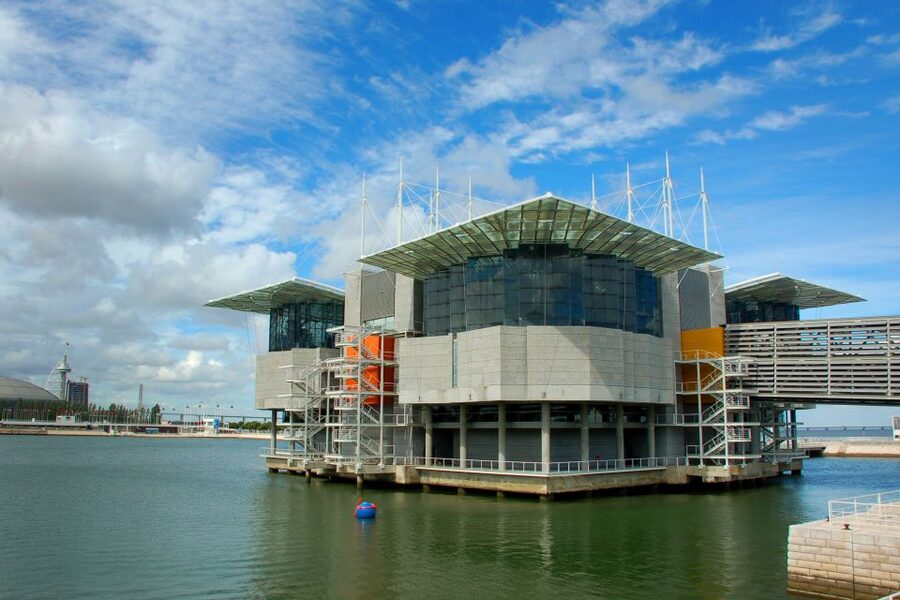
The Oceanarium is a major family attraction and one of the route’s strongest practical stops. Nearby Parque das Nações feels very different from Baixa and Alfama, with modern buildings, broad public spaces, and riverfront development.
Vasco da Gama Shopping and the exhibition center add useful options for lunch, shopping, or a break from sightseeing. The Vasco da Gama Tower marks the eastern end of the route and gives you a clear sense of how far Lisbon extends beyond the old center.
This route is less concentrated than Belém. At some stops, you may spend more time riding between points than looking at famous monuments. That is not a flaw if your aim is to understand the city’s modern side, but it can feel slow if you have only one day.
The Hills Tram through Lisbon’s oldest quarters

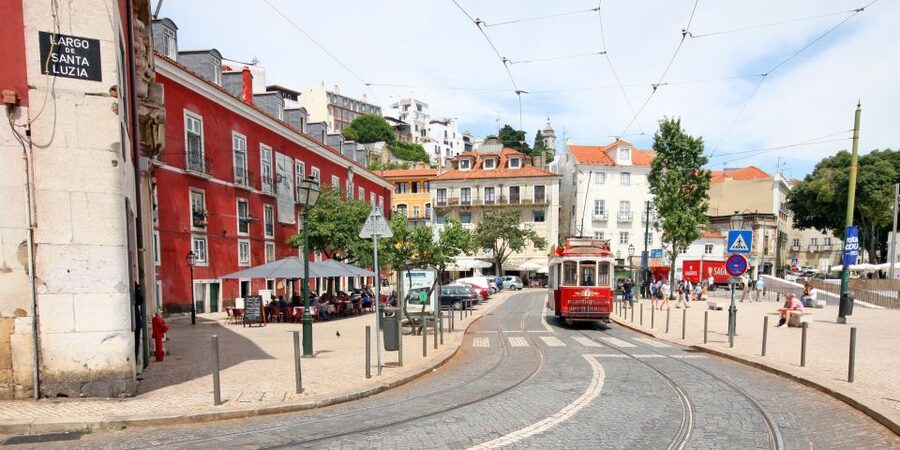
The historic tram is the most distinctive part of the experience. It begins and ends at Praça do Comércio, following a continuous route with no hop-on, hop-off stops.
That detail is important. You can ride past the sights, but you cannot step off at Portas do Sol, the Cathedral, Graça, São Vicente, the National Pantheon, or Martim Moniz during this dedicated tour.
Still, the route gives you a close look at Lisbon’s hillier neighborhoods. The tram passes through Alfama, Mouraria, and Baixa, where narrow streets, tiled houses, churches, and steep climbs make a bus feel less suitable.
The ride itself is part of the attraction. The driver may explain how the tram works, including the mechanics of changing cable lines. That hands-on detail adds something the recorded commentary cannot provide.
Do not expect a quiet museum piece. Lisbon’s old streets are tight, and the tram shares them with daily traffic. That is exactly why the ride feels connected to the city rather than sealed off from it.
Use the Hills Tram early if it is a priority. It runs less often than the buses, and the final departure is around 5:05 p.m. If you want to explore Alfama properly, use the tram as an introduction, then return by public transport or on foot to spend more time at the viewpoints and historic sites.
Audio guides, staff, and the practical tradeoffs
The audio guide is available in 13 languages, including English, Spanish, Chinese, Dutch, French, German, Italian, Japanese, Portuguese, and Russian. It is included on the Belém, Modern Lisbon, and Hills Tramcar Tours.
The commentary gives useful background on Lisbon’s squares, avenues, monuments, and neighborhoods. It is particularly helpful on the first ride, when you are still working out how the city fits together.
The quality is not perfectly even. Some sections are basic, and interesting buildings can pass before an explanation begins. The music has also been criticized as dated or poorly matched to the subject. Live narration would add warmth, but the recorded guide lets you choose your language and listen at your own pace.
Staff can make a difference, especially when you need to identify the correct route or boarding point. The buses are easy to spot, and the route signs help, but ask before boarding if you are unsure. A wrong bus can cost you time because the two services cover very different parts of Lisbon.
The fleet has been praised for being clean and well maintained. That matters on a long loop, particularly if you are comparing the service with ordinary city transport.
How to get the best value from two days

I would use the ticket in three stages.
On the first morning, ride the Belém route far enough to understand the central-to-riverside connection, then get off at Jerónimos Monastery or Belém Tower. Choose one major interior visit and leave time for the nearby monuments.
Later that day, take the Hills Tram from Praça do Comércio. Since it does not stop, treat this as a scenic orientation ride. Afterward, return to Alfama or Mouraria using the included public tram access if you want to walk the streets properly.
On the second day, take the Modern Lisbon route. Stop at the Tile Museum or Oceanarium, depending on your interests. You can stay aboard for the full route first, but remember that this may use a large part of the day.
Do not try to complete every museum and monument. The ticket works best when you use it to identify priorities, then return to one or two places for a proper visit.
The pass also offers discounts at selected museums, restaurants, and bars. Check the current discount details when you collect or activate the ticket, since the practical value depends on which places you plan to visit.
Free entry to the Carris Museum is included when you show a valid ticket. That is a worthwhile extra for anyone interested in Lisbon’s tram system and transport history.
Who should book this Lisbon pass?
I recommend it for a first visit, a short stay, or anyone who wants a broad view without renting a car. It is also helpful if steep hills are a concern, since the buses and public tram access reduce the amount of uphill walking.
Families may appreciate the easy sightseeing format, especially with the Oceanarium and Belém route. The audio options also make it suitable for mixed-language groups.
It is less suited to someone who prefers local buses, long walks, and spontaneous wandering. The sightseeing buses follow fixed loops, departures end in the late afternoon, and traffic can stretch the journey. If you want detailed guiding at each monument, this is not a substitute for a dedicated walking tour.
At $44, the pass becomes a fair deal when you use several routes, make use of the public tram access, and take advantage of discounts. It is harder to justify if you only ride one bus loop and the tram without getting off to explore.
Should you book it?
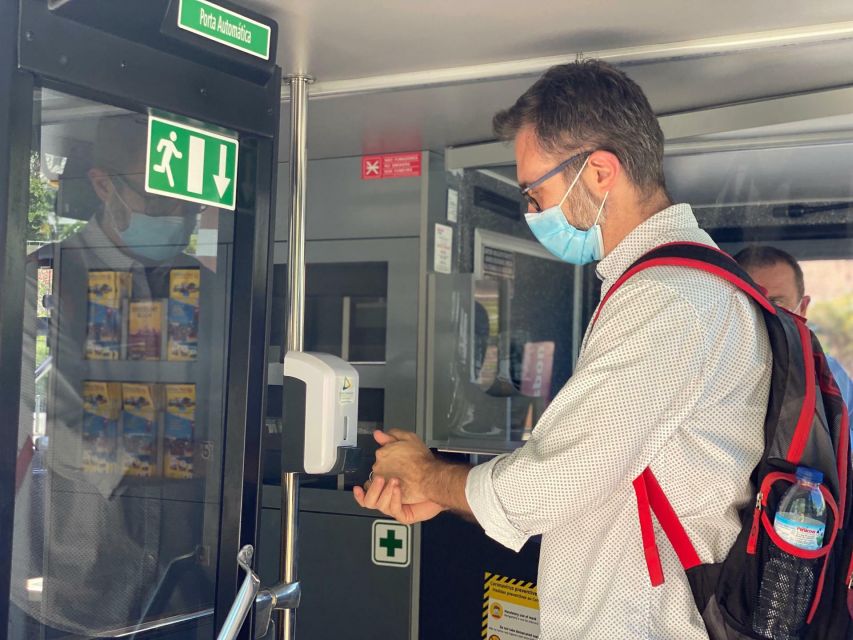
Book this tour if you want an efficient first look at Lisbon, especially over two days. The Belém route and Hills tram give you the strongest mix of major sights and old-city atmosphere, while the Modern Lisbon route fills in the eastern districts many people miss.
Plan around the schedules, confirm the route color before boarding, and leave room for traffic. If you do that, the ticket gives you a practical overview and a useful way to decide where Lisbon deserves more of your time.
FAQ
How long is the ticket valid?
The ticket is valid for 48 hours.
Which tours are included?
You get the Belém Lisbon Hop-on Hop-off Bus, the Modern Lisbon Hop-on Hop-off Bus, and the Hills Tramcar Tour.
Where do the bus tours begin?
Both bus tours begin at Restauradores Square, near the Eden Theatre.
Where does the Hills Tramcar Tour begin?
The Hills Tramcar Tour begins at Praça do Comércio, close to the arch.
Does the historic tram stop at Alfama and Lisbon Cathedral?
No. The Hills Tramcar Tour passes Alfama, Portas do Sol, Lisbon Cathedral, Graça, São Vicente, the Pantheon, and Martim Moniz, but it does not have stops along the route.
Is an audio guide included?
Yes. Audio commentary is included on the Belém, Modern Lisbon, and Hills Tramcar Tours in 13 languages.
Are museum and monument entrance fees included?
No. Entry fees for museums and monuments are not included, although the ticket provides free entry to the Carris Museum when you show a valid ticket.
Just added around Lisbon
- Lisbon: Tuk Tuk Hop-On Hop-Off Tour★ 5.0 · 3 reviews
- Lisbon: National Coach Museum Entry Ticket★ 4.0 · 8 reviews
- Lisbon: Belem, Jeronimos Monastery, and Coach Museum Tour★ 4.8 · 478 reviews
- Lisbon: Sightseeing Boat Tour with Hop-On Hop-Off Option★ 3.3 · 58 reviews
- Lisbon: National Coach Museum Entry Ticket and Audio Guide★ 4.5 · 49 reviews
- Hop on Hop Off Bus with Oceanario Ticket★ 4.4 · 33 reviews
- From/To Lisbon: Sintra Hop-on Hop-off Tickets + Audio Guide★ 3.7 · 119 reviews
- Lisbon: City Sightseeing Hop-On Hop-Off Bus Tour★ 3.8 · 1,220 reviews
Lisbon Bus Tours, compared.



72/96-Hour Hop-On Hop-Off Bus, Tram & Boat Ticket
Read our review →
MiniBus Sintra, Pena, Regaleira, Cap Roca Tour
Read our review →
Boat Tour Ticket and Hop-on Hop-off 48-Hour Bus.
Read our review →

Belem, Jeronimos Monastery, and Coach Museum Tour
Read our review →
From/To Lisbon: Sintra Hop-on Hop-off Tickets + Audio Guide
Read our review →Browse the lists this tour appears in