
REVIEW · VIETNAM
Hue: City Sightseeing Hop-On Hop-Off Bus Tour
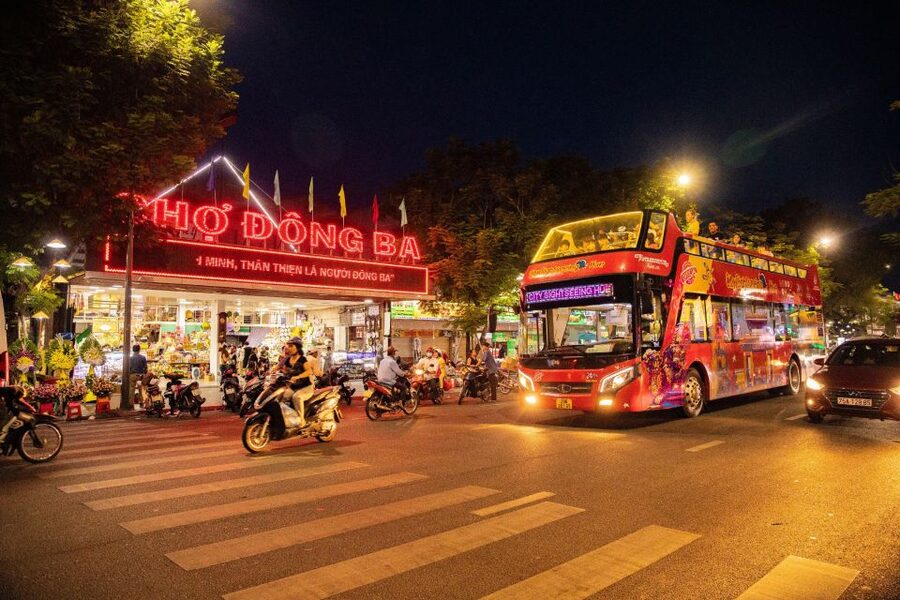
Hue’s red sightseeing buses link the city’s imperial core with its royal tombs, pagodas, market, gardens, and train station. The best feature is the freedom to build your own day, perhaps pairing Dong Ba Market with the Imperial Citadel, then saving Tu Duc Tomb for a quieter afternoon.
I like the nine-language audio guide, which gives you useful background while you ride, and I like the flexibility of a one or two-day ticket. The main concern is reliability: buses run every 40 minutes, and recent service has included missed departures, faulty commentary, and waits that can eat into a short visit.
Key points to know before you book
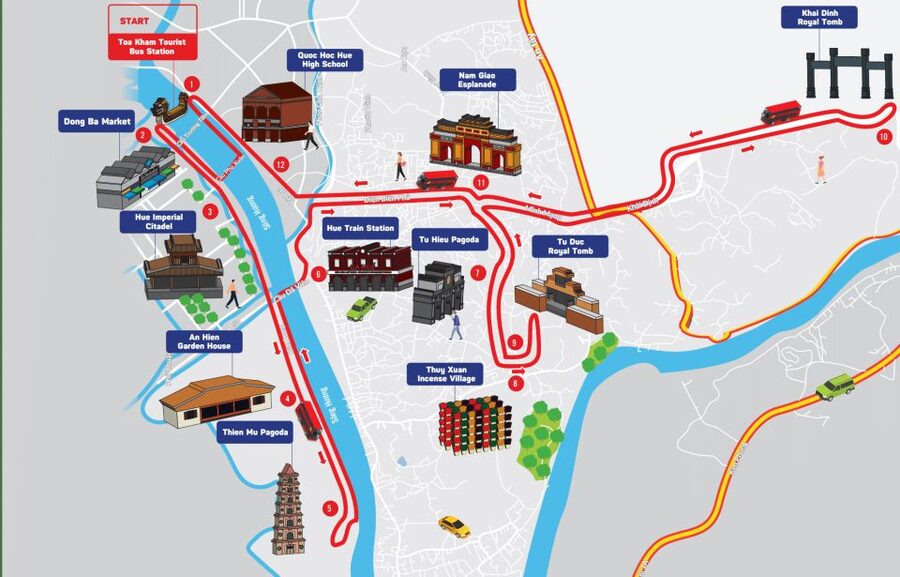
- The 90-minute circuit links 12 useful stops, from Toa Kham Boat Wharf to Khai Dinh Tomb and Quoc Hoc Hue.
- The Imperial Citadel and Dong Ba Market make the strongest central pairing, especially if you have only one day.
- Tu Duc and Khai Dinh Tombs require more time, so do not treat every stop as a quick photo break.
- The audio guide is available in nine languages, but it has not worked perfectly on every bus.
- A full circuit takes about 90 minutes, with buses scheduled every 40 minutes from 8am to 4pm.
- The $19 price is fair for transport and orientation, but weaker value if you expect guaranteed punctual service.
What this Hue bus tour is really good for
I see this as a sightseeing and orientation service rather than a fully guided tour. You ride past key parts of Hue, listen to commentary, and step off when a place deserves your time.
That distinction matters. The ticket does not include entry to the attractions, food, or drinks. You are paying for transport, the audio guide, WiFi, and the ability to create a flexible route over one or two days.
For a first day in Hue, this can help you understand the city’s layout. The route reaches places that are spread well beyond the Citadel, including Tu Duc Tomb, Khai Dinh Tomb, Tu Hieu Pagoda, and Pilgrimage Village.
The service has a 3.7 rating from 63 reviews, which tells me to keep expectations measured. Some rides have been clean, comfortable, and useful, while other departures have been late or absent. I would not make this your only plan on the final few hours of a tightly scheduled visit.
More Hop-On Hop-Off Bus Tours in Vietnam
- Saigon: City Sightseeing Hop-On Hop-Off Bus Tour
★ 4.2 · 1,080 reviews - Hanoi: City Sightseeing Hop-On Hop-Off Bus Tour
★ 4.0 · 611 reviews - Hanoi: 24 Hour Hop on Hop off Bus Tour
★ 4.0 · 67 reviews
Starting at Toa Kham Boat Wharf
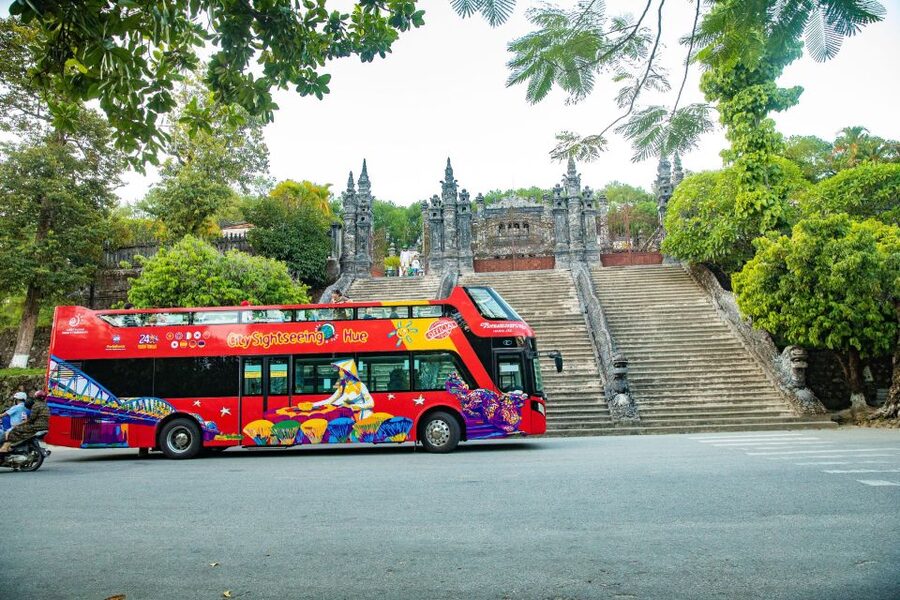
Stop 1 is Toa Kham Boat Wharf, and it is the natural place to begin if you want the complete circuit. The first bus departs at 8am, the last one leaves at 4pm, and the full loop takes about 90 minutes.
A full ride is useful before you start hopping off. You get a broad view of how Hue’s riverside areas, central sights, southern pagodas, and royal tombs fit together.
The 40-minute gap between buses is the detail I would plan around most carefully. Missing a bus can turn a quick stop into a long wait, so check the time as soon as you get off and keep your next departure in mind.
The exact meeting point can vary with the option you book. Mobile and printed vouchers are accepted, and you can redeem them at any stop along the route. Bring your passport or identity card, as required for the activity.
Dong Ba Market for food and everyday Hue
Stop 2 brings you to Dong Ba Market, one of the most useful stops for seeing daily commerce rather than grand monuments. The market sells fresh produce, aromatic spices, traditional handicrafts, and souvenirs.
I would use this stop for lunch or an early snack. Banh Khoai, a sweet and crispy pancake, is specifically recommended here and gives you a local food experience without committing to a long restaurant meal.
Allow time to wander. The market is a maze of stalls, and it is easy to lose your sense of direction. That is part of the appeal, but it also means you should not plan to dash through in ten minutes and catch the next bus.
Dong Ba Market pairs well with the Imperial Citadel because both stops are central and give you two very different views of Hue. One shows royal power and formal architecture. The other shows shopping, food, household goods, and the practical rhythm of the city.
The Imperial Citadel and Hue’s royal center
Stop 3 is the main reason many people will consider this ticket. Hue Imperial Citadel is a UNESCO World Heritage Site, built as a royal city within the modern city.
The complex includes ancient gates, temples, palaces, and courtyards. I would give it the largest block of time in your itinerary, especially if you care about architecture or Vietnamese dynastic history.
The bus gets you near the sight, but your ticket does not include admission. Once inside, you will need to walk between the different sections, so this is not a quick hop-off photo stop.
The changing of the guard ceremony is listed as a highlight. If seeing it matters to you, ask for the timing when you board or arrive, because the bus schedule alone does not tell you when the ceremony takes place.
The Citadel can easily fill much of a morning. If you have only one day, combine it with Dong Ba Market, then choose one southern stop rather than trying to visit every tomb.
More Sightseeing Bus Tours in Vietnam
- Ho Chi Minh City: Panoramic City Bus Tour
★ 3.9 · 285 reviews - From Hue: Hoi An Guided Bus Tour with 4 Sightseeing Stops
★ 4.9 · 121 reviews - City Sightseeing Hanoi Hop-on-Hop-off Bus Tour
★ 3.0 · 53 reviews - Hanoi Exclusive Craft Beer Bus: Cultural Sightseeing Tour
★ 5.0 · 14 reviews
An Hien Garden House and Thien Mu Pagoda
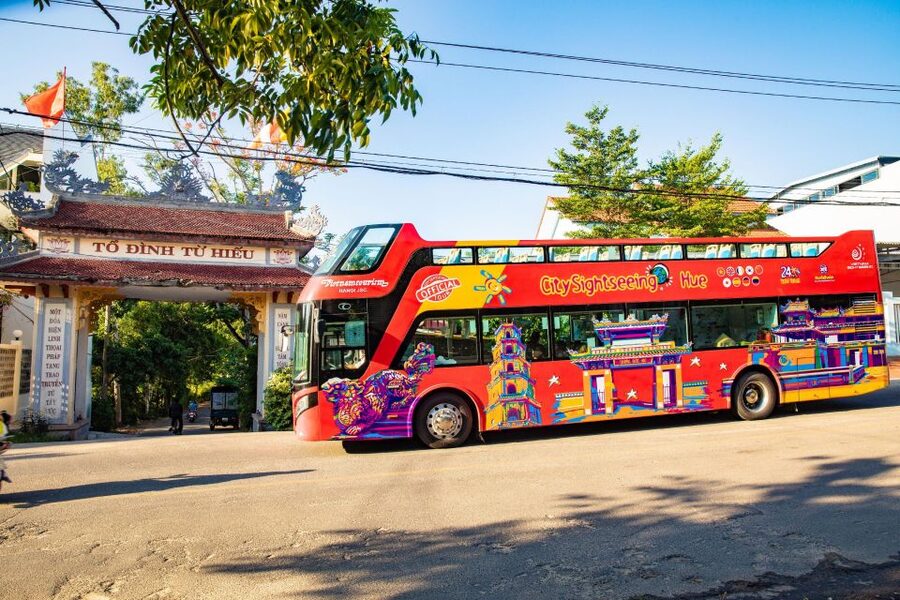
Stop 4 is An Hien Garden House, followed by Stop 5 at Thien Mu Pagoda. These stops shift the focus away from imperial buildings and toward gardens, religious sites, and Hue’s quieter cultural side.
An Hien gives you a chance to see a traditional garden house setting. The supplied details do not specify how long to spend there or what admission costs, so I would confirm local opening arrangements before making it the central part of your day.
Thien Mu Pagoda is one of the route’s major cultural stops. It is a better choice for you if you want a place with a spiritual setting rather than another palace or tomb.
The route makes these sites easier to reach than arranging separate transport for each one. Still, the 40-minute service interval means you should check the next bus before walking away from the stop.
Hue Train Station and the southern pagodas

Stop 6 is Hue Train Station, followed by Tu Hieu Pagoda at Stop 7. The train station may be useful for people connecting onward, but it is not likely to be a major sightseeing stop for most visitors.
Tu Hieu Pagoda offers another religious and reflective pause. It works well for a second day, when you can slow down and give each place more attention rather than racing between monuments.
Stop 8 is Pilgrimage Village. The name signals a resort or retreat setting, but the supplied information does not detail admission, facilities, or exactly how long a visit takes. I would treat it as an optional stop unless you already have a particular reason to go there.
The southern part of the route is where the two-day ticket becomes more useful. You can visit the Citadel and market on day one, then explore pagodas, gardens, and tombs on day two without trying to compress the whole city into one circuit.
Tu Duc Tomb and the story of imperial excess

Stop 9 is Tu Duc Tomb, where Emperor Tu Duc and his empress are buried. This stop is presented as a place to learn about his life of luxury and extravagance.
I would not schedule Tu Duc Tomb between two tightly timed central stops. The site deserves a proper visit, and the ride out adds time. If you want to understand Hue’s royal past beyond the Citadel, this is one of the stronger choices on the route.
The tomb also offers a different experience from the Citadel. The Citadel is a large ceremonial and political complex. Tu Duc Tomb is tied more closely to one ruler and his personal taste, final resting place, and lifestyle.
Since entrance fees are not included, budget for attraction tickets separately. The $19 bus fare covers access to the route, not the full cost of sightseeing.
Khai Dinh Tomb and the Nam Giao Esplanade

Stop 10 is Khai Dinh Tomb, and Stop 11 is Nam Giao Esplanade. Together, these stops extend the route into some of the most historically important areas outside the city center.
Khai Dinh Tomb is the stop I would reserve for anyone who wants to compare different royal monuments. It gives you another perspective on the Nguyen emperors and their funerary architecture.
Nam Giao Esplanade adds a ceremonial dimension. The information available does not give a detailed description of the site or its opening hours, so check conditions locally before relying on it as your main visit.
These farther stops make the bus useful as a transport link, but they also expose its main weakness. With buses only every 40 minutes, a delay can affect the rest of your day. Keep your itinerary loose and avoid booking a fixed activity immediately after the final planned stop.
Quoc Hoc Hue and the end of the route
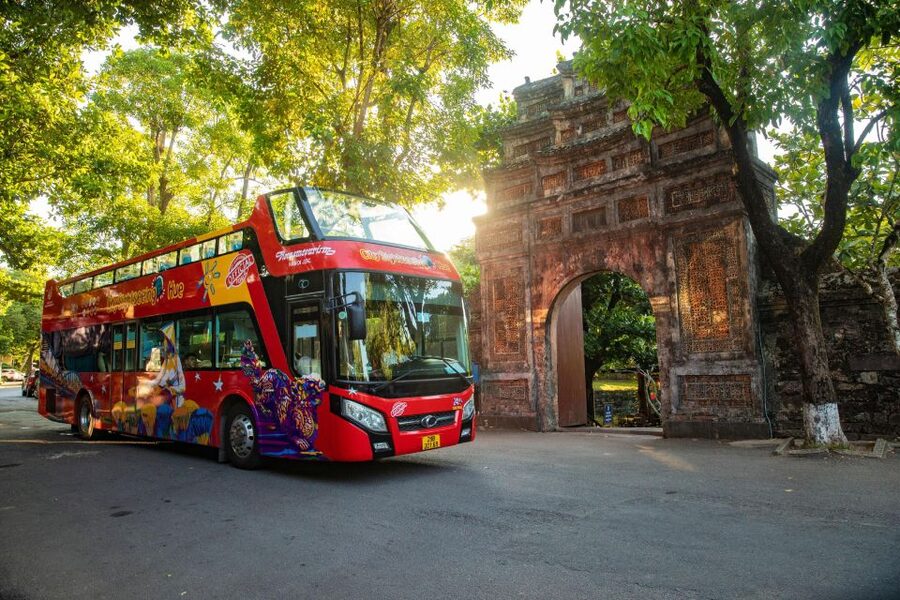
Stop 12 is Quoc Hoc Hue, completing the listed route. This gives you another central reference point and may be convenient if you are staying near the southern side of town.
At this stage, I would use the bus less as a checklist and more as a way to return near your accommodation or continue toward the riverfront. You do not need to leave the bus at every stop just because the ticket allows it.
The route is most useful when you select three or four places that match your interests. Trying to visit all 12 stops in one day would leave little time inside the actual attractions, especially the Citadel and royal tombs.
Audio commentary, WiFi, and comfort on board

The audio guide is offered in English, Vietnamese, French, Chinese, Korean, Japanese, Spanish, Russian, and German. That is a strong feature for an independent visit because you get context without joining a fixed walking group.
The commentary has not been perfectly consistent. On one recent ride, it cut out repeatedly, and moving to different seats helped only partly. The attendant worked to restore it, but some information was still missed.
I would bring your own headphones if the system allows them, although the supplied information does not confirm the connection type. At minimum, sit where you can hear clearly and tell the attendant promptly if the commentary fails.
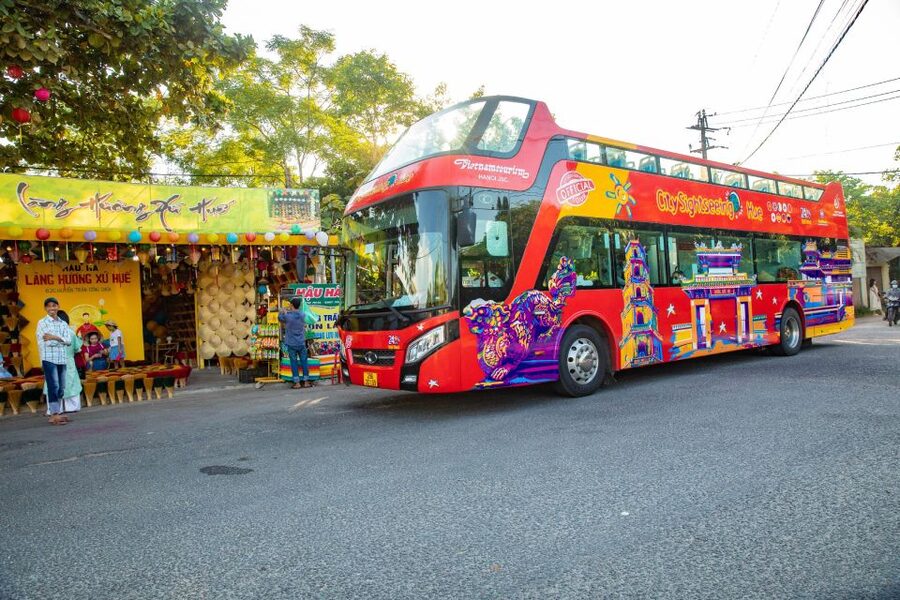
The bus itself has generally been clean and comfortable. Rain can change the experience, since you may need to sit downstairs instead of using the upper deck. On wet days, the views are less useful, and the audio becomes more important.
Free WiFi is included. I would treat it as a handy extra rather than the reason to buy the ticket, since the core value is the route and the included commentary.
The buses are wheelchair accessible. Pets and smoking are not allowed.
Is $19 good value for one or two days?
At $19 per person, the ticket is reasonably priced if you use it as transport to several distant sights. A two-day pass gives you more time to spread out the Citadel, market, pagodas, and tombs.
A one-day ticket makes sense if you mainly want the Citadel, Dong Ba Market, and one royal tomb. It can also work as a quick city overview before you decide where to return on foot or by another form of transport.
The value falls if you spend most of the day waiting. Buses are scheduled every 40 minutes, and recent service has included departures that did not arrive. That is a serious concern for anyone with a train, flight, or fixed evening plan.
I would buy it for flexibility, not precision. If you need guaranteed departure times, private transport may be a safer choice, though the bus is cheaper and gives you audio commentary across the route.
The ticket can be used on any day within 12 months of the selected travel date at checkout. Free cancellation is available up to 24 hours before the activity, and you can reserve now and pay later, which helps if your Hue schedule is still moving.
How I would plan the day
For a strong one-day plan, I would start early at Toa Kham Boat Wharf, ride or continue to the Imperial Citadel, and spend the morning there. Then I would go to Dong Ba Market for food and shopping.
After lunch, I would choose either Tu Duc Tomb or Thien Mu Pagoda. I would not attempt every pagoda, garden, tomb, and ceremonial site in the same day.
For two days, I would put the Citadel and Dong Ba Market on day one. On day two, I would focus on Tu Duc Tomb, Khai Dinh Tomb, and one or two of the southern stops, depending on bus timing and your energy.
Keep your voucher accessible. Both paper and mobile versions work, and vouchers can be redeemed at any stop. I would also carry identification and avoid planning the final bus of the day as your only way back to an important appointment.
Should you book the Hue hop-on hop-off bus?
I would book this tour if you want an inexpensive overview of Hue, prefer independent sightseeing, and plan to visit several places spread around the city. It is especially useful for a first visit, a two-day stay, or anyone who wants audio in a language other than Vietnamese.
I would skip it if you have only a few hours, need exact departure times, or want a fully guided experience with attraction admissions included. The bus can save you transport effort, but the 40-minute frequency and uneven service mean you need patience and a loose schedule.
My practical choice would be the two-day ticket for a relaxed visit. If you choose one day, concentrate on the Imperial Citadel, Dong Ba Market, and one royal tomb. That gives you the best mix of Hue’s courtly past, daily life, and wider historic setting without turning the day into a race.
FAQ
How long does the Hue hop-on hop-off tour last?
The full bus circuit takes about 90 minutes. You can buy a ticket valid for one or two days and get on and off along the route.
How often does the bus run?
Buses are scheduled every 40 minutes.
What time does the first bus leave?
The first tour departs from Stop 1, Toa Kham Boat Wharf, at 8am.
What time does the last bus leave?
The last tour departs from Stop 1 at 4pm.
Which languages are available for the audio guide?
The audio guide is available in English, Vietnamese, French, Chinese, Korean, Japanese, Spanish, Russian, and German.
Are attraction entry fees included?
No. Entry to attractions, food, and drinks are not included in the ticket price.
Can I use a mobile voucher?
Yes. Both mobile and printed paper vouchers are accepted, and they can be redeemed at any stop along the route.
Is the bus wheelchair accessible?
Yes, the bus is wheelchair accessible. Pets and smoking are not allowed.
Just added around Vietnam
- 2 Days 1 night Sapa Tour from Hanoi by Limousine/Sleeper bus★ 4.5 · 6 reviews
- Halong Bay Luxury Cruise Day trip: Buffet lunch, limousine bus★ 5.0 · 2 reviews
- Hoa Lu – Tam Coc Luxury Small group 1D: Limousine bus, biking, boat trip, Lunch★ 5.0 · 6 reviews
- Halong Bay Luxury cruise Day trip: Buffet Lunch, Limousine bus★ 5.0 · 25 reviews
- Halong bay Luxury Cruise Day trip: Buffet lunch & Limousine bus★ 5.0 · 3 reviews
- Limousine Bus Transportation from Hanoi to Sapa★ 5.0 · 2 reviews
- Halong Bay 2 Day Luxury Cruise 6 Star★ 5.0 · 53 reviews
- From Hanoi- Halong Bay 1 Day Save Cost With Limousine Bus Option★ 5.0 · 8 reviews
Vietnam Bus Tours, compared.

Ninh Binh Day Trip: Bai Dinh-Trang An-Mua Cave, Buffet, Boat, Bus
Read our review →
Saigon: City Sightseeing Hop-On Hop-Off Bus Tour
Read our review →

2-Day Sa Pa Ethnic Homestay Tour & Trek with Limousine Bus
Read our review →
Halong bay 5star Cruise Day Trip: Buffet lunch & Limousine bus
Read our review →
Halong Bay Day Tour 6Hour Deluxe Cruise Limousine Bus Small Group
Read our review →

Browse the lists this tour appears in