
REVIEW · HISTORICAL TOURS
Heritage tour of Phnom Penh in electric bus
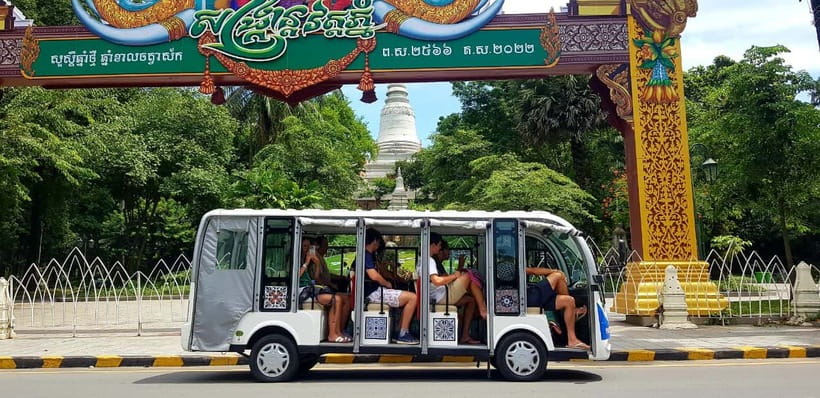
Phnom Penh’s past is easier to grasp from an electric bus than from a hot tuk-tuk ride across town. In 2.5 hours, you’ll see 22 important places, step inside three unusual sites, and use tablet videos to view buildings that are closed to the public. It is a useful first look at a city that can otherwise feel scattered and hard to read.
I like the mix of short walks and relaxed bus travel, especially in Cambodia’s heat. I also like the tablet, which adds old photographs, films, and virtual tours rather than leaving you to stare at a facade and guess what happened there. The main drawback is that this is an overview, not a series of long visits, and hotel pickup, food, and tuk-tuk transport are not included.
Key points at a glance

- Nineteen stops cover 22 major places, giving you a broad introduction to Phnom Penh in a short time.
- The electric bus keeps the ride comfortable, with water supplied and less exposure to traffic and heat than an open tuk-tuk.
- Tablet videos show interiors and old Phnom Penh scenes that you cannot always see in person.
- Three unusual stops include an Hokkien temple, the National Library, and the Royal University of Fine Arts.
- The tour ends near Street 240, close to the Royal Palace and riverside, so you can continue exploring on foot.
- Audio is available in 10 languages, while the live guide speaks English or French.
A city story told from fishing village to capital
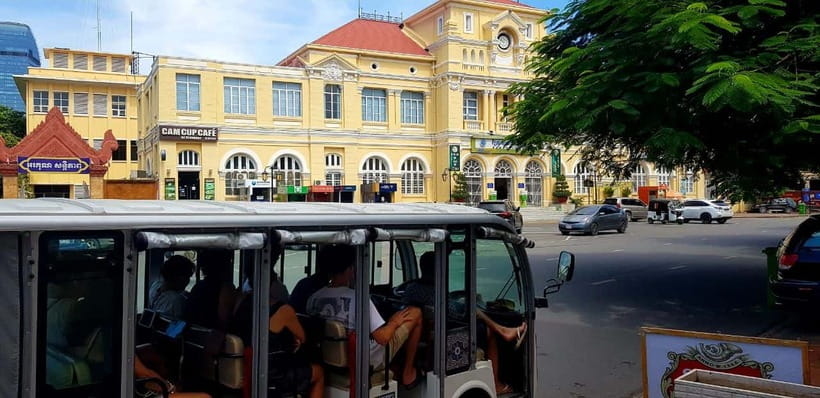
The best feature of this tour is its clear sense of change. Phnom Penh did not begin as the planned capital you see today. The tour follows its movement from a fishing village to a major city, then explains how French colonial planning reshaped its streets, buildings, institutions, and social life.
That broad story matters because Phnom Penh can seem like a collection of unrelated sights. One block may show a royal building, the next a colonial-era institution, and another a modern shopfront covering an older structure. The tour helps connect those pieces.
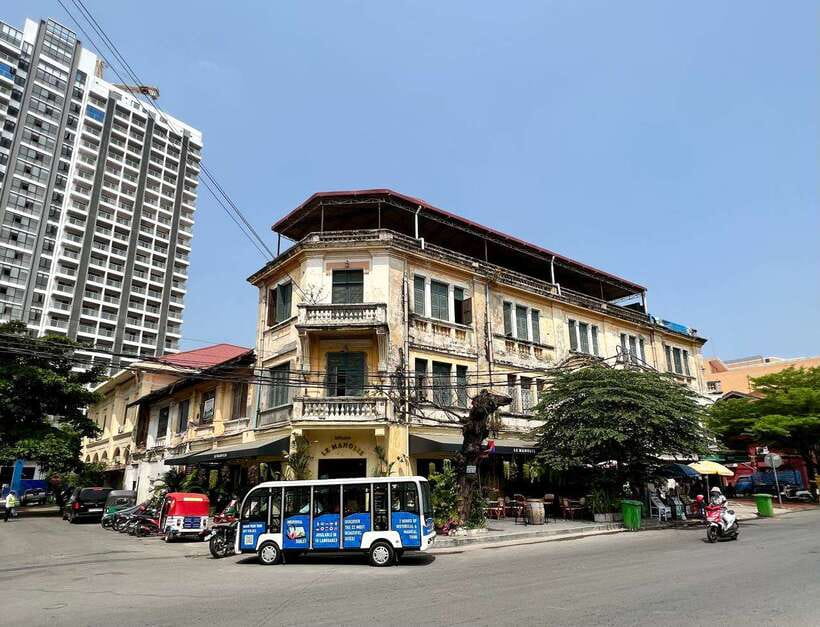
You’ll hear about the French protectorate period, the first urban planning based on French models, the popularity of Art Deco design, and the lives of wealthy residents in the early 20th century. The presentation also addresses Cambodia’s royal family and the much darker years of Khmer Rouge rule.
I appreciate that range. A heritage tour that discussed only elegant facades would give you a thin picture of Phnom Penh. Here, the city’s beauty and pain are presented as parts of the same story.
More History Tours in the world:
- Prague: Historic City Center Bus Tour with Top Sights
★ 4.4 · 2,360 reviews - 2-Hour Gettysburg Battlefield Guided History Bus Tour with a National Park Guide
★ 4.5 · 2,201 reviews - Top Rated Brooklyn Half-Day Food, History & Culture Tour via bus
★ 5.0 · 758 reviews
Nineteen stops, 22 places, and a useful city overview
The route is organized around 19 stops, with 22 major sites included across the journey. You should think of the number as a sign of the tour’s scope rather than a promise of 22 full site visits. Some places are seen from the bus, some are explained through the tablet, and some give you time to get out and look around.
That format works well on a first day in Phnom Penh. You can mark places that deserve a longer return visit, instead of spending your whole morning inside one building and missing the shape of the city around it.
The tour covers the institutions and buildings that helped define the capital under French influence. You’ll encounter architecture linked to government, education, culture, religion, and elite life. The tablet adds context with vintage photographs, letting you compare older views with what you see today.
I find this especially useful for architecture. Phnom Penh’s older buildings can be worn, repainted, partly hidden, or surrounded by newer construction. An archival image can show the original lines and purpose far better than a quick glance from the street.
The tablet is more than an audio guide
Each seat or participant receives a tablet and headset, along with access to audio and video material in 10 languages: English, French, Chinese, German, Italian, Korean, Japanese, Spanish, Khmer, and Russian. The live guide speaks English or French.
The tablet presents films, historic photographs, and short explanations at the relevant points. This gives you two layers of information. The guide can explain what is happening around you, while the screen supplies background that may be difficult to show on the street.
The most useful feature is virtual access to selected interiors. Some buildings are not open to the public, but the videos let you see what lies beyond their doors. That does not replace a real visit, but it is much better than hearing a building named and then passing it without context.
You should also expect a little screen time. If you prefer a tour built entirely around live conversation, this may feel more structured and less spontaneous. If you like visual material and clear explanations, the tablet adds real value.
Three unusual places where you get off the bus
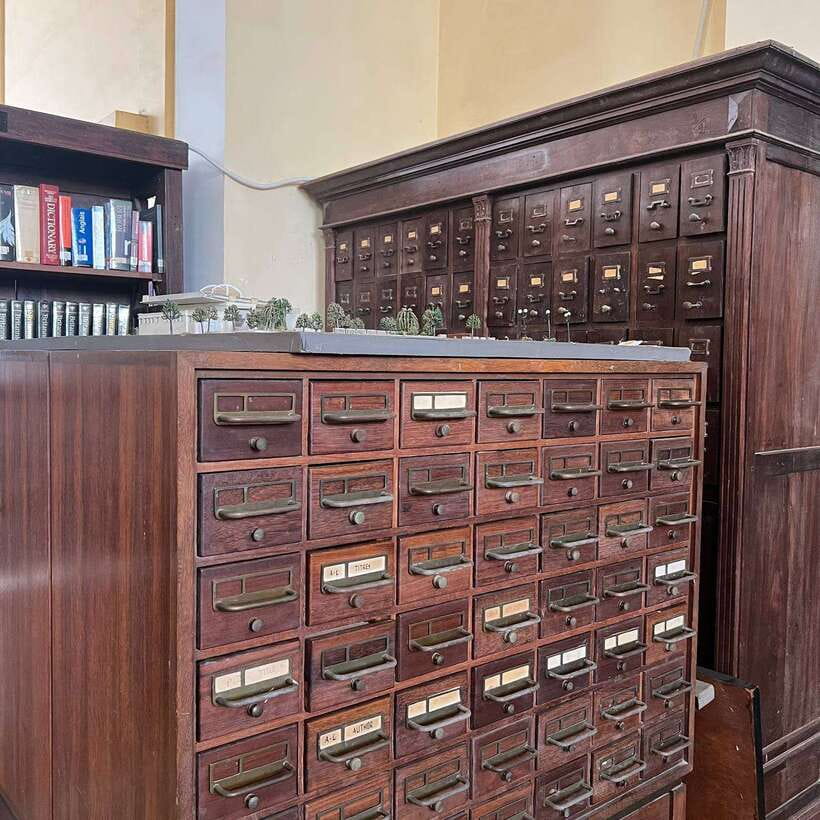
The tour includes walks into three less familiar places: an Hokkien temple, the National Library, and the Royal University of Fine Arts.
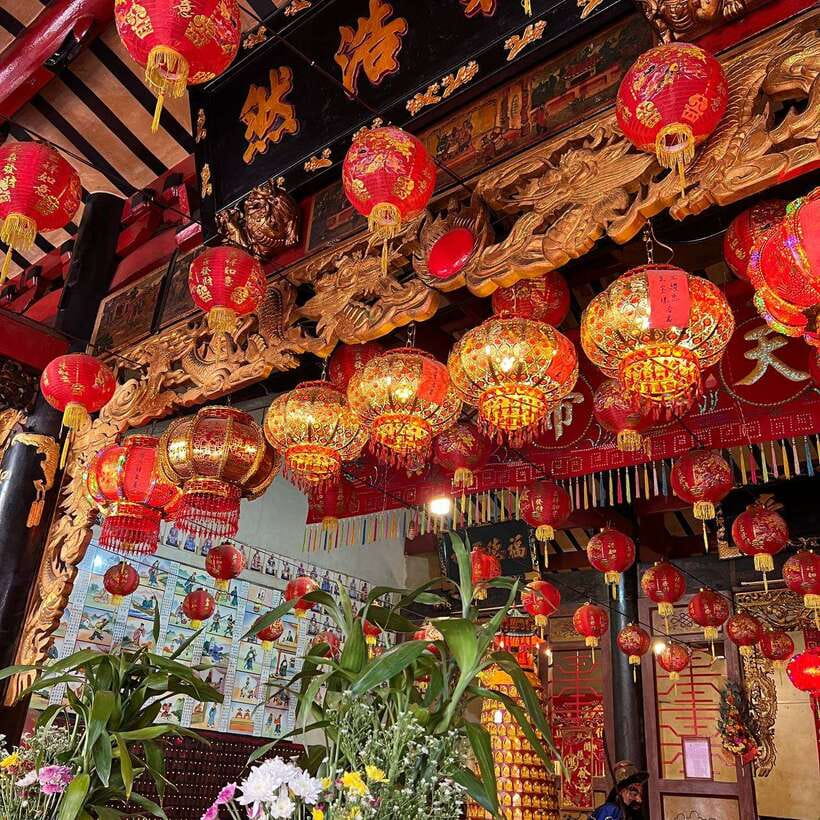
The Hokkien temple offers a look at the Chinese community’s place in Phnom Penh. It adds a religious and social layer that you could easily miss if you visited only royal and colonial monuments.
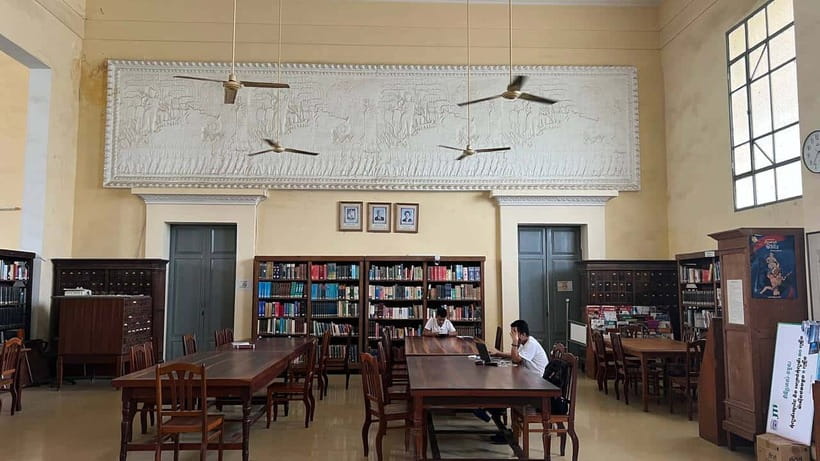
The National Library connects to the city’s educational and cultural development. Its presence on the route helps explain that Phnom Penh’s heritage is not limited to palaces and monuments. Libraries, schools, and institutions also show how the capital organized public life.
The Royal University of Fine Arts brings art and cultural training into the story. It is a fitting stop on a tour that discusses Art Deco design, French influence, and the development of Phnom Penh’s own artistic identity.
These visits are one of the reasons I would choose this tour over a simple driving circuit. Getting out gives the morning a change of pace, and the guide can add details that a recording alone might miss. The exact amount of time at each stop may vary, so do not expect a long, unhurried visit at every location.
A few more bus tours around the world worth a look
- Mt Fuji and Hakone 1-Day Bus Tour Return by Bullet Train
★ 5.0 · 26,383 reviews - Barcelona: 24 or 48-Hour Hop-On Hop-Off Bus Tour
★ 4.4 · 20,872 reviews - London: Warner Bros. Studio Harry Potter Tour & Branded Bus
★ 4.7 · 19,194 reviews - Rome: City Sightseeing Hop-on Hop-off Bus with Audioguide
★ 4.0 · 16,045 reviews
Royal power, colonial planning, and everyday life
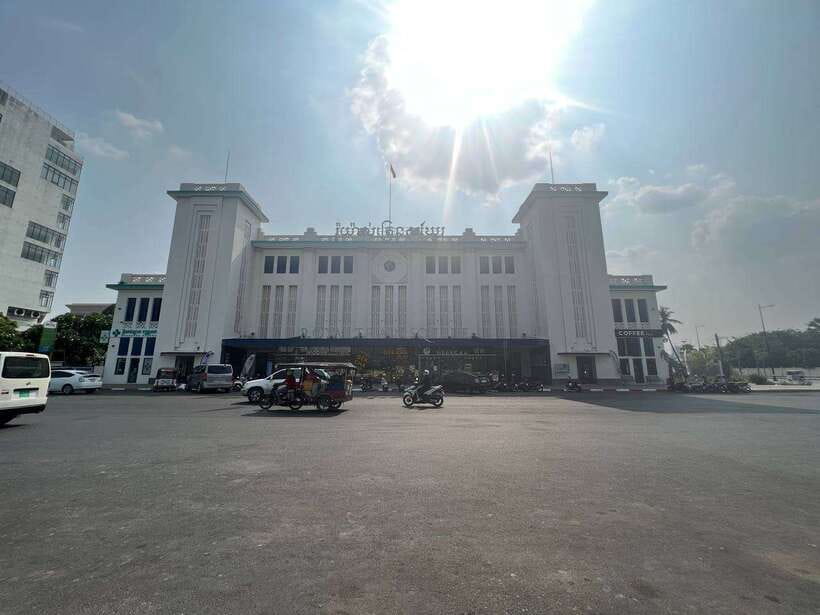
The route does not treat Phnom Penh as a museum piece. It looks at how the city worked and who shaped it.
You’ll learn about the royal family, the French protectorate, and the early 20th-century elite. Those subjects help explain why certain neighborhoods and public buildings took the form they did. The story is not just about dates. It is about power, class, taste, and the practical business of turning a settlement into a capital.
The discussion of social organization is especially helpful. A city’s history is not only found in grand buildings. It also appears in how institutions were arranged, how different communities lived and worked, and how the capital’s public identity developed.
The tour then turns to the Khmer Rouge period. This is a serious part of the experience, and it gives needed weight to the earlier architectural story. Phnom Penh’s past includes both cultural achievement and devastating political violence. Hearing both within one city tour gives you a more honest starting point for the rest of your stay.
If you want a dedicated examination of the Khmer Rouge years, you will need a separate visit to the city’s major memorial sites. This tour introduces the subject but cannot cover it in full during a 2.5-hour circuit.
Why the electric bus helps in Phnom Penh
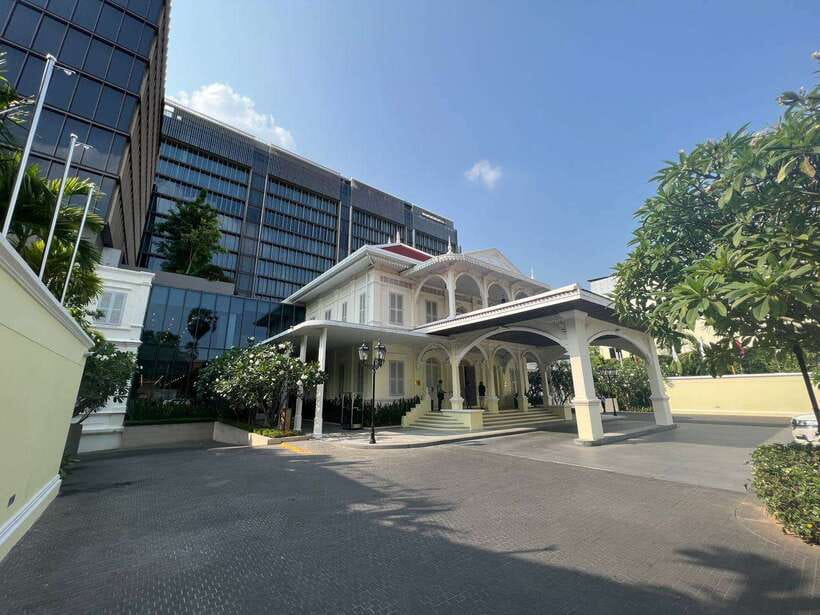
The electric bus is a practical choice for this route. Phnom Penh can be hot, and the tour includes many stops spread across the capital. A bus lets you cover more ground without spending the whole outing in direct sun or dealing with every turn of city traffic from a tuk-tuk.
A bottle of water is included. That sounds minor, but it is welcome on a warm morning with repeated short walks.
The ride also gives you a calmer way to watch the city change outside the window. You can shift between street views, historic photographs, and the guide’s explanation without having to manage directions yourself.
Still, this is not private transportation. A tuk-tuk is not included, and hotel pickup and drop-off are not part of the package. You need to make your own way to the starting point and arrange your onward transport after the finish.
That is not a serious problem if you are staying near central Phnom Penh, but it affects the total cost and planning. At $27 per person, the tour is good value for a structured city introduction, though you should add the cost of getting to and from the meeting point.
Ending near Street 240 and the Royal Palace

The route finishes on Street 240, near the Royal Palace and the riverside. This is a smart ending point because you are not left in an isolated part of the city after the tour.
You can continue on foot toward the palace area, explore nearby streets, or make your own way to the riverfront. The tour is therefore useful as a first half-day plan, especially if you are still deciding how to organize the rest of your Phnom Penh visit.
I would save the Royal Palace itself for after the tour if you want to see it properly. The heritage circuit gives you context and orientation, but it is not a substitute for spending time inside a major attraction at your own pace.
Street 240 also gives you a natural pause after the bus ride. You can stop for food or a drink on your own, though meals and drinks are not included in the tour.
What the $27 price gets you
At $27 per person, you are paying for more than a ride around town. The price includes the electric bus, live guidance, tablet and headset use, the 10-language audio system, video material, and water.
The strongest value comes from the combination of coverage and access. A private tuk-tuk could take you between many of the same areas, but you would need to arrange the route, find explanations for each site, and miss the tablet’s interior footage and historic images.
The tour also saves planning time. If you have just arrived and do not yet know which buildings matter, this circuit gives you a working map of the city. You can then return to the places that caught your attention.
The value is lower if you already know Phnom Penh well or want long visits at a small number of sites. In that case, a self-guided day may give you more freedom. But for a first introduction, the cost is reasonable, particularly if you make use of the tour’s final location and continue exploring afterward.
Who should book this tour?
I would recommend it to you if this is your first visit to Phnom Penh, if you want historical context before visiting major sights, or if heat and traffic make a long tuk-tuk ride unappealing.
It also suits you if you prefer visual explanations. The old photographs and virtual interiors give the story more shape than a standard spoken commentary.
French-speaking visitors should find the format especially useful, since the live guide can speak French and the audio system also supports French. English speakers have the same option, along with the other listed languages for the tablet and headset.
Families and mixed-interest groups may find the short stops easier than a long museum visit, though younger children may not stay engaged with every historical explanation. The tour is also a good fit for anyone who wants a gentle first morning rather than a packed day of formal sightseeing.
You may want to skip it if you dislike organized routes, prefer to spend an hour or more at each site, or already have a detailed Phnom Penh plan. The tour gives you a broad foundation, not complete access to every attraction.
Practical details before you go
The experience lasts 2.5 hours, so plan it as a half-day activity rather than a quick transfer. There are repeated stops and walks, even though much of the route is by bus.
The booking terms allow free cancellation up to 24 hours before departure, and you can reserve now and pay later. Check the available starting times before booking, since the schedule can affect how easily you fit the tour around palace visits or other plans.
The tour has received a five-star rating from 49 ratings, and 97 percent of its transport scores are perfect. More important than the number is the consistent praise for the clear explanations, the useful tablet, and the chance to leave the bus at several sites. One French-language booking described the outing as informative and restful despite the heat, which is a fair way to think about its main advantage.
Should you book the Phnom Penh Heritage Tour?
Book it if you want a well-organized introduction to Phnom Penh’s colonial buildings, royal connections, cultural institutions, and difficult modern past. The mix of electric bus travel, short walks, live explanation, and tablet-based films gives you more context than a basic sightseeing ride.
I would not use it as your only cultural experience in the city. Treat it as the orientation session that helps you choose what to visit next. At $27, it offers solid value for a first visit, especially if you appreciate old photographs, virtual interiors, and a guide who adds information at the stops.
FAQ
How long does the Phnom Penh Heritage Tour last?
The tour lasts 2.5 hours.
How much does the tour cost?
The listed price is $27 per person.
How many places does the tour cover?
The experience includes 19 stops and introduces 22 major places in Phnom Penh.
Which languages are available?
The audio guide is available in Cambodian, Chinese, English, French, German, Italian, Japanese, Korean, Russian, and Spanish. The live guide speaks English or French.
Is hotel pickup included?
No. Hotel pickup and drop-off are not included, and private tuk-tuk transportation is also not included.
Can I cancel the booking?
Yes. You can cancel up to 24 hours in advance for a full refund. You can also reserve now and pay later.
Just added around the world
- 2 Days 1 night Sapa Tour from Hanoi by Limousine/Sleeper bus★ 4.5 · 6 reviews
- Halong Bay Luxury Cruise Day trip: Buffet lunch, limousine bus★ 5.0 · 2 reviews
- Hoa Lu – Tam Coc Luxury Small group 1D: Limousine bus, biking, boat trip, Lunch★ 5.0 · 6 reviews
- Halong Bay Luxury cruise Day trip: Buffet Lunch, Limousine bus★ 5.0 · 25 reviews
- Halong bay Luxury Cruise Day trip: Buffet lunch & Limousine bus★ 5.0 · 3 reviews
- Limousine Bus Transportation from Hanoi to Sapa★ 5.0 · 2 reviews
- From Hanoi- Halong Bay 1 Day Save Cost With Limousine Bus Option★ 5.0 · 8 reviews
- Halong bay Luxur Cruise Day trip: Buffet lunch & Limousine bus★ 5.0 · 21 reviews
Historical Tours, compared.

Historic City Center Bus Tour with Top Sights
Read our review →
2-Hour Gettysburg Battlefield Guided History Bus Tour with a National Park Guide
Read our review →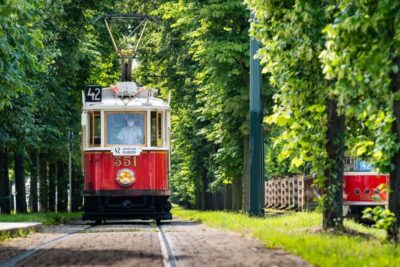
Hop-on Hop-Off Historical Tram Ticket for Line 42
Read our review →

Top Rated Brooklyn Half-Day Food, History & Culture Tour via bus
Read our review →
Charleston: Historic City Highlights Guided Bus Tour
Read our review →
Dublin to Cork, Blarney Castle & Cóbh Heritage Centre by train
Read our review →
Browse the lists this tour appears in